▲ Recommended
2 hrs
Casual game to the reaction. At the current discount, you can buy. The complexity increases gradually, but in general everything is easy if you are not rushing and stopping in front of each trap. The game lacks achievements.
▲ Recommended
13 hrs
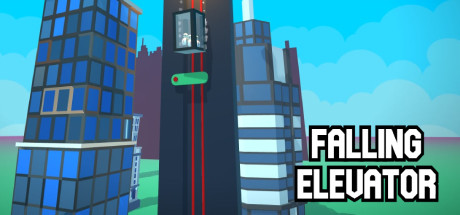
*Falling Elevator*, developed by LTZ and published by RetroScope GM, builds its entire identity around a single, high-stakes scenario: surviving a relentless descent inside a malfunctioning elevator. It’s a premise that immediately communicates tension, and the game wisely doesn’t try to complicate it with unnecessary systems or narrative layers. Instead, it commits fully to delivering a focused, reflex-driven experience where every second matters and the smallest mistake can send you back to the start.
The gameplay loop is simple but effective in short bursts. Each level places you inside the elevator as it drops downward, forcing you to react to a steady stream of hazards that appear with little warning. The goal is to stay alive long enough to reach the end of the descent while avoiding obstacles that can injure or eliminate you. There’s a constant sense of urgency, created not through elaborate mechanics but through the pace at which threats emerge. The confined space amplifies this pressure—there’s nowhere to retreat, and every movement has to be deliberate. This creates a rhythm that feels immediate and accessible, making it easy for players to understand what’s happening even if they fail repeatedly.
As you progress, the game introduces new variations of obstacles and slightly more chaotic patterns, increasing the difficulty without altering the core mechanics. Later levels demand quicker reactions and sharper awareness, but they rarely introduce fundamentally new ideas. Instead, the challenge escalates through density and unpredictability, layering more hazards into the same confined environment. While this approach keeps the experience consistent, it also means that the gameplay doesn’t evolve in a meaningful way. Once you’ve grasped the basics, the rest of the game becomes a matter of improving your timing and memorizing patterns rather than learning new systems.
The retry system plays a crucial role in maintaining the game’s pacing. Failure is frequent, but restarts are instantaneous, allowing players to jump back in without interruption. This creates a loop that can be surprisingly engaging in short sessions, as each attempt feels like an opportunity to refine your reactions and push a little further. However, this design also highlights the game’s reliance on repetition. Progress often comes from trial and error rather than strategic thinking, which can make success feel more like persistence than mastery over time.
Visually, the game keeps things minimal and functional. The elevator setting is intentionally confined, and the design prioritizes clarity over detail to ensure that players can quickly identify incoming threats. While this approach works well for gameplay, it results in a lack of visual variety. Levels tend to blend together, and the environment rarely changes in ways that significantly impact the experience. The presentation does its job, but it doesn’t add much beyond what is strictly necessary.
There is little in the way of narrative or contextual framing. The game doesn’t attempt to explain why the elevator is falling or who the characters are, choosing instead to focus entirely on the immediate challenge. This absence of story keeps the experience streamlined, but it also limits its ability to create a lasting impression. Without additional layers to support the core concept, the tension of the scenario gradually loses its impact, especially during longer play sessions.
Ultimately, *Falling Elevator* succeeds in delivering a clear and focused concept that works best in small doses. Its strength lies in its immediacy—the ability to jump in, react quickly, and experience brief moments of tension without needing to commit to a deeper system. At the same time, its simplicity becomes its biggest limitation, as the lack of variety and mechanical evolution makes it difficult to sustain long-term engagement. It’s a game that understands its idea and executes it cleanly, but doesn’t expand on it enough to feel fully developed.
Rating: 6/10