▲ Recommended
10 hrs
Parkour Running, developed and published by Roxer, is a minimalist indie title that takes the concept of parkour and reduces it to its most basic form, focusing almost entirely on timing, reflexes, and score chasing. Instead of delivering a realistic or mechanically rich interpretation of parkour movement, the game opts for a simple arcade-style approach where the primary objective is to keep moving forward, avoid obstacles, and survive for as long as possible. This stripped-down philosophy defines the experience from start to finish, making it immediately accessible but also limiting in scope.
The gameplay revolves around a straightforward loop of jumping between platforms while managing a small set of movement options. Players must carefully time their jumps, as mobility is intentionally restricted, forcing them to think ahead and avoid wasting movement. The challenge is not in mastering a complex control scheme, but in maintaining consistency under pressure. Obstacles such as moving hazards and unexpected interruptions add a layer of unpredictability, ensuring that players cannot rely solely on memorization. Instead, quick reactions and awareness become essential for maintaining momentum and extending each run.
Rather than offering structured levels or a progression system, the game adopts a score-based format where every attempt is part of a continuous effort to improve performance. There are no checkpoints, no upgrades, and no long-term progression mechanics. The only real reward is a higher score, which encourages repeated attempts and incremental improvement. This design can be engaging for players who enjoy chasing personal bests or competing informally with others, but it also means that the experience lacks a sense of long-term development. Once the core mechanics are understood, there are few new elements introduced to keep things evolving.
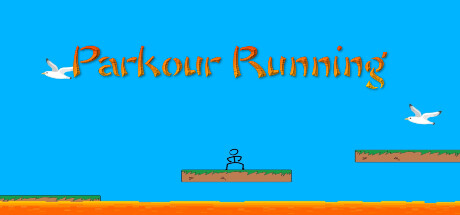
Visually, Parkour Running is extremely simple, prioritizing function over style. The environments are basic and largely unchanging, serving as a backdrop for the action rather than a focal point of the experience. Character animations and visual effects are minimal, providing just enough feedback to support gameplay without adding much personality or flair. While this simplicity ensures that the game runs smoothly on almost any system, it also contributes to a sense of repetition, as there is little visual variety to maintain interest over extended play sessions.
The pacing is fast and immediate, with each run lasting only as long as the player can avoid failure. This makes the game ideal for short bursts of play, as it can be picked up and put down without any commitment. However, this same structure highlights the limitations of the overall design. Without additional modes, challenges, or meaningful variation, the gameplay loop can quickly become predictable. The lack of progression or unlockable content means that motivation to continue relies entirely on the player’s desire to improve their score.
From a technical standpoint, the game is lightweight and functional. It performs smoothly, with simple controls that are easy to learn within seconds. There are no complex systems or demanding requirements, making it accessible to a wide range of players. However, this simplicity also underscores the game’s limited ambition. It feels more like a small experimental project or a basic arcade prototype than a fully developed parkour experience.
In the end, Parkour Running delivers exactly what it sets out to do: a simple, no-frills score-chasing game that offers quick and accessible entertainment. It can be mildly engaging in short sessions, especially for players who enjoy reflex-based challenges, but its lack of depth and variety prevents it from leaving a lasting impression. It is best approached as a brief distraction rather than a substantial game, offering momentary fun without much staying power.
Rating: 5/10
The gameplay revolves around a straightforward loop of jumping between platforms while managing a small set of movement options. Players must carefully time their jumps, as mobility is intentionally restricted, forcing them to think ahead and avoid wasting movement. The challenge is not in mastering a complex control scheme, but in maintaining consistency under pressure. Obstacles such as moving hazards and unexpected interruptions add a layer of unpredictability, ensuring that players cannot rely solely on memorization. Instead, quick reactions and awareness become essential for maintaining momentum and extending each run.
Rather than offering structured levels or a progression system, the game adopts a score-based format where every attempt is part of a continuous effort to improve performance. There are no checkpoints, no upgrades, and no long-term progression mechanics. The only real reward is a higher score, which encourages repeated attempts and incremental improvement. This design can be engaging for players who enjoy chasing personal bests or competing informally with others, but it also means that the experience lacks a sense of long-term development. Once the core mechanics are understood, there are few new elements introduced to keep things evolving.
Visually, Parkour Running is extremely simple, prioritizing function over style. The environments are basic and largely unchanging, serving as a backdrop for the action rather than a focal point of the experience. Character animations and visual effects are minimal, providing just enough feedback to support gameplay without adding much personality or flair. While this simplicity ensures that the game runs smoothly on almost any system, it also contributes to a sense of repetition, as there is little visual variety to maintain interest over extended play sessions.
The pacing is fast and immediate, with each run lasting only as long as the player can avoid failure. This makes the game ideal for short bursts of play, as it can be picked up and put down without any commitment. However, this same structure highlights the limitations of the overall design. Without additional modes, challenges, or meaningful variation, the gameplay loop can quickly become predictable. The lack of progression or unlockable content means that motivation to continue relies entirely on the player’s desire to improve their score.
From a technical standpoint, the game is lightweight and functional. It performs smoothly, with simple controls that are easy to learn within seconds. There are no complex systems or demanding requirements, making it accessible to a wide range of players. However, this simplicity also underscores the game’s limited ambition. It feels more like a small experimental project or a basic arcade prototype than a fully developed parkour experience.
In the end, Parkour Running delivers exactly what it sets out to do: a simple, no-frills score-chasing game that offers quick and accessible entertainment. It can be mildly engaging in short sessions, especially for players who enjoy reflex-based challenges, but its lack of depth and variety prevents it from leaving a lasting impression. It is best approached as a brief distraction rather than a substantial game, offering momentary fun without much staying power.
Rating: 5/10
1 found helpful
Steam ↗