

▲ Recommended
1 hrs
Little game with idle mechanics and roguelite structure that’s not fast or flashy, but it excels at one thing: rewarding long-term grinding.
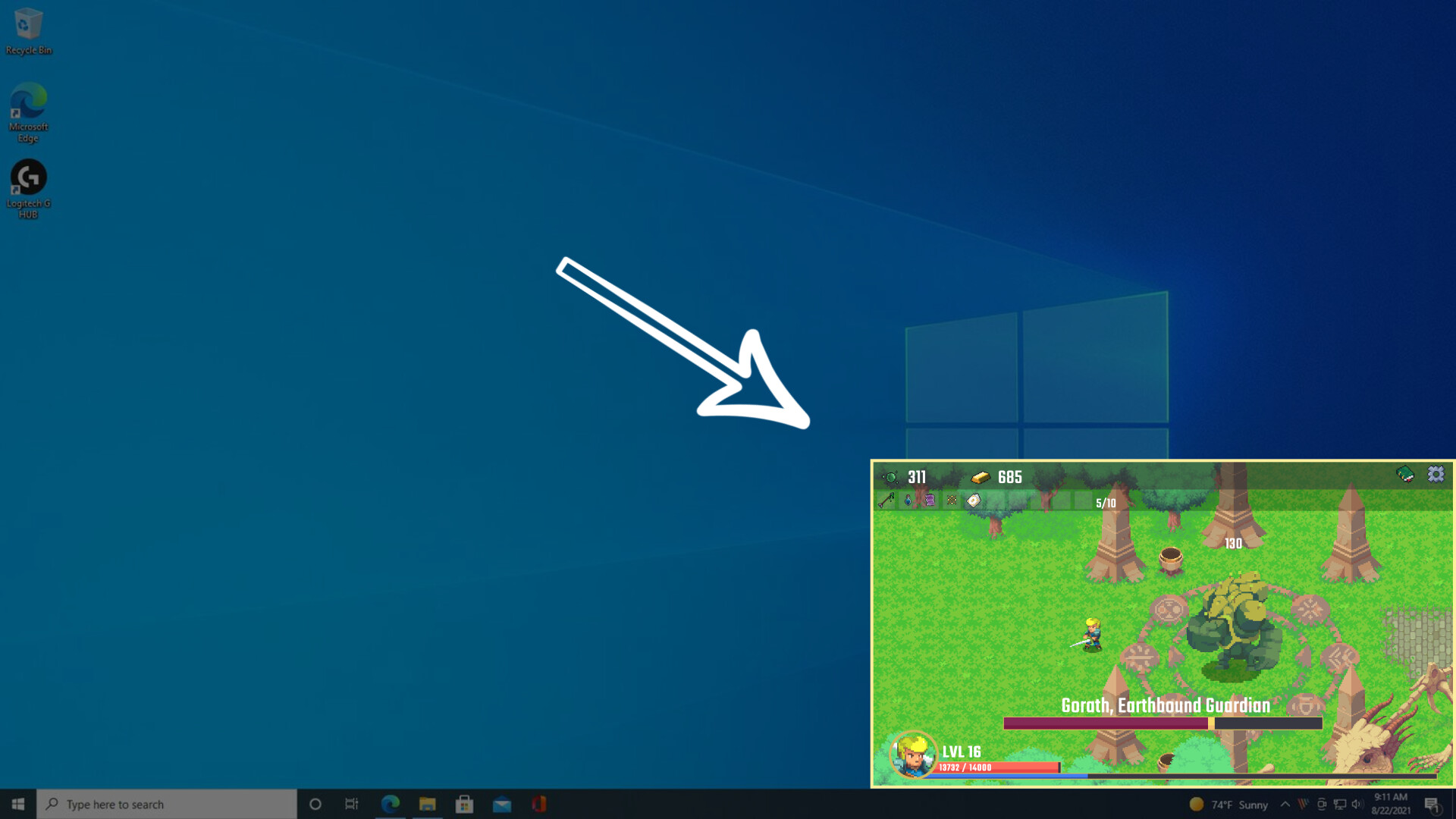
This game takes cues from the idle genre, but with a twist—it runs quietly in a tiny window tucked away in the corner of your desktop, demanding almost no attention. Rather than constant clicking or micromanaging, gameplay revolves around sending your character on raids, clicking the next mission, and buying upgrades. That’s it.
Each raid unfolds on a roguelite-style map. You choose your next event by picking between two nodes, and the entire map is visible, allowing for some route planning. Most nodes are combat encounters (marked with a skull), but you’ll also find shops, healing spots, and a boss waiting at the end. The ultimate goal is to complete all stages in a single raid—a feat that requires plenty of grinding, as each new stage ramps up the difficulty.
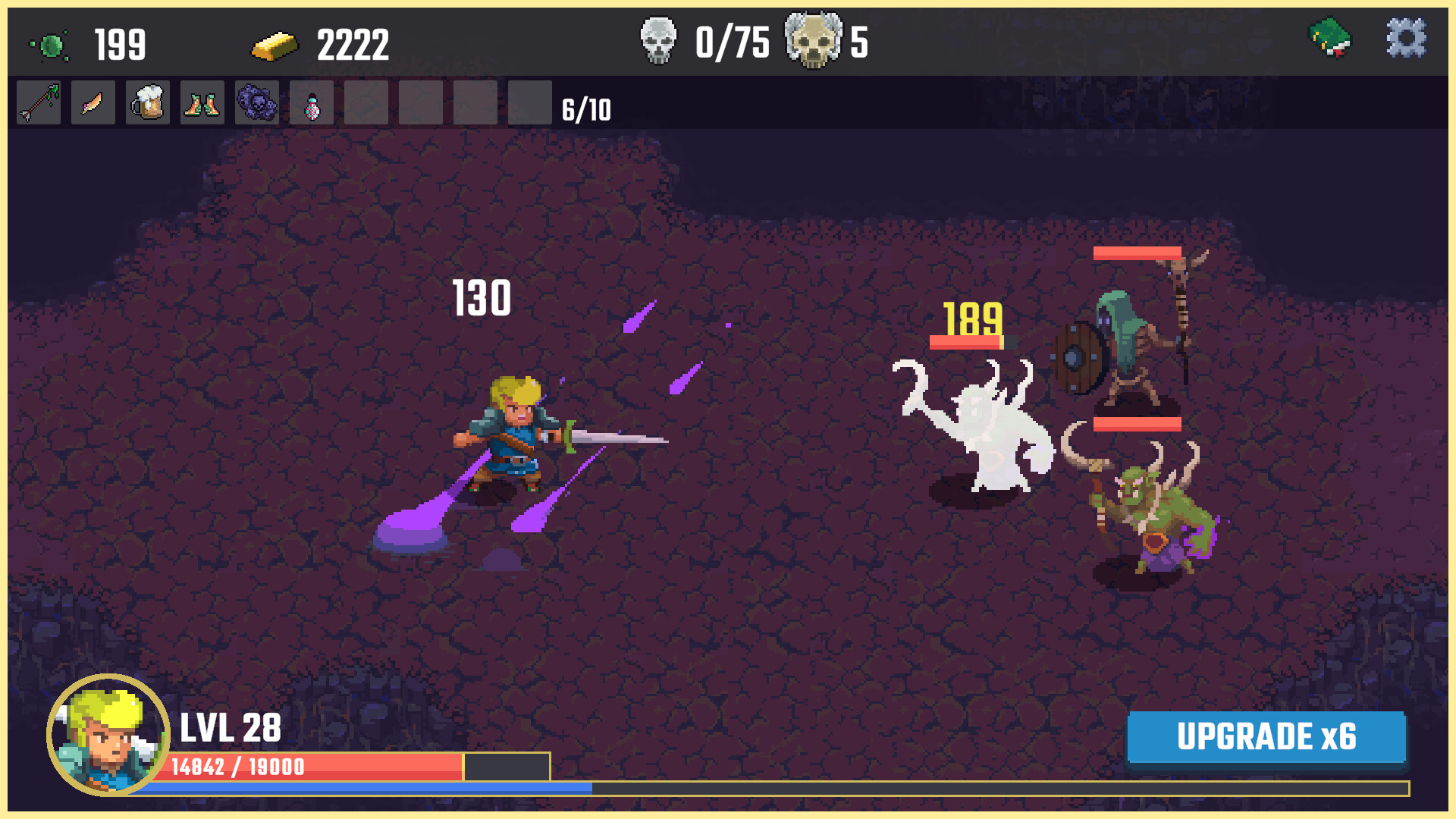
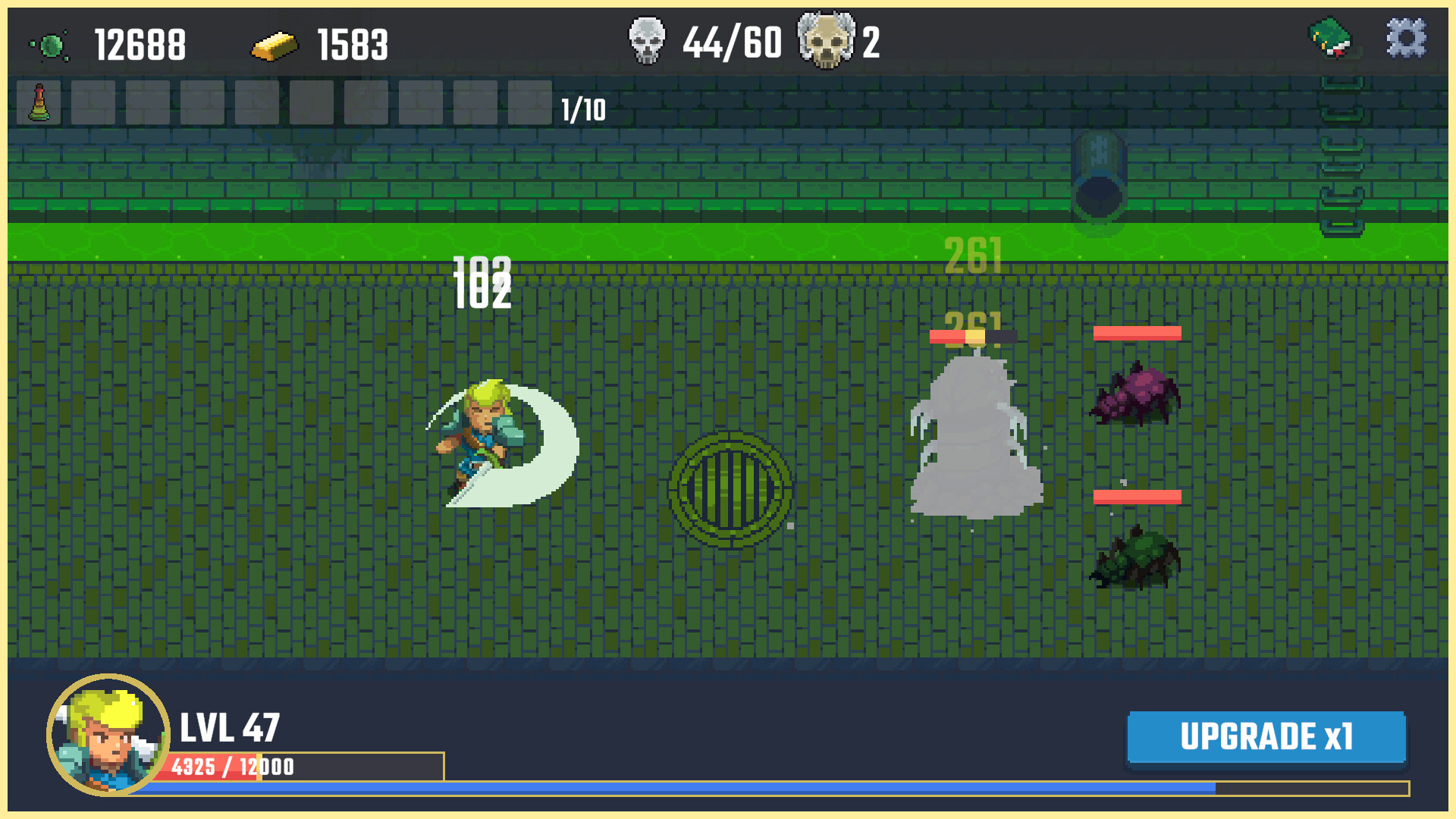
Combat itself is entirely idle. Your character stands on one side, enemies on the other, and the fight plays out without your input. You face groups of four to five enemies per wave, and battles stretch across four or more waves. Once you've defeated enough foes, you’re given the option to press on. Unfortunately, there are no speed settings, which means sitting through earlier, easier fights can feel painfully slow once your character gets stronger. There’s also a pointless walking animation between each event that wastes your time.
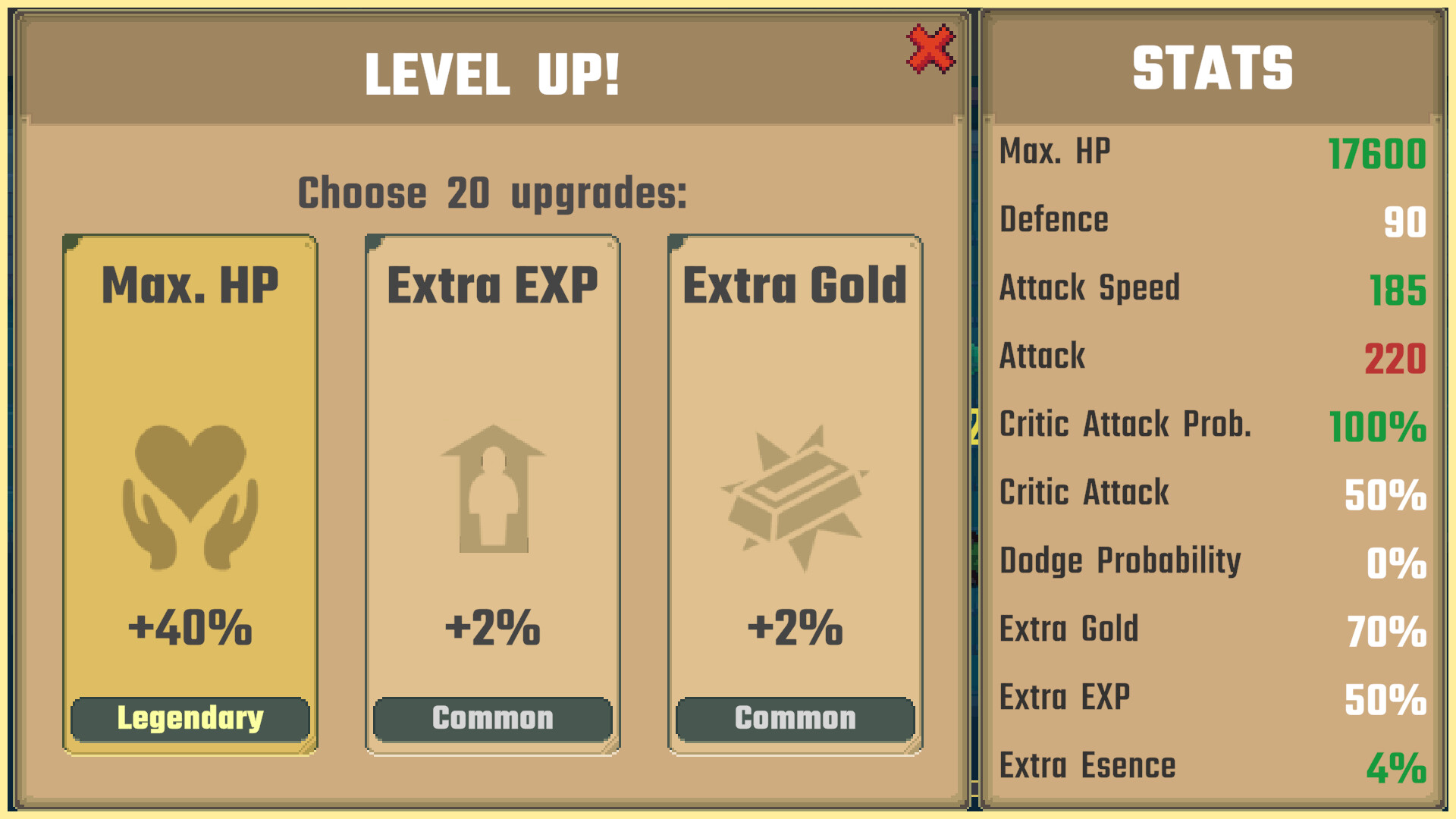
Leveling up happens during raids, and each time you gain a level, you’re offered three randomized perks to choose from. This can only be done on the map after an event. After selecting a perk, the next batch is shuffled again. The perks are your standard fare—boosts to attack, crit, speed, and so on—but occasionally, you’ll be offered a legendary, epic, or special perk. Since these powerful perks cost the same as common ones, there's no reason not to grab them when they appear.
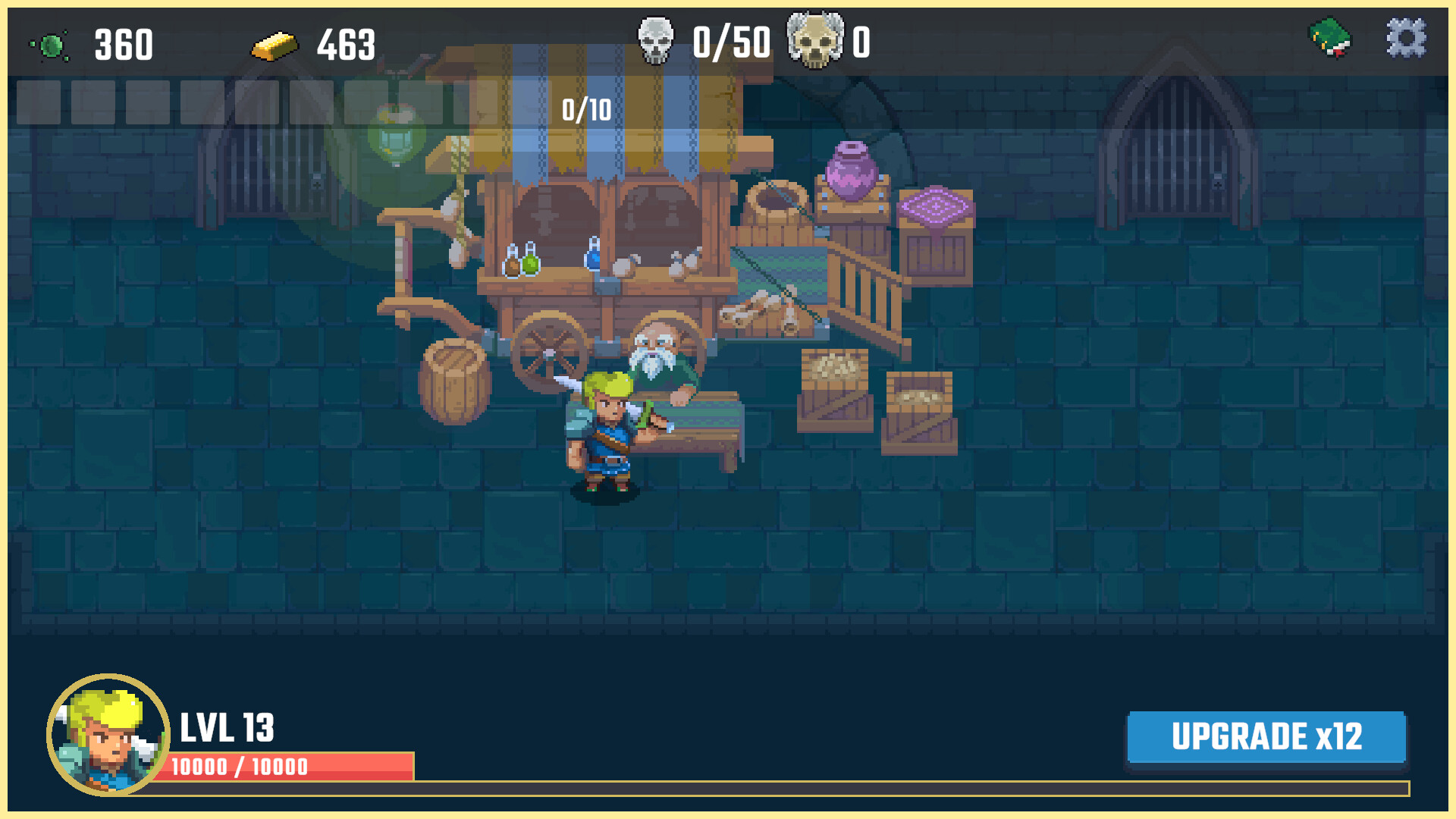
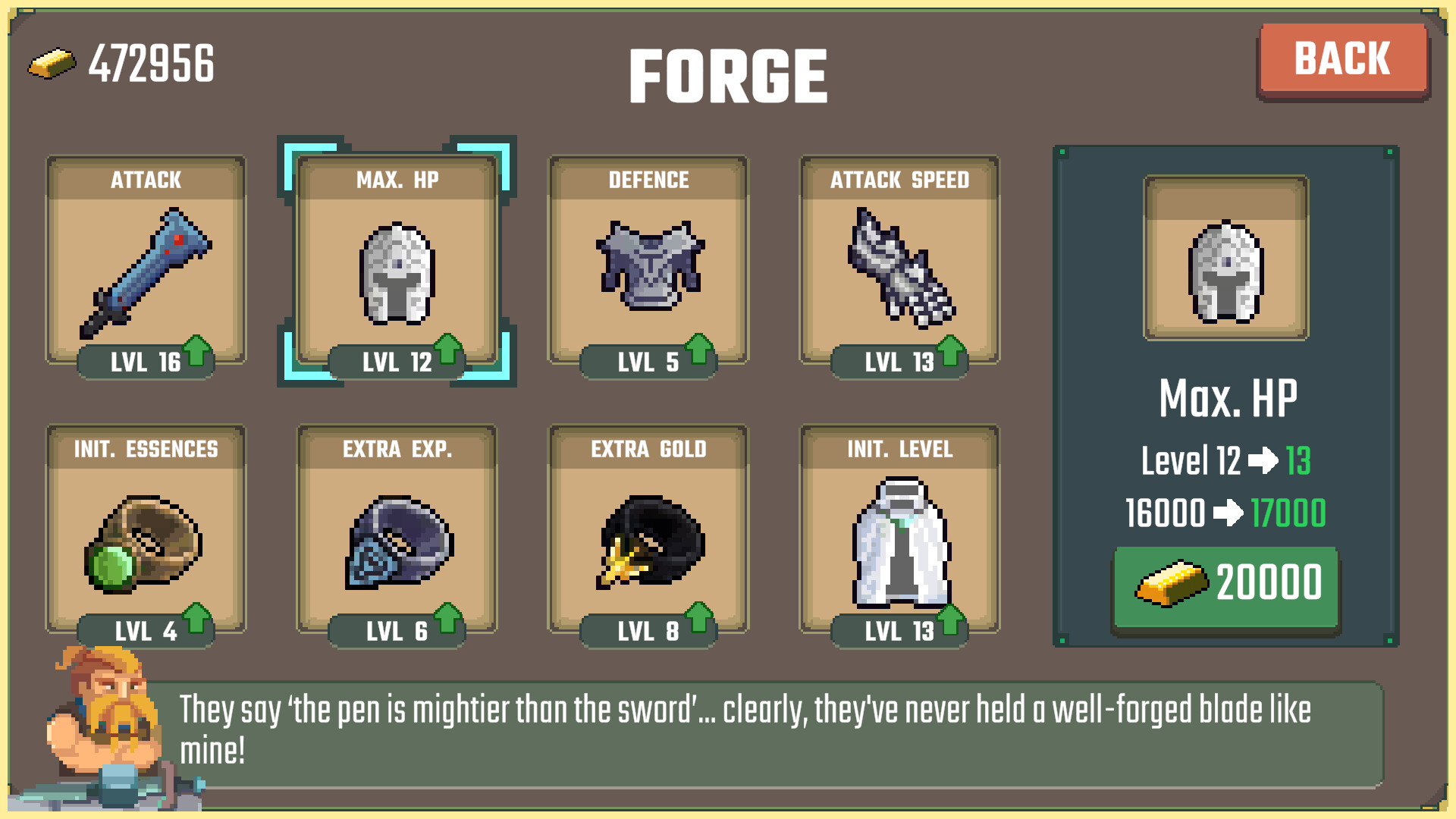
Enemies drop coins upon defeat, which can be spent at shop nodes on stat-boosting items. These items often come with trade-offs—gain a stat, lose another—but the real currency to chase is golden bars. You might score a few from regular enemies, but bosses always drop a generous amount. These bars are used back in the main menu to purchase permanent upgrades, like faster attacks, more health, or increased XP gain.
Each upgrade doubles the cost of the next one, so you won’t get strong very fast. Another reason for this is how bars are handled. If you die in a battle, you only bring back half of the bars. However, if you escape from the raid, you get to keep everything.
There’s also a fullscreen option and a few quality-of-life settings, including screen size and visibility adjustments. You’ll definitely want to expand the window for managing upgrades—the default size is tiny and hard to read. The game includes a codex feature too, where you can track all encountered enemies, bosses, and items, with new entries added automatically after first-time encounters.
This game takes cues from the idle genre, but with a twist—it runs quietly in a tiny window tucked away in the corner of your desktop, demanding almost no attention. Rather than constant clicking or micromanaging, gameplay revolves around sending your character on raids, clicking the next mission, and buying upgrades. That’s it.
Each raid unfolds on a roguelite-style map. You choose your next event by picking between two nodes, and the entire map is visible, allowing for some route planning. Most nodes are combat encounters (marked with a skull), but you’ll also find shops, healing spots, and a boss waiting at the end. The ultimate goal is to complete all stages in a single raid—a feat that requires plenty of grinding, as each new stage ramps up the difficulty.
Combat itself is entirely idle. Your character stands on one side, enemies on the other, and the fight plays out without your input. You face groups of four to five enemies per wave, and battles stretch across four or more waves. Once you've defeated enough foes, you’re given the option to press on. Unfortunately, there are no speed settings, which means sitting through earlier, easier fights can feel painfully slow once your character gets stronger. There’s also a pointless walking animation between each event that wastes your time.
Leveling up happens during raids, and each time you gain a level, you’re offered three randomized perks to choose from. This can only be done on the map after an event. After selecting a perk, the next batch is shuffled again. The perks are your standard fare—boosts to attack, crit, speed, and so on—but occasionally, you’ll be offered a legendary, epic, or special perk. Since these powerful perks cost the same as common ones, there's no reason not to grab them when they appear.
Enemies drop coins upon defeat, which can be spent at shop nodes on stat-boosting items. These items often come with trade-offs—gain a stat, lose another—but the real currency to chase is golden bars. You might score a few from regular enemies, but bosses always drop a generous amount. These bars are used back in the main menu to purchase permanent upgrades, like faster attacks, more health, or increased XP gain.
Each upgrade doubles the cost of the next one, so you won’t get strong very fast. Another reason for this is how bars are handled. If you die in a battle, you only bring back half of the bars. However, if you escape from the raid, you get to keep everything.
There’s also a fullscreen option and a few quality-of-life settings, including screen size and visibility adjustments. You’ll definitely want to expand the window for managing upgrades—the default size is tiny and hard to read. The game includes a codex feature too, where you can track all encountered enemies, bosses, and items, with new entries added automatically after first-time encounters.
7 found helpful
Steam ↗