▲ Recommended
2 hrs
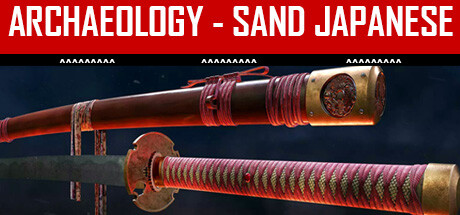
I'm studying archaeology at the Faculty of History, dreaming of discovering ancient treasures in Japan. Then I found this game on Steam, dropped out of uni, and started playing it non-stop. Turns out, it's way better than working in real life! 10/10, best career choice ever.
▲ Recommended
0 hrs
It's easy gameplay, where you are trying to find all objects on the map in the sand. I am feeling myself in a childhood. I loved to find objects in the sand as a kid. All is not bad, but I found a problem: there is a bug with achievements: you can get only the first achievement, other are incompletable.
▲ Recommended
10 hrs
Archaeology – Frozen Space, developed and published by ArchaeologyGames, is a small indie exploration and excavation game that centers on the simple but oddly satisfying process of uncovering hidden artifacts buried beneath layers of terrain. As part of the developer’s broader “Archaeology” series, the game follows a familiar structure built around careful digging and observation rather than action or story-driven gameplay. Set in a frozen, extraterrestrial environment, the game transports players to an icy landscape where mysterious objects lie hidden beneath the surface, waiting to be discovered through patient excavation. While the concept is straightforward, the experience focuses on relaxation and methodical discovery, offering a calm alternative to the fast-paced mechanics found in many modern games.
The gameplay revolves almost entirely around excavation mechanics. Players explore a frozen terrain from a third-person perspective, moving the camera around the environment while searching for subtle signs of buried artifacts beneath the icy ground. Once an object is located, the player begins the careful process of digging away the surrounding material layer by layer. This is done gradually, ensuring that the artifact remains intact while its shape slowly becomes visible. The act of uncovering these objects forms the core of the game’s appeal. Each excavation feels like a small puzzle where patience and precision are rewarded, as players must remove the terrain carefully enough to reveal the artifact without accidentally overlooking its shape.
Rather than presenting a structured narrative or mission-based progression, the game encourages players to explore the environment freely and focus on the satisfaction of discovery. The frozen setting creates a sense of isolation and curiosity, as if players are excavating relics from a forgotten civilization or a lost expedition on a distant world. While the game never explicitly explains the origins of the artifacts, the mysterious atmosphere of the environment adds a quiet sense of intrigue. The absence of heavy storytelling allows players to concentrate fully on the excavation process and the thrill of uncovering objects hidden beneath the snow and ice.
Progression in the game is largely tied to uncovering artifacts and earning points. Each successfully excavated object contributes to the player’s overall score, which can then be compared on leaderboards. This scoring system introduces a mild competitive element, encouraging players to improve their efficiency and refine their digging techniques. Achievements provide additional goals for players who enjoy completionist challenges, rewarding them for discovering certain items or completing excavation tasks within the environment.
Visually, Archaeology – Frozen Space adopts a clean and minimal 3D style that prioritizes clarity over visual complexity. The icy terrain is composed of simple geometric layers that can be removed piece by piece as players dig deeper into the ground. The artifacts themselves gradually emerge as recognizable shapes beneath the terrain, making the process of uncovering them visually satisfying. Although the graphics are relatively simple, the design works well for the game’s purpose because it keeps the player’s attention focused on the excavation rather than overwhelming them with detailed environmental elements.
The frozen landscape provides the game with a distinctive atmosphere compared to other hidden-object or excavation games. Snow-covered terrain stretches across the map, creating the impression that players are exploring a remote and hostile environment. This setting reinforces the feeling of uncovering lost relics buried beneath centuries of frozen terrain. Even though the world itself is not densely interactive, its quiet and open design contributes to the relaxing pace of the experience.
Sound design in the game is understated but effective. Soft ambient audio accompanies the excavation process, reinforcing the calm and solitary atmosphere of the frozen environment. The sound of digging and uncovering objects provides subtle feedback that makes each successful discovery feel rewarding. Rather than relying on dramatic music or cinematic sound effects, the game maintains a quiet soundscape that complements its slow and thoughtful gameplay.
One of the game’s strongest qualities is its accessibility. The controls are simple and easy to learn, allowing players to begin exploring and digging almost immediately. Because the gameplay does not rely on quick reflexes or complicated systems, it can be enjoyed casually without the pressure of time limits or intense challenges. This makes it particularly appealing to players who enjoy relaxing puzzle experiences where they can progress at their own pace.
However, the simplicity that makes the game approachable also limits its long-term depth. The core gameplay loop—searching for buried objects and digging them out—remains largely unchanged throughout the experience. While uncovering artifacts can be satisfying at first, the lack of new mechanics or evolving objectives may cause the gameplay to feel repetitive after extended sessions. Players who prefer more complex puzzle systems or narrative progression may find the experience somewhat limited.
The overall scope of the game is also relatively small. Compared to larger exploration titles, Archaeology – Frozen Space offers a compact experience that can be completed in a fairly short amount of time. While this brevity means the game never becomes overly demanding, it also means that players may finish most of the available content quickly. For some players, however, this shorter format may actually be part of the game’s appeal, allowing it to function as a relaxing and self-contained experience.
Ultimately, Archaeology – Frozen Space succeeds as a calm and methodical excavation game that focuses on the simple pleasure of discovery. Its quiet pacing, minimalistic design, and accessible mechanics create a relaxing gameplay experience centered around uncovering hidden objects within a mysterious frozen landscape. While it does not offer the depth or variety of larger puzzle or exploration games, it still provides a satisfying sense of progression for players who enjoy careful observation and gradual discovery.
For players looking for a laid-back experience that emphasizes patience and curiosity rather than fast reflexes or complex strategy, Archaeology – Frozen Space offers a gentle and contemplative journey. It may be modest in scale, but its focused gameplay and relaxing atmosphere make it an enjoyable choice for fans of casual puzzle and excavation games.
Rating: 5/10