

▲ Recommended
10 hrs
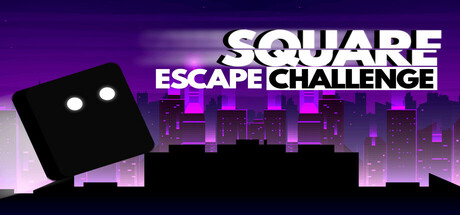
Square Escape Challenge is a compact, reflex-focused platformer that strips the genre down to its essentials and builds its entire experience around timing, precision, and repetition-driven mastery. Developed and published by AGS GAMES, the title makes no attempt to disguise its priorities: there is no story, no dialogue, and no elaborate worldbuilding. Instead, it delivers a pure gameplay challenge where success depends entirely on the player’s ability to read patterns, react quickly, and improve through repeated attempts. This minimalist approach defines the game’s identity and will strongly resonate with players who enjoy tight, skill-based platforming over narrative or mechanical complexity.
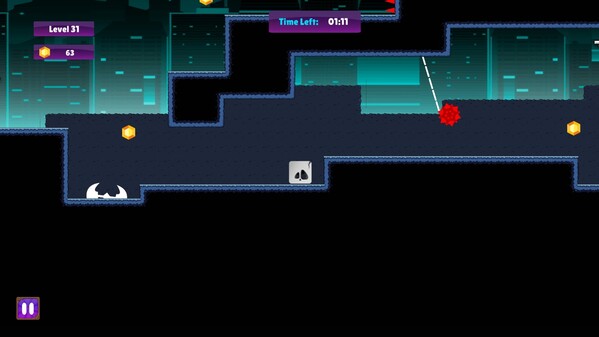
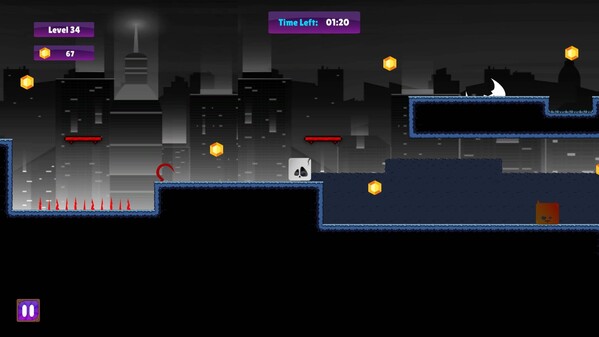
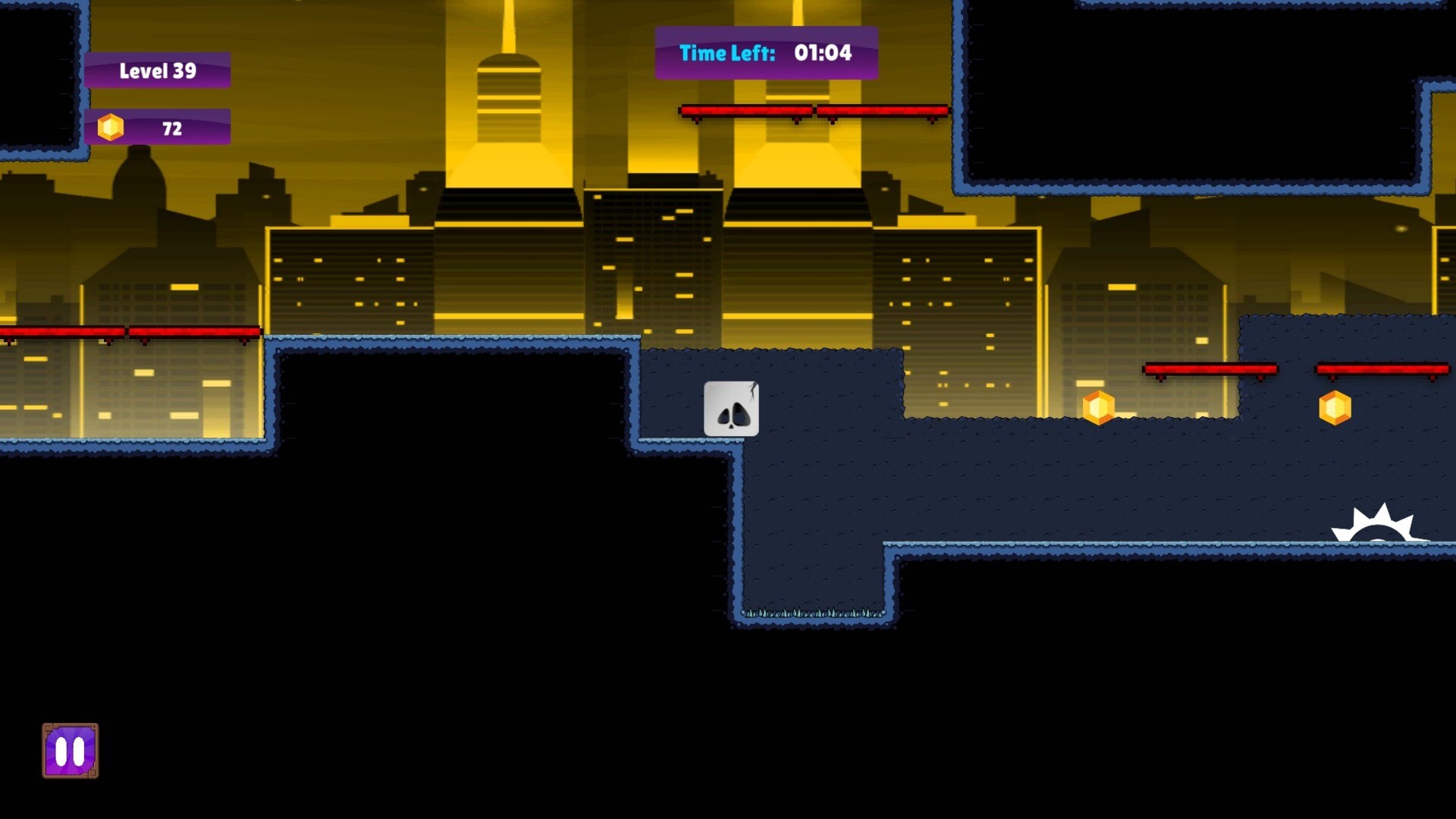
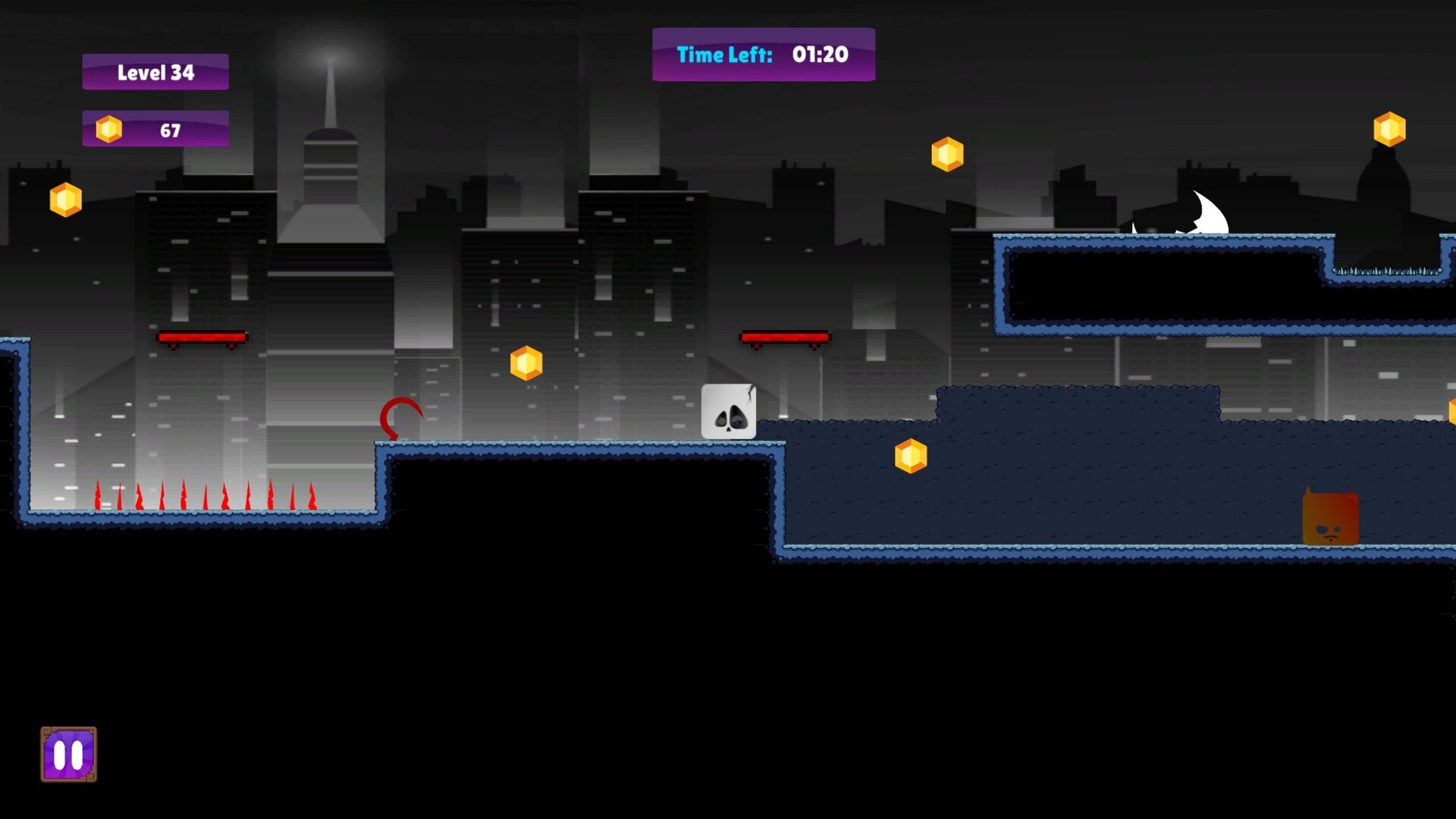
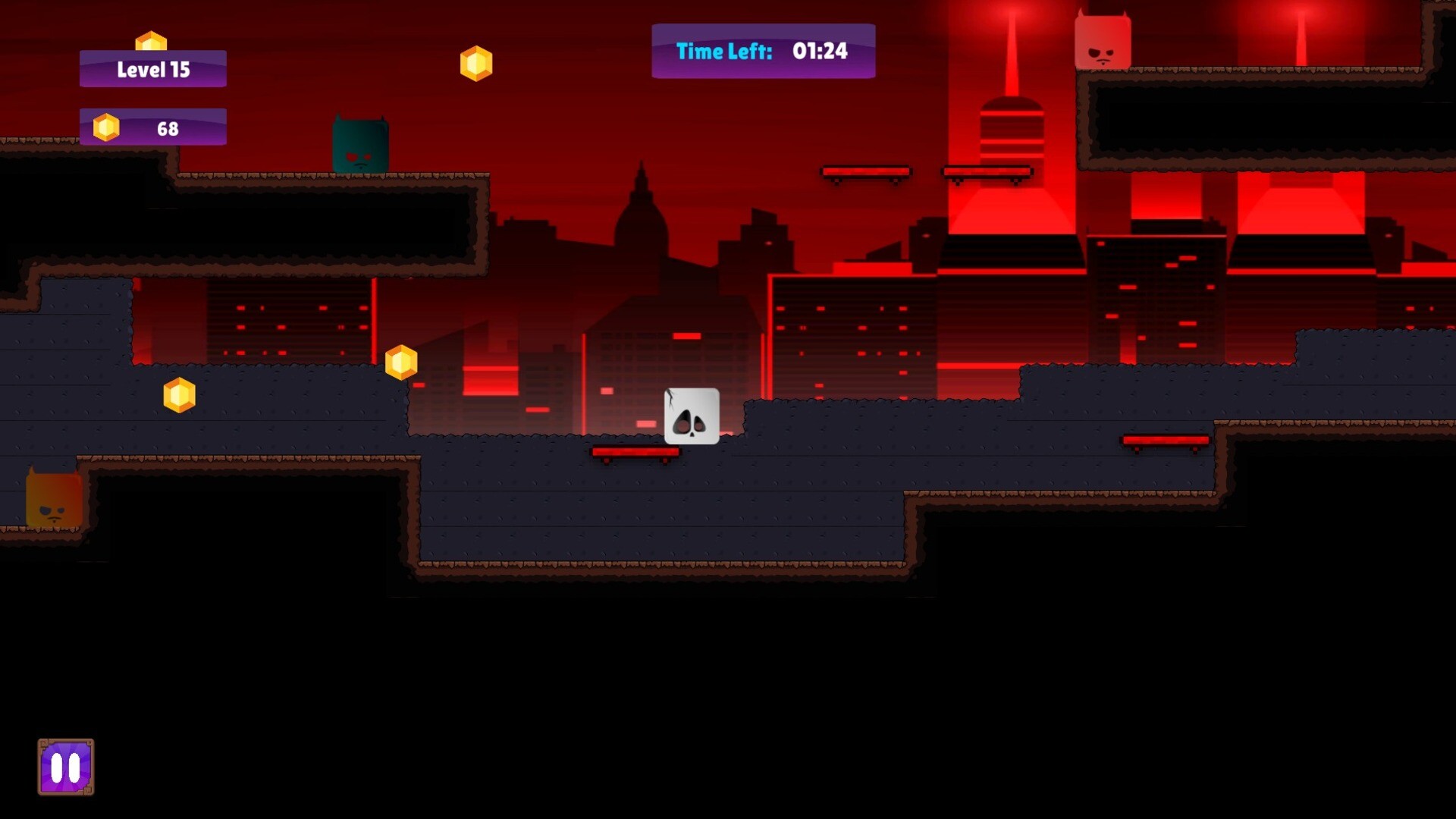
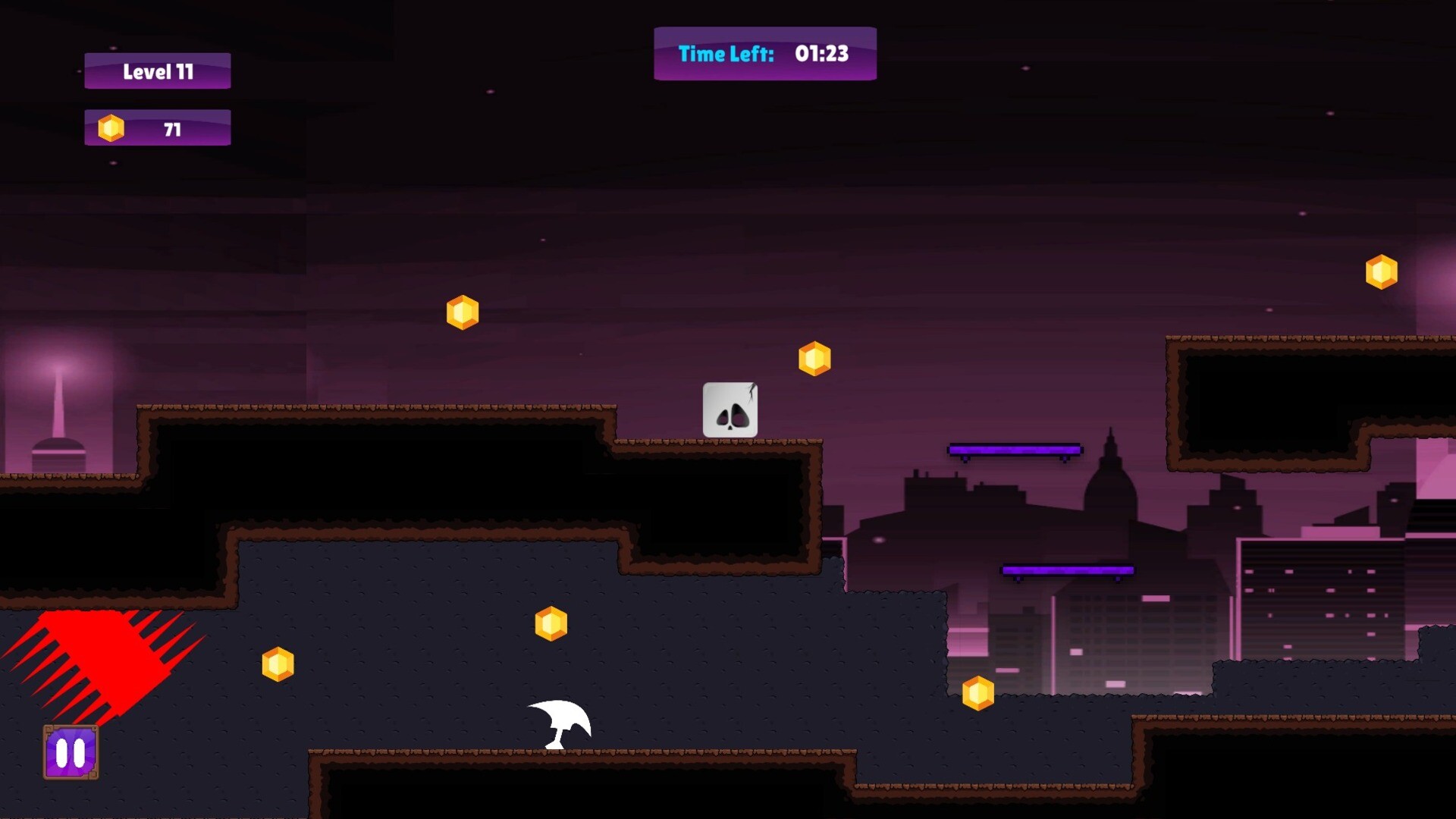
At its core, Square Escape Challenge tasks the player with guiding a small square-shaped character through a series of obstacle-filled levels, each designed to test spatial awareness and split-second decision-making. The controls are intentionally simple, typically limited to movement and jumping, yet the way hazards are arranged ensures that this simplicity never translates into ease. Spikes, moving platforms, enemies, and timing-based traps demand careful observation before execution, and a single mistake often results in immediate failure. This creates a loop where memorization, anticipation, and muscle memory become just as important as raw reflexes.
The difficulty curve is structured to introduce mechanics gradually. Early stages function as implicit tutorials, allowing players to internalize movement physics and hazard behavior without overt instruction. As the game progresses, levels become denser and more punishing, layering multiple threats together and forcing players to plan several moves ahead. What stands out is that the challenge generally feels fair; deaths are almost always the result of player error rather than unclear design. This fairness is crucial to maintaining motivation, as it encourages players to keep retrying rather than becoming frustrated.
Progression is supported by a gem-based system that adds a light meta layer to the experience. Gems collected during play serve two purposes: unlocking cosmetic skins and allowing players to continue from their current position after failure. This system softens the harshness of repeated restarts without undermining the game’s difficulty, giving players some control over how punishing the experience becomes. While the customization options are purely visual and do not affect gameplay, they provide a small incentive to collect gems and engage more deeply with each level.
Visually, Square Escape Challenge embraces a clean and colorful 2D aesthetic that prioritizes readability. Environments are designed so that hazards stand out clearly against backgrounds, which is essential in a game where reaction time matters. The simplicity of the art style complements the gameplay well, avoiding unnecessary visual noise that could interfere with player focus. Animations are functional rather than expressive, reinforcing the idea that the game’s challenge lies in mechanics rather than presentation.
Sound design plays a supportive but understated role. Audio cues provide immediate feedback for jumps, collisions, and hazards, helping reinforce timing and rhythm. The soundtrack, where present, maintains an energetic tone without becoming distracting. While neither visuals nor audio aim to impress on a technical level, they are cohesive and effective, serving the gameplay rather than competing with it.
One of the game’s most defining characteristics is its suitability for short play sessions. Levels are compact, deaths are frequent, and restarts are fast, making it easy to jump in for a few minutes and attempt incremental progress. This design makes Square Escape Challenge ideal for players who enjoy honing skills over time rather than committing to long, continuous play sessions. However, this same structure can lead to repetition, especially for players who prefer variety in mechanics or pacing. Without additional modes, narrative hooks, or significant gameplay evolution, long-term engagement depends entirely on the player’s tolerance for repetition and desire for mastery.
The absence of a story or thematic progression is a deliberate choice, but it also limits the game’s emotional range. There is no sense of journey beyond mechanical advancement, and players looking for context or motivation outside of beating the next level may find the experience shallow. That said, for its intended audience, this purity is a strength rather than a flaw, allowing the game to remain focused and uncompromising.
Overall, Square Escape Challenge is a tightly scoped platformer that succeeds by committing fully to its minimalist, skill-driven design. It does not attempt to innovate within the genre, but instead refines familiar platforming principles into a concise and accessible package. For players who enjoy precision challenges, repeated trial-and-error, and the satisfaction of overcoming difficult levels through practice, it offers a focused and rewarding experience. Those seeking narrative depth, mechanical variety, or long-form progression may find it limited, but within its niche, Square Escape Challenge delivers exactly what it promises: a clean, demanding test of reflexes and timing.
Rating: 5/10
At its core, Square Escape Challenge tasks the player with guiding a small square-shaped character through a series of obstacle-filled levels, each designed to test spatial awareness and split-second decision-making. The controls are intentionally simple, typically limited to movement and jumping, yet the way hazards are arranged ensures that this simplicity never translates into ease. Spikes, moving platforms, enemies, and timing-based traps demand careful observation before execution, and a single mistake often results in immediate failure. This creates a loop where memorization, anticipation, and muscle memory become just as important as raw reflexes.
The difficulty curve is structured to introduce mechanics gradually. Early stages function as implicit tutorials, allowing players to internalize movement physics and hazard behavior without overt instruction. As the game progresses, levels become denser and more punishing, layering multiple threats together and forcing players to plan several moves ahead. What stands out is that the challenge generally feels fair; deaths are almost always the result of player error rather than unclear design. This fairness is crucial to maintaining motivation, as it encourages players to keep retrying rather than becoming frustrated.
Progression is supported by a gem-based system that adds a light meta layer to the experience. Gems collected during play serve two purposes: unlocking cosmetic skins and allowing players to continue from their current position after failure. This system softens the harshness of repeated restarts without undermining the game’s difficulty, giving players some control over how punishing the experience becomes. While the customization options are purely visual and do not affect gameplay, they provide a small incentive to collect gems and engage more deeply with each level.
Visually, Square Escape Challenge embraces a clean and colorful 2D aesthetic that prioritizes readability. Environments are designed so that hazards stand out clearly against backgrounds, which is essential in a game where reaction time matters. The simplicity of the art style complements the gameplay well, avoiding unnecessary visual noise that could interfere with player focus. Animations are functional rather than expressive, reinforcing the idea that the game’s challenge lies in mechanics rather than presentation.
Sound design plays a supportive but understated role. Audio cues provide immediate feedback for jumps, collisions, and hazards, helping reinforce timing and rhythm. The soundtrack, where present, maintains an energetic tone without becoming distracting. While neither visuals nor audio aim to impress on a technical level, they are cohesive and effective, serving the gameplay rather than competing with it.
One of the game’s most defining characteristics is its suitability for short play sessions. Levels are compact, deaths are frequent, and restarts are fast, making it easy to jump in for a few minutes and attempt incremental progress. This design makes Square Escape Challenge ideal for players who enjoy honing skills over time rather than committing to long, continuous play sessions. However, this same structure can lead to repetition, especially for players who prefer variety in mechanics or pacing. Without additional modes, narrative hooks, or significant gameplay evolution, long-term engagement depends entirely on the player’s tolerance for repetition and desire for mastery.
The absence of a story or thematic progression is a deliberate choice, but it also limits the game’s emotional range. There is no sense of journey beyond mechanical advancement, and players looking for context or motivation outside of beating the next level may find the experience shallow. That said, for its intended audience, this purity is a strength rather than a flaw, allowing the game to remain focused and uncompromising.
Overall, Square Escape Challenge is a tightly scoped platformer that succeeds by committing fully to its minimalist, skill-driven design. It does not attempt to innovate within the genre, but instead refines familiar platforming principles into a concise and accessible package. For players who enjoy precision challenges, repeated trial-and-error, and the satisfaction of overcoming difficult levels through practice, it offers a focused and rewarding experience. Those seeking narrative depth, mechanical variety, or long-form progression may find it limited, but within its niche, Square Escape Challenge delivers exactly what it promises: a clean, demanding test of reflexes and timing.
Rating: 5/10
0 found helpful
Steam ↗