▲ Recommended
9 hrs
Mathematician is a compact, purpose-driven educational title that places learning efficiency well ahead of spectacle or narrative ambition. Developed and published by pengjianNiu, the game is built around a clear and narrow goal: transforming basic arithmetic practice into a competitive, time-based activity that feels more engaging than traditional drills. Rather than disguising its educational intent behind story or abstraction, Mathematician embraces its identity as a math-focused quiz game and designs every element around clarity, speed, and accessibility.
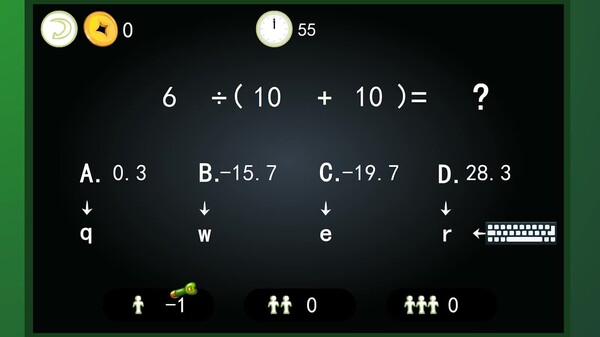
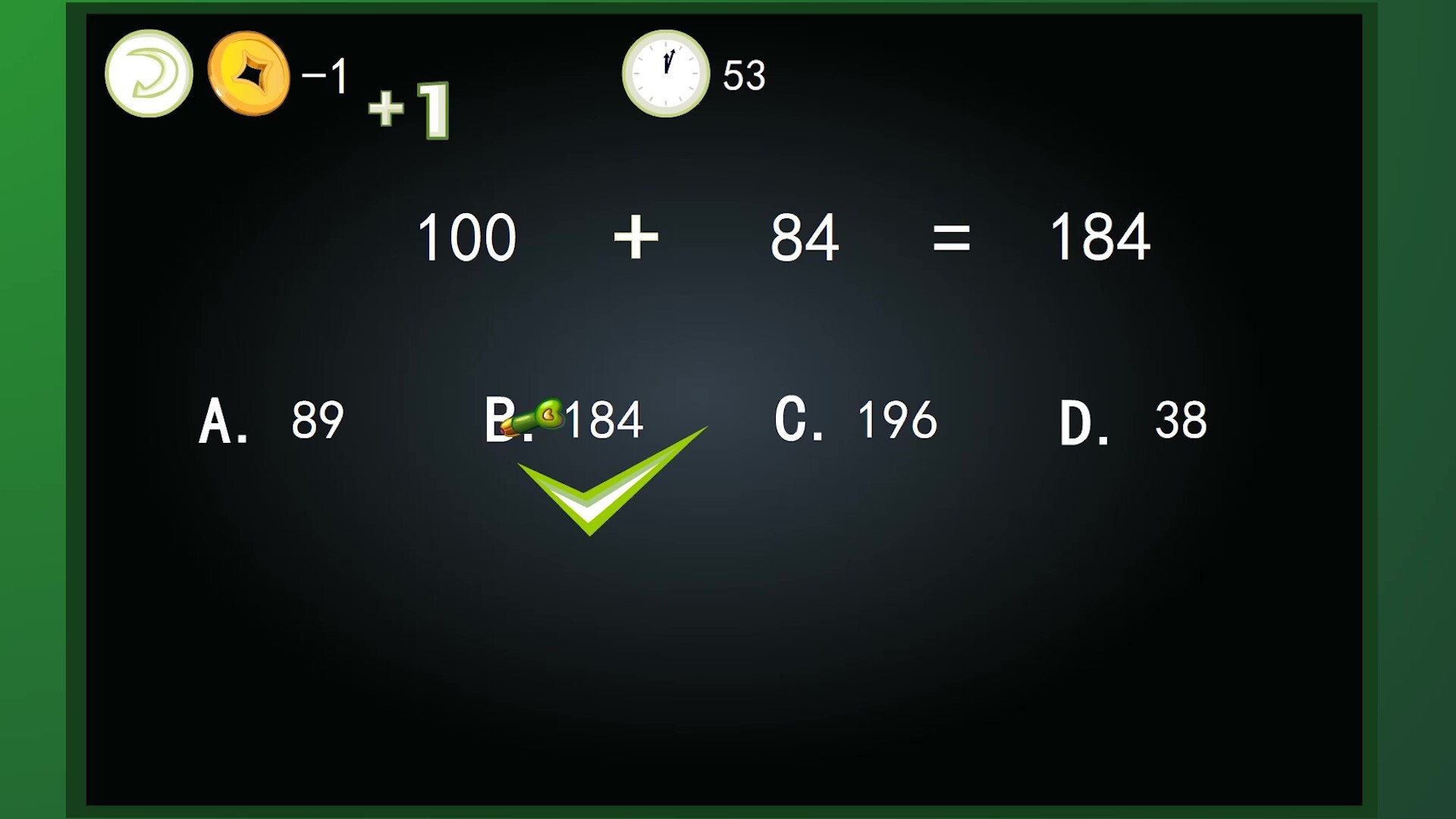
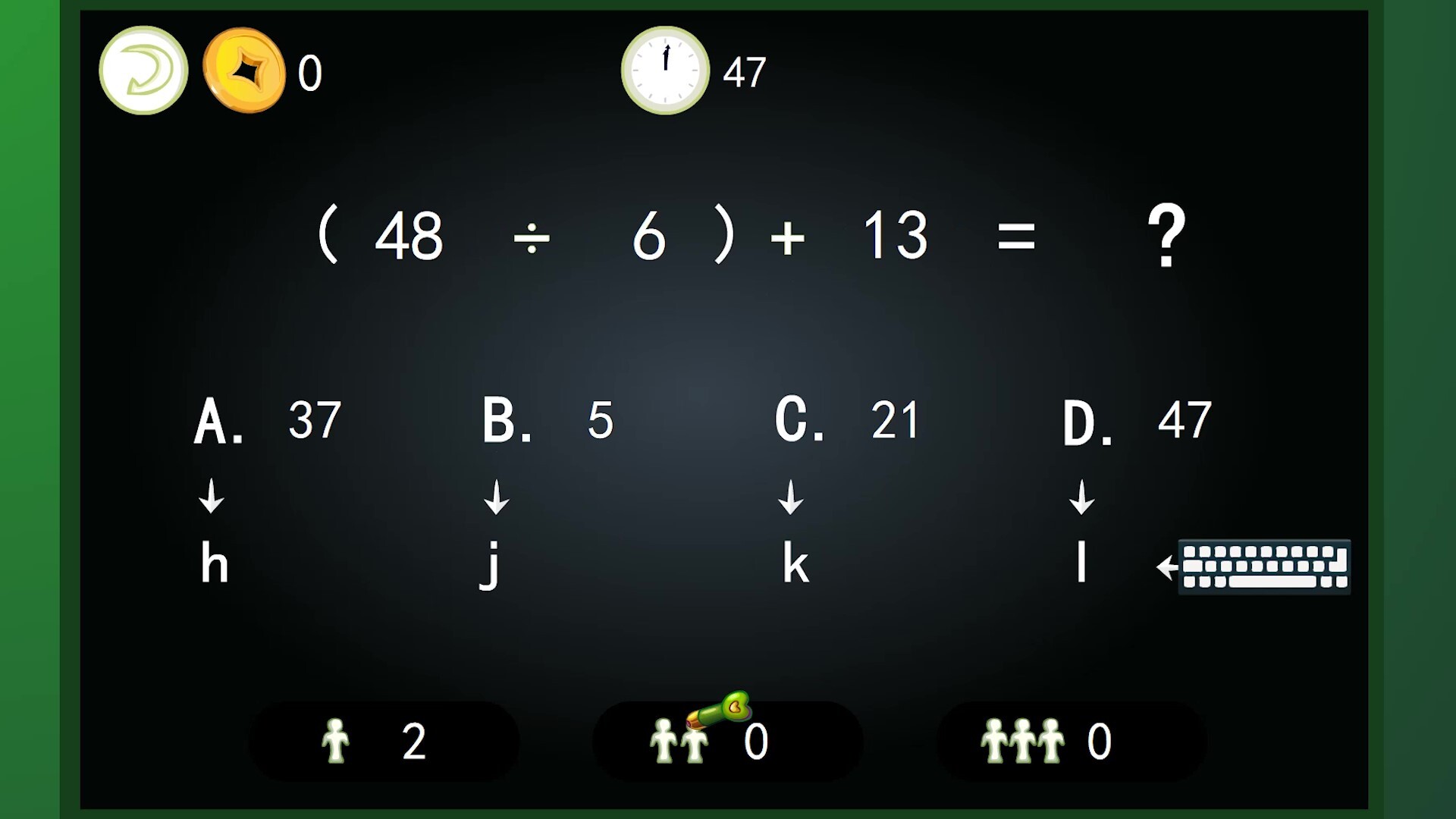
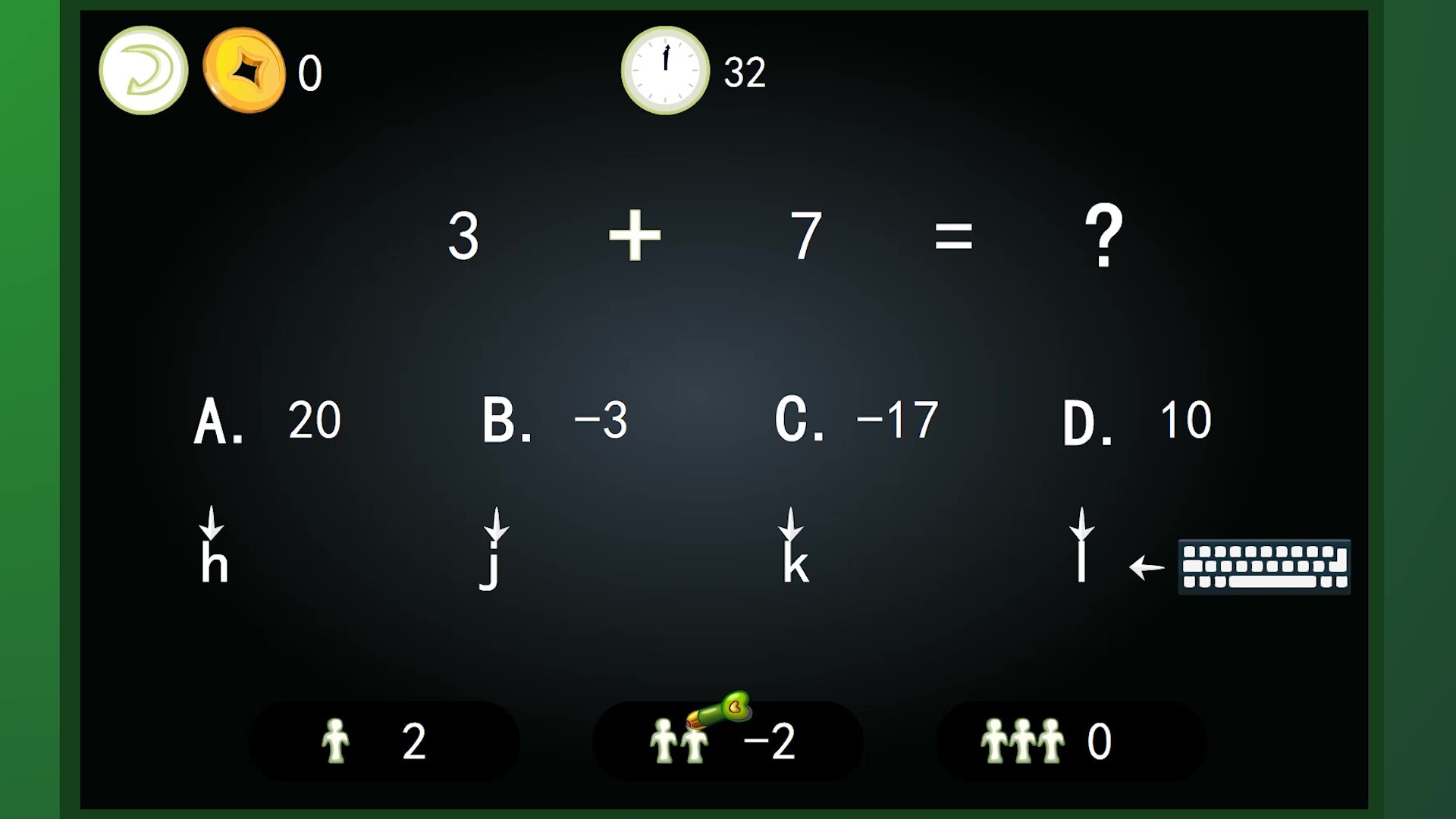
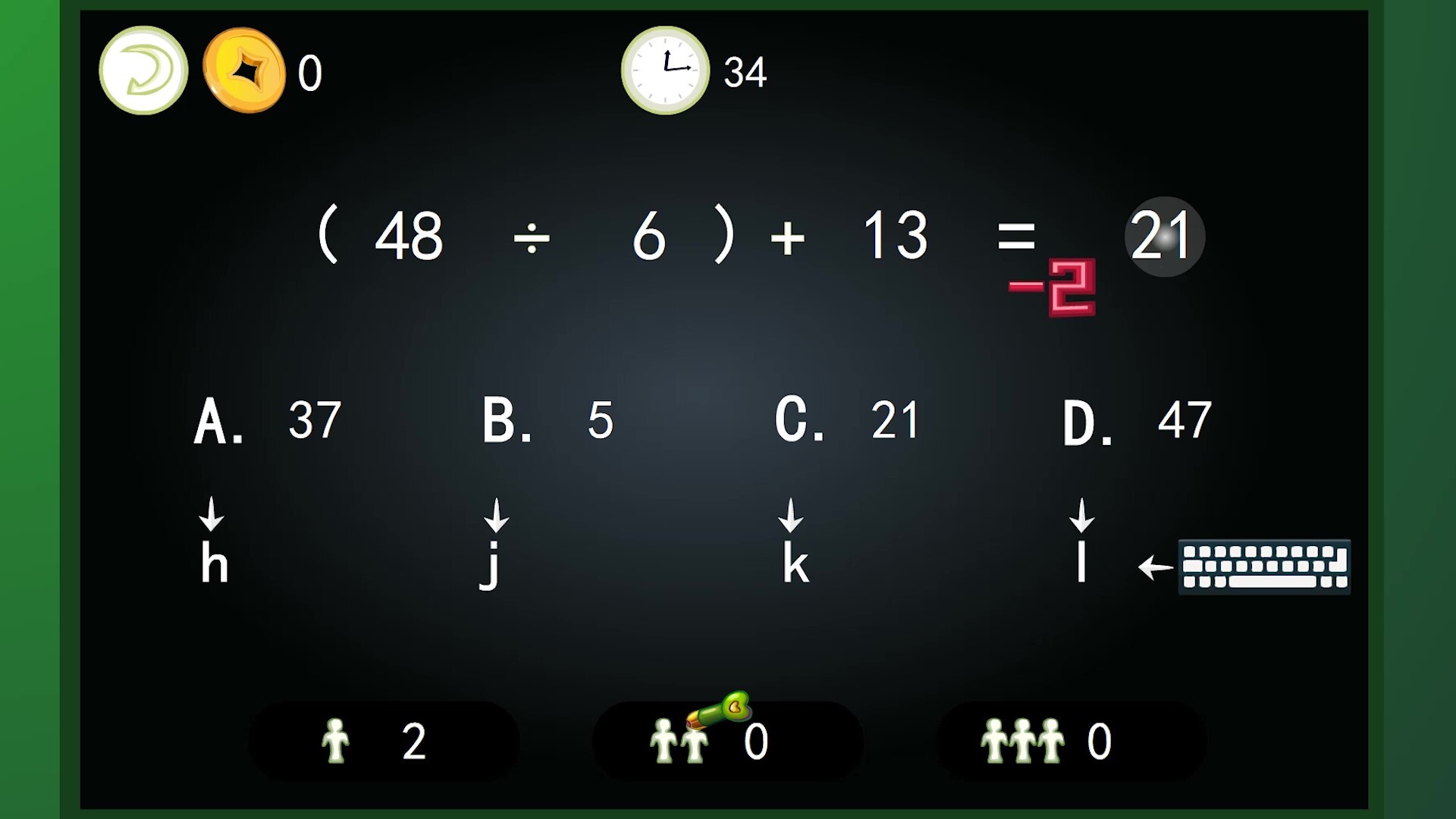
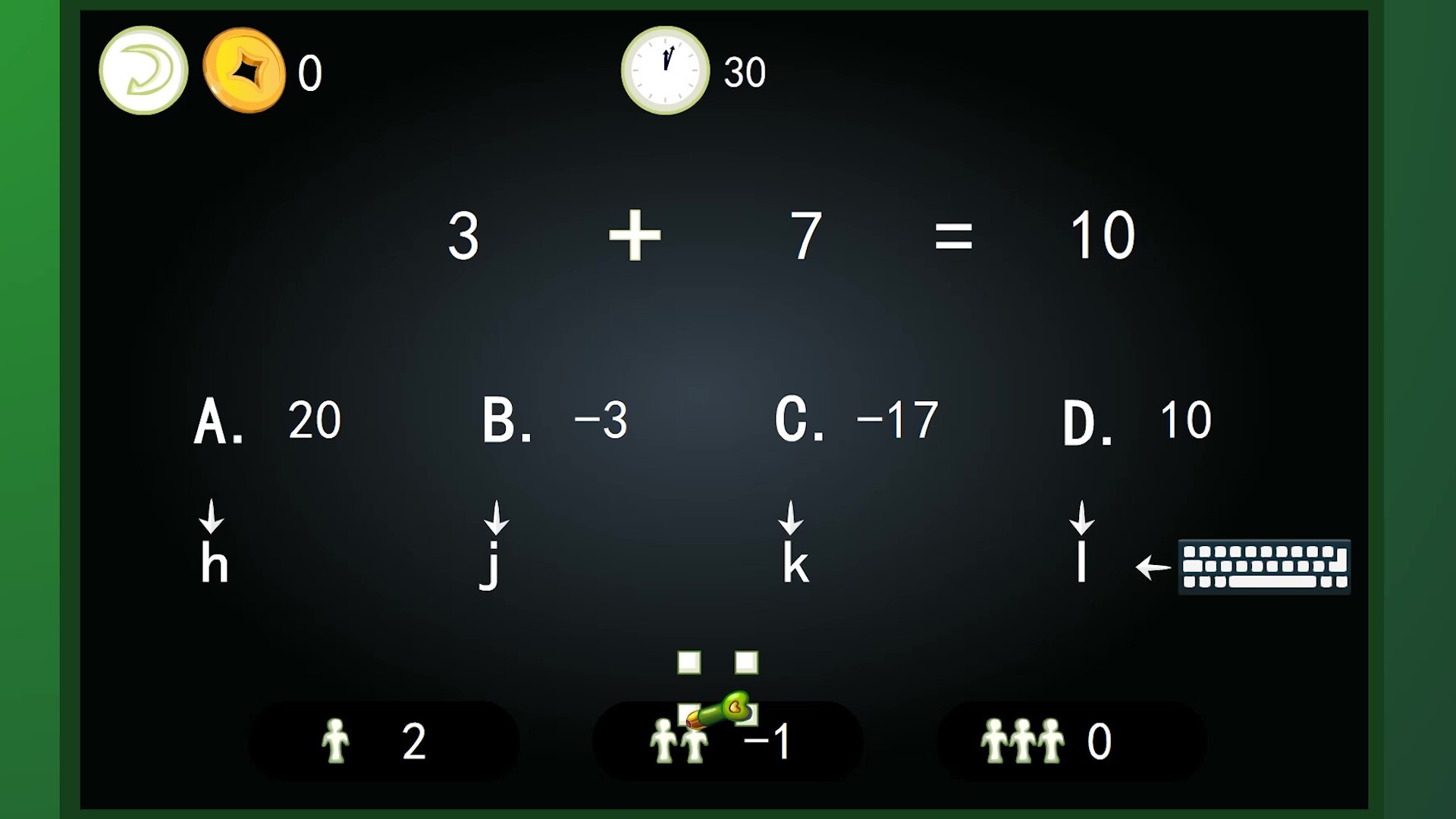
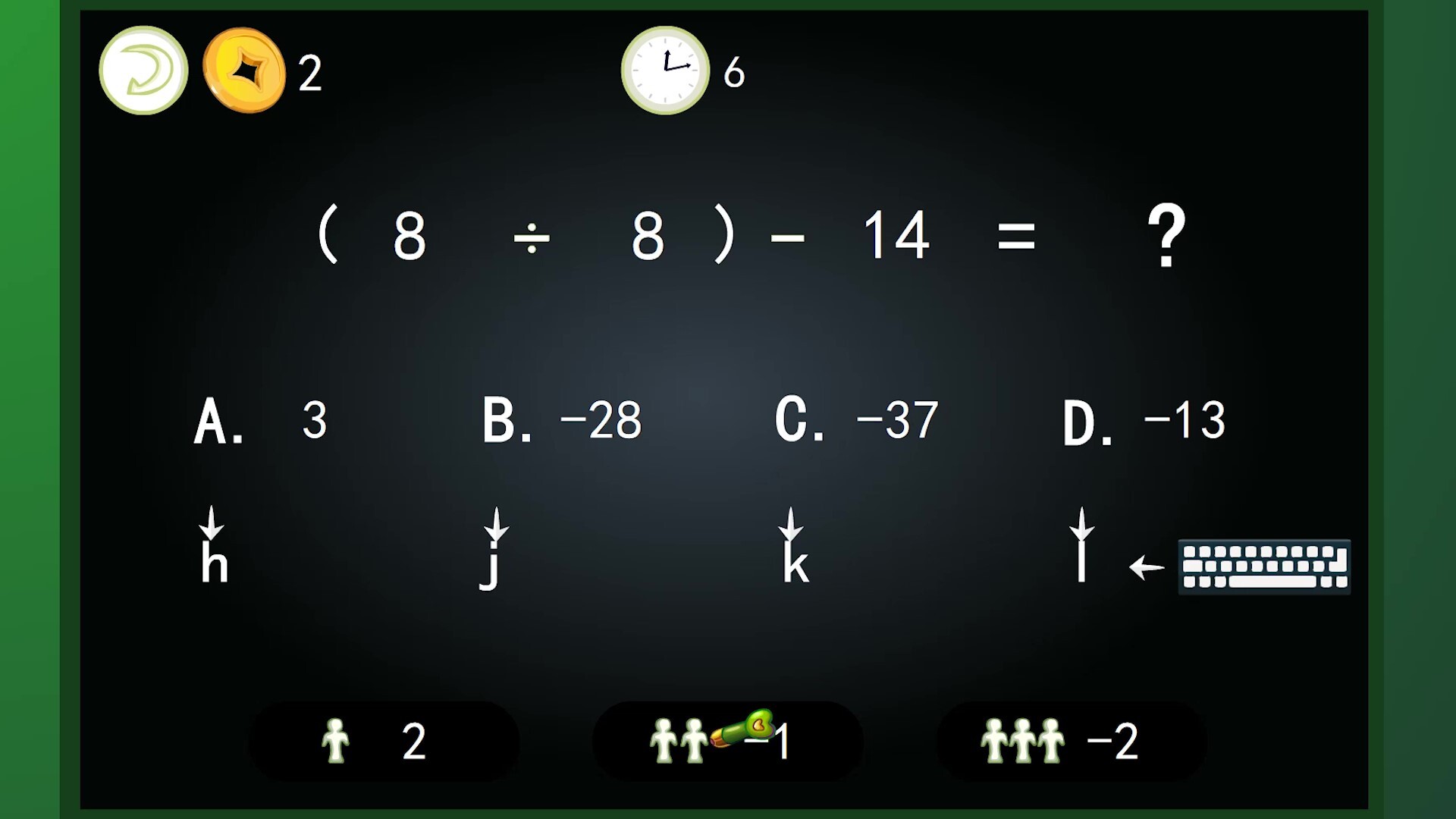
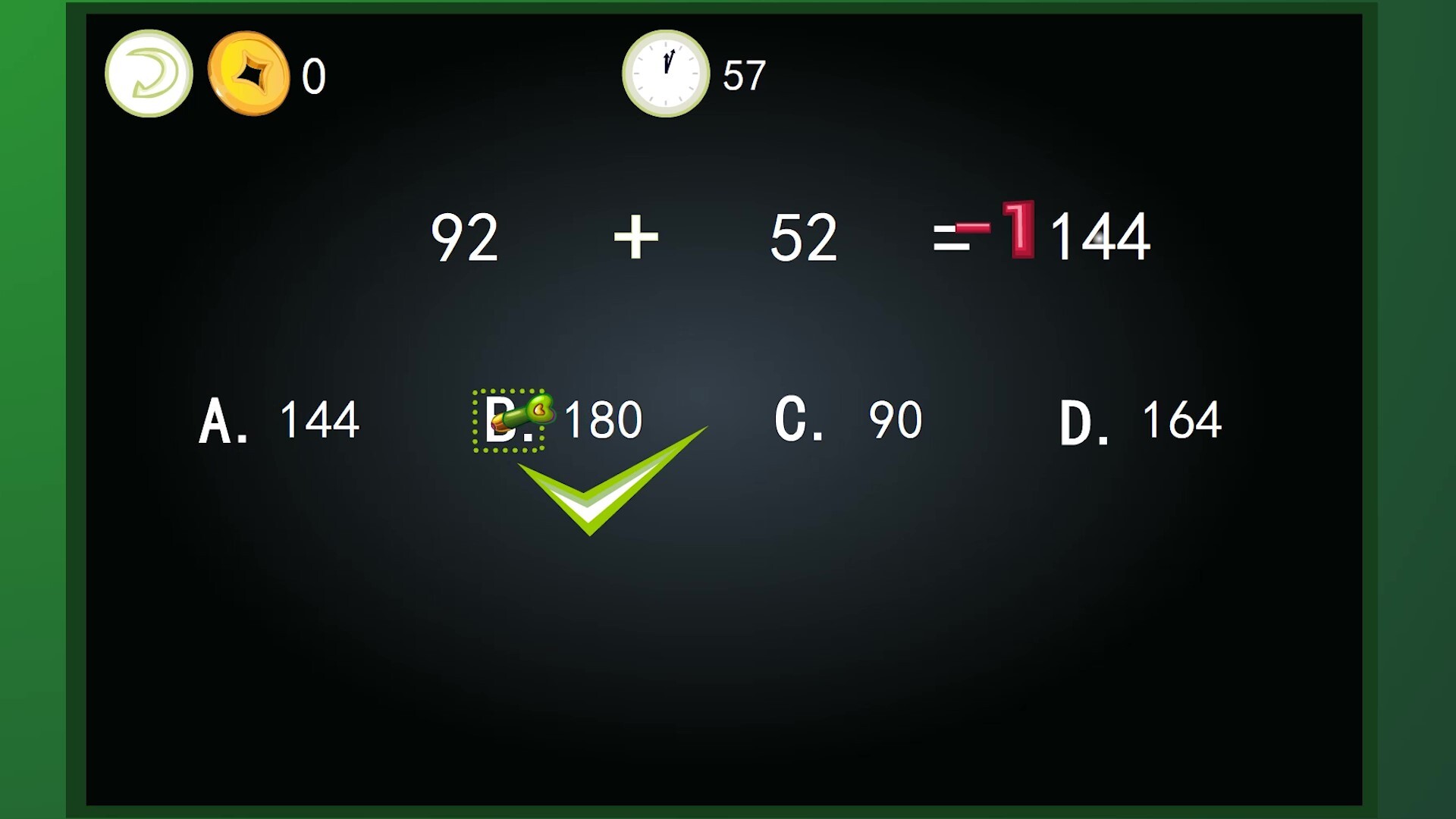
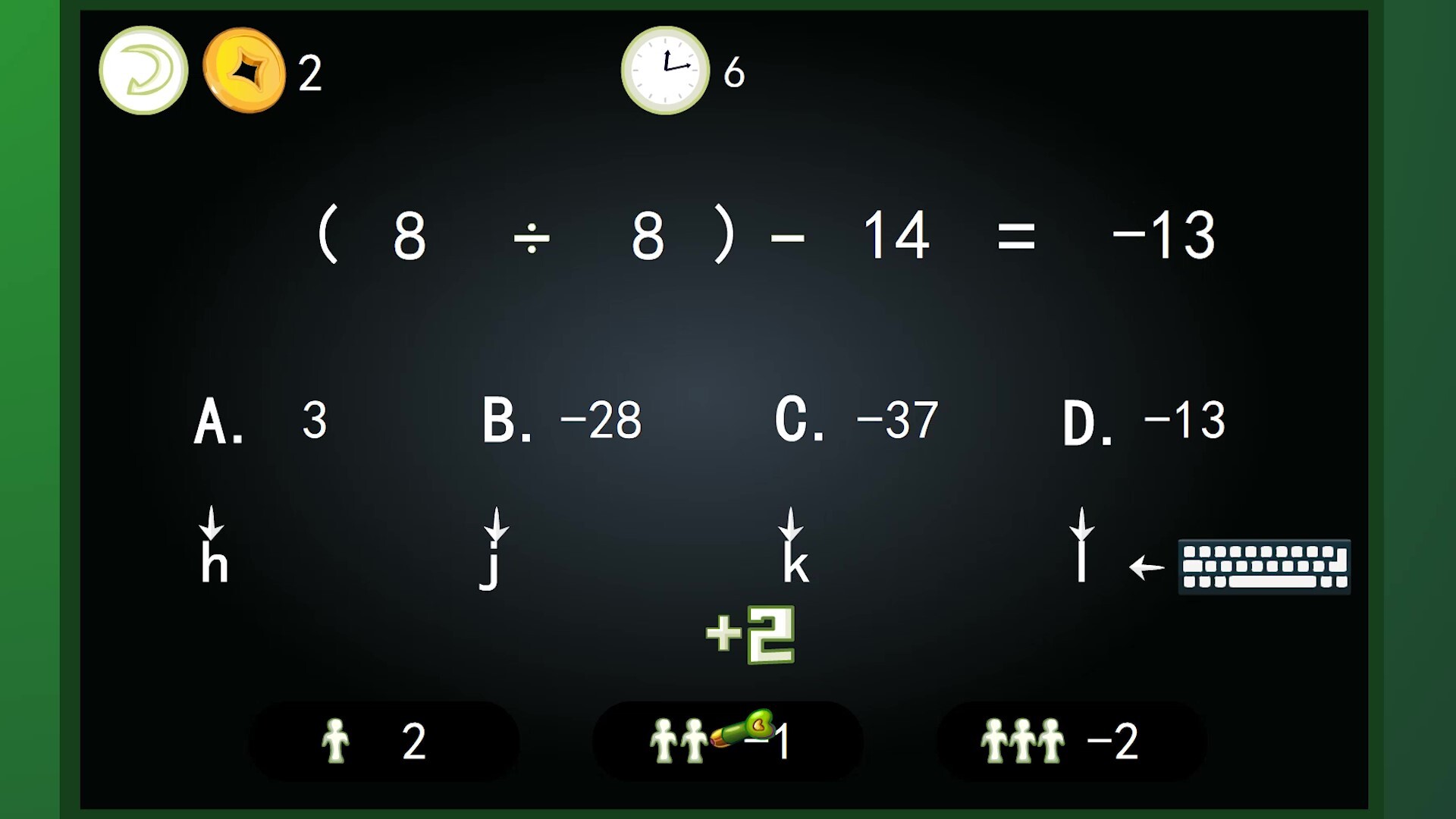
The core gameplay loop is straightforward and immediately understandable. Players are presented with a continuous stream of randomly generated math questions covering fundamental operations such as addition, subtraction, multiplication, division, and modulus. Each problem offers four multiple-choice answers, and players must select the correct one as quickly as possible. Sessions are bound by a strict time limit, creating a sense of urgency that pushes players to balance speed against accuracy. This structure makes the game feel closer to a game-show quiz or classroom competition than a traditional video game, reinforcing its educational focus.
A notable feature of Mathematician is its support for local multiplayer, allowing up to four players to compete simultaneously. This transforms what could be a solitary exercise into a social activity, encouraging friendly rivalry and shared learning. In group settings, the competitive aspect can motivate players to stay engaged longer than they might during solo practice, especially for younger audiences. The multiplayer format also adds replay value, as scores become benchmarks to beat rather than isolated results.
The game’s presentation is intentionally minimal. Visuals are clean and functional, prioritizing readability of numbers and answer choices over decorative elements. There are no characters, environments, or thematic flourishes to distract from the task at hand. This simplicity makes the game accessible across age groups and hardware configurations, but it also means the experience can feel sterile or monotonous for players accustomed to more dynamic or stylized educational games. Audio design is similarly restrained, offering basic feedback rather than immersive soundscapes.
Technically, Mathematician is extremely lightweight and efficient. It launches quickly, runs smoothly on modest systems, and requires virtually no setup or learning curve. Input options are intuitive, supporting both keyboard and mouse controls, which makes it easy to deploy in casual settings such as classrooms, homes, or informal learning environments. The random generation of questions ensures that no two sessions are exactly the same, helping prevent memorization from replacing actual skill development.
Where the game shows its limitations is in long-term engagement. There is no progression system, difficulty scaling beyond faster or more complex questions, or unlockable content to provide a sense of growth over time. Once players are comfortable with the core mechanics, the experience remains largely unchanged. For some users, especially those focused purely on practice, this consistency is a strength. For others, it may lead to fatigue, as there are few incentives to return beyond improving raw performance.
Community presence around Mathematician is extremely small, reflecting its niche positioning. The lack of reviews and active discussion suggests that the game is not designed to appeal to a broad Steam audience, but rather to a specific group seeking a focused educational tool. This low visibility also means there is little external feedback shaping its evolution, reinforcing the impression of a self-contained, utility-driven project.
Ultimately, Mathematician succeeds or fails based entirely on player expectations. As a traditional game, it offers little depth, variety, or emotional engagement. As an educational quiz tool framed as a game, however, it is clear, efficient, and functional. Players looking for a simple way to practice arithmetic under pressure—especially in a competitive group setting—will find it effective and easy to use. Those seeking richer gamification, narrative framing, or visual flair are likely to find it too barebones to sustain interest. In that sense, Mathematician stands as a focused example of design that prioritizes purpose over entertainment, delivering exactly what it promises and little more.
Rating: 6/10
The core gameplay loop is straightforward and immediately understandable. Players are presented with a continuous stream of randomly generated math questions covering fundamental operations such as addition, subtraction, multiplication, division, and modulus. Each problem offers four multiple-choice answers, and players must select the correct one as quickly as possible. Sessions are bound by a strict time limit, creating a sense of urgency that pushes players to balance speed against accuracy. This structure makes the game feel closer to a game-show quiz or classroom competition than a traditional video game, reinforcing its educational focus.
A notable feature of Mathematician is its support for local multiplayer, allowing up to four players to compete simultaneously. This transforms what could be a solitary exercise into a social activity, encouraging friendly rivalry and shared learning. In group settings, the competitive aspect can motivate players to stay engaged longer than they might during solo practice, especially for younger audiences. The multiplayer format also adds replay value, as scores become benchmarks to beat rather than isolated results.
The game’s presentation is intentionally minimal. Visuals are clean and functional, prioritizing readability of numbers and answer choices over decorative elements. There are no characters, environments, or thematic flourishes to distract from the task at hand. This simplicity makes the game accessible across age groups and hardware configurations, but it also means the experience can feel sterile or monotonous for players accustomed to more dynamic or stylized educational games. Audio design is similarly restrained, offering basic feedback rather than immersive soundscapes.
Technically, Mathematician is extremely lightweight and efficient. It launches quickly, runs smoothly on modest systems, and requires virtually no setup or learning curve. Input options are intuitive, supporting both keyboard and mouse controls, which makes it easy to deploy in casual settings such as classrooms, homes, or informal learning environments. The random generation of questions ensures that no two sessions are exactly the same, helping prevent memorization from replacing actual skill development.
Where the game shows its limitations is in long-term engagement. There is no progression system, difficulty scaling beyond faster or more complex questions, or unlockable content to provide a sense of growth over time. Once players are comfortable with the core mechanics, the experience remains largely unchanged. For some users, especially those focused purely on practice, this consistency is a strength. For others, it may lead to fatigue, as there are few incentives to return beyond improving raw performance.
Community presence around Mathematician is extremely small, reflecting its niche positioning. The lack of reviews and active discussion suggests that the game is not designed to appeal to a broad Steam audience, but rather to a specific group seeking a focused educational tool. This low visibility also means there is little external feedback shaping its evolution, reinforcing the impression of a self-contained, utility-driven project.
Ultimately, Mathematician succeeds or fails based entirely on player expectations. As a traditional game, it offers little depth, variety, or emotional engagement. As an educational quiz tool framed as a game, however, it is clear, efficient, and functional. Players looking for a simple way to practice arithmetic under pressure—especially in a competitive group setting—will find it effective and easy to use. Those seeking richer gamification, narrative framing, or visual flair are likely to find it too barebones to sustain interest. In that sense, Mathematician stands as a focused example of design that prioritizes purpose over entertainment, delivering exactly what it promises and little more.
Rating: 6/10
2 found helpful
Steam ↗