Back to rankings
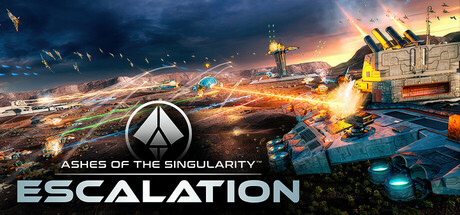
Ashes of the Singularity: Escalation

Ashes of the Singularity: Escalation

by Unknown

★ 74%
Price $29.99
Avg Players 27
Reviews 4,937
Released Nov 10, 2016
Base BuildingIncrementalMilitaryModdable
View on Steam ↗

What players are saying

▲ Recommended 5 hrs
Ashes of the Singularity: Escalation is something of a pleasant surprise in this day and age. For the past ten years or so, the RTS genre has (mostly) been about speeding things up. Developers would make RTS games smaller in scale, faster, and with more and more emphasis on aggressive play at the expense of defensive play. This makes sense in a competitive/e-sport/twitch streaming context where "turtling" players are (apparently) not interesting to watch. Those of us who got our RTS start with Dune II, the older Command and Conquer's, Warcraft and StarCraft (pre-competitive/e-sport) remember when RTS's almost always allowed for players to play how they like. The push for online PvP was simply not a big thing so games were balanced around and mechanically geared for more "casual" play against AI or very casual play over a dial-up modem or the like.

Where Ashes of the Singularity: Escalation really sets itself apart is in its willingness to let the player play how they like. It rewards both aggressive and defensive play and never, ever seems to push you in one way or another. Whereas other RTS's might restrict or even not include the building of defensive structures, Ashes does no such thing. It lets you reinforce any portion of the map that you wish and to whatever level you want. This may seem like a bad thing but in this day and age, it is a unique and almost precious quality. Additionally, it places more emphasis on your standard units. This game has no "hero units" per se and instead relies on the building of small, medium, and dreadnought sized vehicles that are all very capable if used properly. You will find yourself using groups of eight or ten small frigates to rush ahead and destroy neutral "creeps" that guard resource points while using larger frigate and cruiser combination forces for backup. All the while, you can use massive forces composed of all types to assault other enemy fleets and attack their bases and defenses.

In the last game I played, I had used smaller forces to slowly take territory while construction units followed close behind and built strong mixed defenses in every point. By the end, I had the entire map covered in defensive turrets and the enemy was bottled up and could not move. Eventually, I sent in a very large force to destroy them outright. It was satisfying and the kind of thing that I have not been able to really do since the old Command and Conquer games (which had no limit on units or defensive structures).

There are some negatives as well.

The first problem is the factions. The humans and the Substrate look different but they don't play exceptionally different. I was hoping on a more asymmetric setup but both sides play very, very similar and even feel very similar. This is not a deal-breaker but it is something that kinda holds this game back a bit. Perhaps it would have been a bit better if there were another, more wildly different faction to provide some constrast but that does not look like it would be in the cards at this point.

The next issue is the sounds. The vehicle idle and movement sounds are not really all that great. These days, you expect some fairly dynamic audio with lots of low end power and some really interesting little details but this game is a bit flat in that regard. Not a huge deal but something that sticks out a bit for me.

The last issue is the maps. They are generally fine but they sometimes feel a bit overly pathed. This does make for solid defensive play (since you have somewhat predictable routes) but on a long game, it can be a bit of a chore to go along a straight line from resource point to resource point. It generally is easy to get over if there is a lot of action in a match but you may notice it from time to time.

Overall, if you are looking for a RTS that does not feel like it is made only for the competitive/e-sport/twitch stream crowd and instead embraces older, less competitive play styles, this game is for you. It just lets you play and enjoy yourself without feeling arbitrarily limited or overly balanced to the point of being boring.
374 found helpful Steam ↗
▲ Recommended 51 hrs
Ashes of the Singularity is an excellent, if odd game. It borrows heavily and deliberately from many of the most successful Real-Time Strategy games of all time (complete with developer diaries that offer introspective analysis of old games that provided inspiration, and how their features and problem-solving was integrated, refreshed, and updated for Ashes).

From a mechanical standpoint, the game is rock solid. It plays like a smoother, streamlined Supreme Commander, with eloquent nods to several other major RTS titles that helped shape Ashes' otherwise troubled childhood before the release of Escalation. You see, while I have come to enjoy the game immensely, it's strongest features and hooks are rooted in an idea - a type of game - that was popular ten or more years ago. Looking at my own gaming habits, I was more inclined to invest in longer-cycle games, like Supreme Commander, Dawn of War, and another Stardock sister title, Sins of a Solar Empire. Nowadays, I work long hours, and pursue several projects on the side which utterly fragment my free time. I'm hard-pressed to jump into any RTS, let alone one that demands a heavy time and mental commitment to complete. Ashes doesn't make it easy on itself either. Its most gratifying mechanics and strategies are coquettishly hidden under the more mundane layers of its RTS trappings. It's just a matter that you have to play enough to find and appreciate them.

Ashes is, ironically, totally flexible and capable enough to be enjoyed in shorter stints (something completely unexpected, and not at all why I bought the game), which is hard to realize when, on its cover, it seems like just another multi-million-billion unit shakedown simulator (back in the day, the box-art for any RTS would just show an utter ♥♥♥♥♥♥♥♥♥♥♥ of units blasting each other with technicolour lasers, because, like, that's what you do in RTS, right?) Unlike Supreme Commander, where short games leave you out of some of the most fun and dynamic aspects of their assymetrical factions, Ashes has unit and tech progression that follows a lower access curve. You will find more of the game (and strategy options) available much sooner in the game... provided you're willing to grasp its wider economic aspects with both hands.

Unlike Supreme Commander, which left the idea of "map control" very much up to players shaping their own chokepoints and priorities, Ashes focuses heavily on map control, and by extension, resource control. This fundamental idea is baked into the very heart of the game, with its underlying story even demonstrating that the game itself is a reflection of humanity's rapacious desire to consume resources -- in this indeterminate future, humanity is on the verge of technological transendence, hinging on the accumulation of vast amounts of "Turinium," a type of computronium refined wholesale from the mass of entire planets. You play, in pretty much every scenario and game type, a transendent intelligence in a gold-rush against other players, and your success will hinge on how quickly you can capture and exploit the map (later story scenarios got entertainingly creative both in their adherence to this doctrine, and also their departures from it -- I'm looking at you Roceda). The capture model seems inspired by Company of Heroes, though it differs in one creative way: In CoH, capturing and exploiting territory were one and the same. In Ashes, you must first capture territory, then invest in it with a plethora of mining equipment, point attachments, and quanta-fuelled upgrades in order to get the most out of your newly-gotten turf.

The side effect of this system is that, by the mechanic and the map design, it becomes very apparent on the map where the important things are, even at a glance. You don't have to think too much about what bottlenecks you need to fortify, and where you need to invest your might. It almost seems too easy, until you realize that there's an entire web of strategy beneath the surface that will completely up-end any notion you have of being in control of the game.

Alongside the material resources you harvest from the map, you also must generate a tertiary, immaterial resource throughout the game, called Quanta. Without getting into the phlebotinum explanation of what it is, I'll skip to what it does for you. At its basic and most mundane, Quanta needs to be expended to upgrade your unit limit; a number representing your cognitive ability to manage the mental connection to your force of semi-autonomous robots. From there, it gets weird. You can invest Quanta to upgrade your units, a la Starcraft, increasing their health and damage by a scaling percentage. You can also toughen your structures, or make a big investment to substantially increase the HP of your HQ (which is wise, because if it dies, you lose). There is no maximum number of times that you can upgrade your stuff, it's only gated by the doubling of costs every time they're used. This lack of a hard cap gives the game an air of infinite scaling, but I've actually rarely seen it employed to significantly game-altering degrees. Probably the crowd I run with. Anyway.

At the top shelf, quanta gets really weird and cool (and starts to run totally contrary to conventional RTS wisdom). You can expend increasingly huge volumes of Quanta to literally materialize small strike teams behind enemy lines. You can call down immense orbital strikes, place emergency turrets, provide repairs, or jam your enemy's orbital abilities, all by expending Quanta. What does this mean for you, the player? It means a canny opponent can force you into over-extending your hand. By being too greedy, and trying to take too much, you open yourself to cunning plays. Building up defences at each control point is expensive, and often simply taking the point and building a few extractors won't yield a significant-enough return to justify a hardened defence. Investing also takes time, such that blitzing an enemy makes it easier for them to find a weakness and strike while your units are overextended. This degree of risk often forces players to think long and hard about their offensive goals, and whether they're willing to turn around to hold their gains. It also completely upends traditional game logic about how map control and resource production are supposed to directly translate into advantage.

This opens an enormous amount of strategic options, and in the few games I've played online, there has never been an "orthodox" approach to victory. While some players feel at home and excel in the early-game land grab, others will take more cautious approaches, laser-honing on critical objectives and choke points, building up layers of reinforcing defences, and never committing the entirety of their mobile force. Some may not like the degree of uncertainty that Ashes offers -- Starcraft, for example, hammered home the Economy = Victory idea. Ashes still holds economy at the core of its mechanics, but it in my opinion, does an exquisite job of balancing the economic considerations with proper emergent strategic concerns, as an RTS emulating a war should.

Campaign-wise, the game shows the limitations of the studio's funding and reach. While the characters are fully voiced for most of the missions, its clear that this game wasn't a big-budget, AAA imbroglio. The characters are likeable enough, and the story is practical science-fiction so hard as to be almost granite. Some might get turned off the low-budget production, but it's there where it counts, and offers unexpected food for thought.

TL;DR: A deliberate and well-polished love letter to RTSs of the past demonstrates a lot of depth and thought, though some digging is required to appreciate it. Initially appearing as a massive, time-consuming RTS, Ashes of the Singularity: Escalation shows surprising energy and mobility in short games and a mind-boggling capacity for actual, bona fide strategy throughout its experience.
181 found helpful Steam ↗
▲ Recommended 32 hrs
TLDR:

+ good AI
+ beautiful graphics
+ large armies
+ not as twitchy as StarCraft
+ good skirmish customization
+ viable defenses
+ good but not exceptional SP campaign
+ good amount of maps

- beefy hardware needed
- difficult to distinguish units
- UI / usability not quite where SC is (yet!)

You might like it if you:
+ like Supreme Commander
+ prefer a slower approach to RTSes
+ like comp stomping alone or with friends
+ like thousands of units on the screen at the same time.

You better skip it if you:
- like StarCraft
- don't like the SciFi setting
- buy the game for its narrative / SP campaign
- have a potato for a PC to run this on.

It has been said before, but Ashes is quite the spiritual successor to Supreme Commander. The focus is more on the strategic side, rather than the hectic button mashing that is found in StarCraft-like games. Armies move quite slowly, defenses are viable and unit abilities are "centralised" in "orbital" abilities. Although the game offers a campaign mode and various scenarios, the main focus is on skirmish maps. These skimishes offer a vast amount of options to adjust the rules to your liking (like no air units, defensive bonuses etc.). You can win games by eliminating the enemies HQ or by accumulating victory points by holding special locations. I could swear the AI was adapting its army composition to counter my armies and defenses.
The developer is known for supporting their games for a very long time and when you take a look at their design documents, you find that there is still stuff planned in the future:
- more tech tiers,
- naval units,
- overall usability improvements
and more.

On the negative side, I find the different units and buildings quite difficult to distinguish. While most of it is due to the fact, that its grounded in science fiction (its not like in Company of Heroes, where a thing that looks like an MG nest is indeed an MG nest and behaves as you think it would), its not clear what a building does just by looking at it. But as times goes by you get used to it.
Although you can queue up multiple buildings and units (even on repeatable queues), or order reinforcements directly from the selected army, the overall usability could still be improved. Its not obvious that building blueprints and waypoints can be moved for excample and the different levels of icons shown when zooming out could be better adjusted.
Its all rather nit picky though. I am sure that Stardock will keep improving the game!
162 found helpful Steam ↗

Reviews are by Steam users, hosted on Steam.

Latest updates

Ashes of the Singularity II Demo Available Now on Steam Next Fest

78 days ago
Free massive-scale RTS demo includes two factions, 8-player multiplayer, three maps and full skirmish modePlay the demoStardock Entertainment and Oxide Games announced today that a free demo for Ashes of the Singularity II, the highly anticipated sequel to the massive-scale RTS, is available now as part of Steam Next Fest. The demo will feature two factions, 8-player multiplayer, and full skirmish mode. Ashes of the Singularity II is an RTS where you command thousands of units across continent-sized maps, fighting a war for control of the solar system.The Ashes of the Singularity II demo is set in a near future where the United Earth Forces represent humanity's last stand against the Post-Human Coalition. Each faction commands unique units, with the advanced Post-Humans fielding mechs and tanks with energy weapons vs. the UEF’s flesh and blood army. Players will battle it out to determine the winner. "We built Ashes of the Singularity II for people who want to think like a general, not compete in a clicking contest," said Brad Wardell, CEO of Stardock Entertainment. "Your strategy should decide the battle, not your APM. Next Fest is a chance for players to find out if that's the kind of RTS they've been looking for." Demo Features Available:Two playable factions: United Earth Forces and Post-Human CoalitionSkirmish mode against AIFull multiplayer for up to 8 players (with AI backfill as an option)Three maps: Small (2-4 players), Medium (2-6 players), Large (2-8 players)Arctic and Desert EnvironmentsDay and Night scenesSave and load functionalityDeveloped by Oxide Games, renowned for their technological innovation, and published by Stardock Entertainment, the company behind the acclaimed Sins of a Solar Empire series, Ashes of the Singularity II promises to elevate the RTS genre once again.Players eager to join the fight are encouraged to play the free demo during the Steam Next Fest and wishlist Ashes of the Singularity II.Engage directly with the development team a...

First Gameplay Trailer Released for Ashes of the Singularity II

160 days ago
Check out the first gameplay trailer for Ashes of the Singularity IICommand vast armies fighting for control of entire worlds in this massive-scale RTS gameAdd to your Steam wishlist nowThe first gameplay trailer for Ashes of the Singularity II is now live, offering a closer look at the game’s current visuals and gameplay mechanics that fans have been eager to see. This trailer provides a first look into the strategic depth and immersive experience that the sequel promises to deliver.In conjunction with the trailer release, we’ve also published our first set of FAQs. These address common questions about gameplay mechanics, story elements, and system requirements, providing players with essential information as they prepare for the game’s launch.For further insights, be sure to check out PC Gamer's article, which delves into key features and offers their perspective on what to expect from Ashes of the Singularity II.Stay tuned for more updates as we continue to share information leading up to the release.

v3.31 Now Available

278 days ago
v3.31 Update for Ashes of the Singularity: Escalation Players can enjoy a new update that brings a new map and gameplay improvementsThe latest update introduces a new map titled "Luna," designed for four players. This map features a central critical point, along with various optional paths that players can utilize to claim and hold territory on the Moon's surface.In addition to the new map, the update includes several quality-of-life enhancements. T1 units have been made slightly larger, which should help with visibility and selection during gameplay. The matchmaking system has also been improved, aiming to reduce wait times for ranked matches and enhance the overall multiplayer experience.- - - -Ashes of the Singularity II: Wishlist Now Additionally, we announced the newest installment in the series, Ashes of the Singularity II.  In this massive real-time strategy game, command vast armies fighting for control of entire worlds. Control the forces of Earth, the mechanical AI Substrate, or the enigmatic Post-Human Coalition as you battle across the solar system in single player, cooperative multiplayer, or completive multiplayer. After the technological singularity, only one form of life will survive.Add to your Steam Wishlist- - - -v3.31 Ashes of the Singularity: Escalation Screenshotsv3.31 Changelog:New Map: Luna This new map supports four players with a critical point in the center as well as various optional paths to claim and hold territory. Takes place on the cold, hard surface of the Moon.Units T1 Units made slightly larger to make them easier to see and select.Multiplayer Improved the matchmaking system to find ranked matches faster.

Posts come from Steam's official announcements feed.

Comments

Log in to leave a comment.

Loading comments…