This is a faithful recreation of a Soviet-era arcade basketball machine where you aim and shoot from designated pressure points to score against opponents. The game offers straightforward arcade action wrapped in nostalgic presentation, making it ideal for retro enthusiasts or anyone curious about gaming from that era.
About this game
Computer simulation of one of the most recognizable arcade machines of that time.
Players, last 30 days
Peak 0 · Low 0
Daily peak concurrent players, sampled once a night from Steam.
What players are saying
▲ Recommended1 hrs
A simulator of an old soviet era basketball arcade game. You need to shoot from pressure points to hit the enemy basket and earn points.
Its fairly straightforward and simple. If you want to try something retro or you're from that era and want to reminisce, then you're probably the target audience.
Для русскоязычных товарищей.
Тут всё просто, симулятор советской аркадной баскетбольной машины. Прикольно для тех, кто хочет повспоминать прошлое или посмотреть как игры работали в то время.
A little simulator of a game that might not be that well-known.
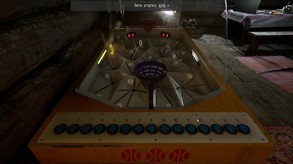
The presentation is wonderful. You begin in a small wooden hut with some food cooking on a stove, a bed in the corner, a laptop on the table, and the main attraction, an arcade game. You can move around the room, but you can't interact with anything.
Game is started by pressing the ESC button, which opens the laptop. You can adjust a few setting or go straight into the game by choosing one of three difficulties. Competing against AI is fair because it allows you to react and time your shot. The difficulty just affects the computer’s precision.
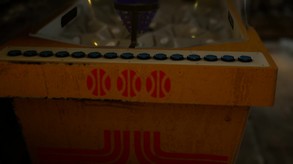
The game itself is very simple. You have a board with 15 buttons that correspond to 15 holes on the playing field. The ball is tossed around and eventually lands in one of the holes. You must press the appropriate button and attempt to flip the ball into the opponent's basket.
The trick is in how long you keep pressing the button. This is shown as a circle that gradually fills up. Every spot may have the perfect shot; you simply need to discover it. Because the ball lands on particular holes significantly more often, it's easy to remember only four or five holes.





![[2.0.3] MEH 🖥️](https://shared.akamai.steamstatic.com/store_item_assets/steam/apps/3065090/header.jpg?t=1725823579)