▲ Recommended
10 hrs
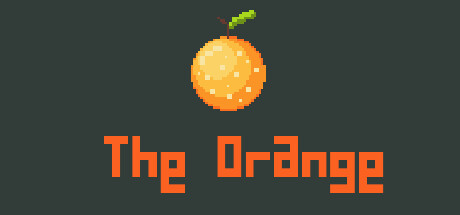
The Orange by Klayser is an unusual indie title that embraces simplicity and abstraction in a way that immediately sets it apart from more conventional releases on Steam. Rather than presenting a clear-cut story or structured objectives, the game revolves around a singular concept: the presence of a mysterious orange that seems to carry symbolic weight far beyond its ordinary appearance. From the moment the experience begins, it becomes evident that the game is less concerned with traditional gameplay systems and more focused on creating a contemplative, almost meditative interaction between the player and its minimalistic world.
Gameplay in The Orange is intentionally sparse, centering on interaction and observation rather than challenge or progression in the typical sense. Players are encouraged to experiment with the environment and the titular object, discovering how subtle actions can trigger changes or lead to unexpected sequences. This design approach fosters a sense of curiosity, but it also requires patience and a willingness to engage without explicit direction. There are no tutorials or guiding systems to hold the player’s hand, which can make the experience feel intriguing for some and aimless for others. The lack of conventional mechanics such as combat, puzzles with clear solutions, or structured levels reinforces the idea that this is more of an exploratory piece than a traditional game.
Visually, The Orange leans into a surreal and minimalist aesthetic that complements its abstract themes. The environments are simple but carry a quiet, sometimes eerie atmosphere, enhanced by subtle shifts in lighting and tone. These visual cues play an important role in conveying meaning, as the game rarely relies on direct narrative exposition. Instead, it communicates through mood and symbolism, leaving players to interpret the significance of what they see and experience. This ambiguity can be one of the game’s strongest qualities, as it allows for personal interpretation, though it may also leave some players feeling disconnected if they prefer clearer storytelling.
The pacing of the game reflects its experimental nature. It is relatively short and does not attempt to extend its runtime with unnecessary content or repetitive mechanics. Progression is tied to discovery, and once the player has uncovered the various interactions and outcomes, there is little incentive to revisit the experience unless one is interested in analyzing its themes more deeply. This brevity works in the game’s favor to some extent, as it prevents the concept from becoming overstretched, but it also highlights the limited scope of what is on offer.
From a technical standpoint, The Orange is straightforward and accessible. Its minimal design ensures that it runs smoothly on most systems, and its controls are simple enough for anyone to pick up quickly. However, this same simplicity contributes to a feeling that the game lacks depth in terms of systems or variety. It relies almost entirely on its core idea and atmosphere to engage the player, which can make the experience feel somewhat thin if that idea does not resonate.
Overall, The Orange is best understood as an experimental interactive piece rather than a fully fleshed-out game. It succeeds in creating a distinctive mood and encourages introspection through its abstract design, but it does so at the cost of traditional engagement and replay value. Players who enjoy unconventional indie projects that prioritize concept and interpretation over mechanics may find it worthwhile, while those looking for a more structured or content-rich experience may come away underwhelmed. Its appeal is undeniably niche, but within that niche, it offers a quietly memorable experience.
Rating: 6/10