▲ Recommended
1 hrs
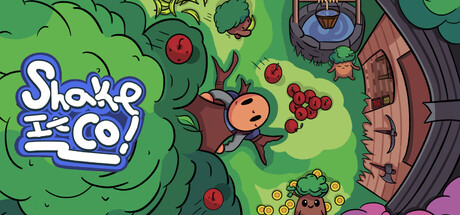
Like the game’s title suggests, what you’ll be doing is shaking a tree in your garden. How you do this depends on your preference. You can click on the tree, swipe across it, or simply hold the button for a continuous shake. The first two methods require you to repeatedly perform the same action, which can quickly become tiring on your hand.
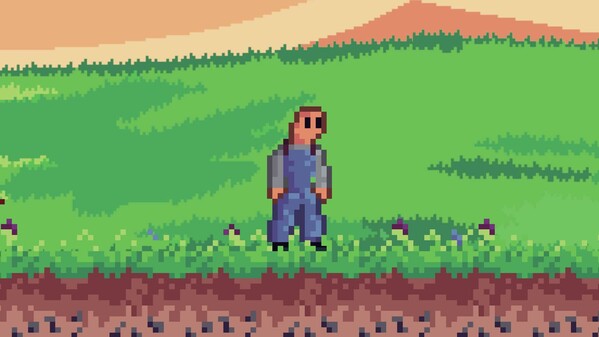
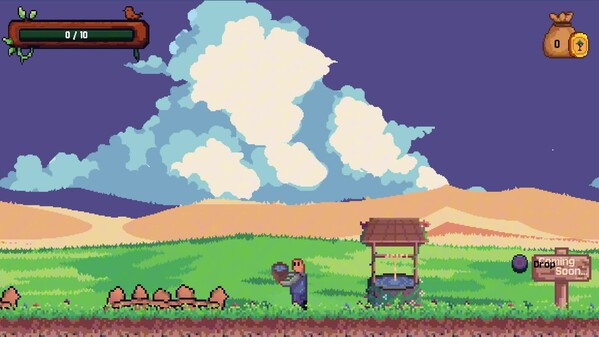
You start with a garden featuring a large tree in the middle and a little character you can move around. Walk up to the tree and shake it to make apples fall to the ground, then collect them and take them to the mailbox to sell them for money. Since you can only carry 10 apples at a time, you’ll quickly get used to walking back and forth between the tree and the mailbox. You can continue doing this until nightfall, or take a nap if you don’t want to wait for the day to end naturally.
Napping ends the day and brings you to the game’s most important mechanic: items and upgrades. These are divided into several categories. The first is the market, where you can invest in tools that make things easier. There are shoes for faster movement, a backpack that increases your carrying capacity, a magnet that lets you collect fruit from a distance, and a few others. Most tools can be purchased multiple times to improve their effectiveness, although each purchase comes at an increased cost.
Then there are skills, which change how various aspects of the game work. You start with only four, but more become available as you purchase existing upgrades, creating something similar to an incremental upgrade tree. These skills include cheaper tool prices, higher selling payouts, a helper that automatically collects fruit for you, and even auto-sell feature so you don’t have to waste time walking to a mailbox.
One particularly useful upgrade introduces a mini game during tree shaking. It requires you to hit a moving arrow while it passes through a small green area. Successfully hitting it 10 times makes the tree drop a large amount of fruit, but missing even once ends the attempt, meaning you have to wait for another opportunity to appear at random. You also have a very short window to hit all the targets. This upgrade quickly becomes something you rely on to make money faster, but unfortunately, the mini game appears as a small circle that is obstructed by other elements on the screen.
The final upgrade category is fruit. Although you start with apples, you can unlock various other types, including grapes, tomatoes, and strawberries. However, they follow a linear progression, with each new fruit costing significantly more to unlock. That’s not all, as every fruit also comes with six separate upgrades.
These upgrades include value, which determines how much the fruit sells for, a chance to produce valuable golden fruit, yield, which increases how much fruit drops at once, and looseness, which determines how many shakes are required before a fruit drops. You shake fruit one by one, with the type being randomly selected from the pool of everything you have unlocked. Because every fruit has its own looseness levels, you can end up getting something that takes a lot of shakes to drop while not selling for particularly much.
One thing you’ll notice fairly quickly is how aggressively the prices scale for almost everything you can buy. If an item can be purchased multiple times, the next level generally costs double the previous one. This can quickly become expensive when an item or upgrade has a lot of levels. The problem is especially noticeable with skills. One upgrade might start at 2,000, only for the next level to jump all the way to 70,000.
So, while the game has a simple gameplay loop that requires active play rather than idling, the high cost of upgrades eventually turns it into a grind. Shaking trees is relatively slow, and the new fruit don’t provide the kind of significant increase in selling price you would expect from their higher unlock costs. In fact, they can make things feel less rewarding because they require more shakes to drop without offering a proportionally better payout.
You start with a garden featuring a large tree in the middle and a little character you can move around. Walk up to the tree and shake it to make apples fall to the ground, then collect them and take them to the mailbox to sell them for money. Since you can only carry 10 apples at a time, you’ll quickly get used to walking back and forth between the tree and the mailbox. You can continue doing this until nightfall, or take a nap if you don’t want to wait for the day to end naturally.
Napping ends the day and brings you to the game’s most important mechanic: items and upgrades. These are divided into several categories. The first is the market, where you can invest in tools that make things easier. There are shoes for faster movement, a backpack that increases your carrying capacity, a magnet that lets you collect fruit from a distance, and a few others. Most tools can be purchased multiple times to improve their effectiveness, although each purchase comes at an increased cost.
Then there are skills, which change how various aspects of the game work. You start with only four, but more become available as you purchase existing upgrades, creating something similar to an incremental upgrade tree. These skills include cheaper tool prices, higher selling payouts, a helper that automatically collects fruit for you, and even auto-sell feature so you don’t have to waste time walking to a mailbox.
One particularly useful upgrade introduces a mini game during tree shaking. It requires you to hit a moving arrow while it passes through a small green area. Successfully hitting it 10 times makes the tree drop a large amount of fruit, but missing even once ends the attempt, meaning you have to wait for another opportunity to appear at random. You also have a very short window to hit all the targets. This upgrade quickly becomes something you rely on to make money faster, but unfortunately, the mini game appears as a small circle that is obstructed by other elements on the screen.
The final upgrade category is fruit. Although you start with apples, you can unlock various other types, including grapes, tomatoes, and strawberries. However, they follow a linear progression, with each new fruit costing significantly more to unlock. That’s not all, as every fruit also comes with six separate upgrades.
These upgrades include value, which determines how much the fruit sells for, a chance to produce valuable golden fruit, yield, which increases how much fruit drops at once, and looseness, which determines how many shakes are required before a fruit drops. You shake fruit one by one, with the type being randomly selected from the pool of everything you have unlocked. Because every fruit has its own looseness levels, you can end up getting something that takes a lot of shakes to drop while not selling for particularly much.
One thing you’ll notice fairly quickly is how aggressively the prices scale for almost everything you can buy. If an item can be purchased multiple times, the next level generally costs double the previous one. This can quickly become expensive when an item or upgrade has a lot of levels. The problem is especially noticeable with skills. One upgrade might start at 2,000, only for the next level to jump all the way to 70,000.
So, while the game has a simple gameplay loop that requires active play rather than idling, the high cost of upgrades eventually turns it into a grind. Shaking trees is relatively slow, and the new fruit don’t provide the kind of significant increase in selling price you would expect from their higher unlock costs. In fact, they can make things feel less rewarding because they require more shakes to drop without offering a proportionally better payout.
8 found helpful
Steam ↗