▲ Recommended
10 hrs
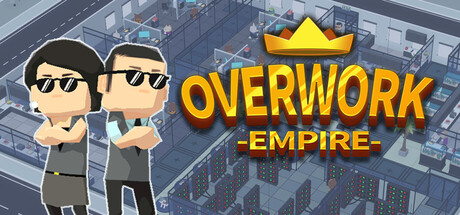
Overwork Empire is a business management simulation developed and published by YanBei that approaches corporate success from a far more cynical perspective than most games in the genre. Instead of portraying company growth as a rewarding entrepreneurial dream, it builds its identity around satire, workplace pressure, and the uncomfortable realities of profit-driven systems. By blending management simulation, card mechanics, and defensive strategy elements, the game creates an experience that feels unusual from the very beginning.
Players take control of a game development company and guide it through years of expansion, financial planning, and operational survival. Every decision influences the future of the business. Building departments, controlling expenses, hiring workers, and maintaining growth all become critical responsibilities. The game follows a long-term structure where preparation periods and production phases alternate, requiring players to think ahead instead of reacting only to immediate problems. Salaries, taxes, building costs, and company maintenance ensure that success demands careful planning rather than simple expansion.
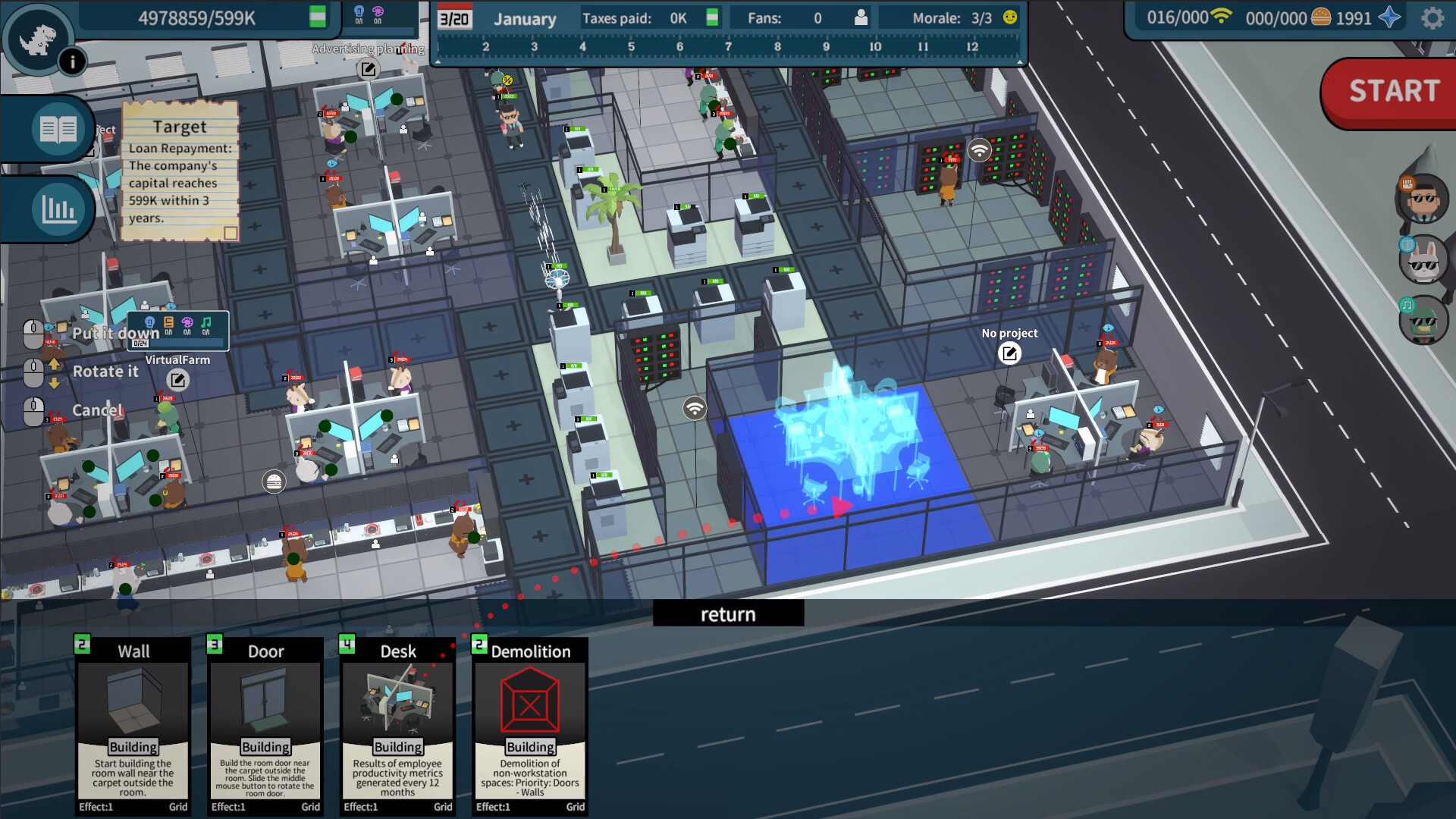
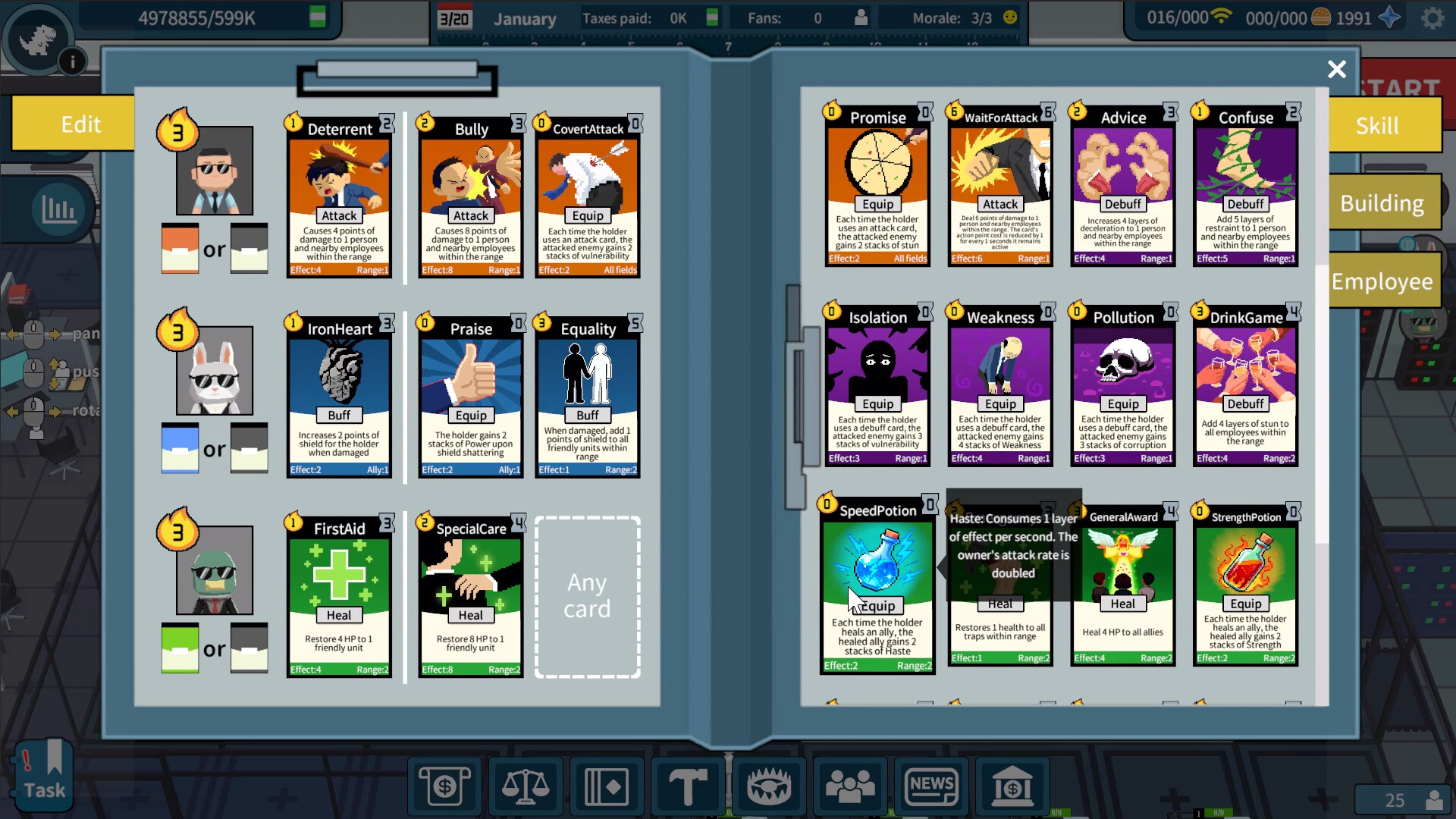
The management mechanics rely heavily on a card-driven system that shapes nearly every aspect of company operations. Construction cards allow players to create and improve facilities, recruitment cards bring new employees into the workforce, and management abilities influence productivity. The company itself is divided into multiple operational branches, including development teams, food support systems, and technical infrastructure, forcing players to think strategically about where resources should be allocated. Balancing departments becomes increasingly important as the organization grows larger and more demanding.
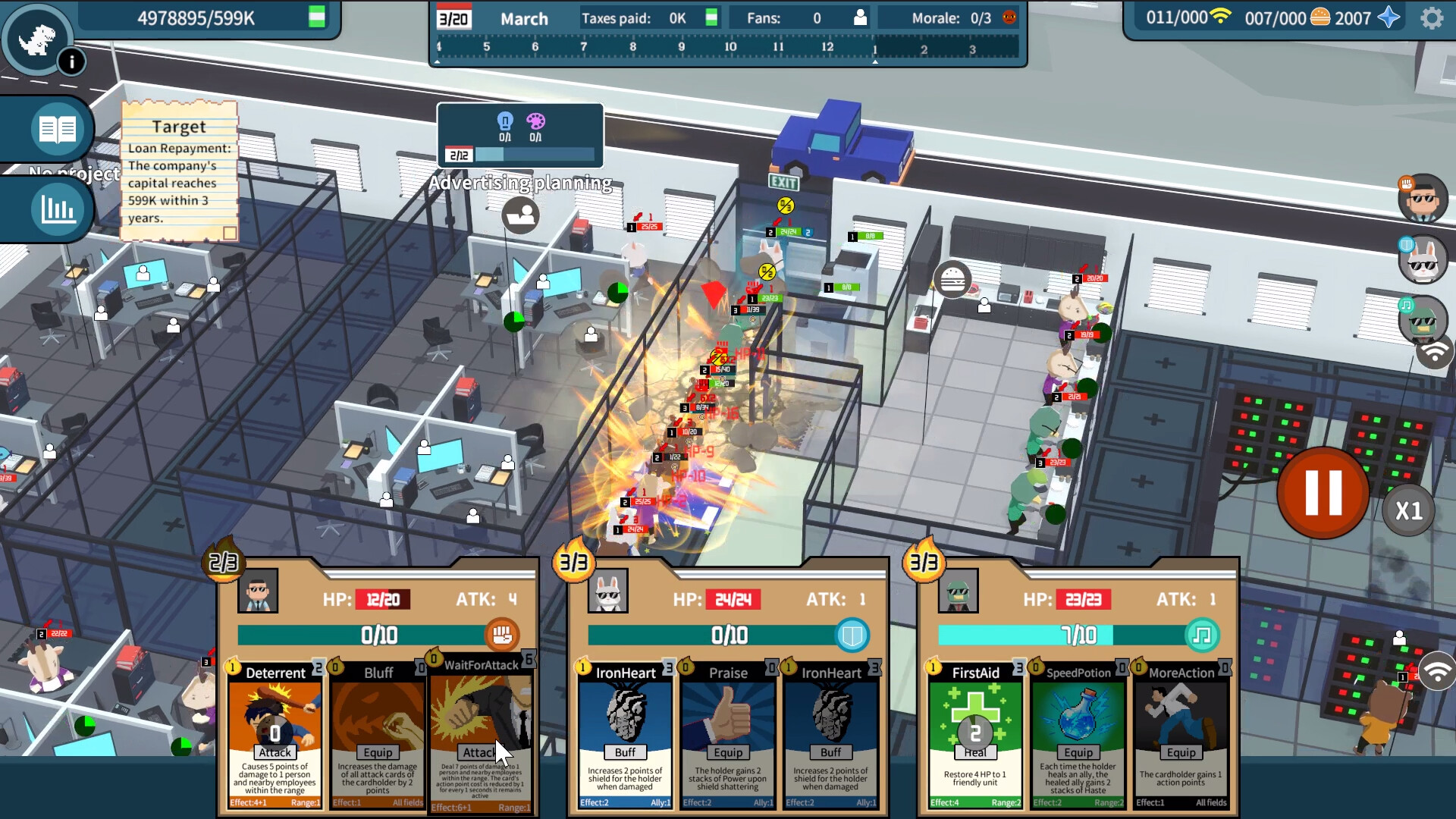
One of Overwork Empire's most distinctive ideas is how it handles worker exhaustion. Rather than treating employees as passive statistics, the game transforms burnout into an active gameplay problem. Overworked staff may attempt to escape the endless pressure of overtime, creating situations where management systems must intervene to keep productivity running. The concept is intentionally exaggerated for satire, turning corporate labor issues into gameplay mechanics that resemble defensive strategy systems. It creates a strange blend of humor and discomfort that separates the game from more conventional tycoon experiences.
The satirical tone becomes one of the game's strongest features. Modern workplace culture often celebrates efficiency, expansion, and relentless productivity, and Overwork Empire exaggerates those ideas until they become absurd. The result feels less like a traditional business simulator and more like a dark parody of corporate ambition. Players are encouraged to chase profits and growth while constantly confronting the consequences of pushing systems too hard. This gives the game a unique personality that lingers even after sessions end.
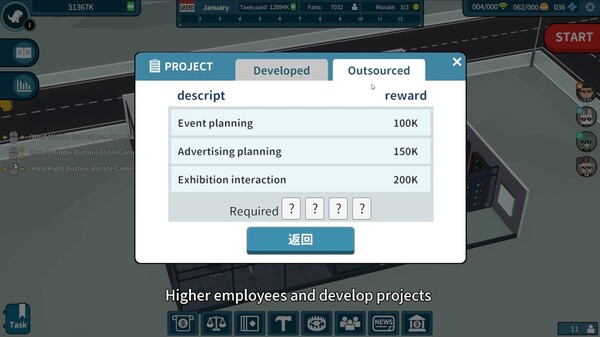
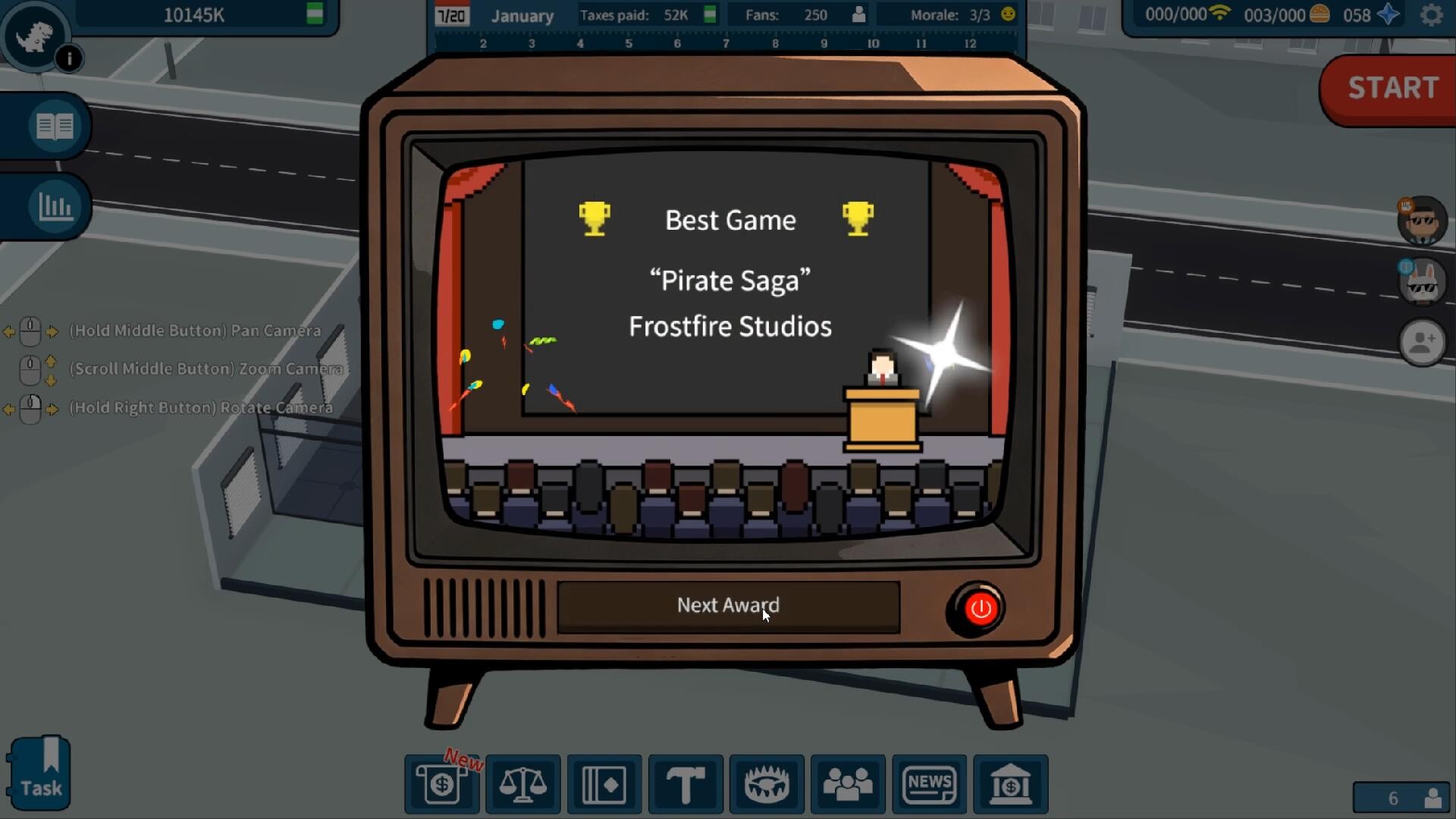
Progression also contributes meaningfully to the experience. Early stages emphasize contract work and external projects as players establish financial stability. Over time, opportunities emerge to build internal projects capable of generating stronger long-term success. Expanding beyond outsourced work creates a satisfying sense of advancement, giving players larger goals than simply surviving another business cycle. Awards and company recognition further reinforce progression while encouraging smarter long-term planning.
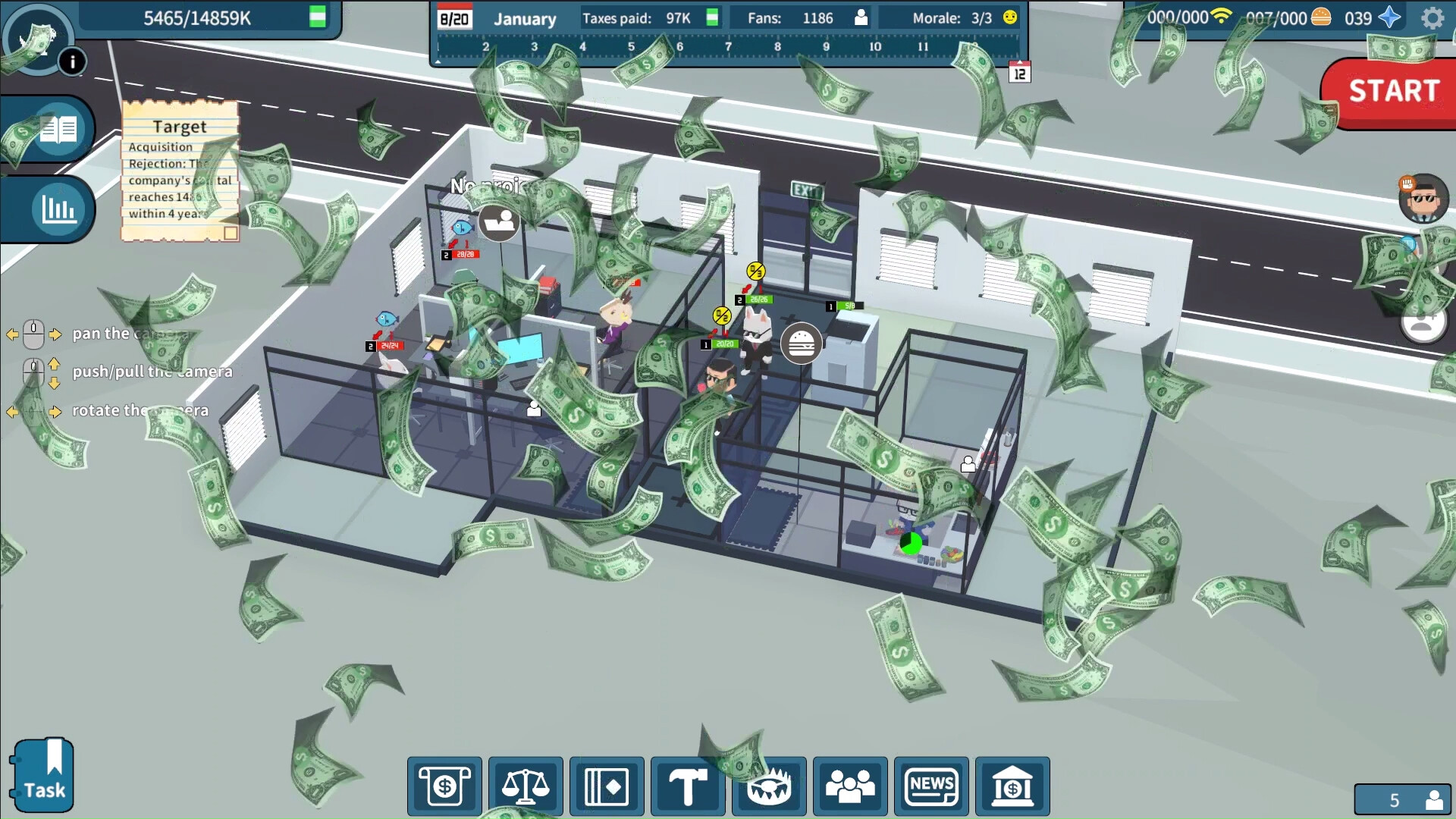
The visual design favors clarity over spectacle. Facilities, systems, and operational elements remain easy to read, which benefits a game centered heavily on resource management and efficiency. The presentation may not compete visually with larger-budget simulation titles, but it supports the gameplay effectively. The interface places emphasis on strategic information rather than visual excess, helping players focus on decision-making rather than presentation alone.
Overwork Empire also succeeds because of how confidently it commits to its unusual concept. Many management games pursue familiarity by following proven formulas, but YanBei embraces a more experimental direction. Combining business simulation systems with cards and defensive mechanics could easily have resulted in something unfocused, yet the structure largely supports the game's satirical goals. Every mechanic reinforces the larger theme of workplace pressure and corporate obsession.
The experience will not appeal to everyone. Players looking for a calm business-building simulator may find its darker humor and stressful mechanics less appealing. The satire can feel intentionally uncomfortable, and the management systems demand attention rather than passive play. However, players who enjoy unconventional strategy titles and simulation games that experiment with genre expectations may discover something refreshingly different.
Overwork Empire succeeds by transforming corporate growth into something more complicated than simple financial success. It presents management as both opportunity and criticism, blending strategic gameplay with commentary on work culture in ways few business simulators attempt. Its combination of planning systems, card mechanics, progression structure, and satirical storytelling creates an experience that stands apart within the indie management genre. While not every idea lands equally well, its originality and willingness to challenge familiar formulas make it memorable.
Rating: 7/10
Players take control of a game development company and guide it through years of expansion, financial planning, and operational survival. Every decision influences the future of the business. Building departments, controlling expenses, hiring workers, and maintaining growth all become critical responsibilities. The game follows a long-term structure where preparation periods and production phases alternate, requiring players to think ahead instead of reacting only to immediate problems. Salaries, taxes, building costs, and company maintenance ensure that success demands careful planning rather than simple expansion.
The management mechanics rely heavily on a card-driven system that shapes nearly every aspect of company operations. Construction cards allow players to create and improve facilities, recruitment cards bring new employees into the workforce, and management abilities influence productivity. The company itself is divided into multiple operational branches, including development teams, food support systems, and technical infrastructure, forcing players to think strategically about where resources should be allocated. Balancing departments becomes increasingly important as the organization grows larger and more demanding.
One of Overwork Empire's most distinctive ideas is how it handles worker exhaustion. Rather than treating employees as passive statistics, the game transforms burnout into an active gameplay problem. Overworked staff may attempt to escape the endless pressure of overtime, creating situations where management systems must intervene to keep productivity running. The concept is intentionally exaggerated for satire, turning corporate labor issues into gameplay mechanics that resemble defensive strategy systems. It creates a strange blend of humor and discomfort that separates the game from more conventional tycoon experiences.
The satirical tone becomes one of the game's strongest features. Modern workplace culture often celebrates efficiency, expansion, and relentless productivity, and Overwork Empire exaggerates those ideas until they become absurd. The result feels less like a traditional business simulator and more like a dark parody of corporate ambition. Players are encouraged to chase profits and growth while constantly confronting the consequences of pushing systems too hard. This gives the game a unique personality that lingers even after sessions end.
Progression also contributes meaningfully to the experience. Early stages emphasize contract work and external projects as players establish financial stability. Over time, opportunities emerge to build internal projects capable of generating stronger long-term success. Expanding beyond outsourced work creates a satisfying sense of advancement, giving players larger goals than simply surviving another business cycle. Awards and company recognition further reinforce progression while encouraging smarter long-term planning.
The visual design favors clarity over spectacle. Facilities, systems, and operational elements remain easy to read, which benefits a game centered heavily on resource management and efficiency. The presentation may not compete visually with larger-budget simulation titles, but it supports the gameplay effectively. The interface places emphasis on strategic information rather than visual excess, helping players focus on decision-making rather than presentation alone.
Overwork Empire also succeeds because of how confidently it commits to its unusual concept. Many management games pursue familiarity by following proven formulas, but YanBei embraces a more experimental direction. Combining business simulation systems with cards and defensive mechanics could easily have resulted in something unfocused, yet the structure largely supports the game's satirical goals. Every mechanic reinforces the larger theme of workplace pressure and corporate obsession.
The experience will not appeal to everyone. Players looking for a calm business-building simulator may find its darker humor and stressful mechanics less appealing. The satire can feel intentionally uncomfortable, and the management systems demand attention rather than passive play. However, players who enjoy unconventional strategy titles and simulation games that experiment with genre expectations may discover something refreshingly different.
Overwork Empire succeeds by transforming corporate growth into something more complicated than simple financial success. It presents management as both opportunity and criticism, blending strategic gameplay with commentary on work culture in ways few business simulators attempt. Its combination of planning systems, card mechanics, progression structure, and satirical storytelling creates an experience that stands apart within the indie management genre. While not every idea lands equally well, its originality and willingness to challenge familiar formulas make it memorable.
Rating: 7/10
0 found helpful
Steam ↗