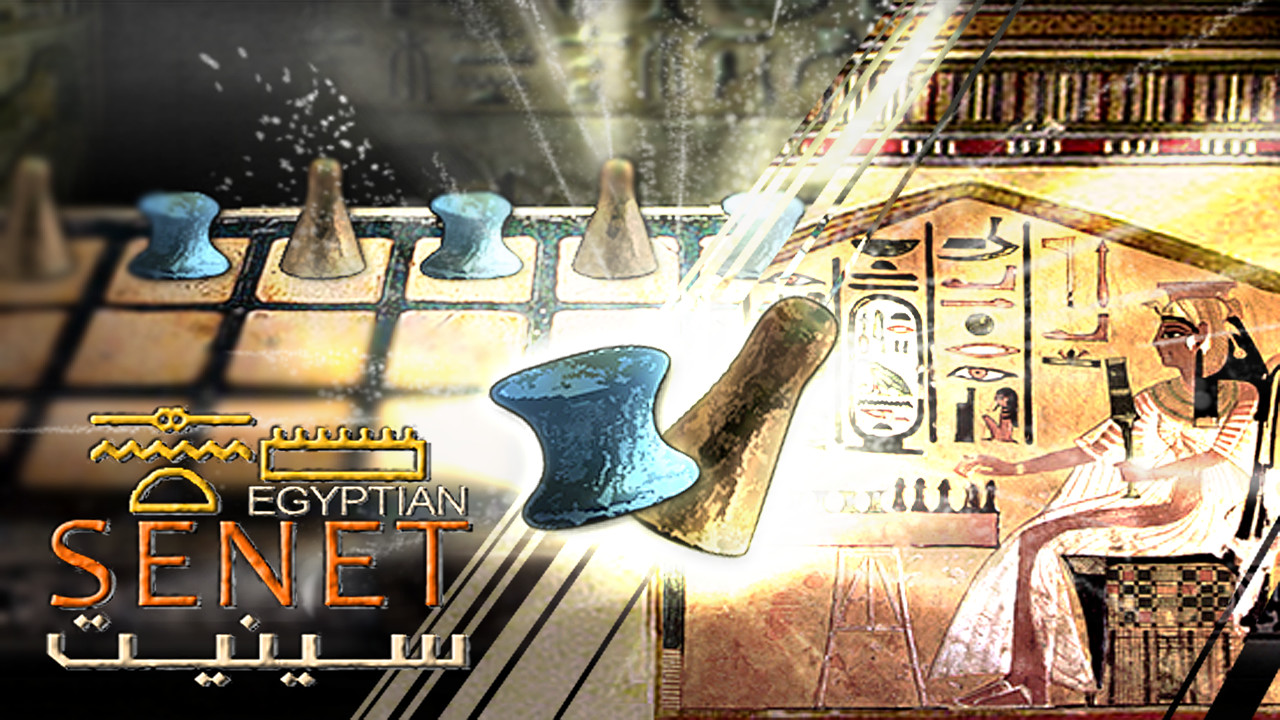
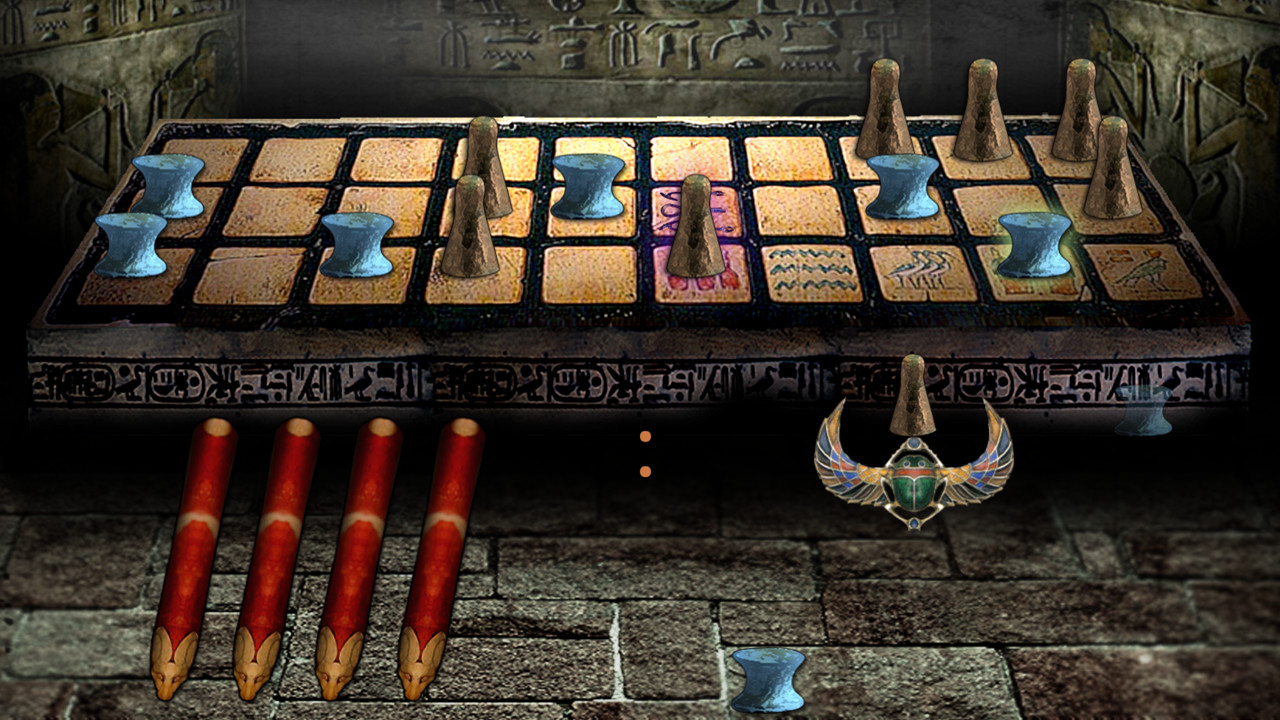
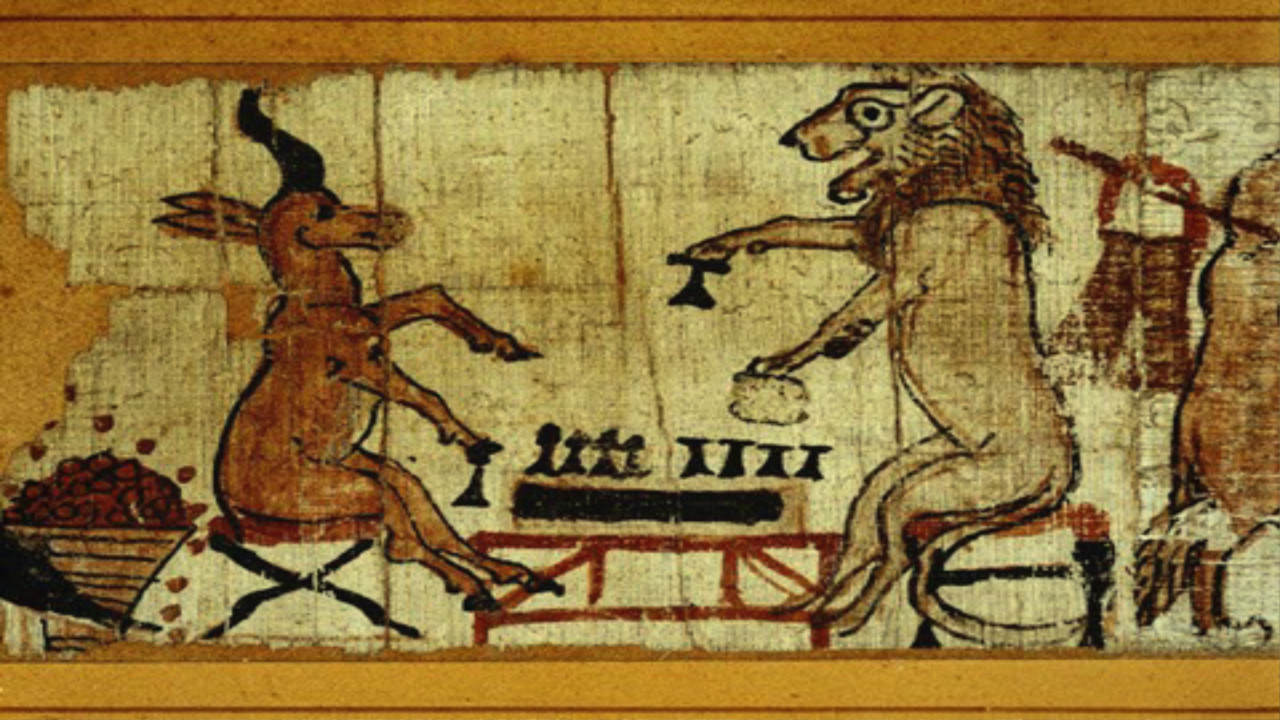
Senet is a board game for two players against AI or hotseat, like an easier version of backgammon. It was created by Egyptians in a tech park ("smart village") outside of Cairo, Egypt.
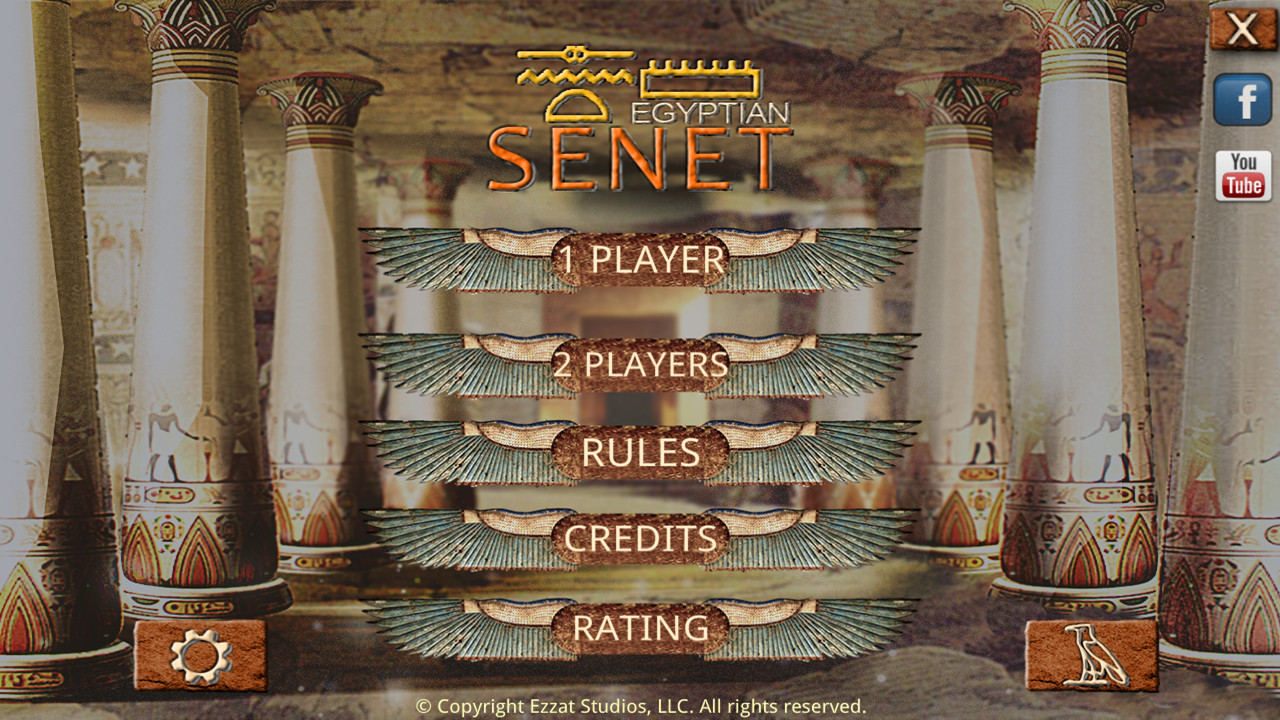
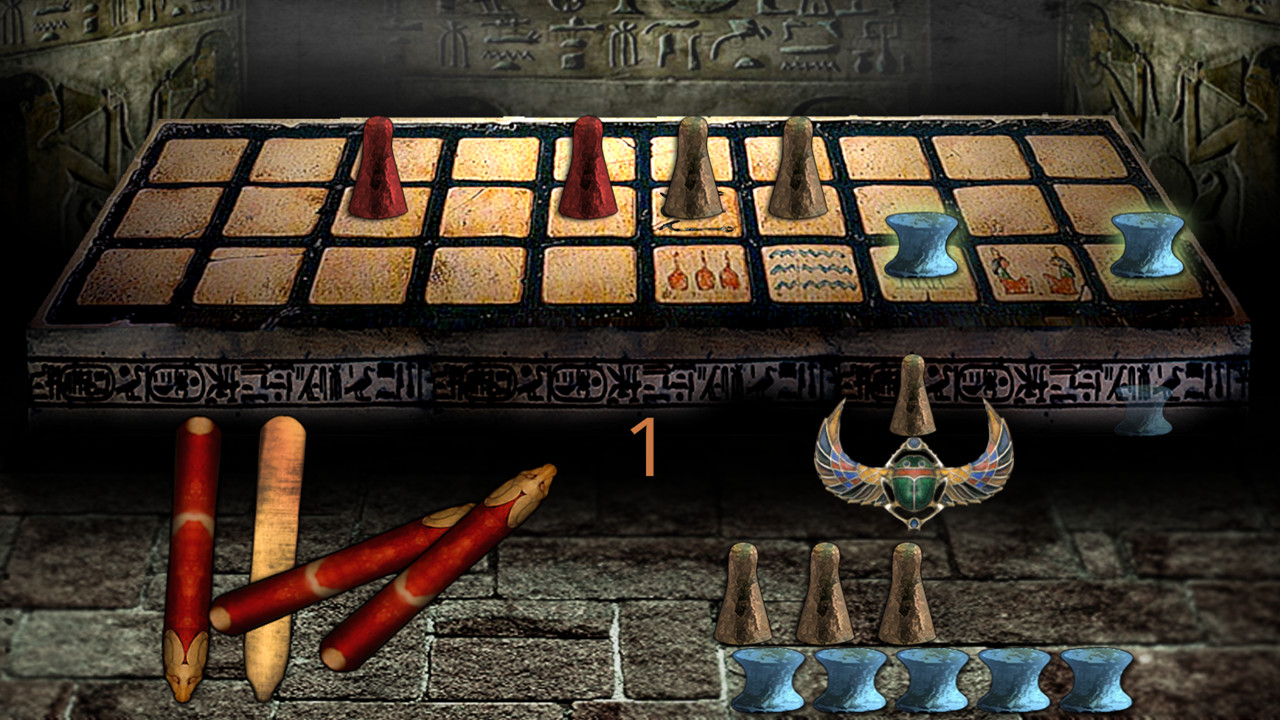
The second video on the store page shows some of the gameplay. The game is quite similar to backgammon, except you're playing in the same direction, and a blockade (sort of) is formed by two or more pawns in sequence - there's never more than one pawn on any space of the board. The game provides little backstory. It is a single player against AI (3 levels of difficulty) or hot-seat two-player gameplay. The game runs fine even on older computers.
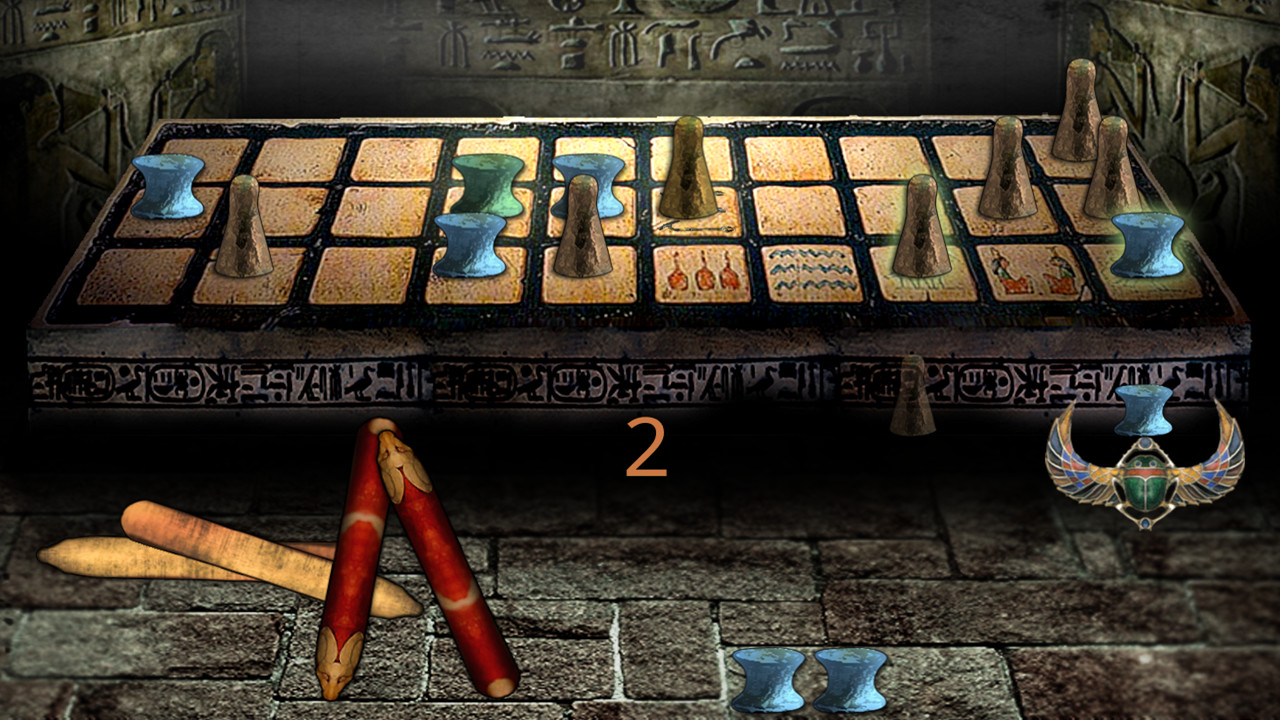
The pieces move across the board in a Z-shapes path, i.e. right on the top row, left on the center row, then right on the bottom row; your aim is to move all of your pieces off the board before your opponent does. Since there can never be more than one piece on any square, you can generally only move to unoccupied squares; you can also swap position with an opponent's pawn if it has no other pawn adjacent to protect it. Your "dice" are 4 sticks colored red and white; the number of whites is your roll, but if you have all red, that counts as 5. You get to roll again on any 1,4 or 5, as often as they keep occurring; play switches to your opponent as soon as you roll a 2 or 3 and make your move. To reduce swapping in the endgame, every pawn needs to reach the 5th to last square (with the paddles), from there, a 5 moves it off the board, 4,3 and 2 move it to end squares where it needs to stay until moved off the board with a throw of 1, 2 or 3 respectively; and a 1 (which must be taken if no other pawn is movable) moves it to the water square, which moves it up a row to the rebirth ankh, or if that's occupied, to the first unoccupied square before it; the same thing happens to pawns that get swapped out on the end squares. Strategy is generally to keep your stones grouped (any group of two or more is safe from swapping), preventing the opponent from forming groups and setting your own stones back, while trying to swap his own stones back.
I'd say that games are faster than backgammon because pawns that get "hit" don't move back as much; and the strategy is slightly easier, for the same reason. The rules are easy to pick up because the game marks all of your pieces that have legal moves.
If you plan to play against a friend, I'd recommend the tablet version (iOS or Android) since that's more comfortable than hotseat on a PC (the board is probably too small for a smartphone screen though); but there's nothing wrong with the Steam version. You're getting a simple board game, no bells and whistles; while you could easily make your own board or use a free flash version (or
Tabletop Simulator for online multiplayer), this'll provide an AI to play against on your own and helps you learn the rules.