▲ Recommended
1 hrs
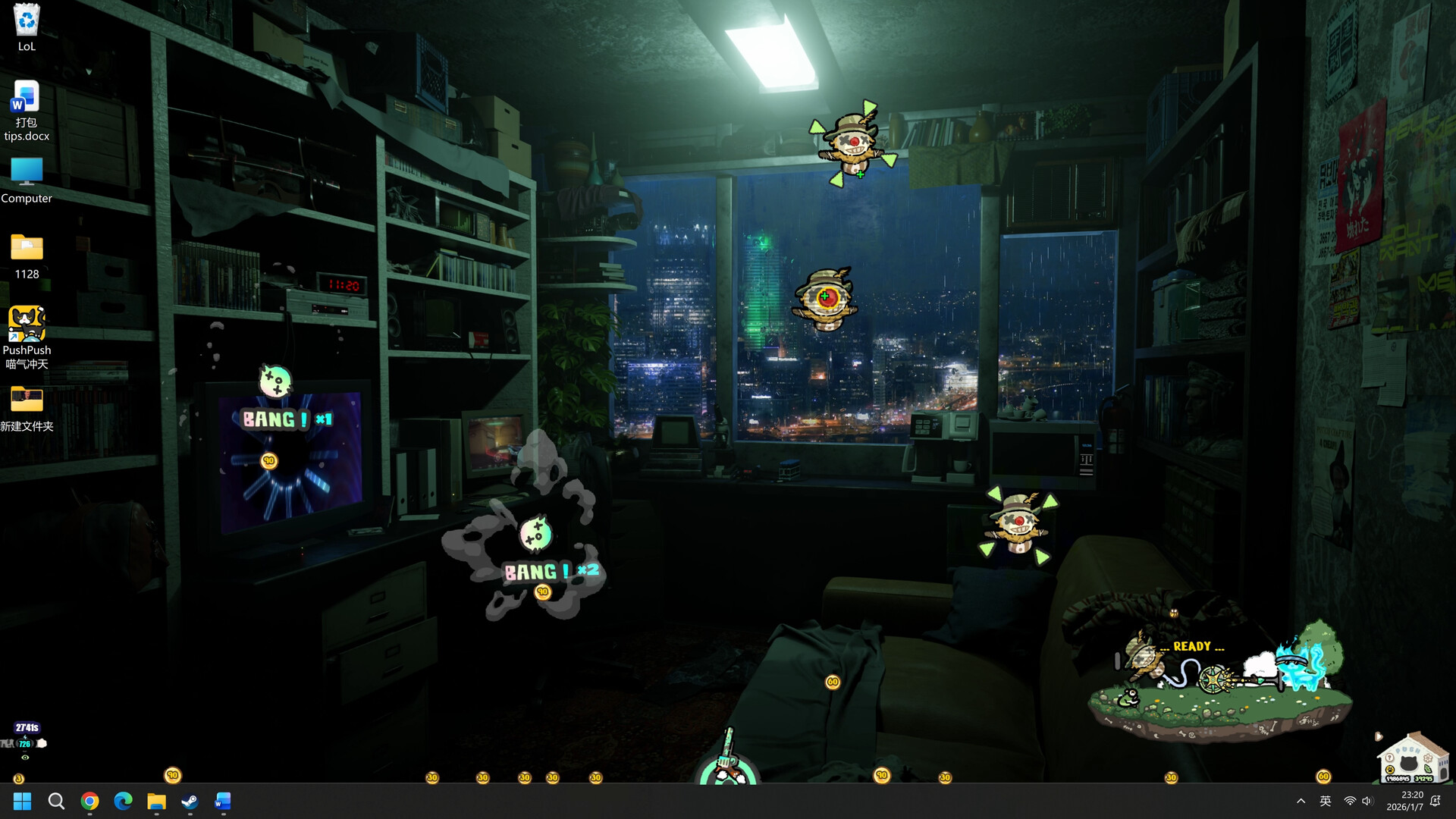
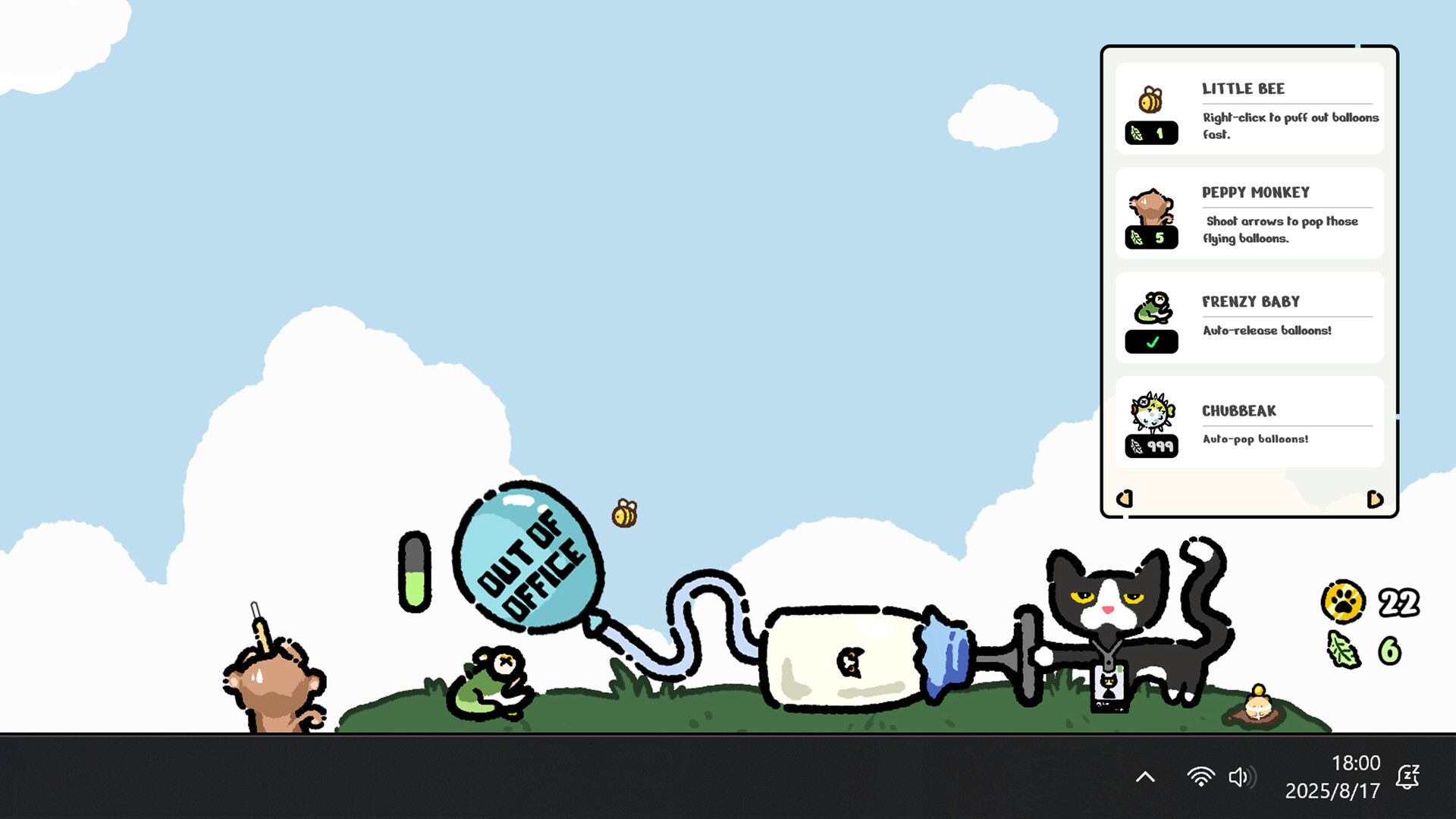
This is a silly little idle game where you pump balloons and then pop them for money. Balloons can be pumped automatically in idle mode, although doing it manually makes the process much faster. You also have to manually pop the balloons and collect the money. Manual play gives you another useful option too, as you can use a clover to boost a balloon, giving it a chance to turn gold. Clovers are limited, and you earn them when two coins falling from balloons merge together.
Once you have saved enough money, you can invest it in better pumps, which require less effort to fill balloons in idle mode, better cats that fill balloons faster and can work on two or even three balloons at once, and better balloons that give you more coins when popped. There are plenty of upgrades available, although many of them offer fairly similar benefits.
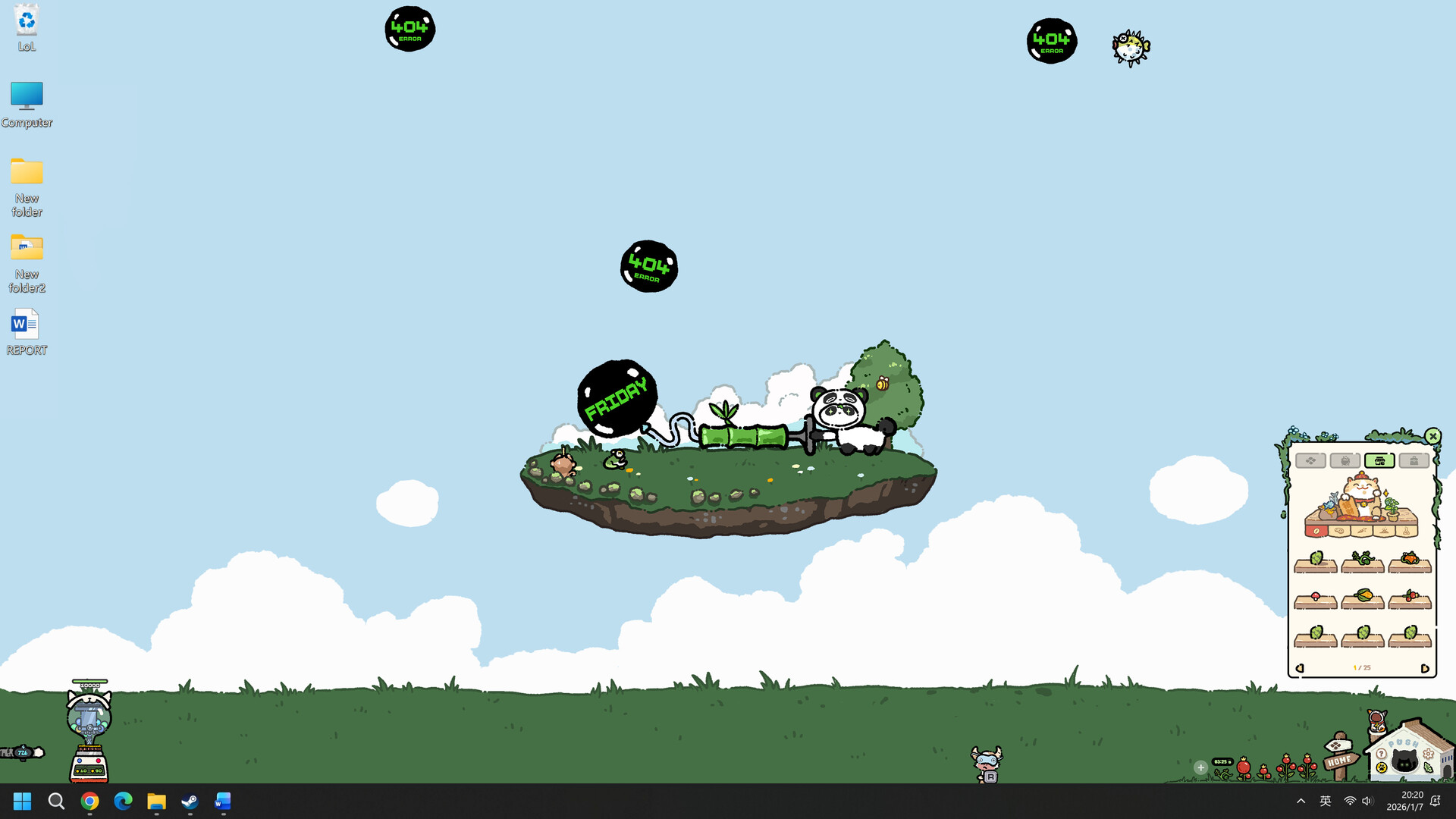
Buying more cats comes with another perk, as having more cats increases your chance of finding a mint leaf. These are extremely rare, and when you get one, a cat will hang it outside its house in the large tree. Mint leaves can then be used to buy various helpers, such as a shooter that randomly fires at balloons and frequently misses, a gardener that plants seeds and grows vegetables, or a helper that collects money for you.
The problem is that these helpers are incredibly expensive, so it can take days to afford them. If you have money to spare, you can also upgrade the cat tree, with each level providing a couple of useful perks. Higher levels give you more mint leaves and increase seed production, meaning you do not have to rely entirely on luck or popped balloons to get them.
Overall, it is a simple and rather silly idle game with plenty of upgrades and things to unlock. The progression can be painfully slow, especially when it comes to the more expensive helpers. It’s something you can have running in the background.
▲ Recommended
12 hrs
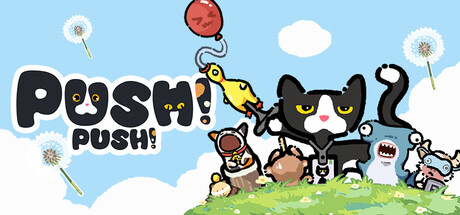
Push Push is a cheerful incremental desktop game that turns a simple balloon-pumping concept into a surprisingly layered combination of collection, resource management, automation, farming, and feline companionship. Developed and published by 1ceAgain, it is clearly designed for players who enjoy having a low-pressure game running alongside their normal computer activities. Instead of demanding constant concentration, it encourages brief interactions, periodic upgrades, and the satisfaction of watching a small collection of cats gradually become an increasingly productive operation.
The basic gameplay begins with cats pumping balloons to earn Meow Coins. This immediately establishes the idle-game foundation, but there are enough variables to make progression more interesting than endlessly clicking the same object. Cats have attributes such as Stamina and Luck, meaning their effectiveness depends partly on how they are assigned and managed. Working harder consumes stamina, while luck can influence opportunities involving more valuable balloons. Gold and Prismatic balloons introduce particularly desirable rewards, giving players something more exciting to watch for than the ordinary flow of currency.
Progression is heavily driven by collecting. There are more than 100 cats, balloons, pumps, accessories, and related items to obtain, providing a steady supply of smaller goals even when the larger progression becomes gradual. Unlocking equipment or discovering another cat feels more satisfying than merely watching a number increase because many rewards have a visible presence in the game. An infinitely growing tree provides another representation of long-term advancement and reinforces the feeling that even short sessions are contributing toward something larger.
Automation becomes one of the more important systems as progress continues. Animal helpers such as Slacktail and Slackhoof can reduce the amount of direct attention required for repetitive activities. This is a natural fit for a desktop-oriented incremental game. Push Push initially gives players reasons to interact frequently, but eventually rewards advancement by allowing parts of the economy to operate more independently. The result is a comfortable rhythm where players can return occasionally, collect what has accumulated, make improvements, reorganize priorities, and then leave their cats working again.
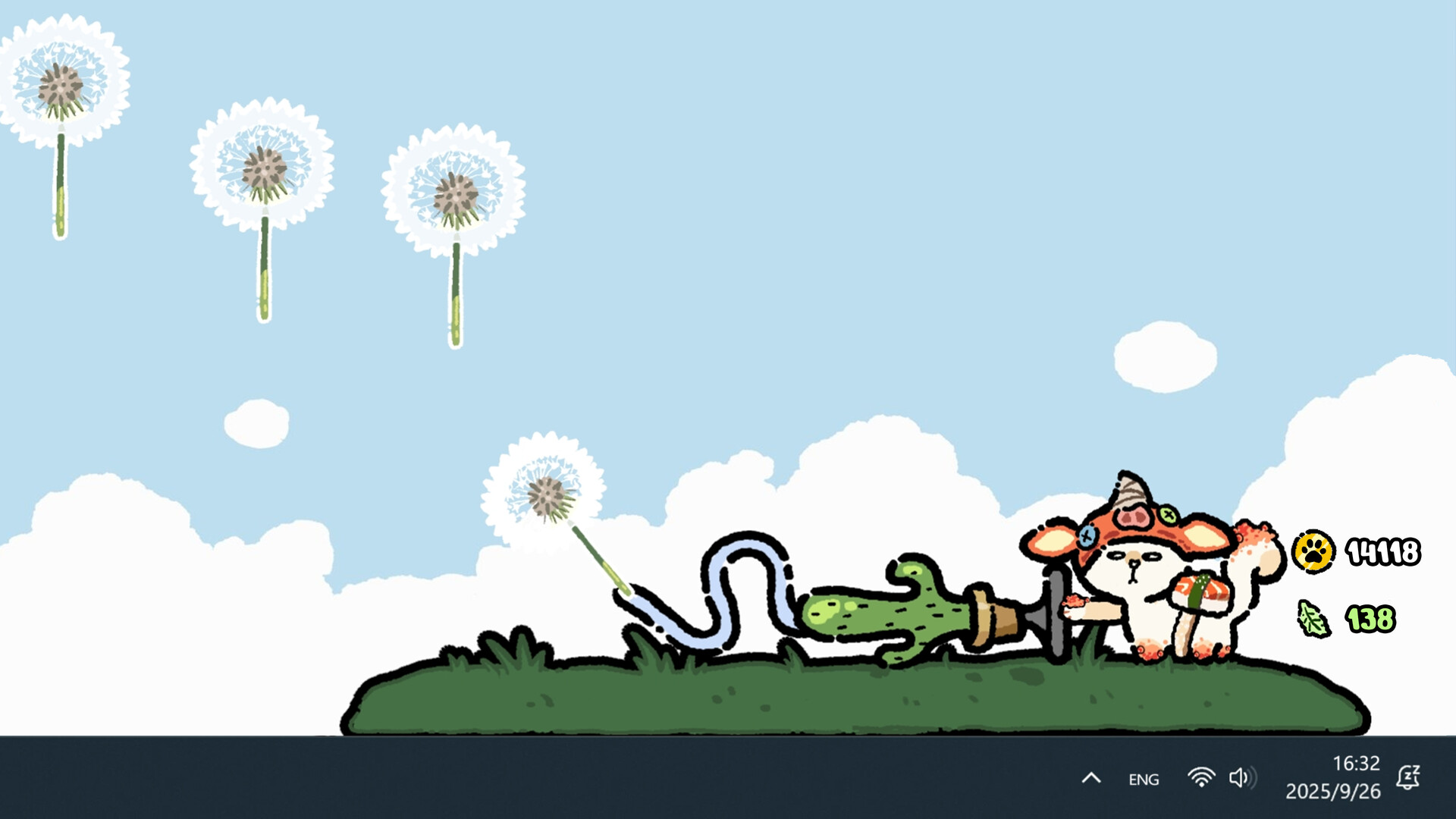
Farming provides another layer to the resource economy. Crops and other resources can be harvested and turned into cat food cans, which are connected to maintaining the cats and their stamina. This gives farming an actual purpose within the broader progression rather than treating it as an unrelated side activity. Players interested in optimization can decide how aggressively they want their cats working while ensuring that enough resources remain available to support continued productivity. These systems are individually straightforward, but their interaction gives the game more depth than its cute appearance initially suggests.
The Rocket Gacha introduces an element of randomized progression. Rare items can contribute toward improving it, giving collectors another long-term objective. Players who enjoy the anticipation associated with randomized rewards will probably appreciate this system more than those who prefer completely predictable advancement. Fortunately, it exists alongside numerous other progression paths, so the overall experience is not dependent entirely on random outcomes. Between equipment, cats, farming, automation, balloons, accessories, and upgrades, there is usually another objective available.
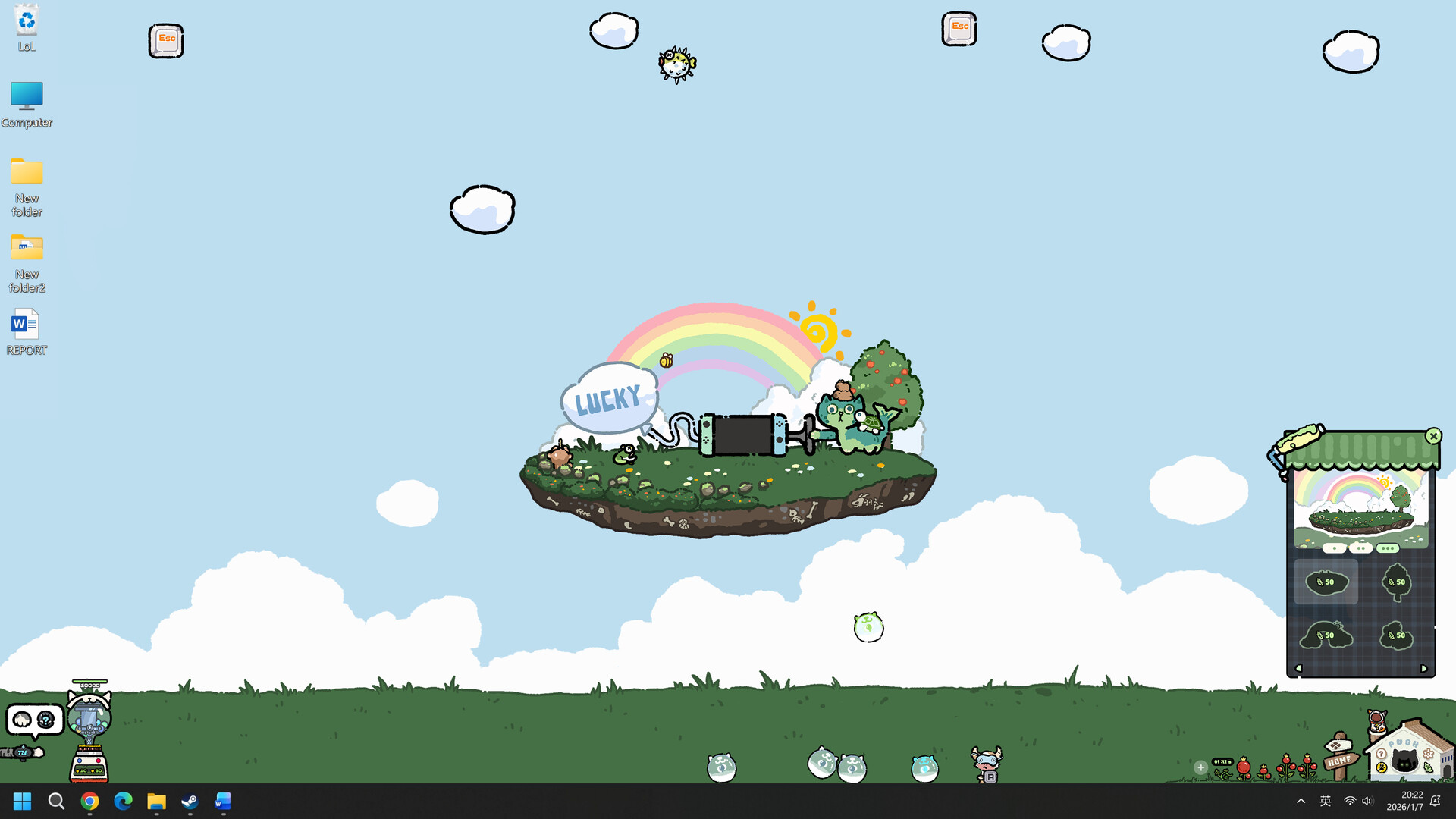
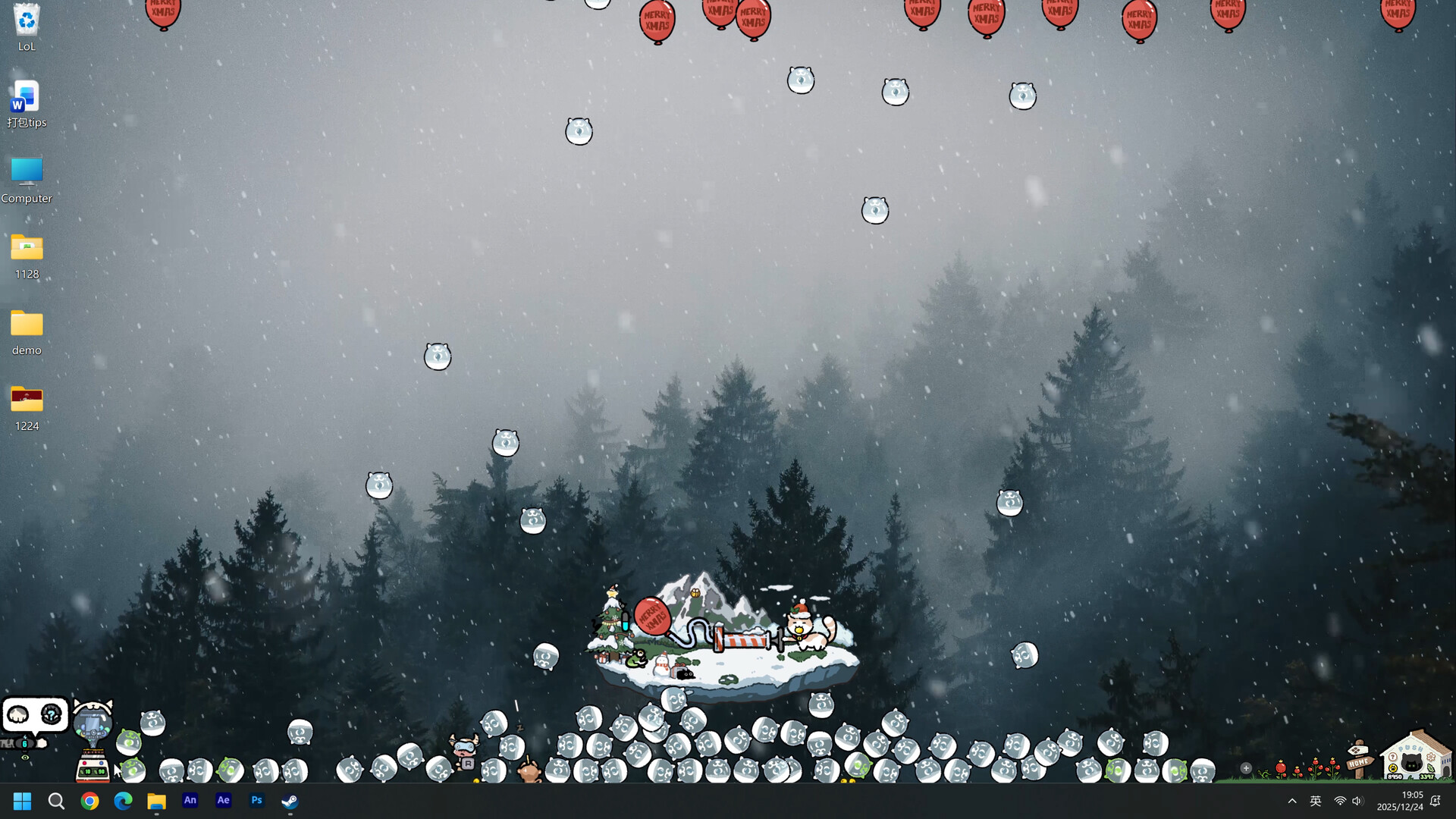
Customization strengthens the desktop-companion aspect considerably. Different island skins and decorative elements allow players to change the appearance of their little environment, while accessories help give individual cats more personality. Small stories involving the cats and their laboratory further distinguish them from being anonymous resource generators. These features may not fundamentally alter the incremental mechanics, but they provide personality and make long-term progression feel more personal.
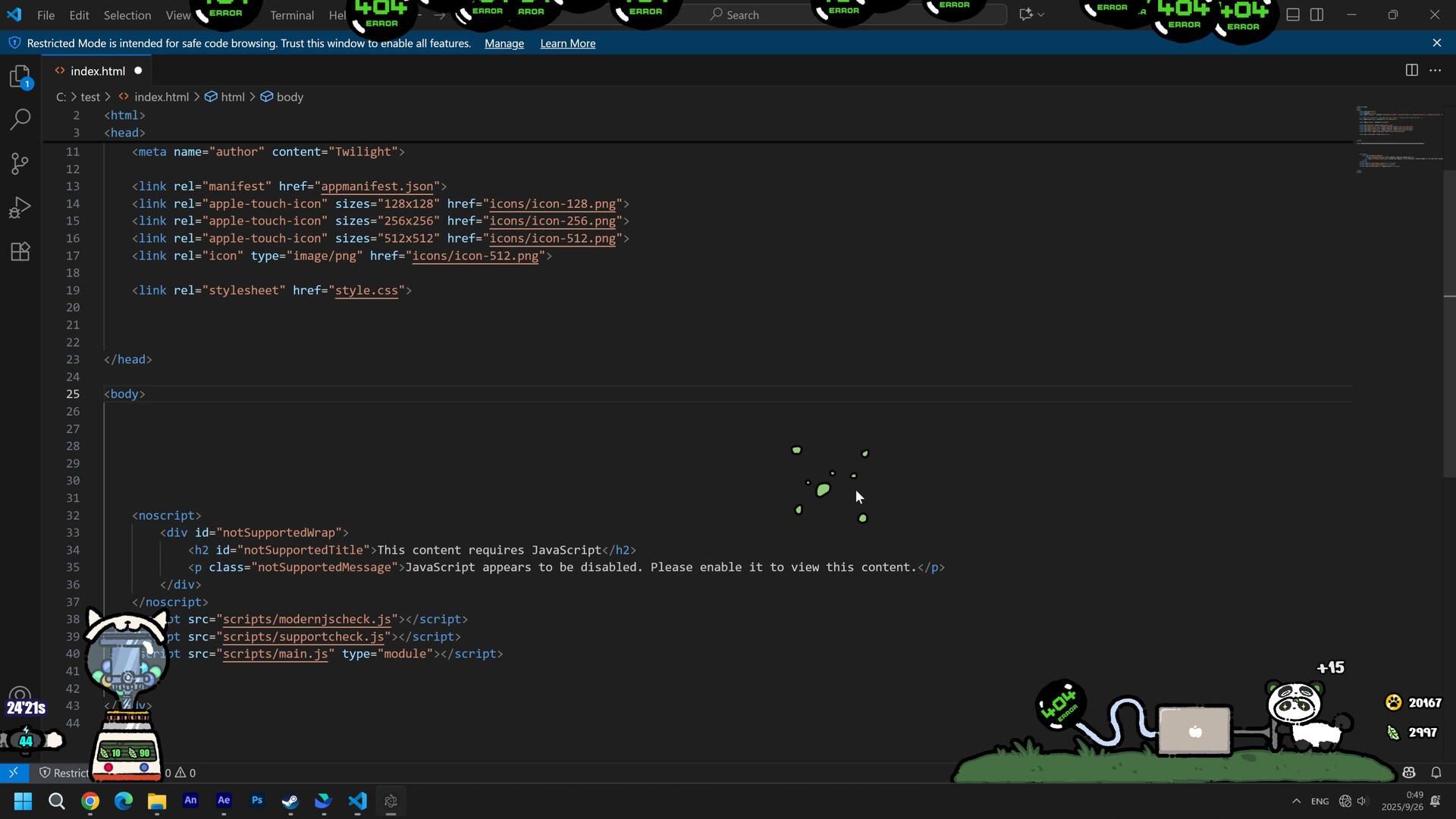
Another useful feature is the ability to quickly hide the game, reinforcing its purpose as something that can coexist with work, browsing, videos, or other applications. Rather than expecting Push Push to dominate an entire gaming session, it works best when treated as a relaxing background activity that occasionally invites attention. Steam Cloud support also makes persistent progression more convenient, while 39 achievements provide structured milestones for players who enjoy completing specific objectives.
The main limitation comes directly from the genre. Anyone expecting complex strategy, fast action, or constant hands-on gameplay may find the repetitive accumulation of resources too passive. The appeal depends heavily on enjoying incremental growth, collecting, optimization, and periodic interaction. For the appropriate audience, however, that relaxed pacing is precisely the attraction. There is something pleasantly satisfying about checking on the cats, discovering what has accumulated, making a few improvements, and watching the little operation become increasingly efficient.
Steam Deck compatibility is currently best regarded as unverified rather than officially confirmed as Verified or Playable. Because the game is built around desktop-style interaction and background operation, its design is naturally more suited to a conventional PC environment. It may still be possible to run it on Steam Deck, but players should not assume a fully optimized handheld experience without an official compatibility rating.
Push Push succeeds by surrounding an extremely simple central idea with enough complementary mechanics to sustain interest. The combination of cats, balloon pumping, farming, automation, collecting, customization, randomized rewards, and gradual optimization creates a cozy incremental experience without demanding constant attention. It is especially appealing as a secondary game that can quietly exist on the desktop while its collection and economy continue to grow.
Rating: 8/10