▲ Recommended
8 hrs
Deep Sea Bubble Shooter: Reflex Challenge, created by Aleksa Racovic, is a compact arcade puzzle game that reworks a familiar formula by shifting the focus away from careful aiming and toward timing and reaction. Instead of allowing players to freely line up shots at their own pace, it introduces a constantly rotating targeting system that forces decisions to be made in motion. This single change gives the experience a noticeably different rhythm, turning what is typically a slow and methodical genre into something more immediate and reflex-driven.
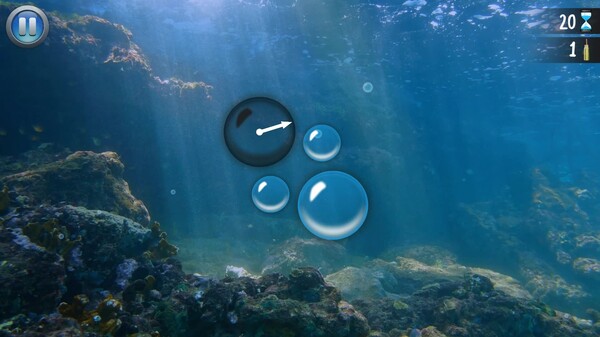
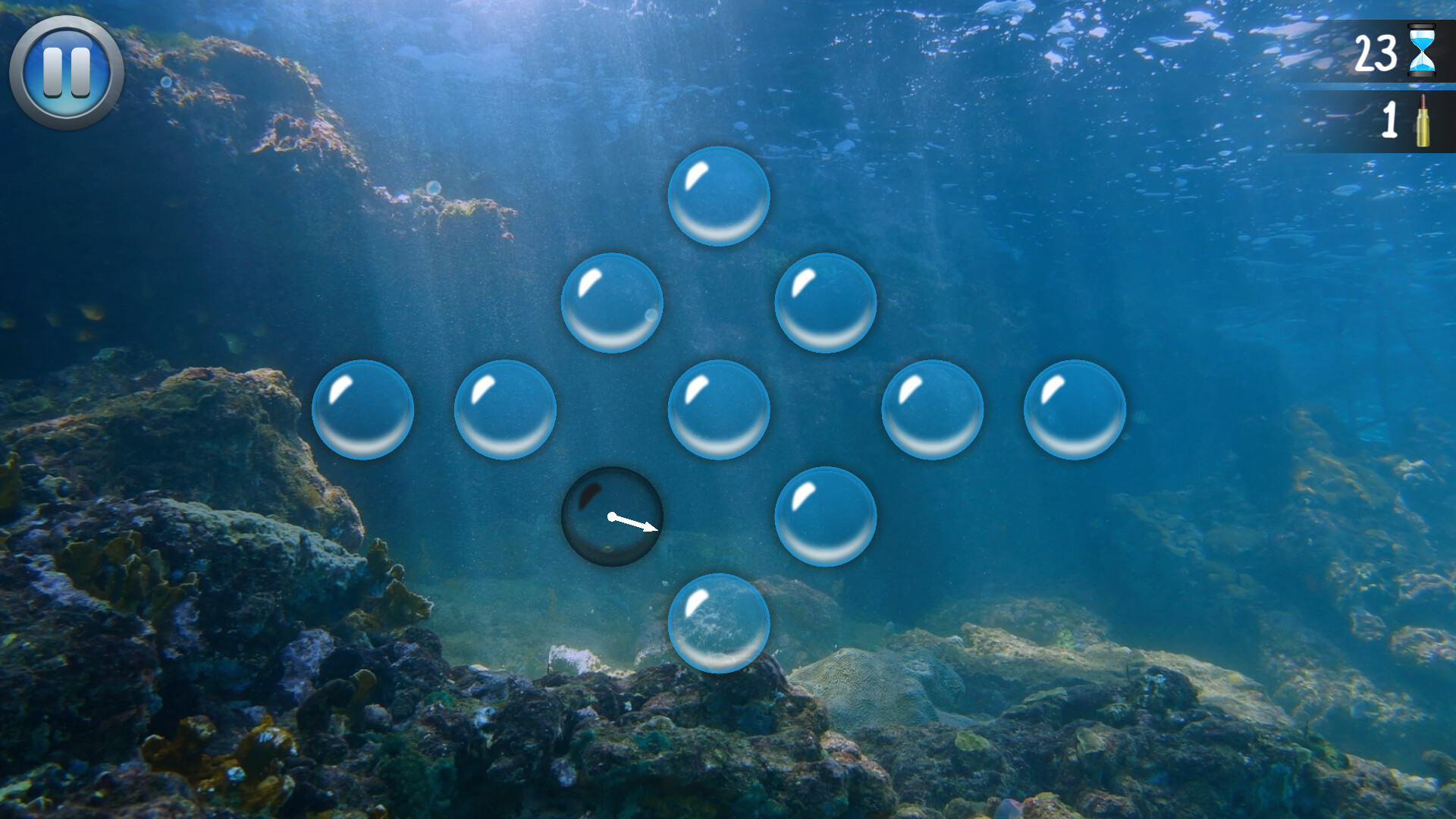
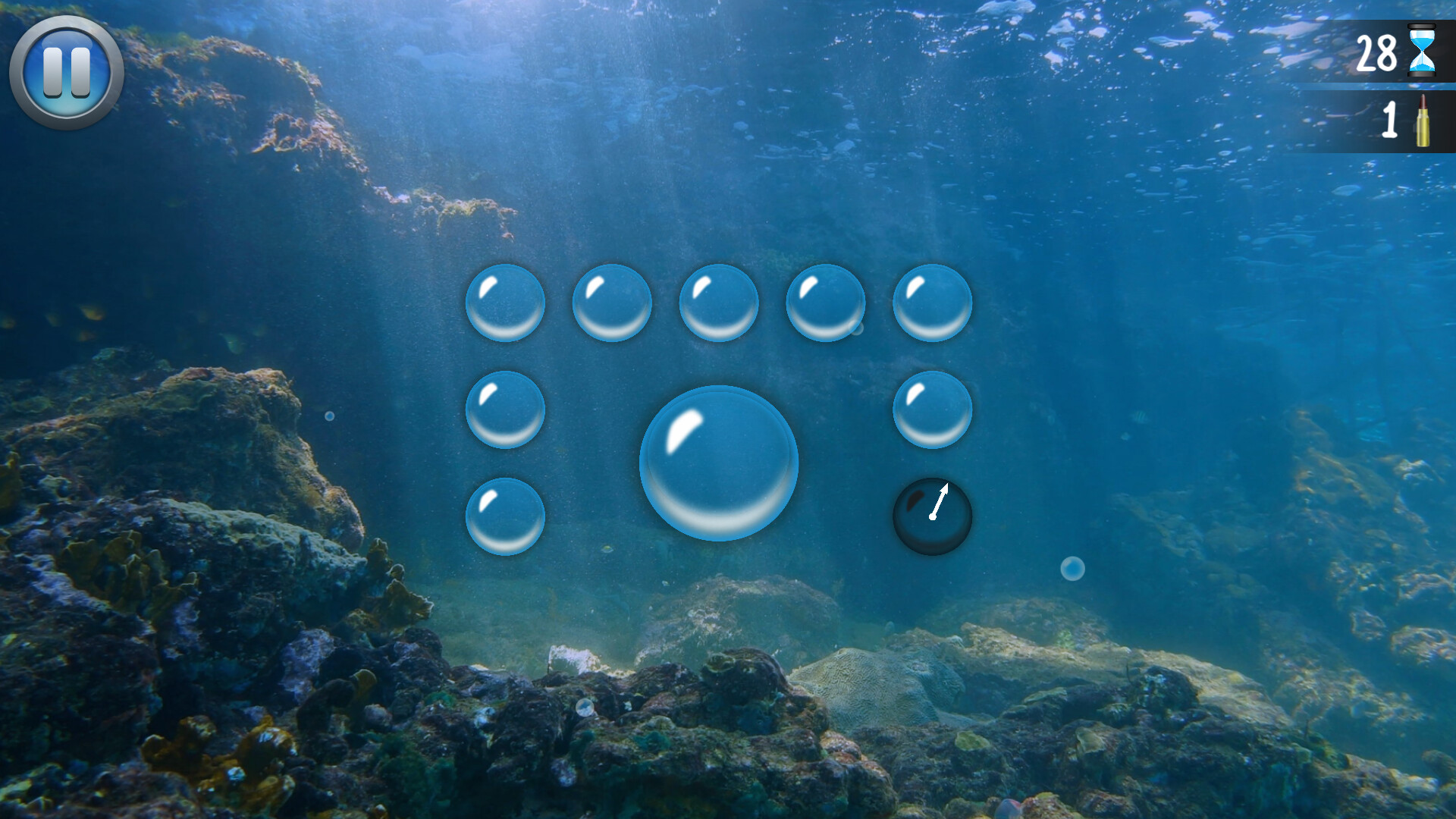
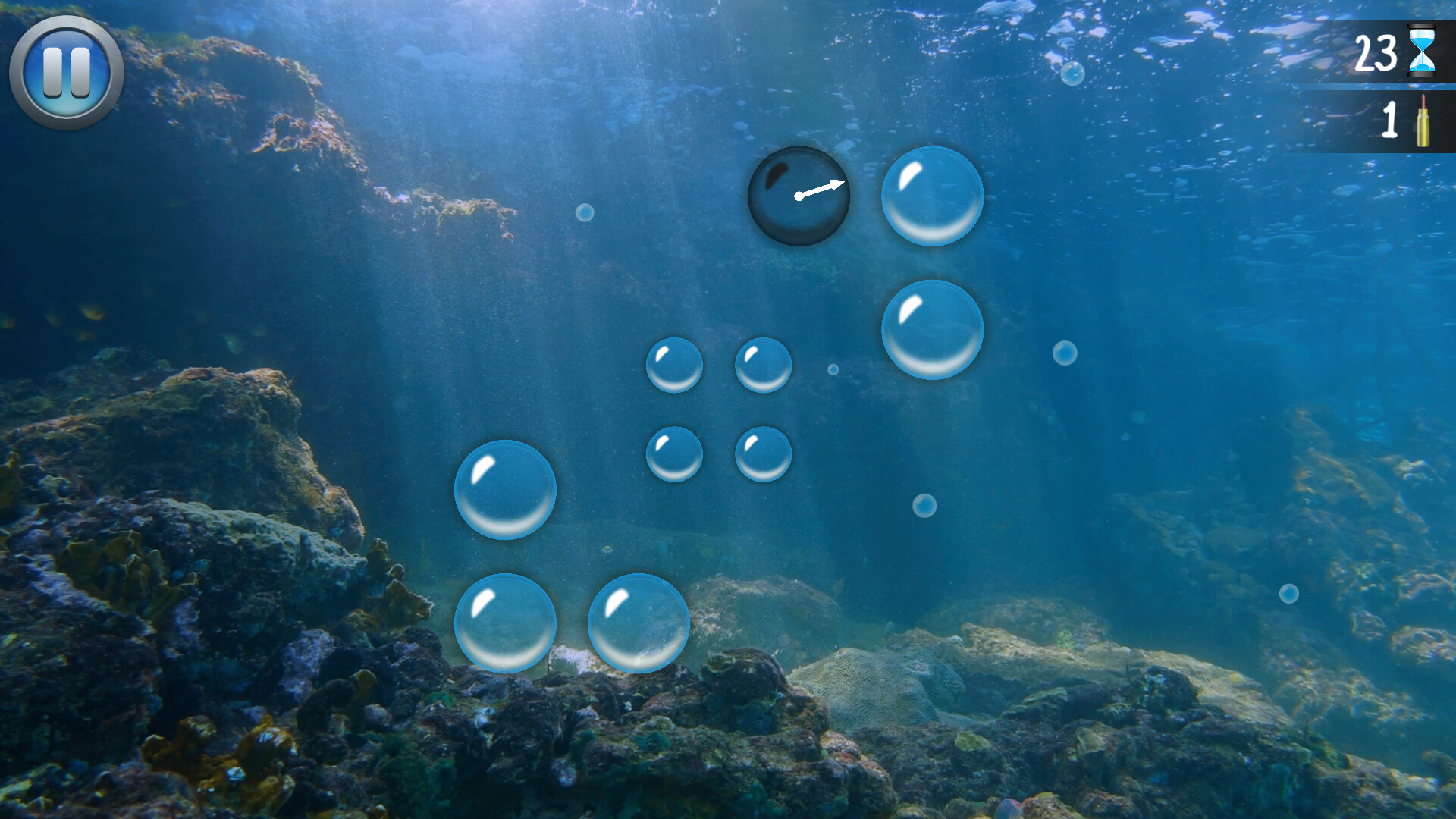
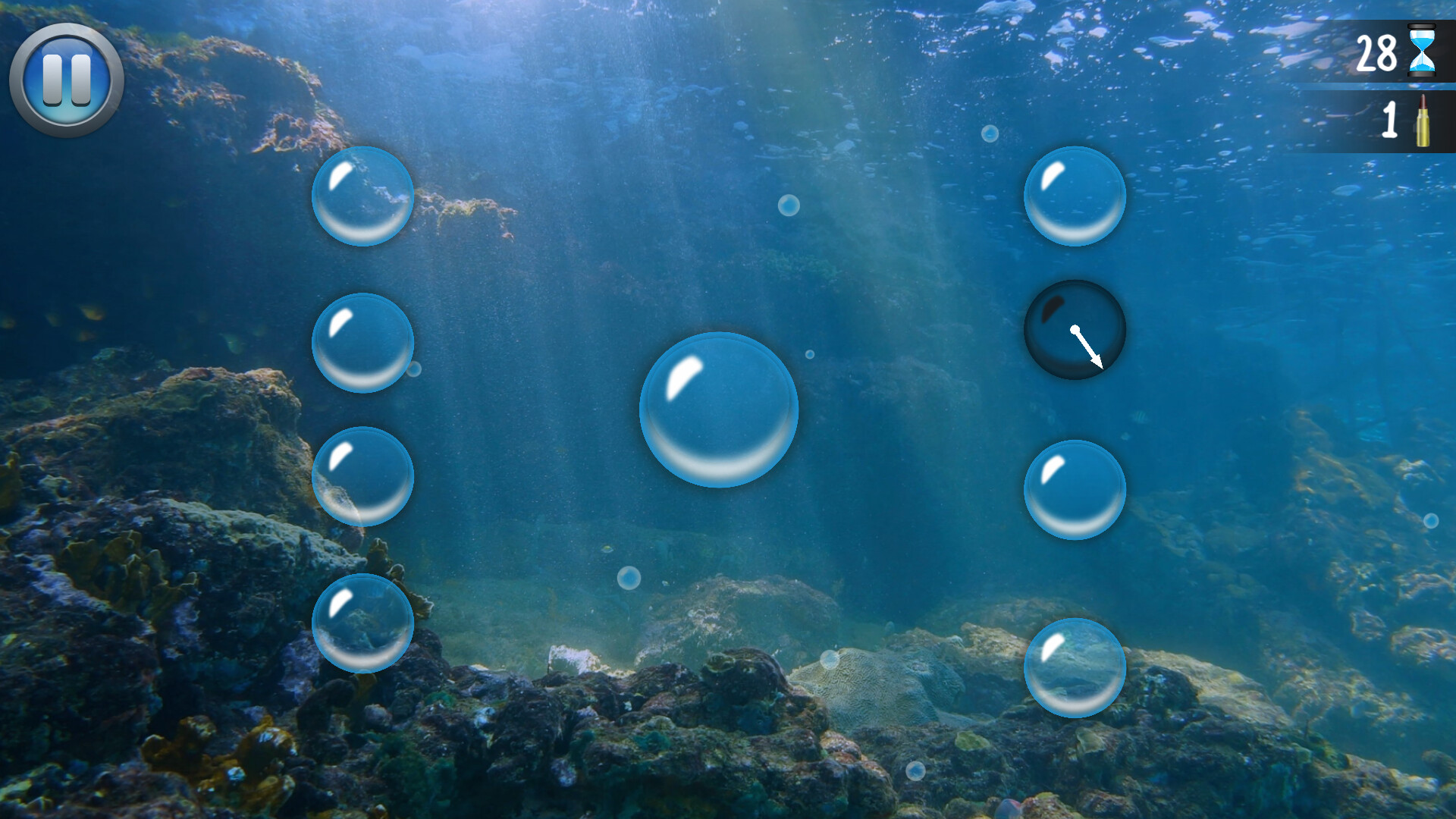
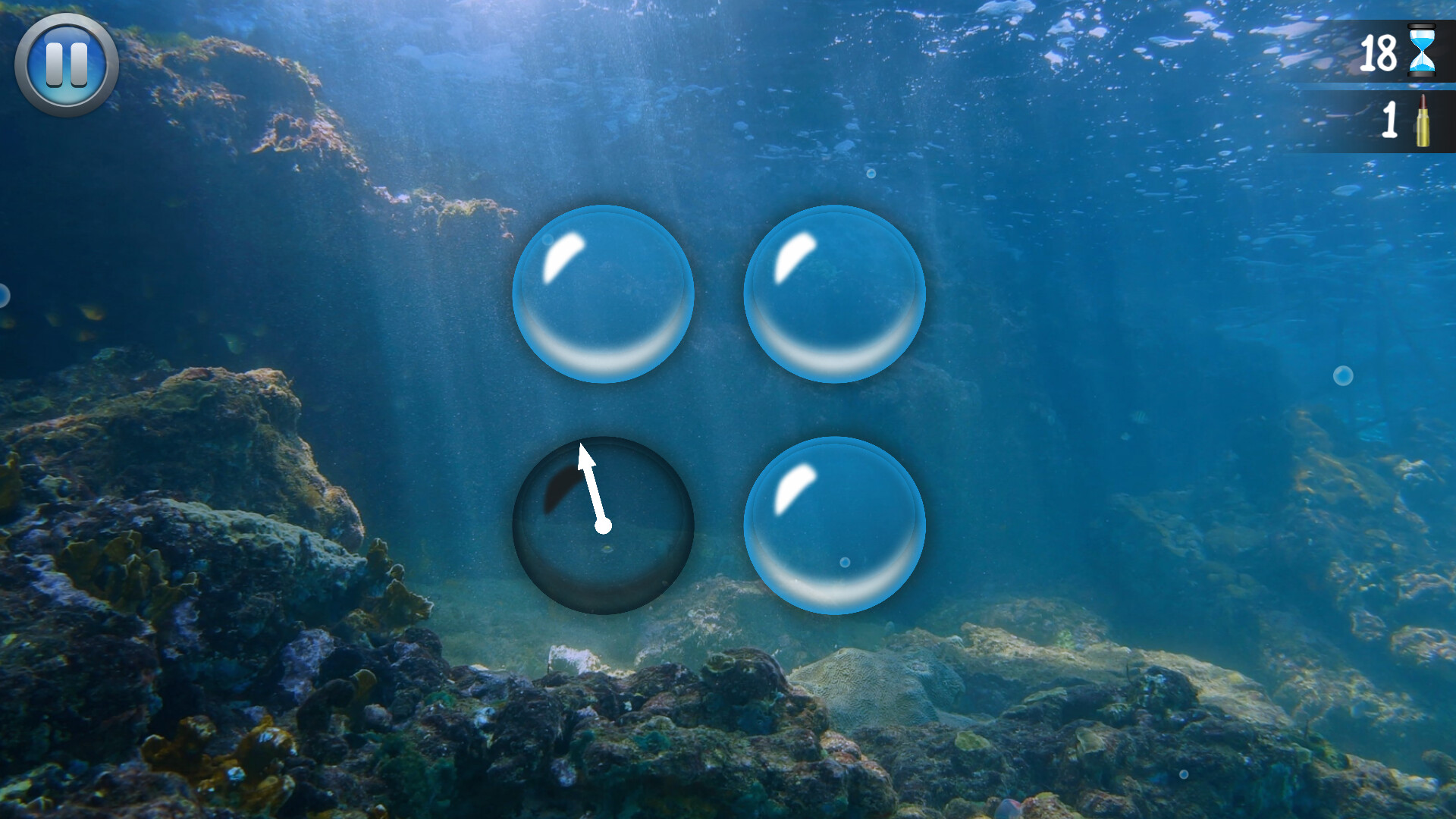
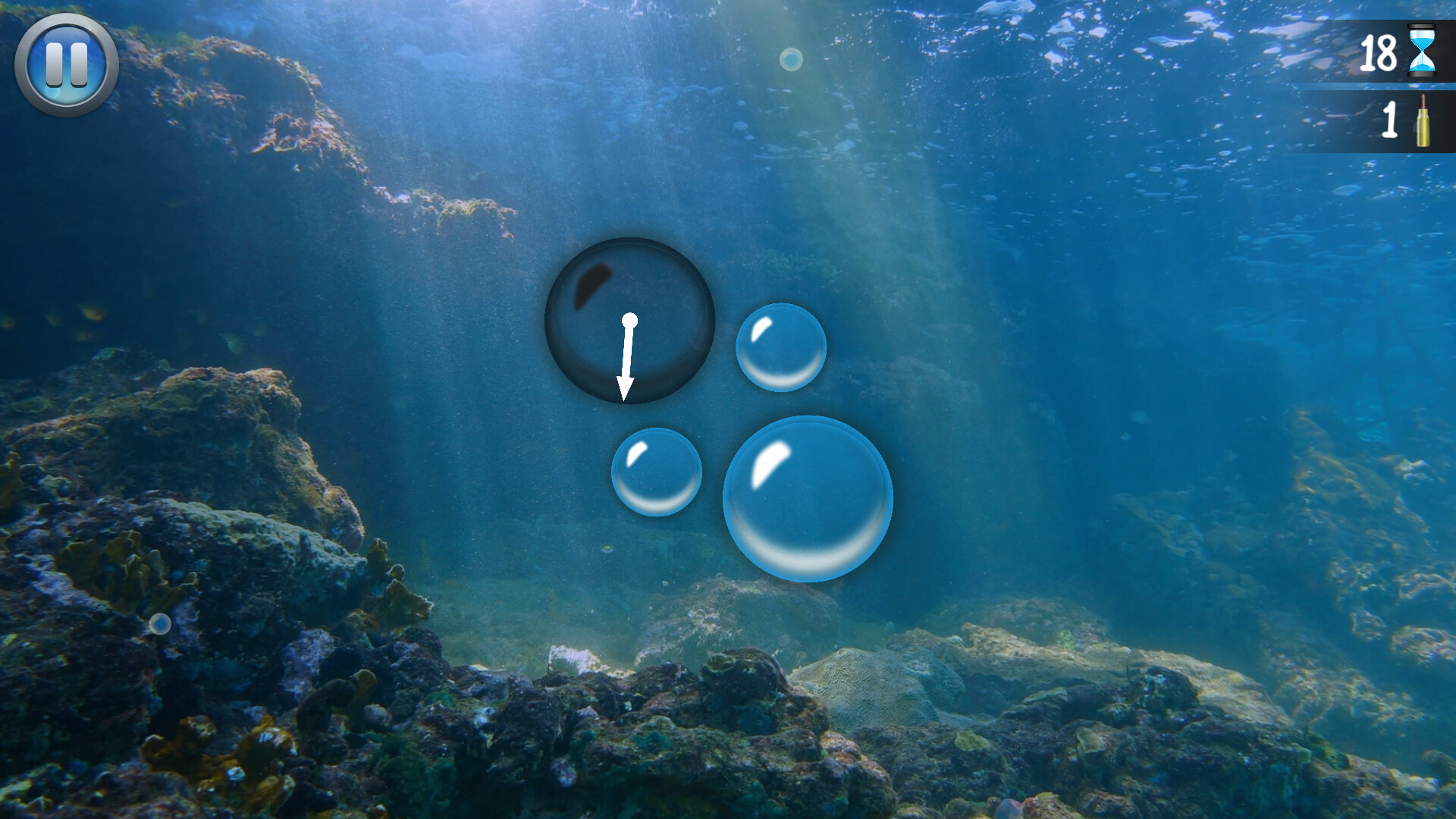
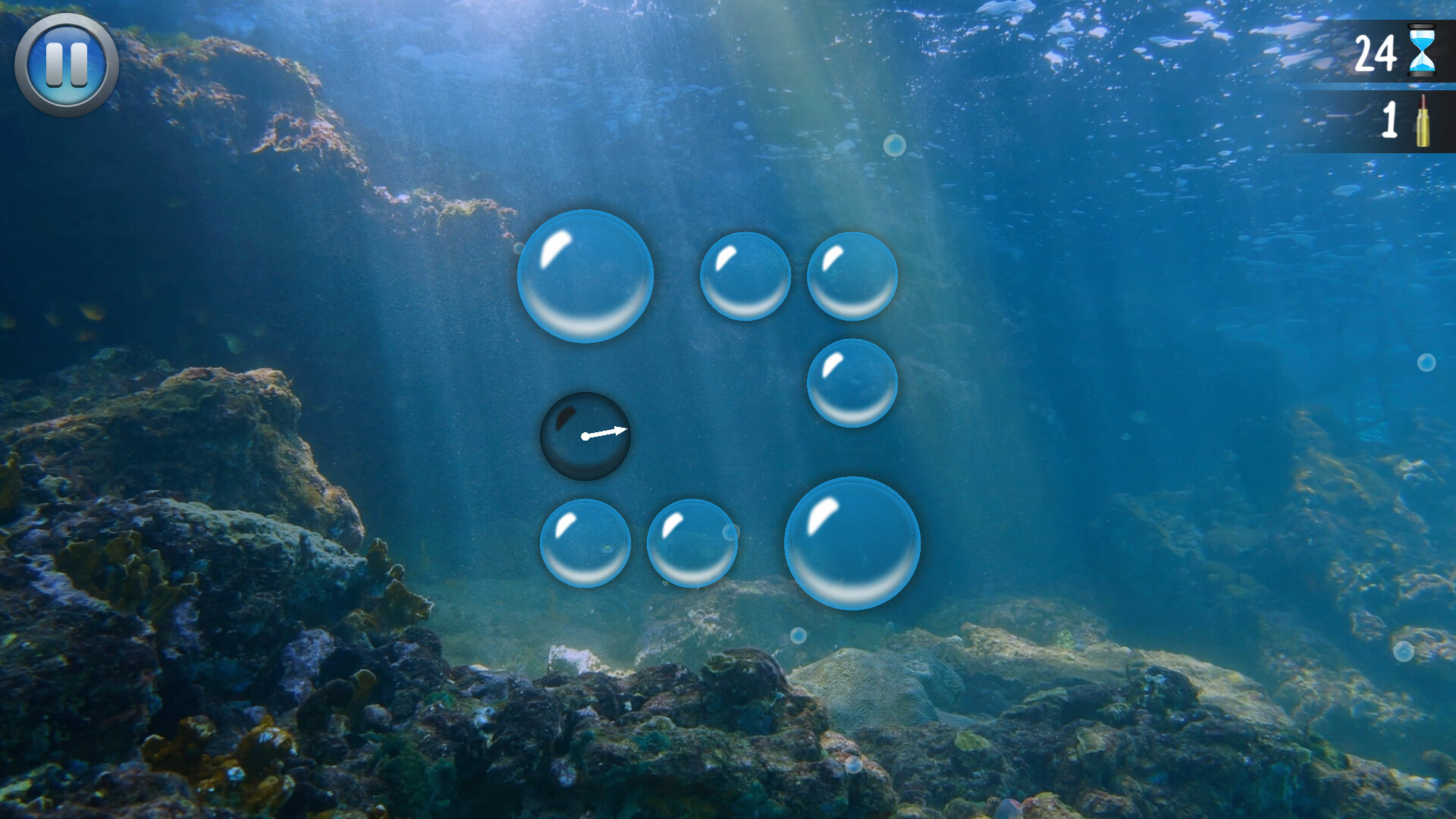
The core gameplay revolves around clearing clusters of bubbles by activating a shot at the precise moment the rotating crosshair aligns with a target. Because the reticle never stops moving, players must remain attentive at all times, balancing quick reactions with an understanding of how the board is structured. While the mechanic is simple to grasp, it creates a consistent sense of pressure, as even a slight delay or mistimed input can disrupt progress. At the same time, the game allows for multiple approaches to each level, meaning players can choose which clusters to prioritize rather than following a strict sequence. This adds a small layer of strategy, even within the fast-paced design.
Progression is built around a large number of stages that gradually increase in complexity. Rather than introducing entirely new systems, the game raises the challenge by requiring more precise timing, tighter execution, and more efficient decision-making. Later levels demand a better understanding of how to manage shots and anticipate the movement of the crosshair, encouraging players to refine their skills rather than rely on new mechanics. This structure makes improvement feel tied directly to player performance, as success comes from becoming more accurate and consistent over time.
To support this progression, the game includes a light upgrade system that provides incremental benefits. By earning stars through strong performance, players can unlock enhancements that make the experience slightly more forgiving, such as slowing the rotation speed or extending available time. These upgrades offer a sense of advancement and help smooth out the difficulty curve, but they do not fundamentally change how the game is played. The focus remains firmly on mastering the timing-based mechanic, with upgrades acting as small adjustments rather than transformative additions.
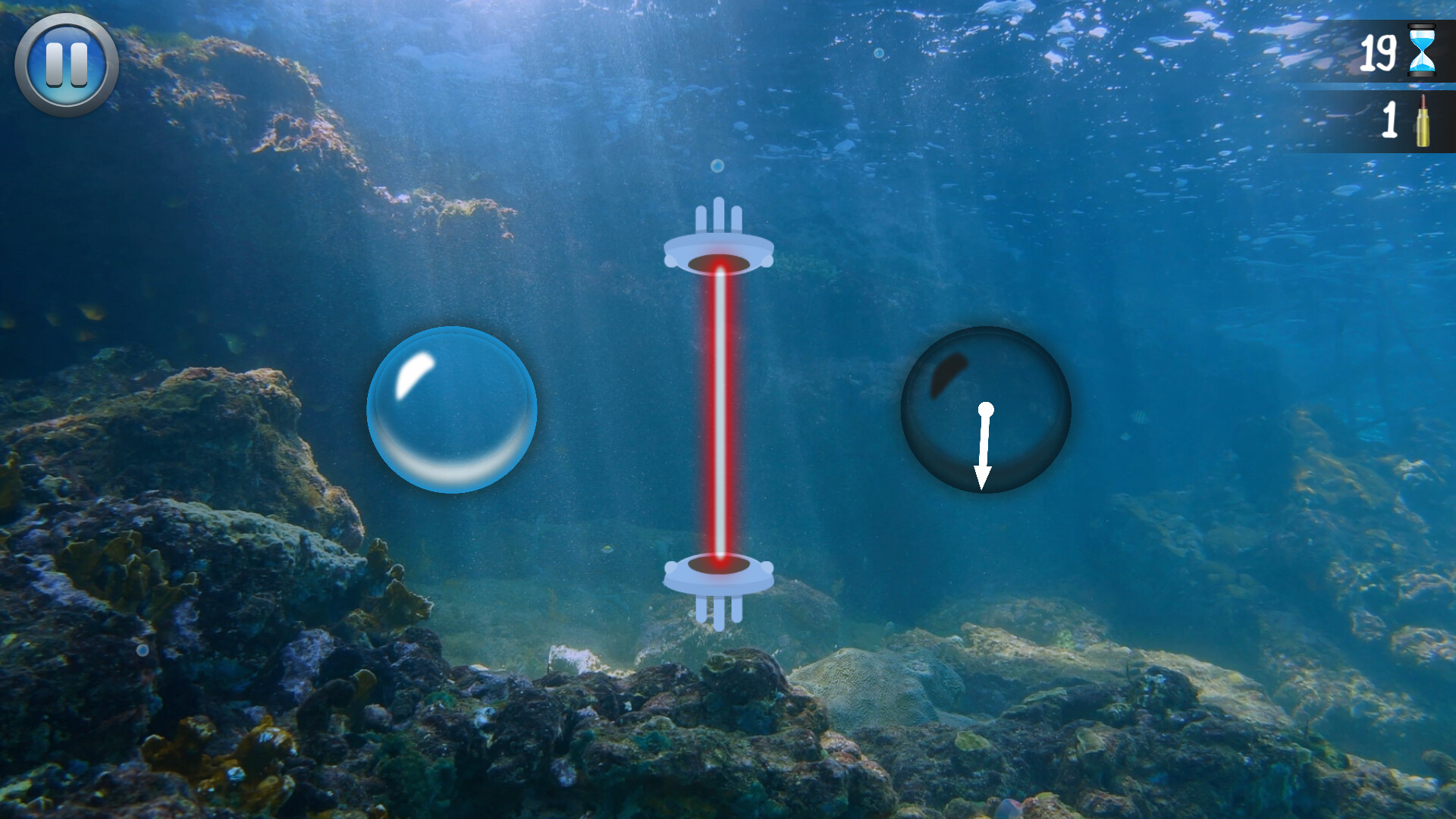
The presentation adopts a clean underwater theme that complements the gameplay without drawing too much attention to itself. Colors are bright and easy to distinguish, ensuring that bubbles and targeting elements remain visible even during faster moments. The visual design prioritizes clarity, which is essential given the reliance on precise timing, and avoids unnecessary detail that might distract from the core interaction. While the aesthetic is pleasant, it remains relatively static, with limited variation across different stages.
The pacing is well-suited to short play sessions, with individual levels designed to be completed quickly. This makes it easy to pick up and play in brief intervals, offering a steady stream of small challenges that can be tackled without a significant time investment. However, this structure also highlights the game’s limitations during extended play. Because the central mechanic remains unchanged, the experience can begin to feel repetitive once players become fully accustomed to the timing system, and the absence of new gameplay elements reduces the sense of discovery.
Another aspect that defines the experience is its narrow scope. The game is built around a single idea and executes it consistently, but it does not expand beyond that concept. There are no major shifts in gameplay or additional modes that significantly alter how it is played, which means that long-term engagement depends largely on the player’s willingness to continue improving their performance. For some, this focus can be appealing, while others may find it lacks the variety needed to maintain interest.
In the end, Deep Sea Bubble Shooter: Reflex Challenge offers a concise and engaging take on a classic puzzle formula by introducing a mechanic that emphasizes timing and responsiveness. It succeeds in creating a distinct identity within its genre, providing quick, accessible gameplay that can be enjoyed in short bursts. At the same time, its limited evolution and repetitive structure prevent it from delivering a deeper or more lasting experience. It works best as a casual, skill-based diversion rather than a long-term puzzle challenge.
Rating: 6/10
The core gameplay revolves around clearing clusters of bubbles by activating a shot at the precise moment the rotating crosshair aligns with a target. Because the reticle never stops moving, players must remain attentive at all times, balancing quick reactions with an understanding of how the board is structured. While the mechanic is simple to grasp, it creates a consistent sense of pressure, as even a slight delay or mistimed input can disrupt progress. At the same time, the game allows for multiple approaches to each level, meaning players can choose which clusters to prioritize rather than following a strict sequence. This adds a small layer of strategy, even within the fast-paced design.
Progression is built around a large number of stages that gradually increase in complexity. Rather than introducing entirely new systems, the game raises the challenge by requiring more precise timing, tighter execution, and more efficient decision-making. Later levels demand a better understanding of how to manage shots and anticipate the movement of the crosshair, encouraging players to refine their skills rather than rely on new mechanics. This structure makes improvement feel tied directly to player performance, as success comes from becoming more accurate and consistent over time.
To support this progression, the game includes a light upgrade system that provides incremental benefits. By earning stars through strong performance, players can unlock enhancements that make the experience slightly more forgiving, such as slowing the rotation speed or extending available time. These upgrades offer a sense of advancement and help smooth out the difficulty curve, but they do not fundamentally change how the game is played. The focus remains firmly on mastering the timing-based mechanic, with upgrades acting as small adjustments rather than transformative additions.
The presentation adopts a clean underwater theme that complements the gameplay without drawing too much attention to itself. Colors are bright and easy to distinguish, ensuring that bubbles and targeting elements remain visible even during faster moments. The visual design prioritizes clarity, which is essential given the reliance on precise timing, and avoids unnecessary detail that might distract from the core interaction. While the aesthetic is pleasant, it remains relatively static, with limited variation across different stages.
The pacing is well-suited to short play sessions, with individual levels designed to be completed quickly. This makes it easy to pick up and play in brief intervals, offering a steady stream of small challenges that can be tackled without a significant time investment. However, this structure also highlights the game’s limitations during extended play. Because the central mechanic remains unchanged, the experience can begin to feel repetitive once players become fully accustomed to the timing system, and the absence of new gameplay elements reduces the sense of discovery.
Another aspect that defines the experience is its narrow scope. The game is built around a single idea and executes it consistently, but it does not expand beyond that concept. There are no major shifts in gameplay or additional modes that significantly alter how it is played, which means that long-term engagement depends largely on the player’s willingness to continue improving their performance. For some, this focus can be appealing, while others may find it lacks the variety needed to maintain interest.
In the end, Deep Sea Bubble Shooter: Reflex Challenge offers a concise and engaging take on a classic puzzle formula by introducing a mechanic that emphasizes timing and responsiveness. It succeeds in creating a distinct identity within its genre, providing quick, accessible gameplay that can be enjoyed in short bursts. At the same time, its limited evolution and repetitive structure prevent it from delivering a deeper or more lasting experience. It works best as a casual, skill-based diversion rather than a long-term puzzle challenge.
Rating: 6/10
1 found helpful
Steam ↗