



▲ Recommended
1 hrs
Update: achievements have been fixed.
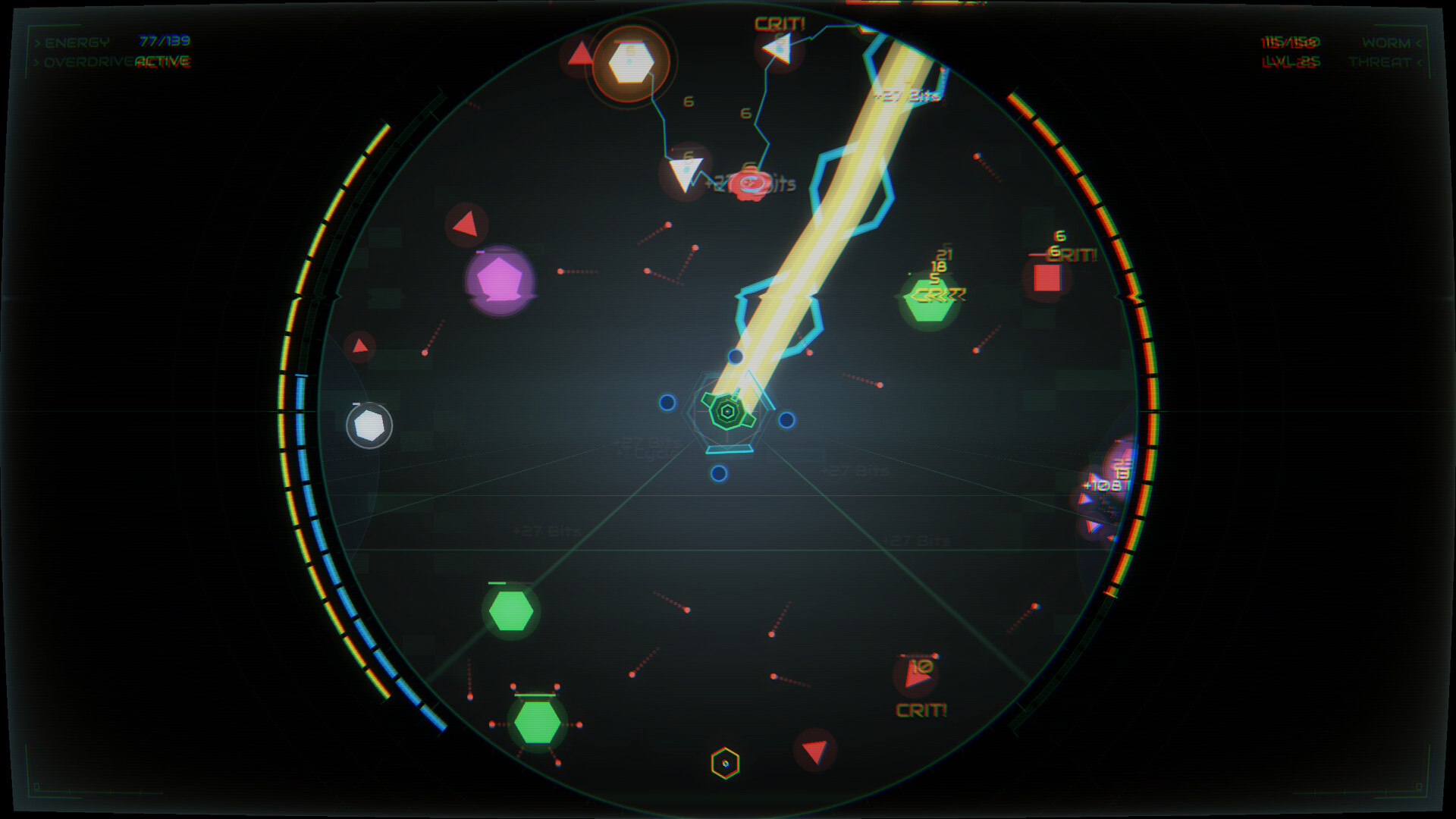
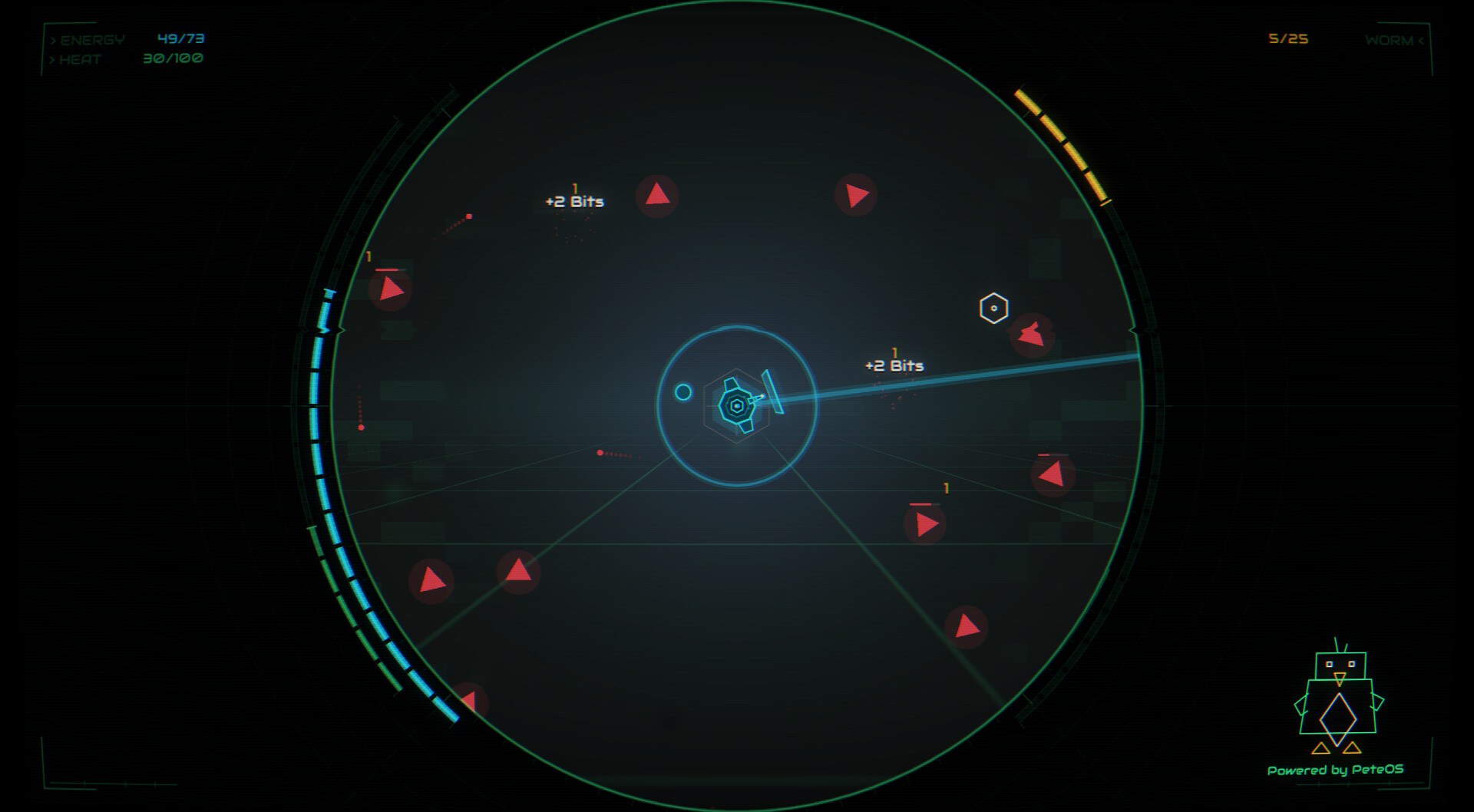
The goal in this short incremental game is to protect an operating system from an infection. You do this by playing runs where a turret is locked in the middle of the screen, and your job is to shoot down waves of incoming enemies. If you want to give your fingers a break, you can enable auto fire, although aiming is still entirely up to you.
Presentation is part of the experience. The game features a scanline filter and CRT effect that make it feel like you're looking at an old monitor. If you prefer a cleaner and sharper look, both effects can be turned on or off whenever you like.
Your first run will probably end in success, but that's only the beginning. There are 20 threat stages to conquer before you can fully complete the game. Every new stage raises the threat level, increasing both the health of enemies and the damage they deal. The objective is usually to destroy enough enemies to spawn a worm, which must also be defeated to unlock the next threat stage.
The main limitation is your energy. It slowly drains over time and drops much faster whenever you get hit. Since your turret never moves, avoiding damage becomes impossible as the threat level rises. That's where the operating system's defenses and upgrades come into play, giving you a much better chance of surviving.
Bits are the game's upgrade currency, and you earn them with every enemy you destroy. That means every run is worthwhile, even if you fail to complete a stage. If the current threat level proves too difficult, you can always return to any previously unlocked stage to farm more resources.
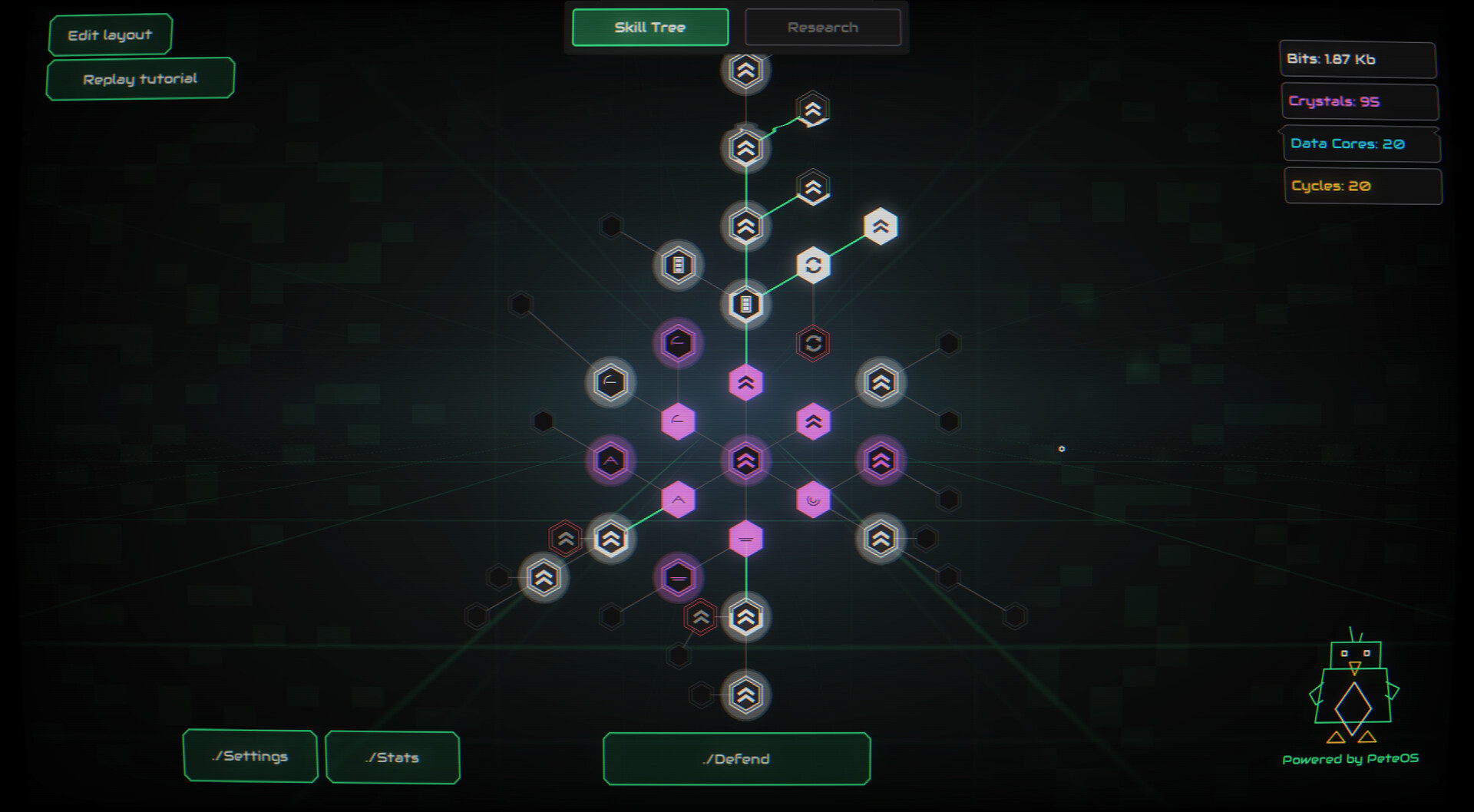
The upgrade tree is a little different from what you're used to, but it will still feel familiar if you've played other incremental games. It's divided into rings, and you need to purchase enough upgrades in one ring before the next one becomes available. Buying a single upgrade also reveals several new branches that stretch into future rings, giving you a glimpse of what's ahead much earlier than most games do. At the same time, there's still some mystery because you can only see two rings in advance.
Another welcome difference is the upgrade pricing. Although most upgrades have multiple levels, the cost never increases. If an upgrade has five levels and the first one costs 50 bits, every level costs exactly 50 bits. It's a simple system that makes planning your upgrades much easier. The visual indicators are also excellent, making it immediately obvious which upgrades you can afford and which ones are already fully upgraded.
Base upgrade costs do increase as you move farther from the center of the tree, but it never feels excessive because the game's progression is balanced well enough that you generally keep pace with the rising threat level.
At the center of the tree are the operating system's defensive weapons. You begin with the turret, but there are four more to unlock, lightning, missiles, side turrets, and pulse. Unlike regular upgrades, these weapons require tokens instead of bits. Tokens are awarded for completing threat stages, and each stage only grants one token the first time you clear it, so you can't simply grind the easiest difficulty.
Each weapon also serves as the starting point for its own upgrade branch. The turret focuses on upgrades like damage, critical hits, and volley chance, while missiles gain improvements such as additional projectiles and a larger blast radius. There's also a sixth node in the center that contains general upgrades, including faster energy regeneration, increased enemy spawn rates, and more bits earned per kill.
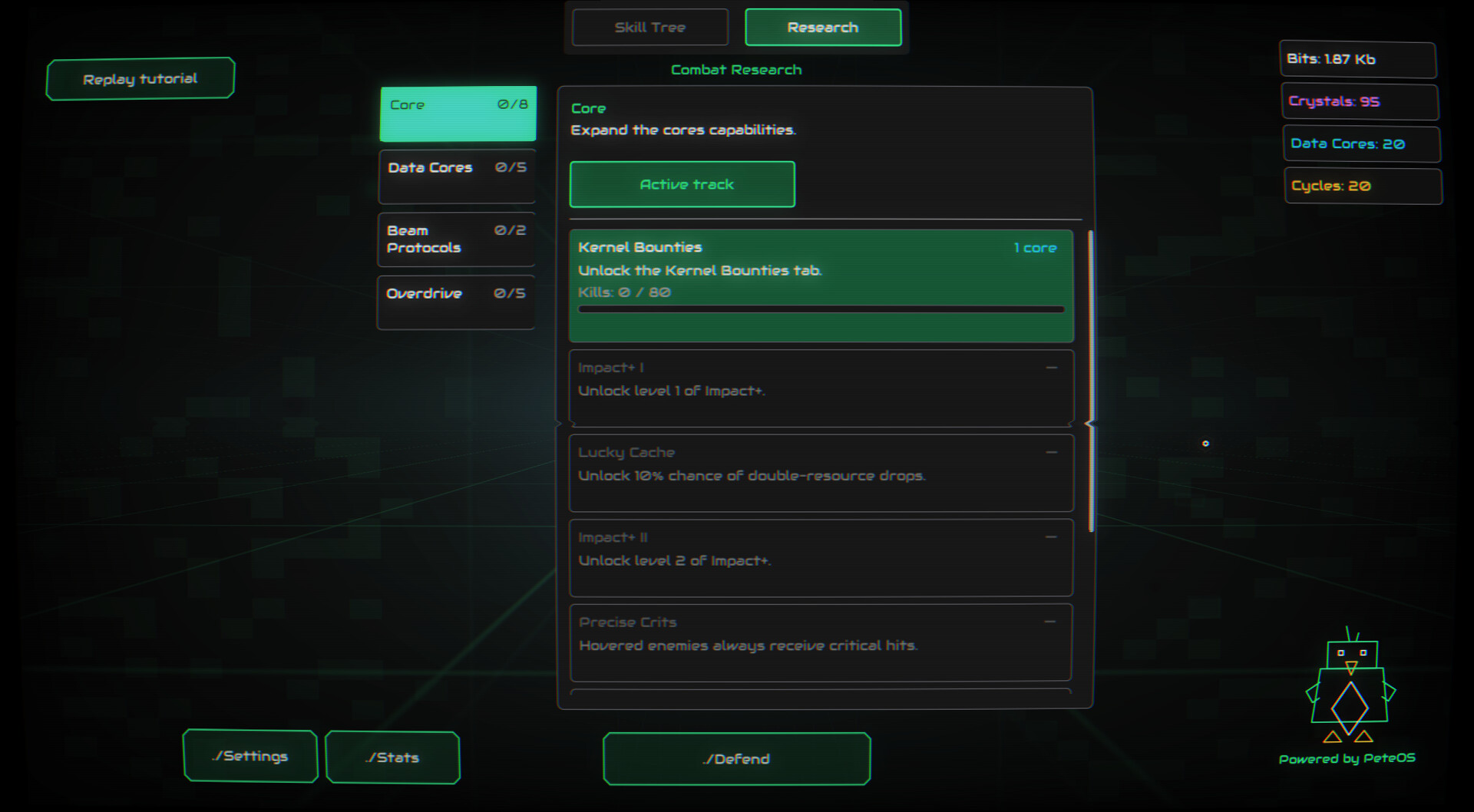
One of the more unique upgrades is Research, which unlocks a new enemy that drops a separate resource called Data Cores. These are spent in the Research tab to unlock powerful perks, such as a chance to earn double bits or trigger additional explosions. New research options are hidden behind enemy kill milestones, but you'll usually have collected enough Data Cores to unlock them as soon as they become available. One of the best rewards is Overdrive, a powerful ability that charges across multiple runs and is usually worth saving for worm fights.
In conclusion, this is exactly the kind of game I want from the incremental genre. It has enjoyable core gameplay, a satisfying progression system, and fine presentation that make it stand out without overstaying its welcome. It only takes a few hours to finish, making it an easy recommendation for fans of the genre. The only real disappointment is the achievements, which appear to be broken because none of them unlock.
The goal in this short incremental game is to protect an operating system from an infection. You do this by playing runs where a turret is locked in the middle of the screen, and your job is to shoot down waves of incoming enemies. If you want to give your fingers a break, you can enable auto fire, although aiming is still entirely up to you.
Presentation is part of the experience. The game features a scanline filter and CRT effect that make it feel like you're looking at an old monitor. If you prefer a cleaner and sharper look, both effects can be turned on or off whenever you like.
Your first run will probably end in success, but that's only the beginning. There are 20 threat stages to conquer before you can fully complete the game. Every new stage raises the threat level, increasing both the health of enemies and the damage they deal. The objective is usually to destroy enough enemies to spawn a worm, which must also be defeated to unlock the next threat stage.
The main limitation is your energy. It slowly drains over time and drops much faster whenever you get hit. Since your turret never moves, avoiding damage becomes impossible as the threat level rises. That's where the operating system's defenses and upgrades come into play, giving you a much better chance of surviving.
Bits are the game's upgrade currency, and you earn them with every enemy you destroy. That means every run is worthwhile, even if you fail to complete a stage. If the current threat level proves too difficult, you can always return to any previously unlocked stage to farm more resources.
The upgrade tree is a little different from what you're used to, but it will still feel familiar if you've played other incremental games. It's divided into rings, and you need to purchase enough upgrades in one ring before the next one becomes available. Buying a single upgrade also reveals several new branches that stretch into future rings, giving you a glimpse of what's ahead much earlier than most games do. At the same time, there's still some mystery because you can only see two rings in advance.
Another welcome difference is the upgrade pricing. Although most upgrades have multiple levels, the cost never increases. If an upgrade has five levels and the first one costs 50 bits, every level costs exactly 50 bits. It's a simple system that makes planning your upgrades much easier. The visual indicators are also excellent, making it immediately obvious which upgrades you can afford and which ones are already fully upgraded.
Base upgrade costs do increase as you move farther from the center of the tree, but it never feels excessive because the game's progression is balanced well enough that you generally keep pace with the rising threat level.
At the center of the tree are the operating system's defensive weapons. You begin with the turret, but there are four more to unlock, lightning, missiles, side turrets, and pulse. Unlike regular upgrades, these weapons require tokens instead of bits. Tokens are awarded for completing threat stages, and each stage only grants one token the first time you clear it, so you can't simply grind the easiest difficulty.
Each weapon also serves as the starting point for its own upgrade branch. The turret focuses on upgrades like damage, critical hits, and volley chance, while missiles gain improvements such as additional projectiles and a larger blast radius. There's also a sixth node in the center that contains general upgrades, including faster energy regeneration, increased enemy spawn rates, and more bits earned per kill.
One of the more unique upgrades is Research, which unlocks a new enemy that drops a separate resource called Data Cores. These are spent in the Research tab to unlock powerful perks, such as a chance to earn double bits or trigger additional explosions. New research options are hidden behind enemy kill milestones, but you'll usually have collected enough Data Cores to unlock them as soon as they become available. One of the best rewards is Overdrive, a powerful ability that charges across multiple runs and is usually worth saving for worm fights.
In conclusion, this is exactly the kind of game I want from the incremental genre. It has enjoyable core gameplay, a satisfying progression system, and fine presentation that make it stand out without overstaying its welcome. It only takes a few hours to finish, making it an easy recommendation for fans of the genre. The only real disappointment is the achievements, which appear to be broken because none of them unlock.
3 found helpful
Steam ↗