

▲ Recommended
12 hrs
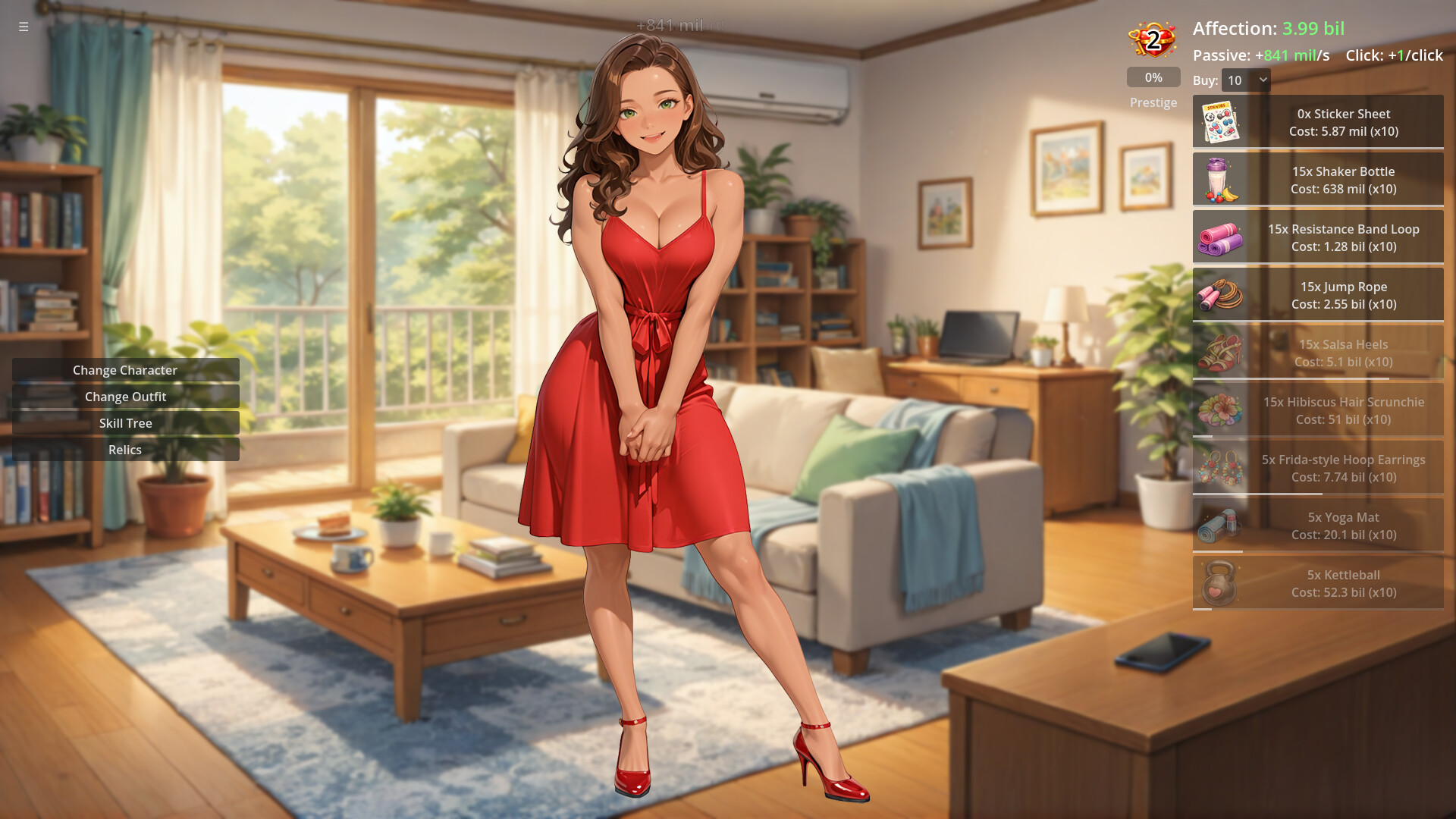
GF Clicker is a casual incremental game that mixes traditional clicker progression with light dating-sim elements, character collection, and long-term optimization. Developed and published by Simulacrum Games, it starts with an extremely accessible concept: click to generate affection, use accumulated resources to purchase gifts and upgrades, and gradually turn manual progress into an increasingly efficient automated system. It does not attempt to reinvent the idle genre, but the relationship theme gives familiar mechanics a more playful identity and provides tangible goals beyond simply watching numbers increase.
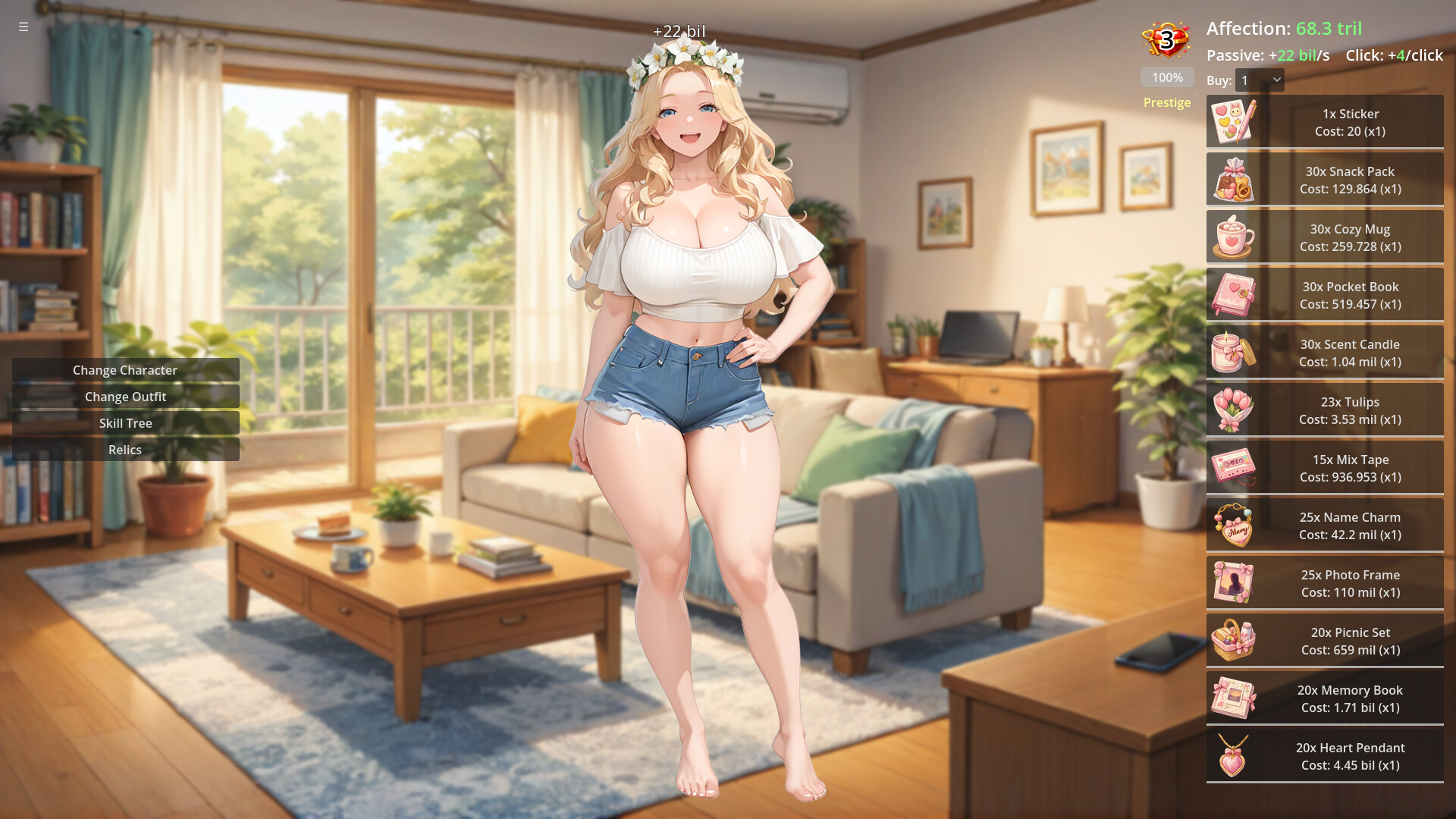
At the beginning, active clicking plays an important role in building resources. Affection serves as the backbone of progression, with earned currency being reinvested into gifts and improvements that increase future production. As the economy grows, the experience gradually shifts away from constant clicking toward automation. This transition is one of the most satisfying characteristics of a well-designed incremental game, since actions that initially require persistent input eventually happen automatically at a much greater scale. Offline progression further supports this approach by allowing meaningful advancement even when the game is not running.
There are also mechanics designed to reward players who prefer remaining actively involved. Combos, critical clicks, and floating-heart events can provide temporary opportunities to accelerate progress, giving attentive players something more substantial to do than repeatedly pressing the same button. These systems help bridge the gap between an active clicker and a passive idle game. Players can spend time optimizing their immediate gains when they want a more involved session, then allow automated systems to continue working when they prefer a relaxed background experience.
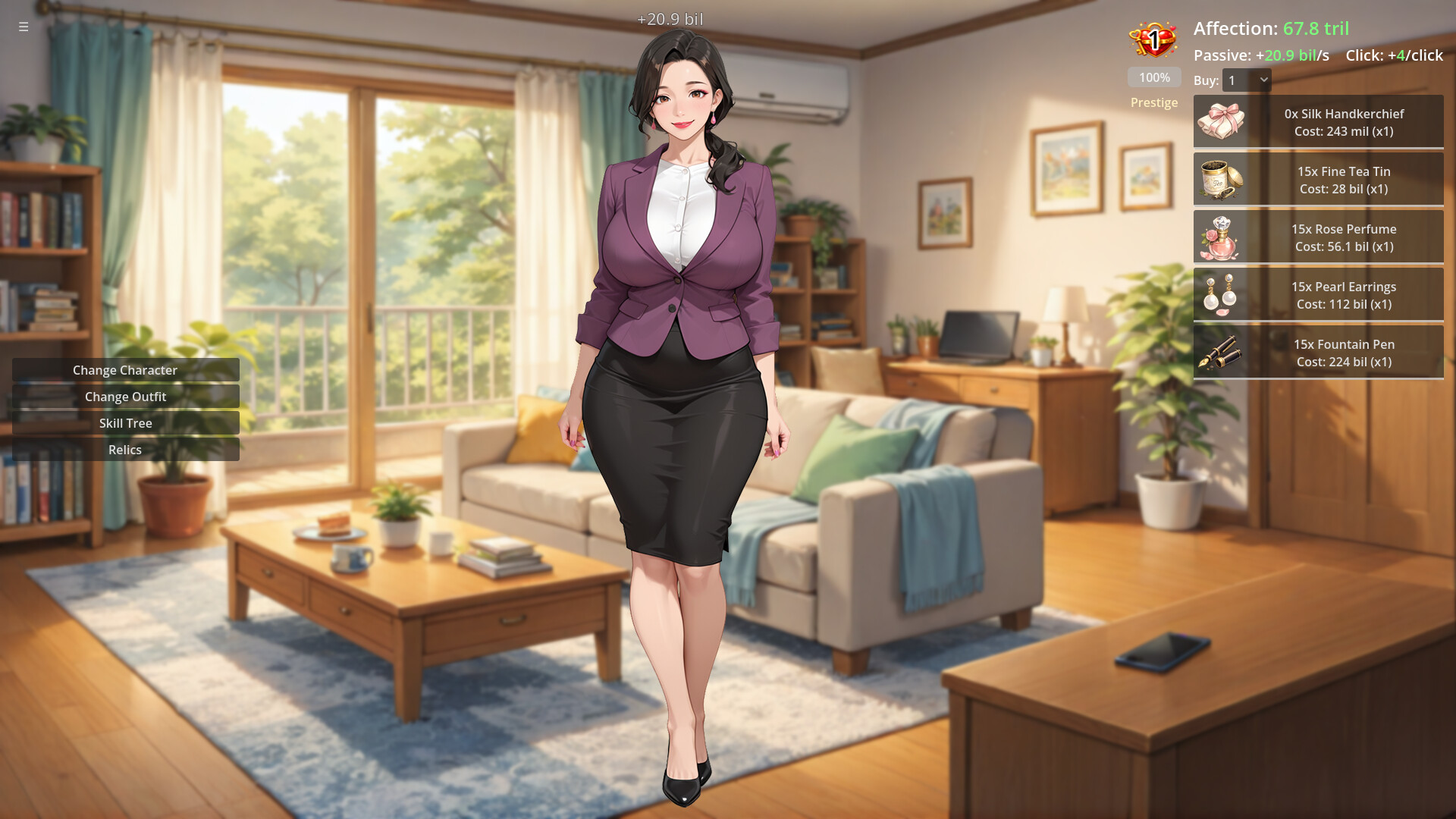
The dating-inspired portion revolves around six adult female characters: Mary, Valentina, Sarah, Lily, Katie, and Scarlet. Progressing relationships and providing gifts gives the resource economy a recognizable objective, while the different characters provide multiple progression targets. There are also 60 outfits available to collect. These costumes provide more than simple visual variety because collecting them contributes to progression, creating a practical reason to pursue the wardrobe system. Completionists consequently have a substantial secondary goal beyond maximizing resource generation.
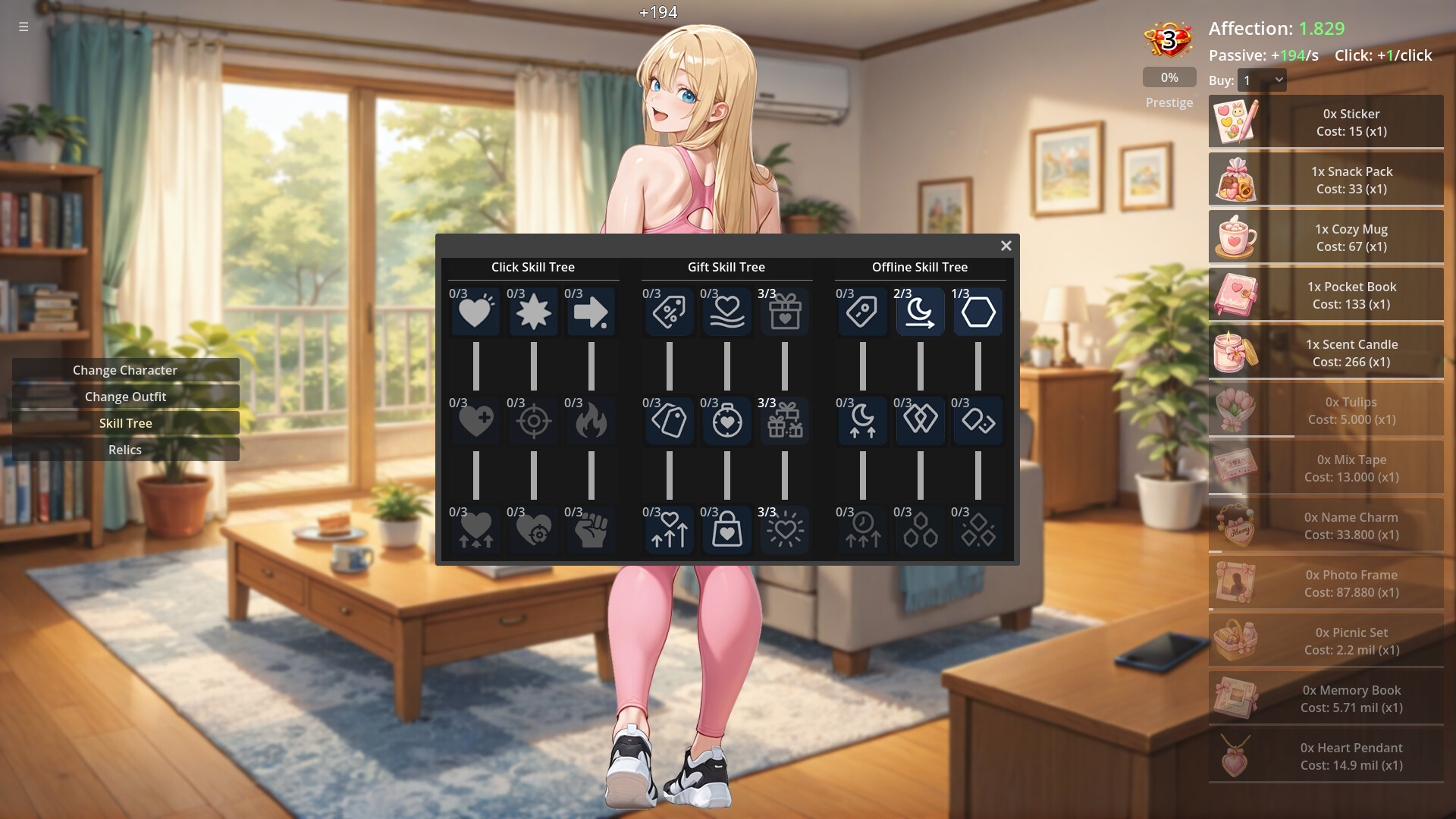
Progression becomes more involved through a three-branch skill tree. This adds some degree of specialization and gives players choices regarding how they want to improve their overall efficiency. Relics provide another layer, featuring randomized statistics and distinctive effects that can influence progression. Hunting for better relic combinations introduces an element of optimization and randomness, potentially extending the game's longevity for players interested in refining their setup rather than merely purchasing the next obvious upgrade.
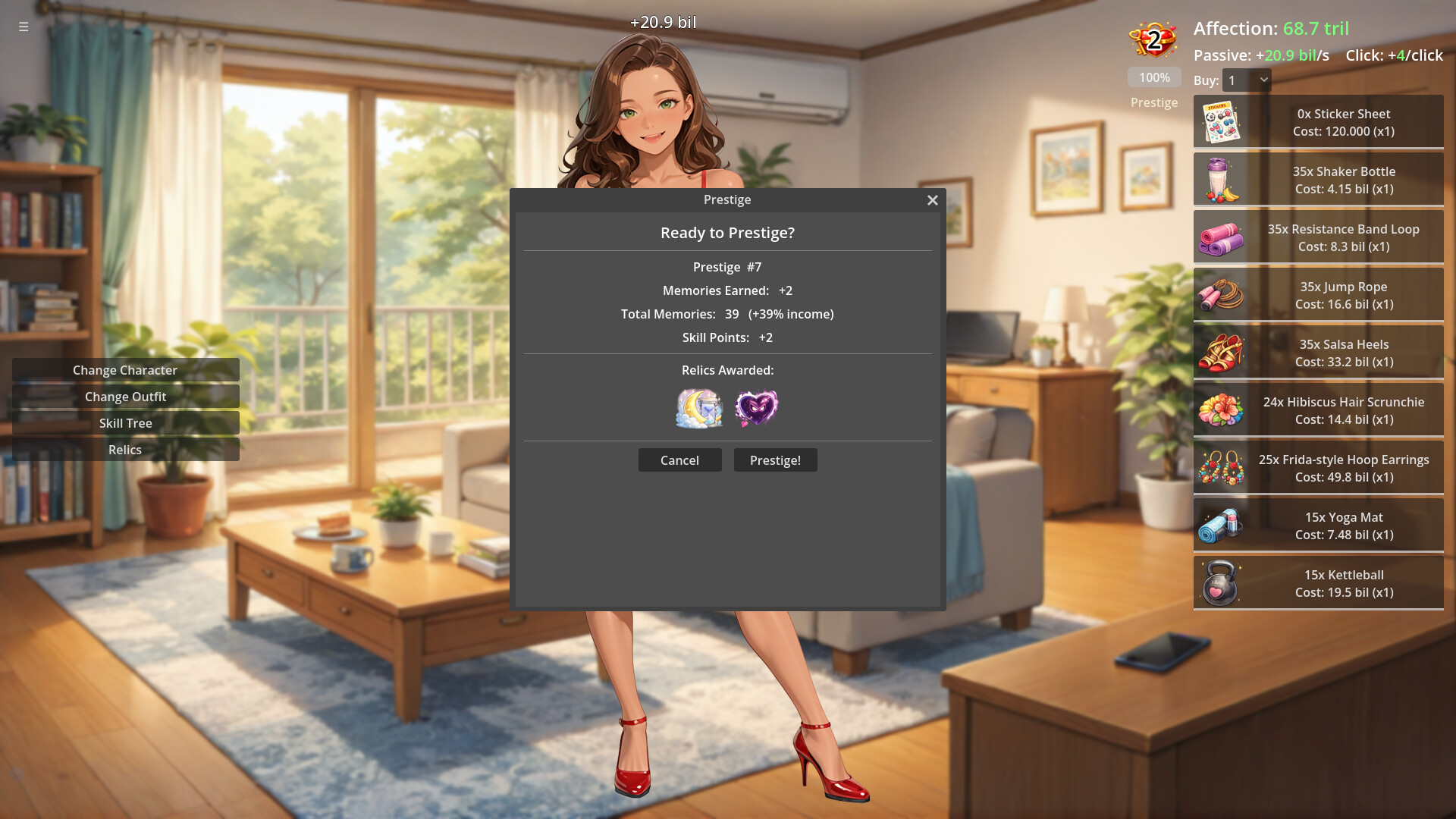
A prestige system provides the larger long-term progression loop. Resetting portions of accumulated progress in exchange for greater future efficiency is a familiar incremental-game mechanic, but it remains effective because it restores the excitement of rapid advancement. Returning to earlier stages with significantly improved capabilities can make previously slow milestones disappear quickly. Combined with skills, relics, outfits, gifts, and automated resource production, prestige gives the game a stronger sense of continuing development than its straightforward clicking premise initially suggests.
The visual presentation uses colorful 2D character artwork with an anime-influenced style. Its romantic theme includes some suggestive character imagery, including revealing clothing and swimwear, but the presentation is not centered around explicit sexual activity or full nudity. The overall atmosphere is more playful and flirtatious than overtly adult. One detail prospective players may consider important is the use of generative AI assistance for character artwork and background music. Depending on individual preferences concerning AI-generated creative material, this may either be largely irrelevant or an important consideration.
GF Clicker is strongest when approached as a low-pressure incremental experience rather than a sophisticated dating simulator. Players expecting extensive conversations, branching relationship narratives, dramatic storytelling, or complex romantic decisions may find the relationship component comparatively lightweight. The characters primarily provide personality and objectives for the progression systems. Likewise, anyone who dislikes repetitive resource accumulation, exponential numerical growth, prestige resets, or waiting for automated production will probably find the fundamental gameplay monotonous regardless of its presentation.
Steam achievements provide additional objectives for completion-oriented players, while Steam Cloud support is useful for protecting long-term progress. The single-player format is also well suited to the design because progression is based around personal efficiency rather than competitive systems. It is the type of game that can work particularly well alongside other activities, requiring attention when upgrades become available while otherwise allowing automated systems to handle much of the workload.
Steam Deck compatibility is less straightforward. The game does not have an official Steam Deck Verified or Playable designation, so it should be treated as officially unverified rather than guaranteed to provide a fully optimized handheld experience. Its relatively straightforward 2D clicker interface and modest gameplay structure may make it technically manageable through Steam Deck's compatibility environment, particularly with touchscreen or trackpad input, but controller behavior, interface readability, and overall stability should not be assumed to meet Valve's verification standards. Players specifically purchasing it for Steam Deck should therefore consider compatibility uncertain until stronger official verification or reliable testing becomes available.
Overall, GF Clicker takes a familiar incremental formula and gives it personality through romance-themed progression, collectible outfits, multiple characters, relics, skills, prestige, and offline advancement. The underlying gameplay remains deliberately repetitive, but that repetition is precisely what dedicated clicker and idle-game fans often enjoy. Its combination of active bonuses and passive automation makes it flexible enough for both focused sessions and occasional check-ins. It is not a deep relationship simulator, but as a casual progression game with dating-inspired presentation and several interconnected upgrade systems, it offers a respectable amount of material for its intended audience.
Rating: 7/10
2 found helpful
Steam ↗