▲ Recommended
11 hrs
LEEN, developed and published by Techcast, is a minimalist turn-based strategy game that strips away the excess commonly seen in modern multiplayer titles and instead focuses on a distilled core of positioning, prediction, and clever timing. Rather than relying on flashy effects or complex systems, it introduces players to an abstract battlefield where tiny paper-like figures—simple bodies with a pin for a head—compete in tightly contained arenas. At first glance, the aesthetic and mechanics appear deceptively modest, but the game’s design highlights the tension of outthinking an opponent in small, rapid-fire tactical encounters.
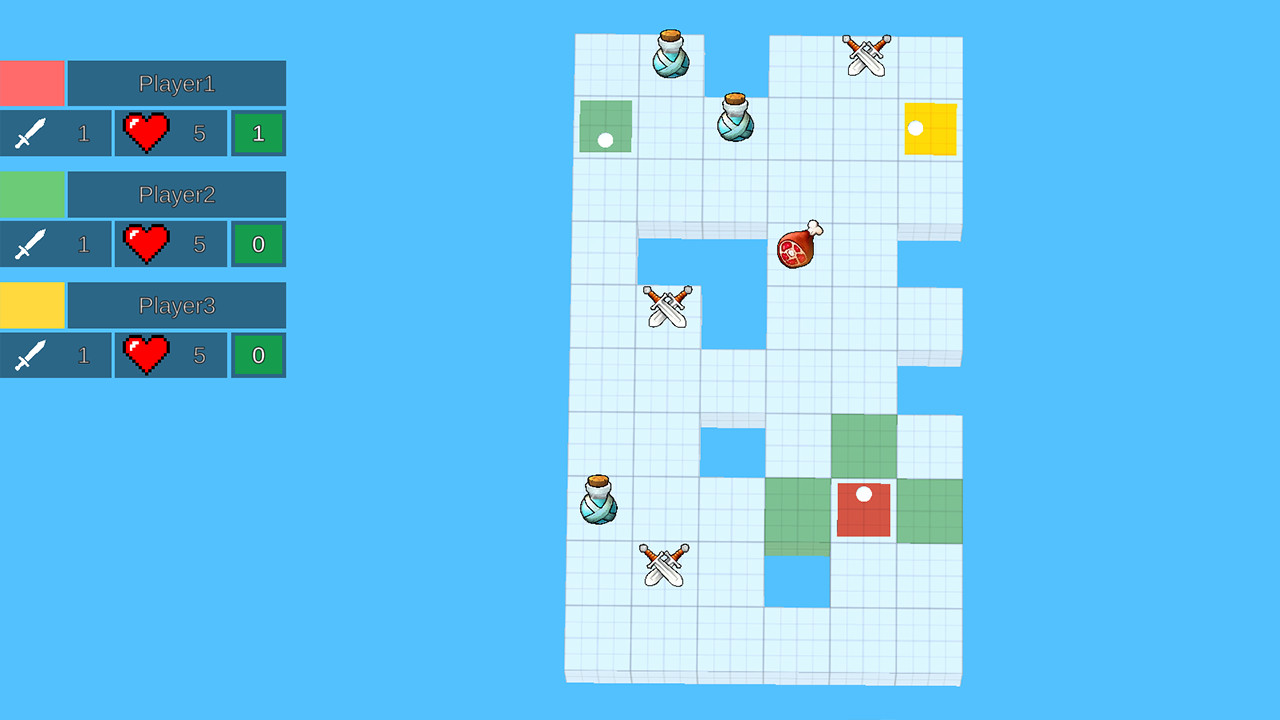
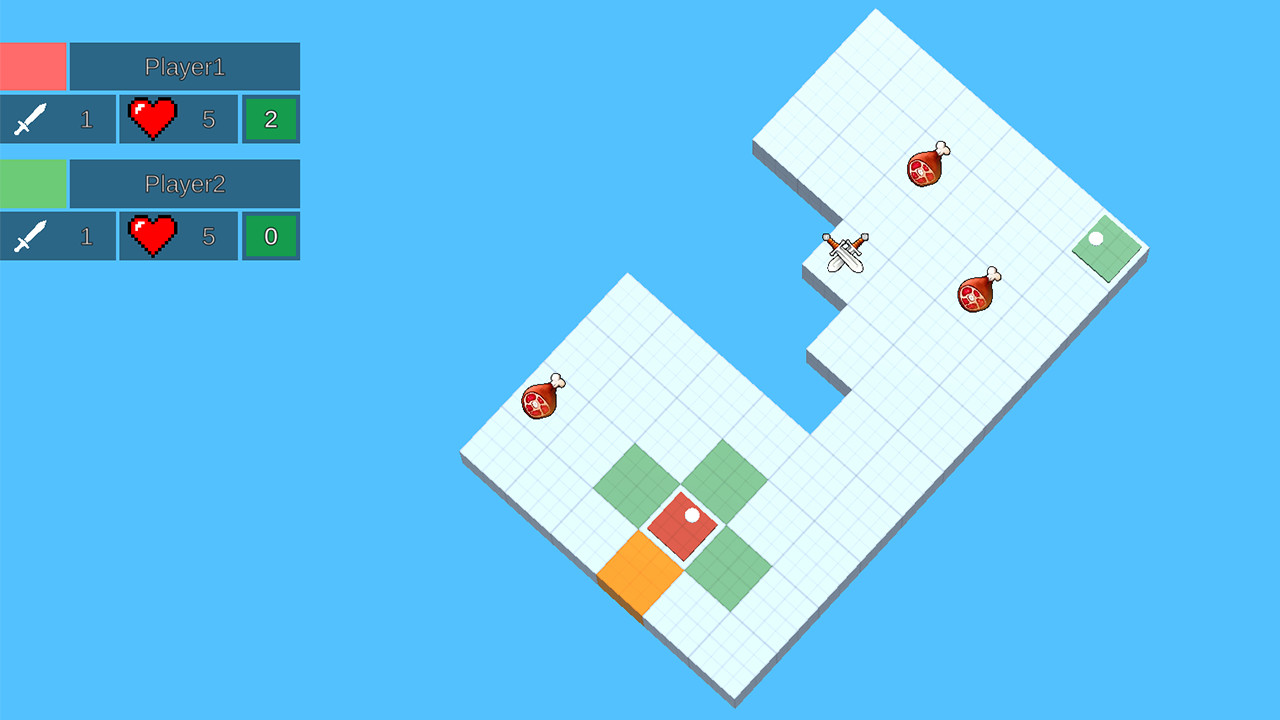
The premise of each match is straightforward: maneuver your character across a randomly generated map while managing limited actions and orienting yourself to strike at the right moment. Victory is achieved not through brute force, but by ending your turn in a position where your character successfully “points” toward your opponent, triggering an attack that eliminates them. Because every action comes with consequences and each turn unfolds like a micro-puzzle, the game emphasizes predictive thinking—trying to anticipate the movement and intentions of your opponent while disguising your own plans. This creates psychological layers beneath the minimalist surface, which can be surprisingly engaging when two players begin adapting to each other's patterns.
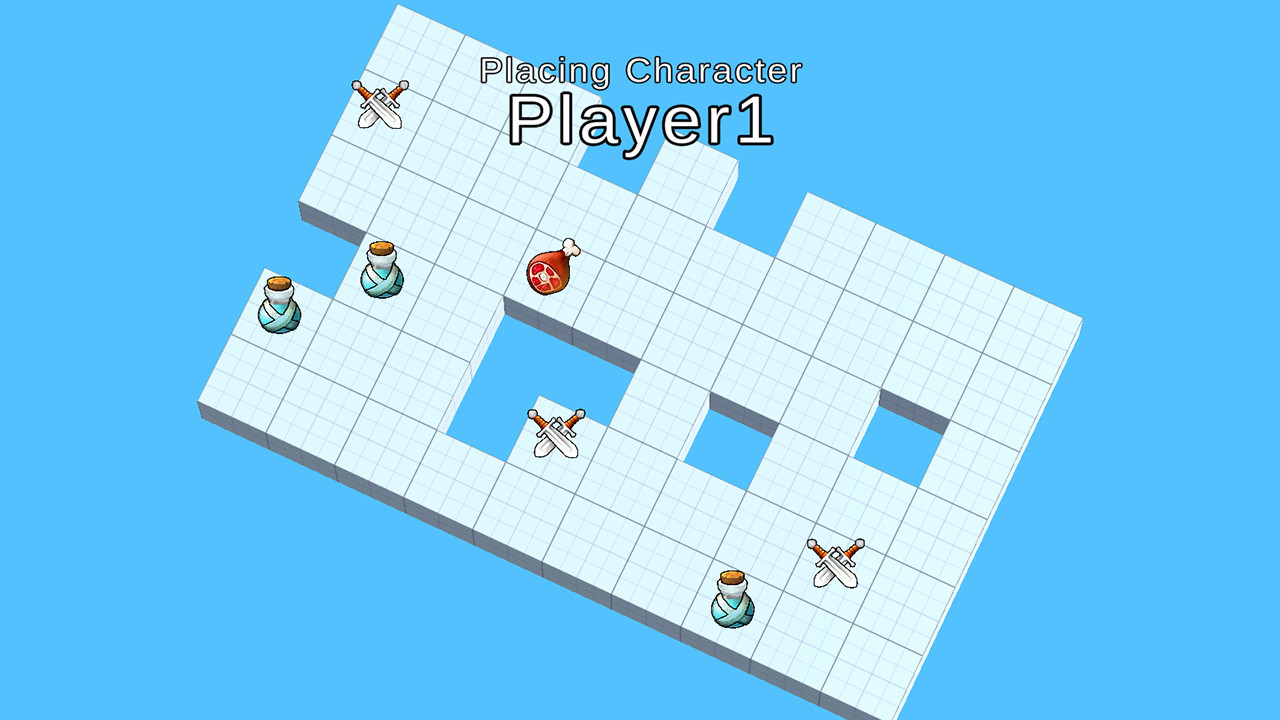
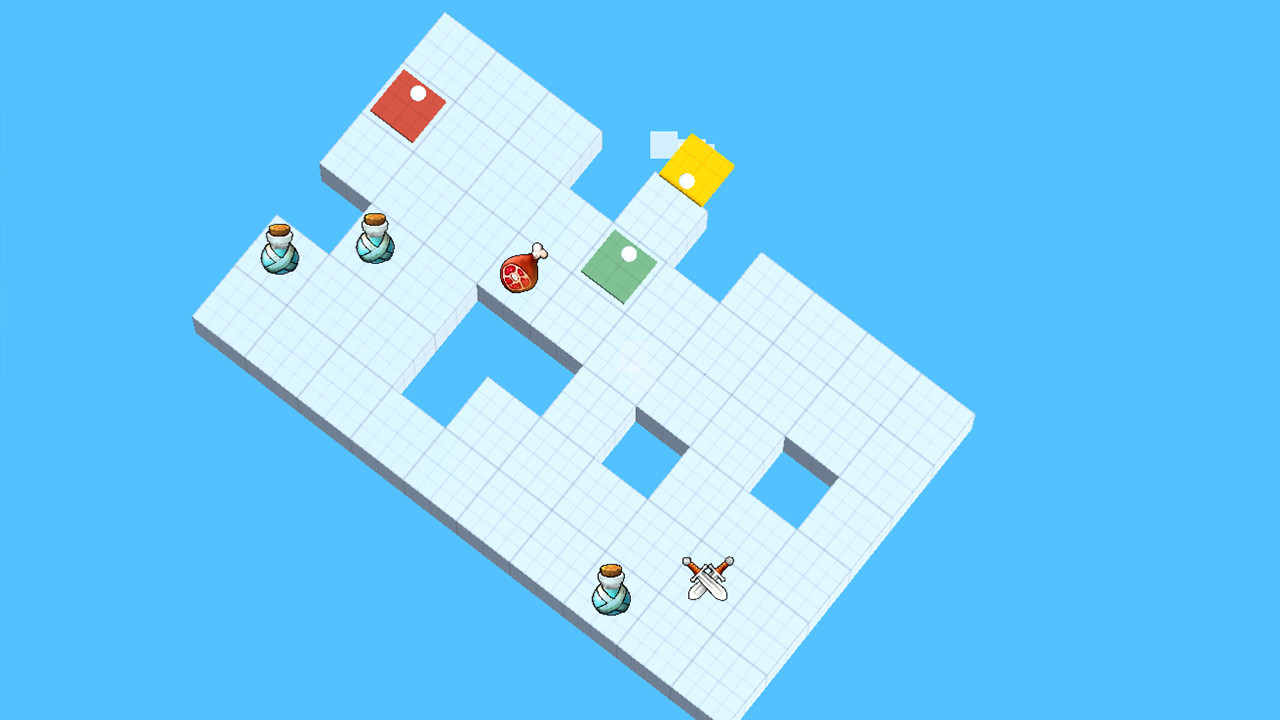
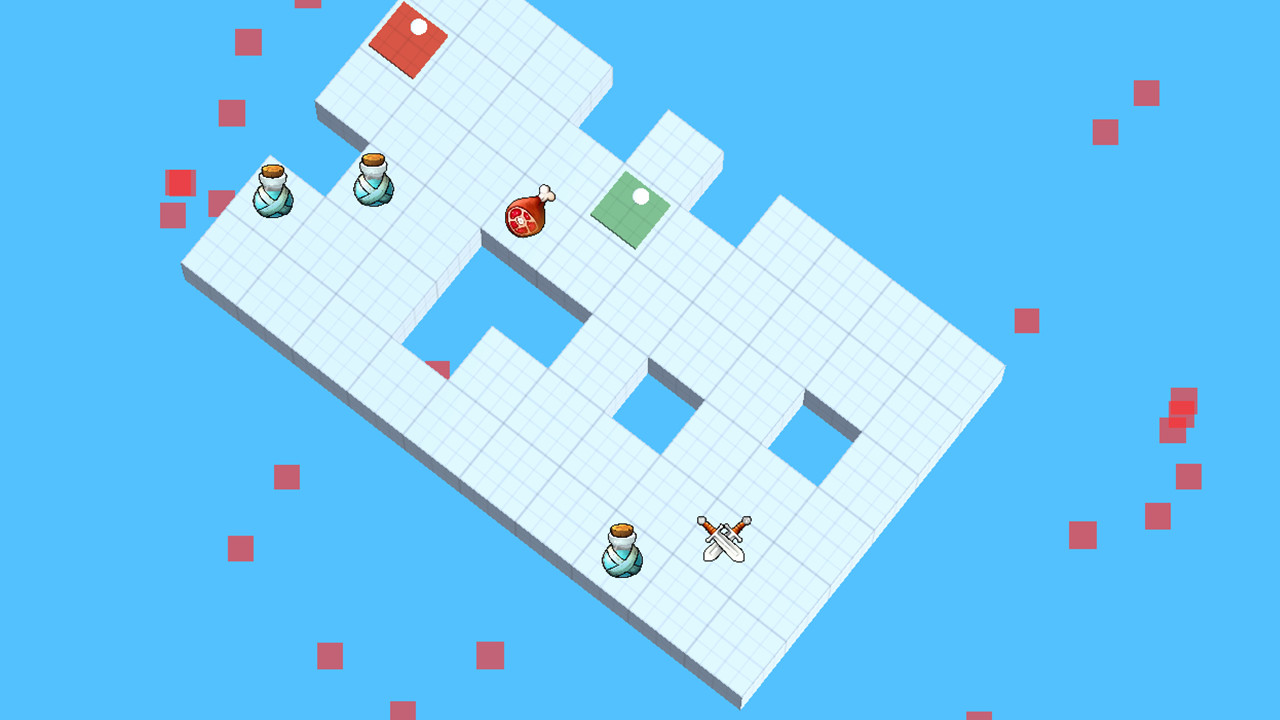
Randomized maps add a level of unpredictability that benefits the game's pacing. With each new match featuring a different layout, players can't rely on memorized strategies; instead, they adapt to shifting obstacles, item placements, and spatial constraints. This variety enhances replayability in the short term, especially during sessions with friends. LEEN supports both local and online multiplayer, allowing players to compete either side-by-side or across distance. The game’s small footprint and low system requirements make it accessible even for those with older or less powerful hardware, reinforcing its pick-up-and-play nature.
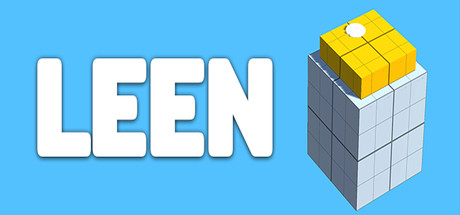
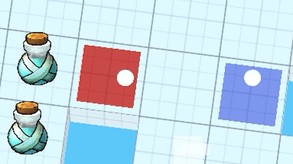
Visually, the game embraces simplicity. The “pinhead paper” design for characters, the understated textures, and the clean interface contribute to a humble charm. Rather than overwhelming players with visual noise, LEEN communicates clearly and directly, ensuring that attention stays fixed on movement, angles, and decision-making. The spare presentation also aligns well with the game’s conceptual identity: a lightweight, digitally rendered tabletop duel built around pure strategy rather than spectacle.
However, LEEN’s simplicity is also its greatest limitation. With such a small mechanical scope, the game’s depth plateaus quickly. After learning the basics—orientation, movement efficiency, and the interaction of turns—matches begin to follow familiar patterns. Without long-term progression, unlockable content, evolving mechanics, or significant variety in objectives, the experience risks becoming repetitive after only a handful of sessions. The game offers just enough tactical nuance to entertain for short bursts, but not enough structure to support extended play or a lasting skill meta.
The multiplayer population poses another challenge. With few active players online, matchmaking can take considerable time or be entirely unfeasible without organizing games with friends. In a genre where spontaneous competition is a major draw, a small or inactive community can severely limit the game’s potential. Local multiplayer remains a strong option, but only for those with someone physically present to play with; otherwise, the appeal diminishes significantly.
Technical and tagging issues noted in community discussions further highlight its indie modesty. Misclassified tags and occasional problems with multi-player stability suggest that the game would benefit from further refinement. While these are not game-breaking flaws, they reinforce the impression that LEEN is a limited, budget-scale project aimed at a very specific audience rather than a broad gaming demographic.
Ultimately, LEEN succeeds most as a compact, low-pressure strategy toy—something to pull out for a few quick rounds of mind games with a friend rather than a title intended for deep progression or long-term mastery. Its minimalist charm and accessible design make it enjoyable in short spans, and when played with someone who enjoys tactical guessing games, matches can produce thrilling, clever exchanges. Yet its narrow scope, thin online player base, and lack of progression mean that it is best approached as a bite-sized strategic diversion rather than a competitive centerpiece. For players who appreciate focused, cerebral duels without mechanical clutter, LEEN is a small but intriguing offering; for others seeking breadth, longevity, or layered complexity, its simplicity will likely run its course quickly.
Rating: 6/10