▲ Recommended
4 hrs
Alright. Moksha Space is a very experimental gaming experience that can be difficult to define despite the very thorough description on the game's product page. And so, I think the first thing to do is find out more about Moksha itself.
In looking into this, it turns out Moksha is a term for various forms of emancipation, liberation, nirvana, or release. So, four states of being, and is generally considered a metaphysical journey in Hinduism, Buddhism, Jainism and Sikhism. In the context of the game, it seems more like you are in a version of Limbo or Purgatory than a version of Nirvana, whereby you have to rely solely on perception to break the chains mentally binding you to such a place, or perhaps to simply create a place of solace in a plane of duality. Wikipedia says this about Moksha: Moksha is derived from the Sanskrit root word, muc, which means to free, let go, release, liberate. And that does seem more specifically in tune with the experience this game offers.
https://steamcommunity.com/sharedfiles/filedetails/?id=3296914804
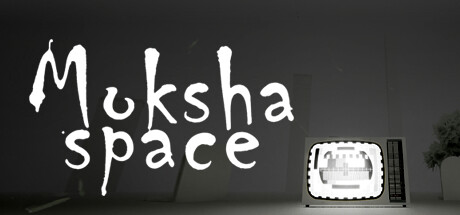
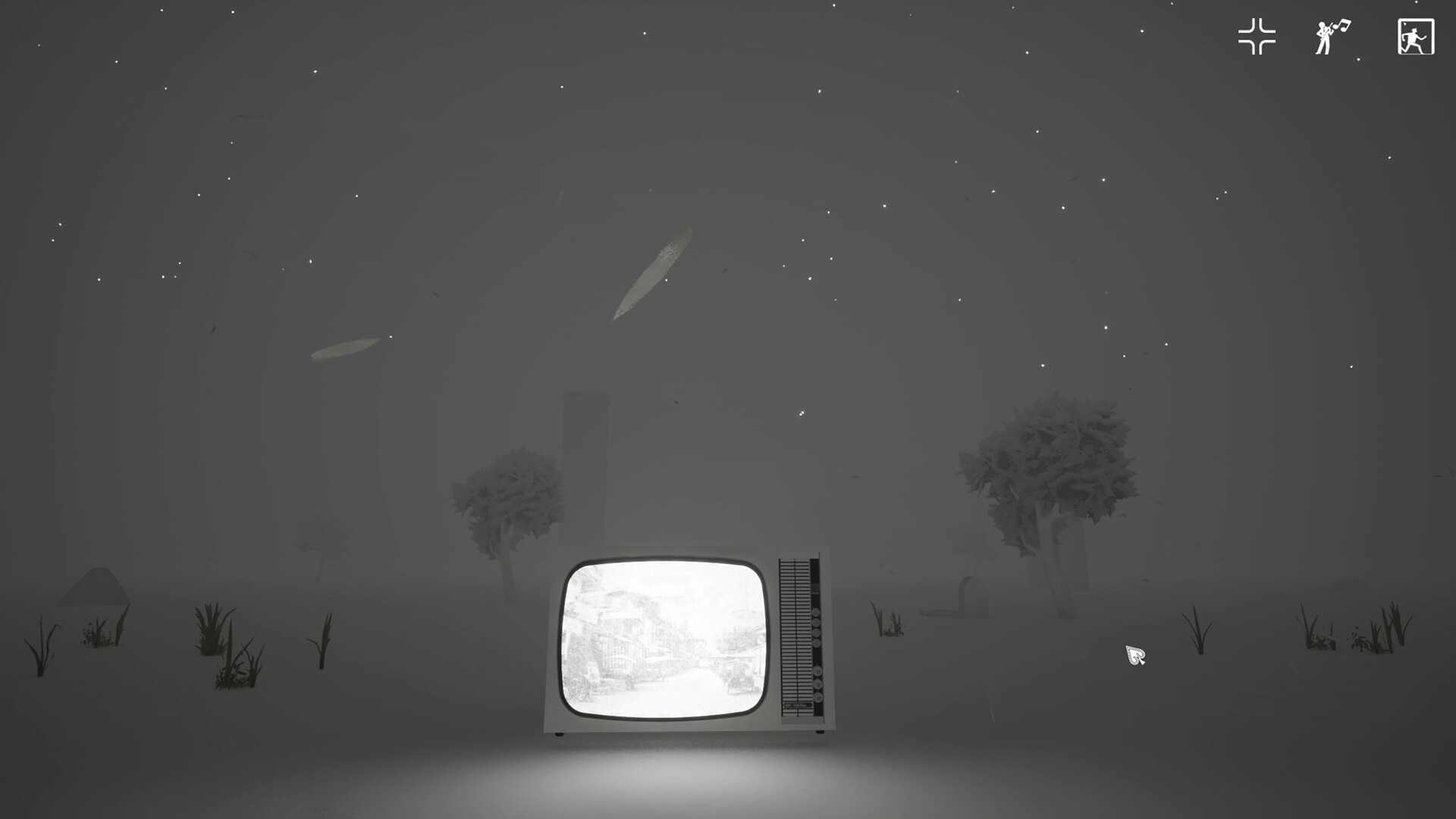
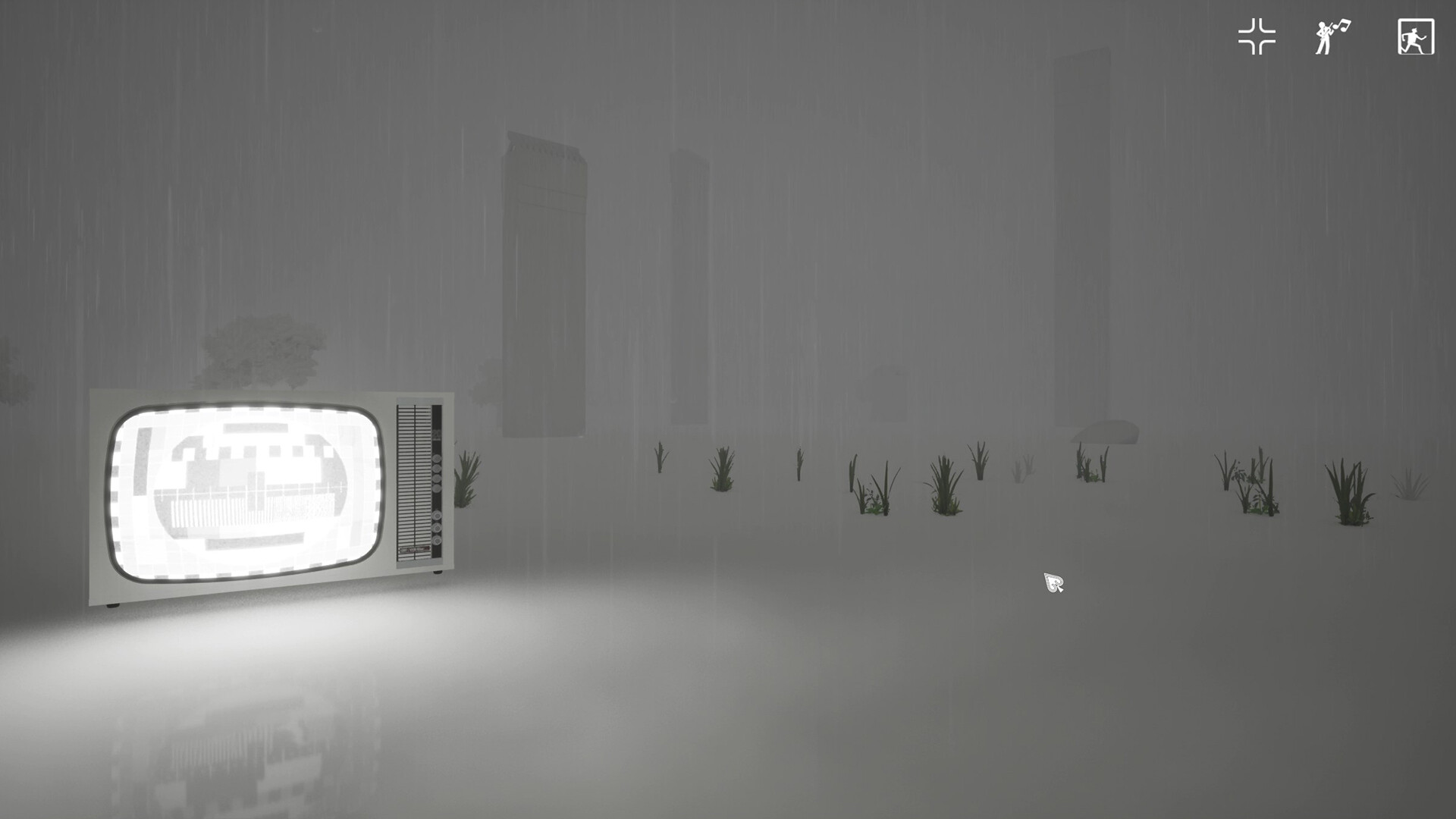
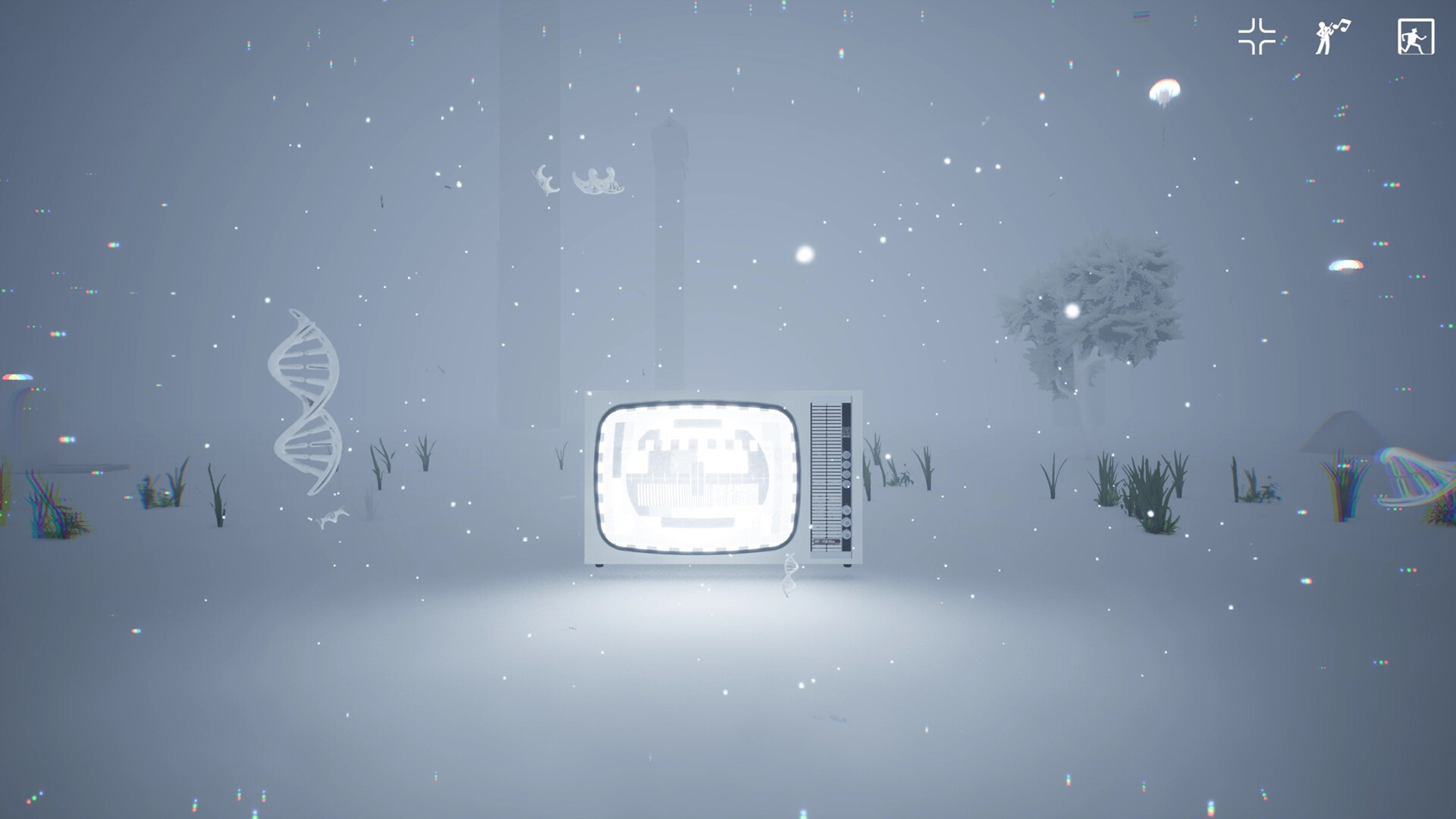
With that in mind, this is a game that requires you to also let go of popular gaming conventions. This is entirely a first-person experience, wherein you (presumably) sit cross legged between two televisions in the center of an endless plane of existence. The televisions regularly cycle through a variety of old, slightly weathered looking photos that are purposely slightly indistinct. You can tell what they are, but you can't see the finer details of any. Periodically, the televisions will display something you don't really see in the digital streaming era: a 'this broadcast has ended' type of screen. Without words of course. It's something from what is now a bygone era. At least in the States, where I live.
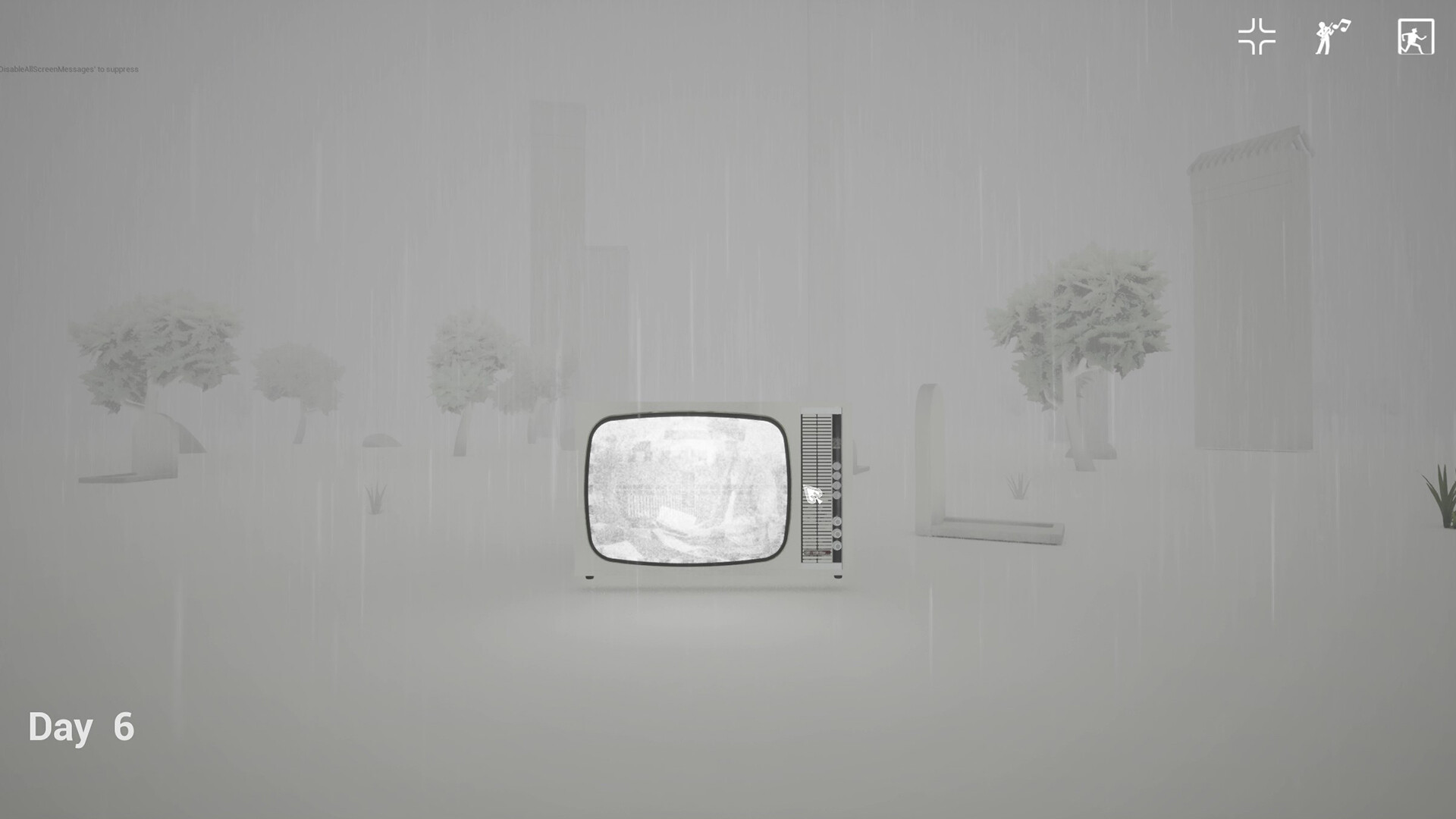
All around the endless vista of this plane of existence, you will see various mysterious structures, quite a few trees, a lot of tombstones, and what seems like grass that hasn't been yet given life. Everything except the structures can be interacted with by clicking them. Grass will be given new life and begin to grow. Tombstones will reveal the memories of the people buried there. Trees will begin to sway in the wind. Additionally, you can turn the two televisions on and off as you please, and doing so can have an impact on your presumed state of being.
The game features a day/night cycle, and the duration of each seems to be tied to seasons, which does mirror real life a bit. The game does cycle through the four seasons, so this makes quite a bit of sense. If your televisions are turned off at night, you will start to get stressed, represented by your heartbeat increasing and getting increasingly louder, until eventually, the televisions turn back on, on their own. Both need to be turned off for this effect to occur though. Additionally, at night, a static sequence of four letters will appear on random nights. Outside of the obvious tie in with the theme of four seasons and four states of Moksha, I haven't really been able to determine what practical impact they have on the game, but you can choose one to click, after which they disappear. Or you can decide not to click on any, in which case they will disappear on their own after a short period of time.
https://steamcommunity.com/sharedfiles/filedetails/?id=3296299017
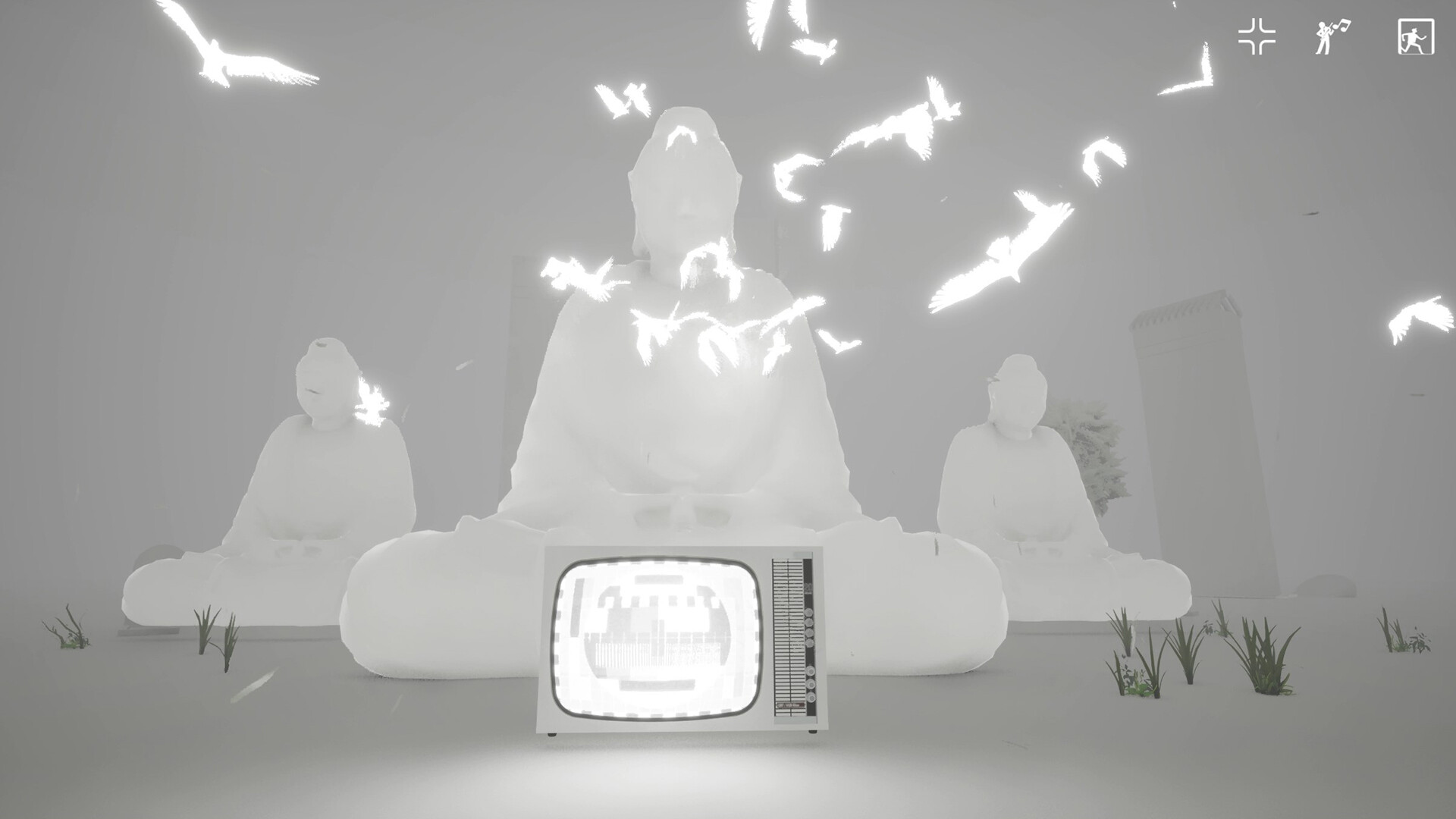
The game's description talks about choosing your path by either growing the grass as it appears or interacting with the tombstones. The exact location of everything changes each day, but as a rule, there will be a few more tufts of grass to click on each new day should that be the route you choose. Personally, I have been doing both. Growing grass and clicking on tombstones. There are a limited number of unique interactions with the tombstones though. So maybe you are really supposed to do both activities as I have been? Also, periodically as you progress through the days, a few unique events will occur. Such as an owl sounding off or the screen turning red, for example. These events represent a large percentage of the game's achievements and seem to happen at a predetermined pace, possibly impacted by your choice in how you interact with the game.
That's the game in a nutshell, so far as I've been playing it. I'm currently on day 170, and there is an achievement for playing through an entire year's cycle, so once I get to that, if something unique happens, I'll update this review. I expect that will put my gameplay right at ten hours.
Day 245, I unlocked the final event. The remainder of the game through Day 365 becomes an idle game at that point. Just waiting to get through the year.
Day 365. Nothing special happened outside of receiving the final achievement. Ran the game through Day 366 just to be sure.
https://steamcommunity.com/sharedfiles/filedetails/?id=3296299008
The only real issue I note with this game is grass and tombstones will sometimes appear in spots that are impossible to click on, and the hit detection on your cursor is imperfect. Sometimes, the tip of the cursor registers the click. Other times, the heart of the cursor is the thing needed to register your click. That could definitely be refined. Expanding the available pool of images and tombstone memories would also be ideal to give people more incentive to play this for the ten-ish hours required to make it through a year. And I'd like to see some indication of what the mysterious letters do.
I think in order to appreciate this game, you need to step away from popular gaming convention and be willing to have a patient approach, just taking in the experience. In so doing, I think you honor the concept the game is offering. It is incredibly niche, and I think you will need to have a more philosophical bent to really appreciate it, but I think Moksha Space is a worthwhile journey and worth a look.
Btw, that creepy nun image...no thanks. I turned to the other TV each time that showed up, lol.
I received this license via our IndieGems Curator program.
In looking into this, it turns out Moksha is a term for various forms of emancipation, liberation, nirvana, or release. So, four states of being, and is generally considered a metaphysical journey in Hinduism, Buddhism, Jainism and Sikhism. In the context of the game, it seems more like you are in a version of Limbo or Purgatory than a version of Nirvana, whereby you have to rely solely on perception to break the chains mentally binding you to such a place, or perhaps to simply create a place of solace in a plane of duality. Wikipedia says this about Moksha: Moksha is derived from the Sanskrit root word, muc, which means to free, let go, release, liberate. And that does seem more specifically in tune with the experience this game offers.
https://steamcommunity.com/sharedfiles/filedetails/?id=3296914804
With that in mind, this is a game that requires you to also let go of popular gaming conventions. This is entirely a first-person experience, wherein you (presumably) sit cross legged between two televisions in the center of an endless plane of existence. The televisions regularly cycle through a variety of old, slightly weathered looking photos that are purposely slightly indistinct. You can tell what they are, but you can't see the finer details of any. Periodically, the televisions will display something you don't really see in the digital streaming era: a 'this broadcast has ended' type of screen. Without words of course. It's something from what is now a bygone era. At least in the States, where I live.
All around the endless vista of this plane of existence, you will see various mysterious structures, quite a few trees, a lot of tombstones, and what seems like grass that hasn't been yet given life. Everything except the structures can be interacted with by clicking them. Grass will be given new life and begin to grow. Tombstones will reveal the memories of the people buried there. Trees will begin to sway in the wind. Additionally, you can turn the two televisions on and off as you please, and doing so can have an impact on your presumed state of being.
The game features a day/night cycle, and the duration of each seems to be tied to seasons, which does mirror real life a bit. The game does cycle through the four seasons, so this makes quite a bit of sense. If your televisions are turned off at night, you will start to get stressed, represented by your heartbeat increasing and getting increasingly louder, until eventually, the televisions turn back on, on their own. Both need to be turned off for this effect to occur though. Additionally, at night, a static sequence of four letters will appear on random nights. Outside of the obvious tie in with the theme of four seasons and four states of Moksha, I haven't really been able to determine what practical impact they have on the game, but you can choose one to click, after which they disappear. Or you can decide not to click on any, in which case they will disappear on their own after a short period of time.
https://steamcommunity.com/sharedfiles/filedetails/?id=3296299017
The game's description talks about choosing your path by either growing the grass as it appears or interacting with the tombstones. The exact location of everything changes each day, but as a rule, there will be a few more tufts of grass to click on each new day should that be the route you choose. Personally, I have been doing both. Growing grass and clicking on tombstones. There are a limited number of unique interactions with the tombstones though. So maybe you are really supposed to do both activities as I have been? Also, periodically as you progress through the days, a few unique events will occur. Such as an owl sounding off or the screen turning red, for example. These events represent a large percentage of the game's achievements and seem to happen at a predetermined pace, possibly impacted by your choice in how you interact with the game.
That's the game in a nutshell, so far as I've been playing it. I'm currently on day 170, and there is an achievement for playing through an entire year's cycle, so once I get to that, if something unique happens, I'll update this review. I expect that will put my gameplay right at ten hours.
Day 245, I unlocked the final event. The remainder of the game through Day 365 becomes an idle game at that point. Just waiting to get through the year.
Day 365. Nothing special happened outside of receiving the final achievement. Ran the game through Day 366 just to be sure.
https://steamcommunity.com/sharedfiles/filedetails/?id=3296299008
The only real issue I note with this game is grass and tombstones will sometimes appear in spots that are impossible to click on, and the hit detection on your cursor is imperfect. Sometimes, the tip of the cursor registers the click. Other times, the heart of the cursor is the thing needed to register your click. That could definitely be refined. Expanding the available pool of images and tombstone memories would also be ideal to give people more incentive to play this for the ten-ish hours required to make it through a year. And I'd like to see some indication of what the mysterious letters do.
I think in order to appreciate this game, you need to step away from popular gaming convention and be willing to have a patient approach, just taking in the experience. In so doing, I think you honor the concept the game is offering. It is incredibly niche, and I think you will need to have a more philosophical bent to really appreciate it, but I think Moksha Space is a worthwhile journey and worth a look.
Btw, that creepy nun image...no thanks. I turned to the other TV each time that showed up, lol.
I received this license via our IndieGems Curator program.
If you found this review helpful and would be interested in supporting my Curator group, Robilar's Reviews, it would be appreciated. Cheers.Also follow IndieGems for more reviews like this one.
16 found helpful
Steam ↗