▲ Recommended
14 hrs
Merge Guard is a surprisingly enjoyable indie strategy game that combines merge mechanics with village defense in a way that feels simple at first but gradually becomes very addictive. Instead of trying to overwhelm players with complicated systems or high-pressure gameplay, the game focuses on creating a relaxing progression loop where every upgrade feels rewarding. It takes familiar mechanics from merge-style mobile games and blends them with light tower defense concepts, resulting in an experience that is easy to understand yet difficult to stop playing once the cycle of upgrading and defending begins.
The gameplay revolves around protecting a village from incoming enemy attacks while constantly improving your defenses through merging units and collecting resources. Players combine similar warriors or structures to create stronger versions, allowing the settlement to grow more powerful over time. The controls are straightforward and the systems are introduced gradually, making the game accessible even to players who normally avoid strategy titles. There is very little frustration during the early hours because the game prioritizes steady progression and experimentation over punishing difficulty spikes. This relaxed design philosophy gives Merge Guard a cozy atmosphere that works well for casual gaming sessions.
One of the game’s biggest strengths is the sense of progression it delivers. Every successful merge feels satisfying because it immediately results in stronger units or more efficient production. The gameplay loop is built around constant improvement, and the game does an excellent job of rewarding players frequently enough to maintain engagement. Watching a weak village slowly transform into a fortified settlement filled with upgraded defenders creates a strong sense of accomplishment. Even though the mechanics remain fairly simple, the consistent stream of upgrades makes the experience feel active and rewarding almost all the time.
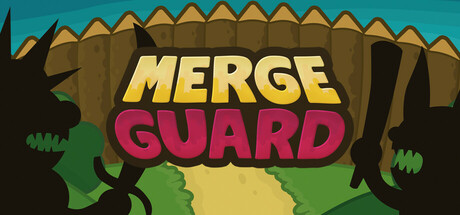
Visually, Merge Guard embraces a bright cartoon-inspired art style that perfectly fits its casual tone. The environments are colorful, character designs are charming, and the animations give the battlefield enough movement to keep everything visually appealing. The graphics are not technologically impressive, but the art direction succeeds because it gives the game personality. Many indie strategy games rely on generic fantasy aesthetics, but Merge Guard feels more inviting thanks to its cheerful presentation and smooth visual design. The clean interface also helps players manage resources and units without confusion, which is important in a game centered around constant upgrades and merging.
The pacing of the game deserves praise as well. Unlike more intense tower defense titles that demand constant attention and precision, Merge Guard allows players to progress comfortably at their own pace. The battles become more challenging over time, but the game rarely feels stressful. This balance makes it especially appealing for players looking for a strategy game they can enjoy casually without committing to extremely long sessions or mastering complicated mechanics. It creates a relaxing gameplay flow where players can focus on optimization and growth instead of reacting to nonstop chaos.
At the same time, the game’s simplicity can also become its biggest weakness after several hours. While the merging mechanics are satisfying, the gameplay does not evolve dramatically as the experience continues. Enemy encounters eventually begin to feel repetitive, and the overall strategy remains fairly limited compared to deeper tower defense or management games. There are moments where the gameplay loop starts feeling predictable because new mechanics are introduced slowly and the core formula changes very little. Players searching for complex tactical depth or highly varied combat scenarios may eventually feel that the experience lacks long-term substance.
Content variety is another area where the game feels somewhat limited. Merge Guard works best as a lightweight indie experience meant for short or medium-length play sessions rather than endless replayability. While there are upgrades to unlock and systems to optimize, the game does not offer the enormous scale or complexity seen in larger strategy games. Fortunately, the developers appear interested in improving the experience through updates and additional features, which helps the game feel more supported and alive despite its modest scope.
The sound design complements the gameplay nicely without drawing too much attention to itself. The soundtrack uses calm and upbeat melodies that reinforce the game’s relaxing atmosphere, while sound effects provide enough feedback to make merges and combat actions feel responsive. Nothing about the audio presentation is groundbreaking, but it fits the overall tone of the game effectively. The music succeeds at keeping the experience comfortable and lighthearted during extended sessions.
What ultimately makes Merge Guard enjoyable is how well it understands its own identity. The game never tries to pretend it is a hardcore strategy masterpiece. Instead, it focuses entirely on being approachable, satisfying, and easy to enjoy. The combination of merge mechanics, village growth, and casual defense gameplay creates a loop that feels consistently entertaining despite its simplicity. It captures the same kind of satisfaction found in incremental or idle-style games where steady progression becomes the main motivation for continuing to play.
Merge Guard may not offer enough depth for players seeking advanced strategy systems or endless content, but it succeeds at delivering a charming and addictive indie experience with strong casual appeal. Its accessible gameplay, colorful visuals, and rewarding progression systems make it an enjoyable title for fans of relaxing management and merge games. While repetition eventually becomes noticeable, the overall experience remains fun because the core gameplay loop is polished and satisfying enough to carry the game through its limitations.
Rating: 6/10
The gameplay revolves around protecting a village from incoming enemy attacks while constantly improving your defenses through merging units and collecting resources. Players combine similar warriors or structures to create stronger versions, allowing the settlement to grow more powerful over time. The controls are straightforward and the systems are introduced gradually, making the game accessible even to players who normally avoid strategy titles. There is very little frustration during the early hours because the game prioritizes steady progression and experimentation over punishing difficulty spikes. This relaxed design philosophy gives Merge Guard a cozy atmosphere that works well for casual gaming sessions.
One of the game’s biggest strengths is the sense of progression it delivers. Every successful merge feels satisfying because it immediately results in stronger units or more efficient production. The gameplay loop is built around constant improvement, and the game does an excellent job of rewarding players frequently enough to maintain engagement. Watching a weak village slowly transform into a fortified settlement filled with upgraded defenders creates a strong sense of accomplishment. Even though the mechanics remain fairly simple, the consistent stream of upgrades makes the experience feel active and rewarding almost all the time.
Visually, Merge Guard embraces a bright cartoon-inspired art style that perfectly fits its casual tone. The environments are colorful, character designs are charming, and the animations give the battlefield enough movement to keep everything visually appealing. The graphics are not technologically impressive, but the art direction succeeds because it gives the game personality. Many indie strategy games rely on generic fantasy aesthetics, but Merge Guard feels more inviting thanks to its cheerful presentation and smooth visual design. The clean interface also helps players manage resources and units without confusion, which is important in a game centered around constant upgrades and merging.
The pacing of the game deserves praise as well. Unlike more intense tower defense titles that demand constant attention and precision, Merge Guard allows players to progress comfortably at their own pace. The battles become more challenging over time, but the game rarely feels stressful. This balance makes it especially appealing for players looking for a strategy game they can enjoy casually without committing to extremely long sessions or mastering complicated mechanics. It creates a relaxing gameplay flow where players can focus on optimization and growth instead of reacting to nonstop chaos.
At the same time, the game’s simplicity can also become its biggest weakness after several hours. While the merging mechanics are satisfying, the gameplay does not evolve dramatically as the experience continues. Enemy encounters eventually begin to feel repetitive, and the overall strategy remains fairly limited compared to deeper tower defense or management games. There are moments where the gameplay loop starts feeling predictable because new mechanics are introduced slowly and the core formula changes very little. Players searching for complex tactical depth or highly varied combat scenarios may eventually feel that the experience lacks long-term substance.
Content variety is another area where the game feels somewhat limited. Merge Guard works best as a lightweight indie experience meant for short or medium-length play sessions rather than endless replayability. While there are upgrades to unlock and systems to optimize, the game does not offer the enormous scale or complexity seen in larger strategy games. Fortunately, the developers appear interested in improving the experience through updates and additional features, which helps the game feel more supported and alive despite its modest scope.
The sound design complements the gameplay nicely without drawing too much attention to itself. The soundtrack uses calm and upbeat melodies that reinforce the game’s relaxing atmosphere, while sound effects provide enough feedback to make merges and combat actions feel responsive. Nothing about the audio presentation is groundbreaking, but it fits the overall tone of the game effectively. The music succeeds at keeping the experience comfortable and lighthearted during extended sessions.
What ultimately makes Merge Guard enjoyable is how well it understands its own identity. The game never tries to pretend it is a hardcore strategy masterpiece. Instead, it focuses entirely on being approachable, satisfying, and easy to enjoy. The combination of merge mechanics, village growth, and casual defense gameplay creates a loop that feels consistently entertaining despite its simplicity. It captures the same kind of satisfaction found in incremental or idle-style games where steady progression becomes the main motivation for continuing to play.
Merge Guard may not offer enough depth for players seeking advanced strategy systems or endless content, but it succeeds at delivering a charming and addictive indie experience with strong casual appeal. Its accessible gameplay, colorful visuals, and rewarding progression systems make it an enjoyable title for fans of relaxing management and merge games. While repetition eventually becomes noticeable, the overall experience remains fun because the core gameplay loop is polished and satisfying enough to carry the game through its limitations.
Rating: 6/10
0 found helpful
Steam ↗