▲ Recommended
4 hrs
The initial welcome to the game is charming, as it begins with a book opening across your desktop. It quickly becomes clear that this is no ordinary book. Inside lies a living world that has unfortunately been overrun by monsters. You are guided by the book’s guardian, Fei, who tasks you with reclaiming this world with the help of heroes. Your journey begins with Arya, the very first hero, who starts out as a complete novice.
The game is divided into two main parts. In the first part, Arya generates money in an idle fashion. However, this process only lasts for a little over two minutes before you need to manually press the claim button. If you fail to do so, the income stops accumulating. At the same time, there is also a more active way to earn money. By clicking and shaking a hero, you can generate significantly more gold that is instantly added to your stash.
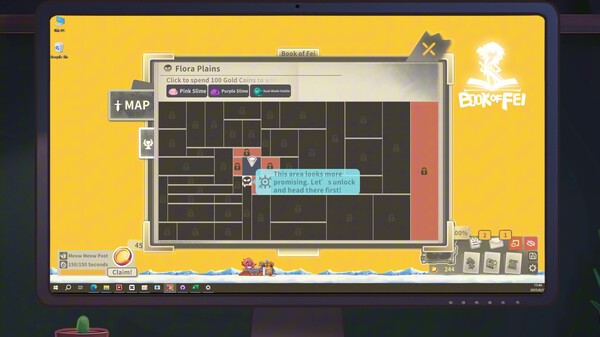
The second, and main component of the game revolves around battles. The world within the book is divided into a grid of smaller and larger squares. Your objective is to travel across these spaces, defeat several waves of enemies, and ultimately face a boss at the end of each encounter. Combat itself is automatic. If your heroes win, they advance to the next wave. If they lose, the battle resets back to the first wave.
Unlocking new areas on the map requires spending money. Each spot only needs to be unlocked once, but the cost steadily increases the further you move away from the starting point in the center toward the outer edges of the map. The ultimate destination lies on the far right side, serving as the final goal of your adventure.
Defeat is not necessarily a setback because it is also part of the progression. Heroes gain experience from every enemy they defeat, gradually increasing their health, attack power, and speed. Each hero also has two special abilities that activate automatically during combat.
Since no hero can fight effectively without equipment, you will spend your hard earned money on chests that contain random gear. These chests can provide weapons, armor, or accessories. Heroes belong to different archetypes such as warriors or archers, and each archetype has its own type of chest.
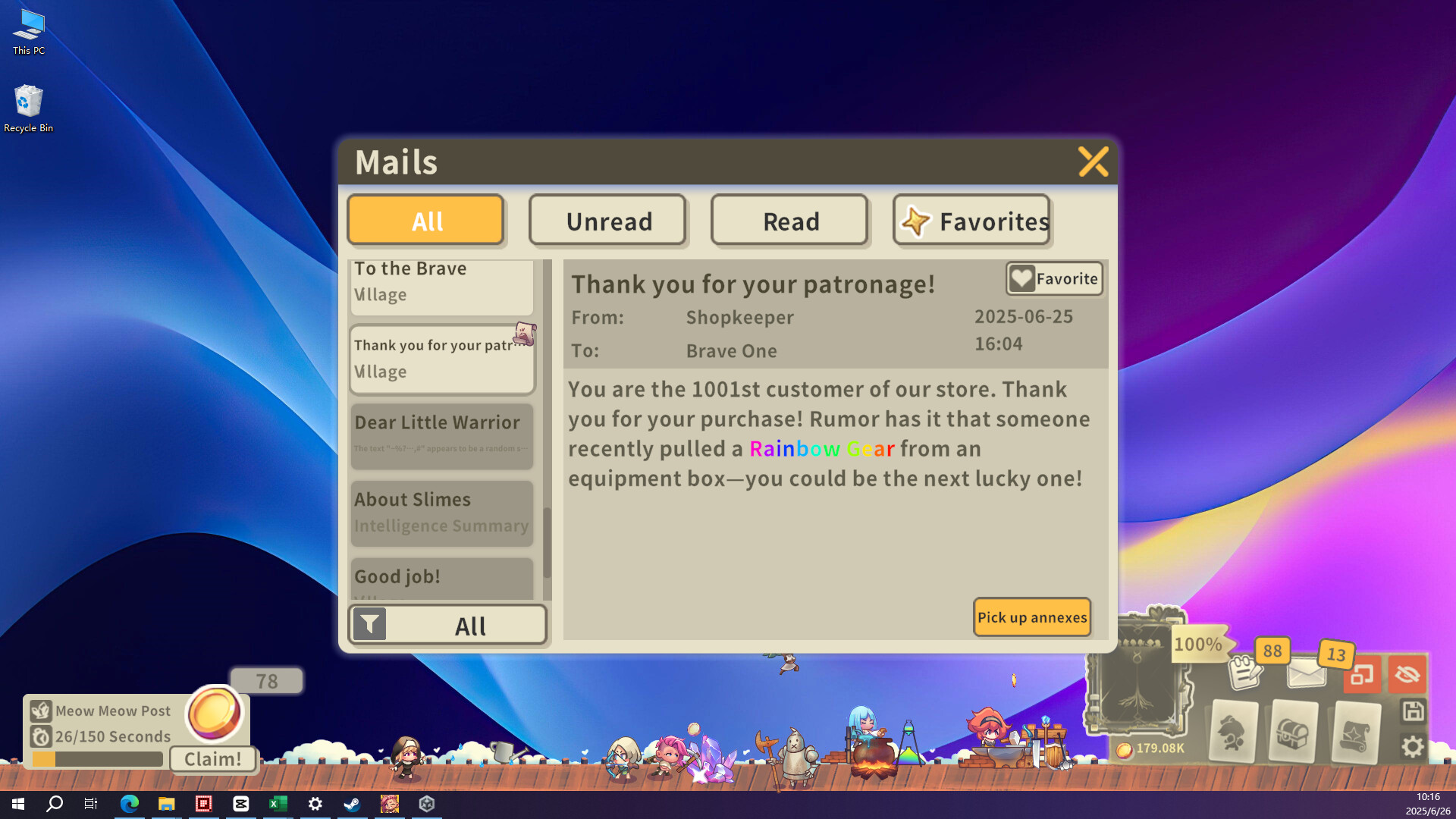
Every hero has four tiers of equipment for each gear category. While the first tier is available from the start, the remaining tiers unlock as you progress through the world. Fortunately, the game avoids drowning the player in endless piles of useless items. If you obtain equipment with a higher rarity tier, it is immediately equipped. The highest rarity is the rainbow tier. If you receive a lower quality item, it automatically converts into experience books that can be used to boost a hero’s level. Once you manage to acquire the best possible equipment, chests will reward only experience books instead of redundant gear.
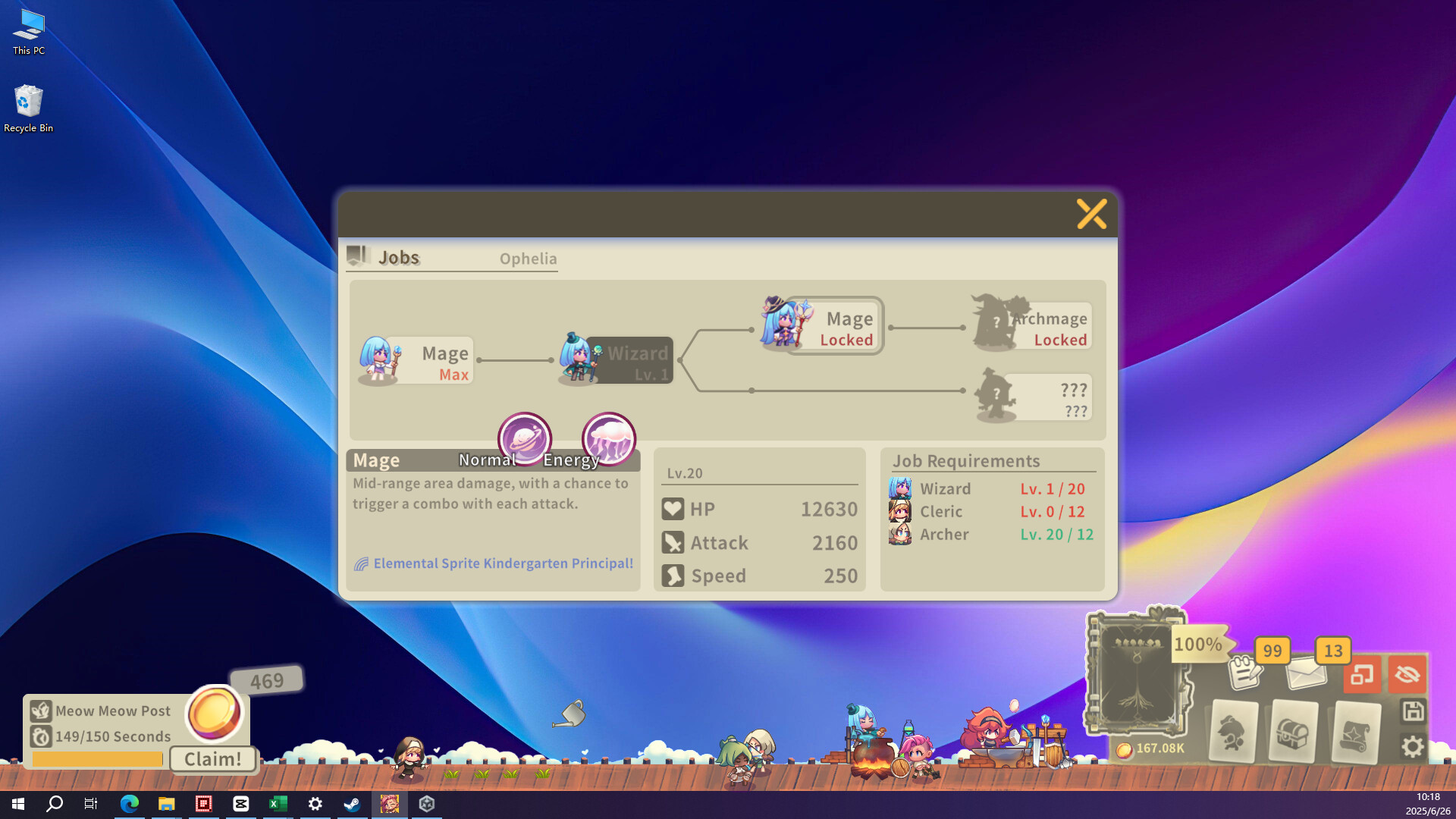
As you reclaim areas of the map, new heroes become available for purchase. Up to three heroes can form a party and participate in battles. However, each hero has a level cap. When a hero reaches the maximum level and fulfills certain requirements, you can promote them to a stronger class. This promotion increases all their stats and grants two additional abilities, although the hero returns to level one. Beyond this, there are even third and fourth class promotions, though reaching them may take some time.
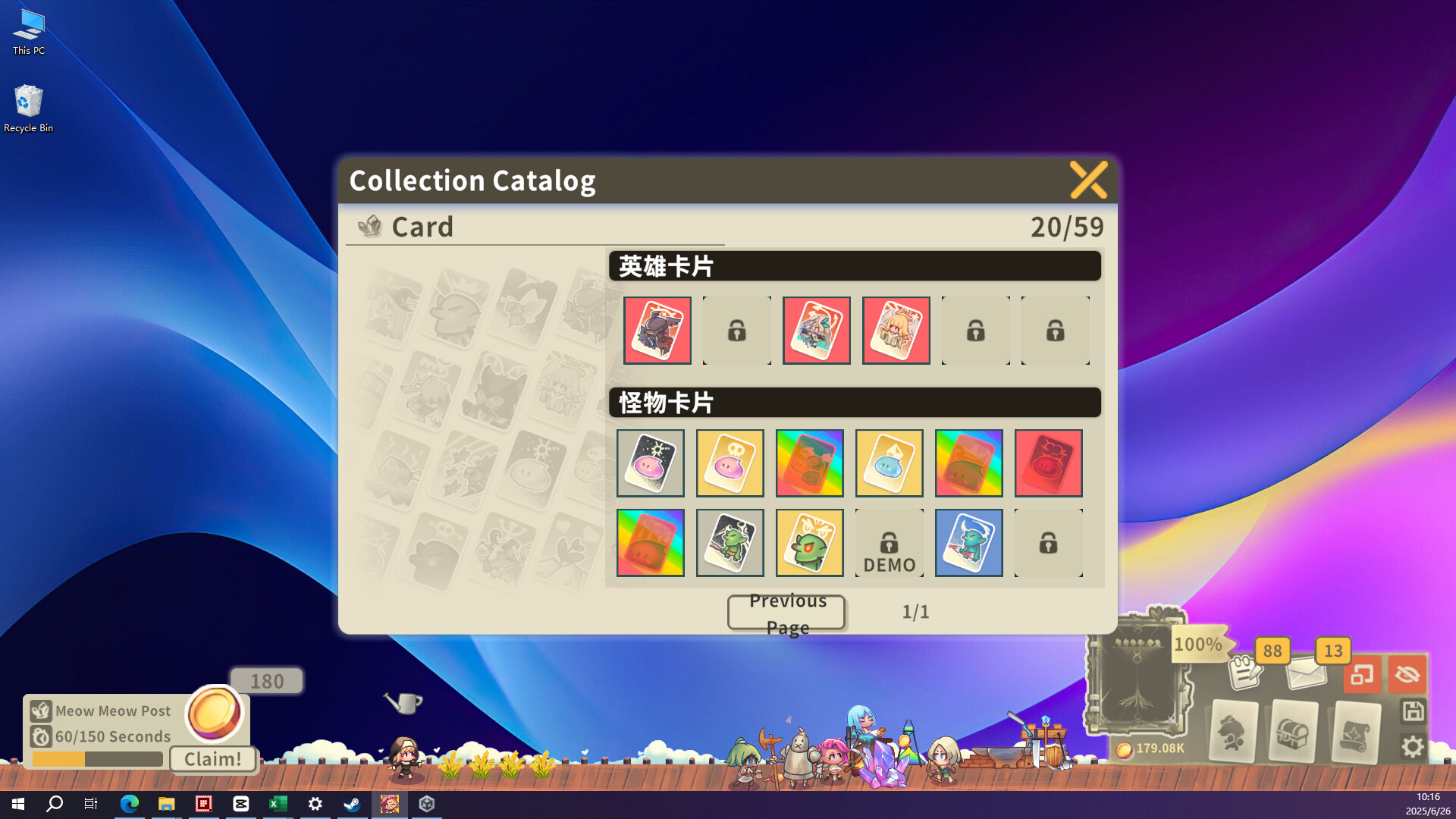
Another piece of customization comes in the form of monster cards. These rare items occasionally drop from defeated enemies. Each card grants a unique perk, such as generating a protective shield every ten seconds, restoring a small percentage of health over time, increasing attack power, and many other perks. A hero can equip only one card at a time, and cards must be collected manually by clicking on them when they appear after a battle. Just like with gear, cards come in rarity tiers, and they are replaced automatically when a better found is found.
The core gameplay loop is simple but effective. You earn money to unlock new map locations, purchase chests to obtain better equipment, and defeat all enemies in an area until it reaches one hundred percent completion. Once a location is fully conquered, you can move to adjacent areas, gradually expanding your reach across the map.
Not every location leads to combat. Some spots unlock new working areas that increase the idle income limit, allowing the game to run unattended for longer periods. Others trigger special events that unlock badges in the shop. These badges provide helpful bonuses, such as a small lifesteal chance or additional experience for heroes who are not currently participating in battles.
Overall, the game strikes a pleasant balance between idle mechanics and active interaction. Progressing through the world and completing all achievements may take several hours, yet the experience rarely feels like a chore or something that constantly demands your attention every few minutes. Instead, it offers a relaxed and rewarding pace that fits perfectly within the idle genre.
▲ Recommended
13 hrs
Book of Fei is a unique idle RPG developed and published by TAO Studio that successfully combines the charm of a desktop companion with the addictive progression systems of a role-playing game. Instead of demanding constant attention, the game quietly occupies a small portion of the player's desktop, allowing heroes to continue their adventures while the player works, studies, browses the internet, or performs other daily activities. This unconventional approach immediately helps the game stand out among countless idle titles, offering an experience that feels more like a persistent fantasy companion than a traditional RPG.
The game's fantasy setting serves as the backdrop for an ongoing adventure in which a group of heroes gradually grows stronger through exploration, combat, and resource gathering. Players are tasked with managing a team of adventurers who journey across dangerous lands, battle monsters, collect equipment, and uncover new opportunities for growth. While the narrative remains relatively light compared to story-driven role-playing games, it provides enough context to support the progression systems and gives players a reason to continue strengthening their party.
One of the most appealing aspects of Book of Fei is how effectively it balances automation with player involvement. Heroes continue fighting and collecting rewards even when the player is not actively interacting with the game, but meaningful decisions still influence long-term success. Players regularly return to upgrade equipment, assign jobs, adjust party compositions, unlock classes, and optimize builds. This creates a satisfying cycle where progress occurs naturally over time while still rewarding strategic planning and careful management.
Character development forms the heart of the experience. Players can recruit and manage a team of heroes while guiding them through a wide selection of advanced professions and specializations. With dozens of class paths available, there is considerable freedom when creating a party. Some players may focus on powerful damage-dealing builds, while others create balanced teams built around support abilities and survivability. The variety encourages experimentation and makes progression feel highly customizable.
Equipment and loot collection add another layer of depth. Throughout their adventures, heroes acquire weapons, armor, accessories, cards, and various enhancement materials that improve their effectiveness in battle. The constant search for stronger gear creates a rewarding sense of progression that is familiar to RPG fans. Every upgrade feels meaningful because it directly contributes to the overall strength of the party, making even passive progression feel exciting when valuable rewards are discovered.
The card system provides additional opportunities for customization. Rather than relying exclusively on equipment upgrades, players can equip special cards that grant bonuses, modify abilities, and strengthen specific playstyles. This feature allows players to tailor heroes according to their preferred strategies and introduces more depth than many idle games offer. The combination of classes, equipment, and cards creates a surprising amount of build diversity beneath the game's simple exterior.
Another enjoyable mechanic is the job assignment system. Heroes are not limited to combat roles and can be sent to work various occupations that generate resources and income. Deciding whether to deploy characters in battle or assign them to productive activities introduces a management component that complements the RPG progression. These systems help create the impression that the heroes exist within a living world rather than functioning solely as combat units.
One of the game's most impressive achievements is its integration with everyday computer use. The developers clearly designed Book of Fei to coexist comfortably alongside other applications. The interface can be resized, repositioned, hidden, or minimized with ease, allowing players to customize how visible the game remains. This flexibility makes it particularly appealing for players who enjoy incremental progression but do not always have time to dedicate to full gaming sessions.
Visually, Book of Fei embraces a bright and charming anime-inspired aesthetic. Character designs are appealing, animations are expressive, and the fantasy world is presented with a colorful style that enhances the game's relaxed atmosphere. Despite occupying only a small portion of the desktop, the game manages to maintain a strong visual identity that makes checking on the heroes consistently enjoyable.
The soundtrack and sound design further contribute to the overall charm. The audio remains pleasant and unobtrusive, fitting perfectly with the game's role as a desktop companion. Rather than demanding attention, the music quietly enhances the atmosphere while allowing players to focus on whatever tasks they may be performing outside the game.
The steady pace of progression is another major strength. Even short play sessions feel productive because heroes are constantly gaining experience, earning resources, and discovering equipment. The game rewards long-term engagement without requiring excessive grinding or repetitive manual actions. Players can check in periodically, make important decisions, and then allow the adventure to continue independently.
Of course, the game's idle nature may not appeal to everyone. Players seeking fast-paced action, complex tactical combat, or narrative-heavy role-playing experiences may find the gameplay too passive. Much of the enjoyment comes from optimization, collection, and gradual progression rather than direct control over battles. However, for fans of idle games, this approach is precisely what makes the experience appealing.
What ultimately makes Book of Fei stand out is its ability to transform an idle RPG into something that feels personal. The heroes become constant companions throughout the day, quietly growing stronger while accompanying the player through routine activities. The combination of character progression, equipment collection, class customization, and desktop integration creates an experience that is both relaxing and rewarding.
For players who enjoy incremental progression systems, fantasy RPG mechanics, and desktop companion experiences, Book of Fei offers a surprisingly deep and charming adventure. Its blend of automation and strategy, supported by extensive customization and thoughtful quality-of-life features, makes it one of the more distinctive entries in the idle RPG genre. It may not deliver the intensity of traditional role-playing games, but it succeeds wonderfully as a persistent fantasy journey that evolves alongside the player's daily routine.
Rating: 9/10