▼ Not recommended
0 hrs
Loads with audio and a white screen that doesnt go away. I'm sorry, I am not trouble shooting a simple clicker game. $1 is bad enough for this issues, but to charge $10, give 6+ things to try to make it work, and be aware of the problem and not role out a patch to fix it yet offer a 90% sale instead? No. I'm good. I play clickers to unwind, not act as tech support.
▲ Recommended
8 hrs
Riches In the Deep is a casual incremental management game built around mining, business expansion, and the satisfying process of watching a small operation grow into a massive empire of wealth. The game embraces the familiar structure of clicker and idle progression systems while using a mining theme to create a steady sense of growth and discovery. Instead of focusing on narrative depth or complex mechanics, the experience is designed entirely around continuous progression, resource accumulation, and the addictive satisfaction of turning tiny profits into overwhelming financial success.
The gameplay begins with relatively simple mining tasks where players manually collect resources and slowly earn enough money to invest in better equipment and more productive systems. At first, progress feels modest, but the game quickly introduces automation and larger-scale management mechanics that dramatically accelerate income generation. This gradual transformation from manual labor to fully automated wealth production becomes the heart of the experience. Every new upgrade increases efficiency, every investment improves profits, and every successful expansion opens the door to even larger financial opportunities.
One of the strongest aspects of Riches In the Deep is how effectively it captures the addictive rhythm common to successful incremental games. The game constantly rewards players with visible progress, creating a satisfying cycle where each improvement immediately leads to faster growth and bigger rewards. Even small upgrades feel meaningful because they noticeably impact resource generation. This creates a constant sense of momentum where players are always working toward the next major unlock or profitable investment.
The mining theme gives the game more personality than many generic clicker titles. Digging deeper underground in search of valuable resources creates a simple but effective sense of advancement throughout the experience. The further players progress into the mining systems, the more profitable and expansive their operations become. While the mechanics themselves remain relatively straightforward, the theme helps tie the progression systems together into a cohesive experience that feels more engaging than simply watching numbers rise without context.
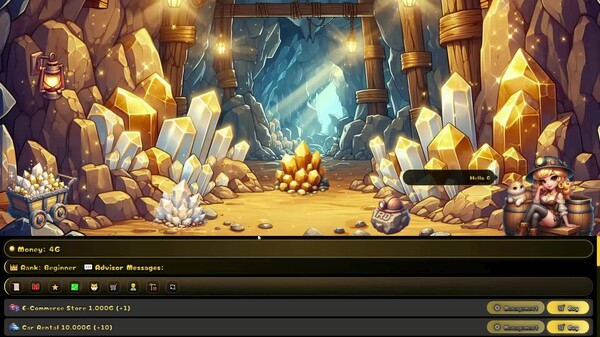
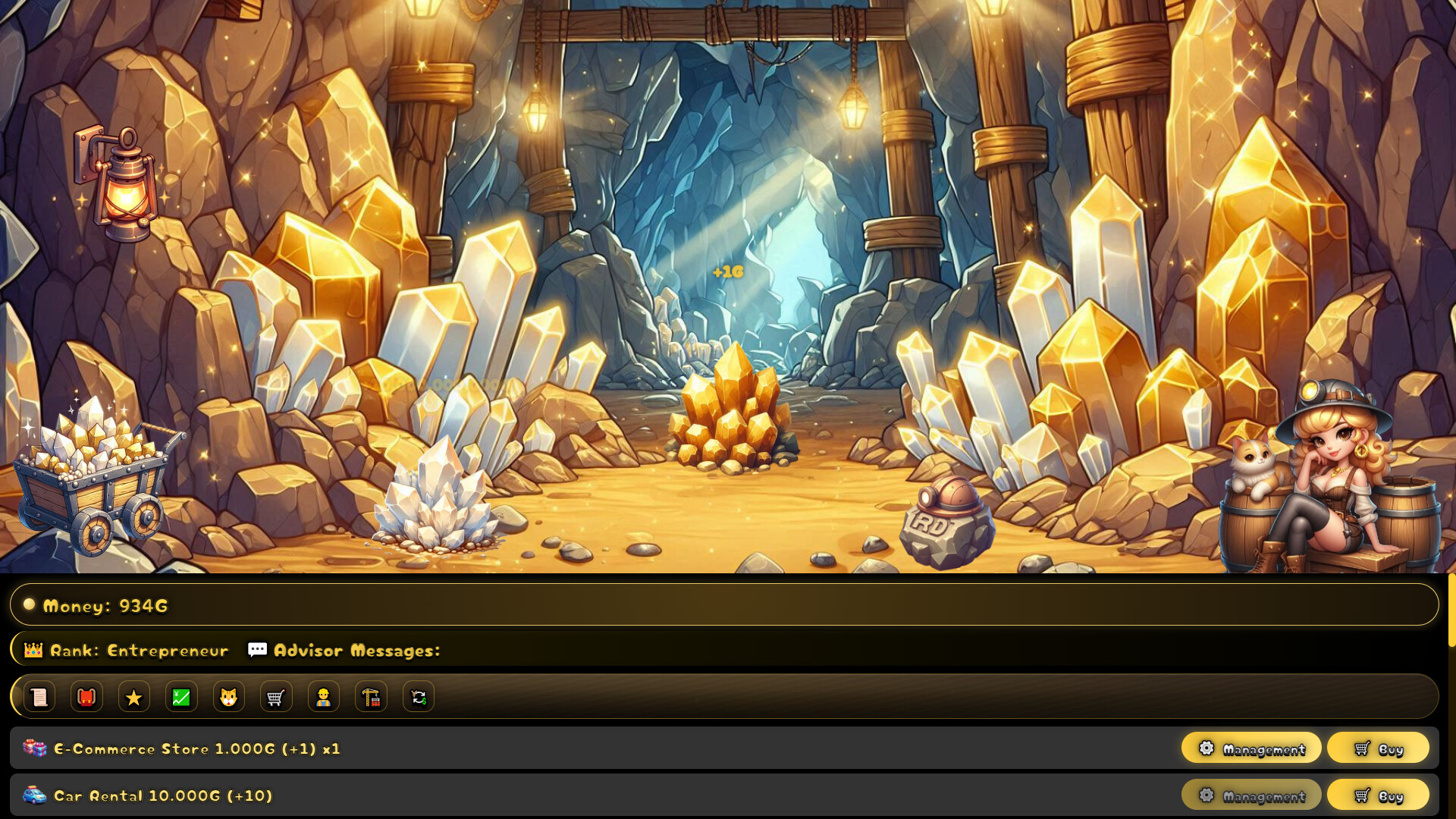
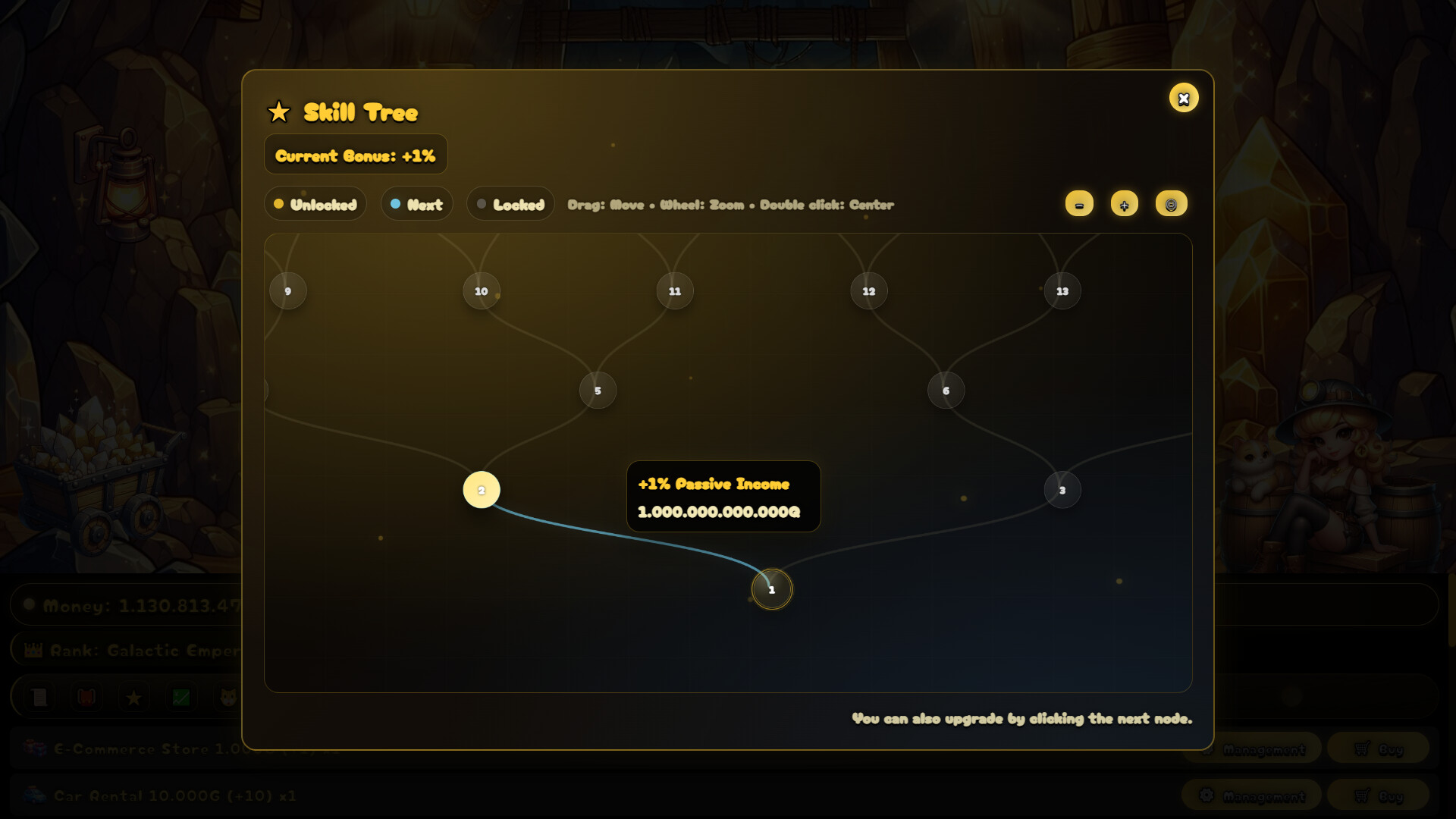
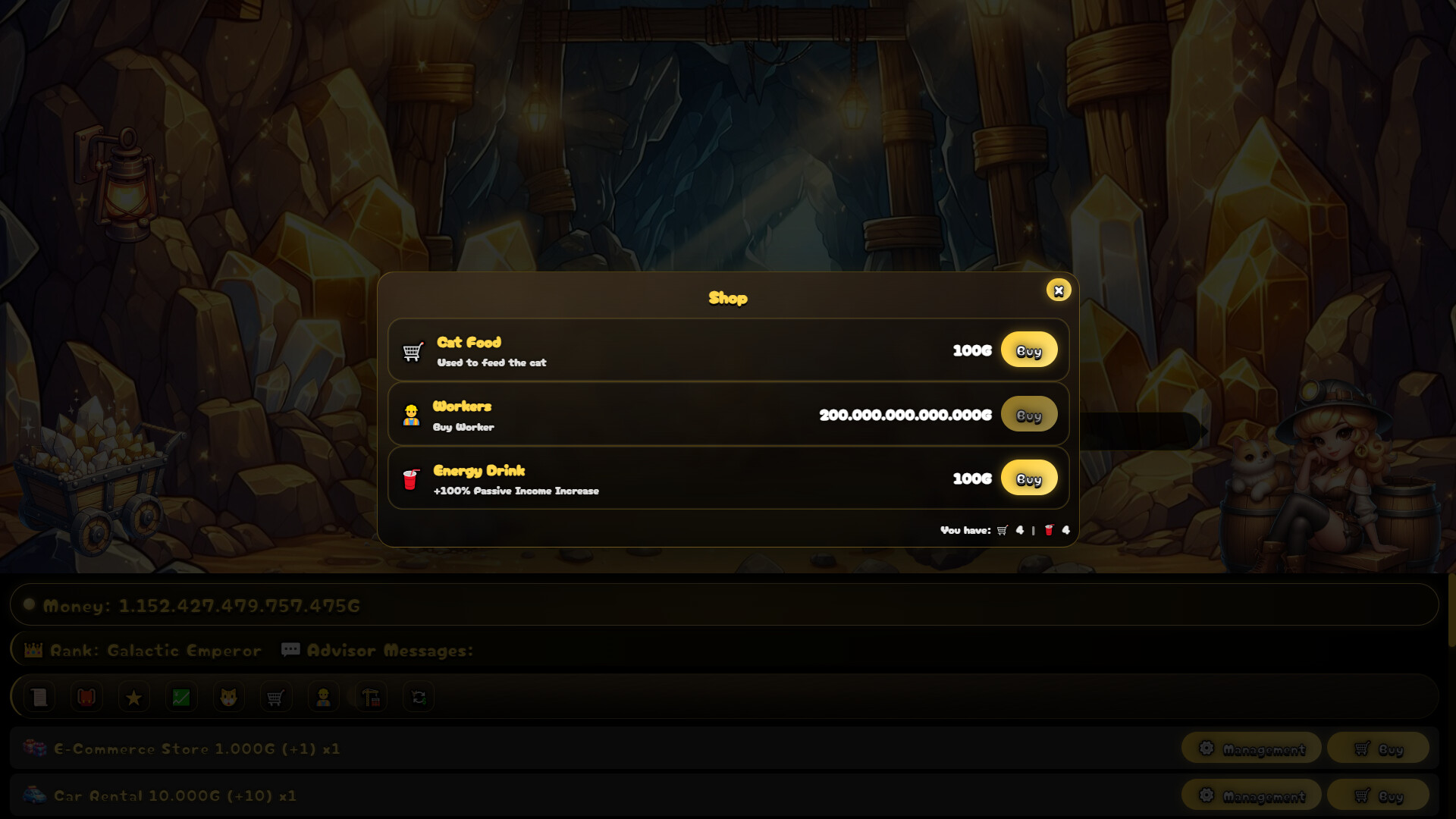
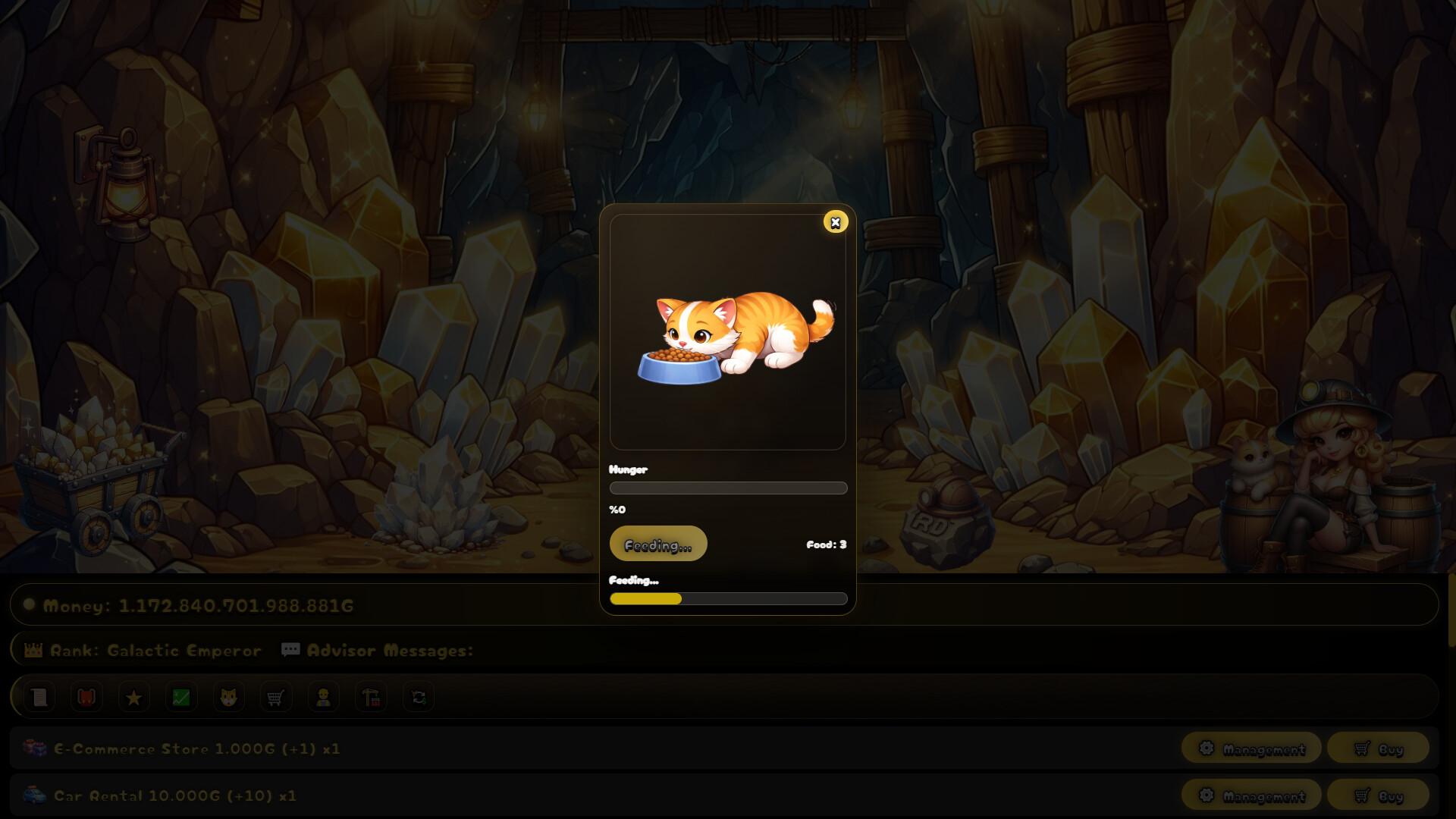
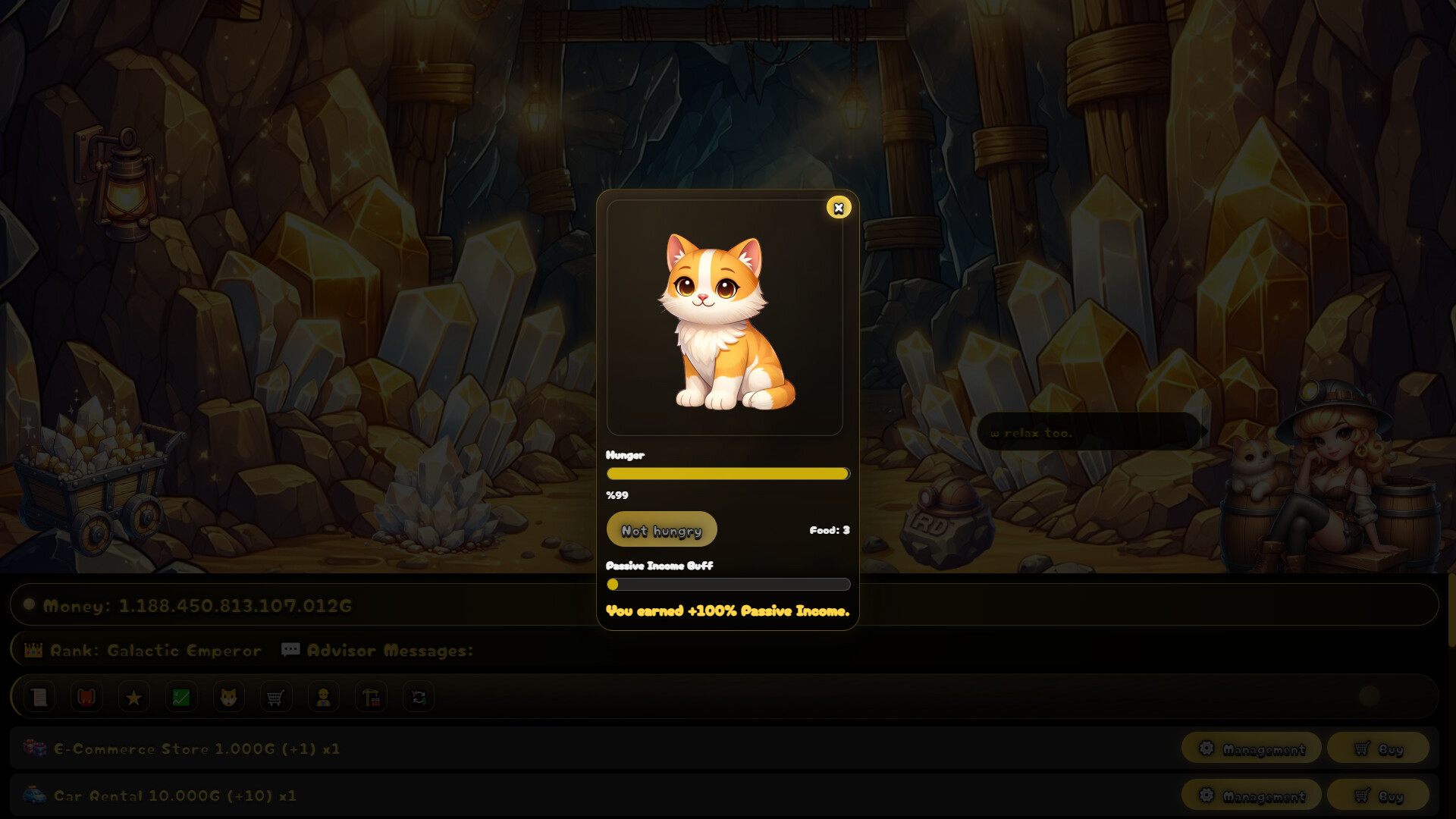
Visually, the game uses a colorful and minimalist 2D presentation that keeps menus and progression systems easy to navigate. Resource counters, upgrade paths, and management tools remain clear and readable even during longer sessions where players are juggling multiple income systems at once. The graphics are fairly basic overall, but the simplicity works well for the genre because the main focus remains entirely on progression and optimization rather than visual spectacle.
The pacing of the game is another area where it performs reasonably well. Early progression happens quickly enough to keep players engaged, constantly introducing new upgrades and financial goals before the gameplay becomes stagnant. As the game progresses, larger investment systems begin requiring more planning and patience, creating a gradual shift from active clicking toward passive management and optimization. This balance between active involvement and automated progression helps maintain engagement over time.
Sound design remains fairly modest but functional throughout the experience. Resource collection sounds and upgrade effects provide enough feedback to make progression feel rewarding, while the background music maintains a calm and relaxing atmosphere. The soundtrack itself is not especially memorable, but it complements the laid-back pacing effectively and supports the game’s role as a casual management experience designed for longer play sessions.
One of the more satisfying aspects of Riches In the Deep is the transition from struggling for small profits to managing a highly productive financial system. Once automation becomes fully operational, the game shifts into a more passive optimization experience where players focus on maximizing efficiency and expanding their mining empire even further. Watching profits grow exponentially creates the same type of satisfying progression loop that makes many incremental games difficult to stop playing.
However, the game also suffers from the repetitive structure commonly associated with idle and clicker titles. While the progression remains satisfying initially, the core gameplay loop changes very little throughout the experience. Most of the game revolves around generating more money in order to purchase upgrades that generate even more money. Players searching for deeper strategy systems, meaningful gameplay variety, or narrative-driven content may eventually find the experience somewhat shallow after extended sessions.
The overall production scale is also relatively small. Animations are limited, environments lack significant detail, and the game focuses heavily on menus and numerical progression rather than immersive world-building. While these limitations are understandable for a modest indie project, they do prevent the experience from feeling particularly ambitious compared to larger management simulators or strategy games.
Another issue is the reduced sense of challenge during later stages. Once profitable systems are fully automated, progression can become more passive and less dependent on player decision-making. At that point, the gameplay often revolves around waiting for larger numbers to accumulate rather than making difficult strategic choices. Players who enjoy optimization and idle progression may still find this satisfying, but those looking for more active gameplay could lose interest once the novelty begins to fade.
Despite these shortcomings, Riches In the Deep succeeds because it fully understands what makes incremental games appealing. The constant flow of upgrades, visible growth, and rewarding progression systems creates an experience that remains strangely addictive even when the mechanics themselves are extremely simple. The game does not attempt to become more complicated than necessary, and that focused design philosophy helps the core gameplay remain accessible and enjoyable.
Riches In the Deep may not redefine the idle management genre or offer significant gameplay depth, but it still provides an entertaining and relaxing progression experience for players who enjoy building wealth through gradual expansion and automation. Its repetitive structure and minimal presentation prevent it from standing out as a major strategy title, yet the satisfying growth systems and comfortable pacing make it easy to continue playing for hours at a time. For fans of clicker games and casual resource management experiences, the game delivers a pleasant and consistently rewarding journey into endless profit and expansion.
Rating: 6/10