
▲ Recommended
2 hrs
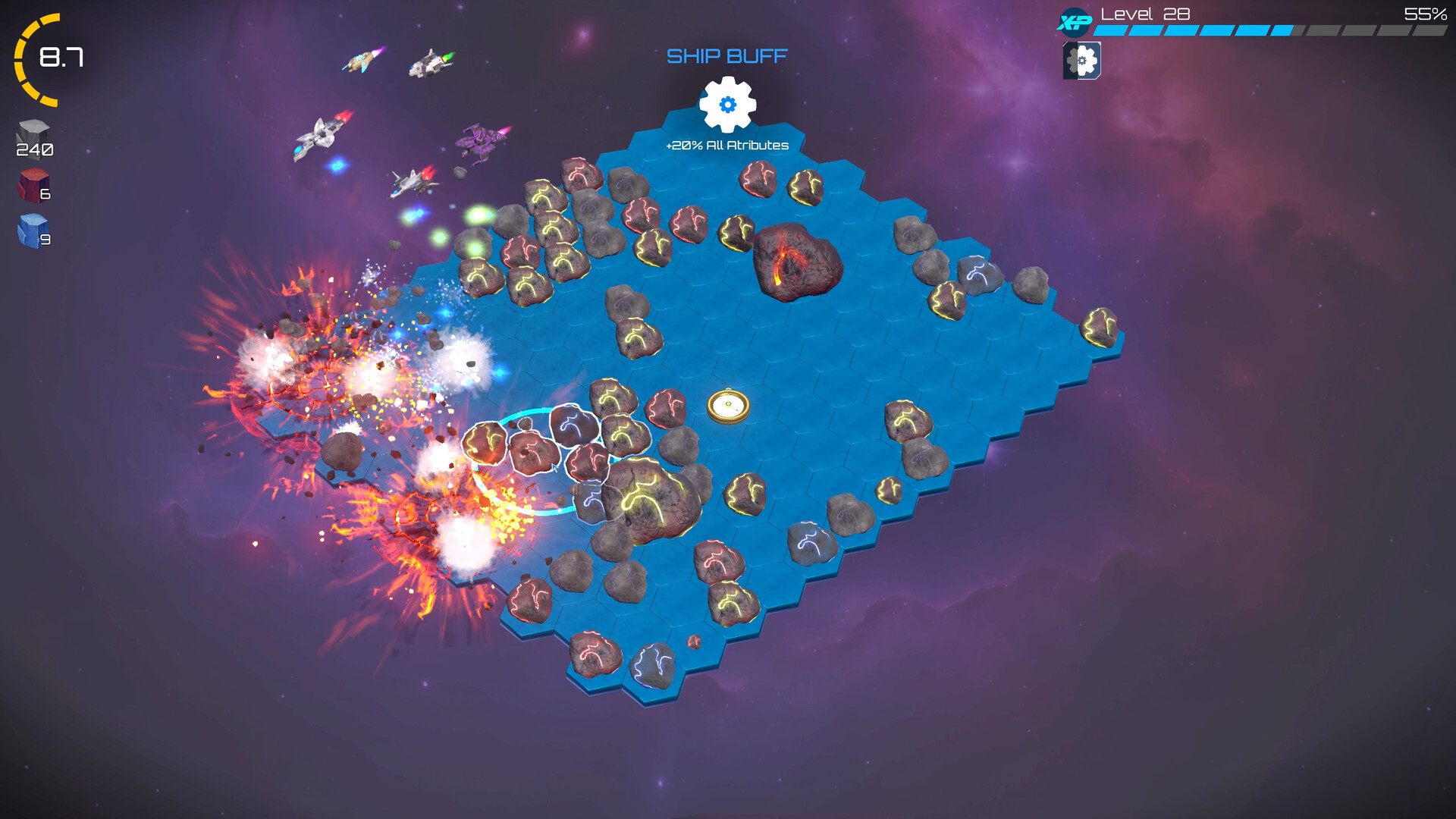
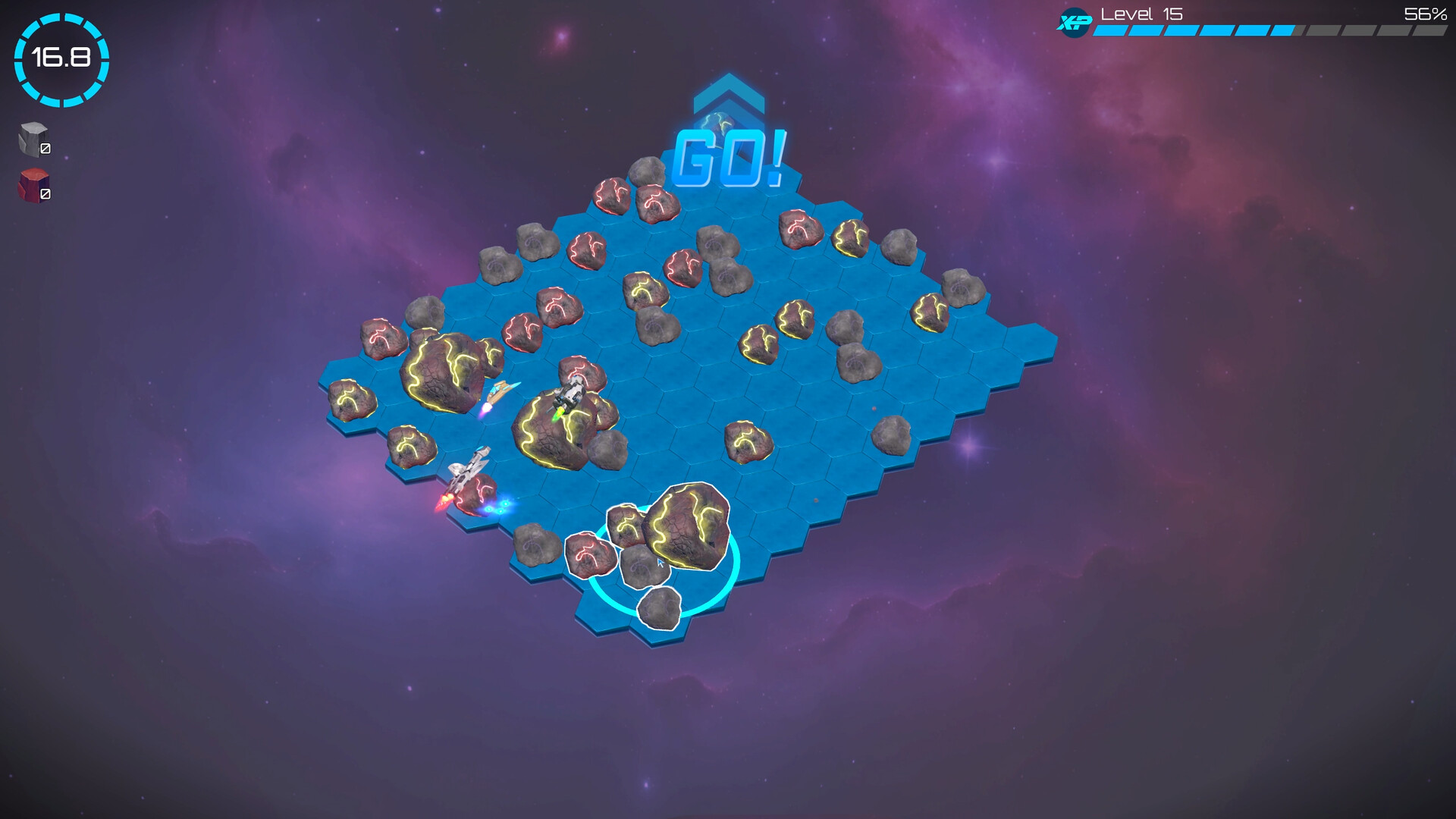
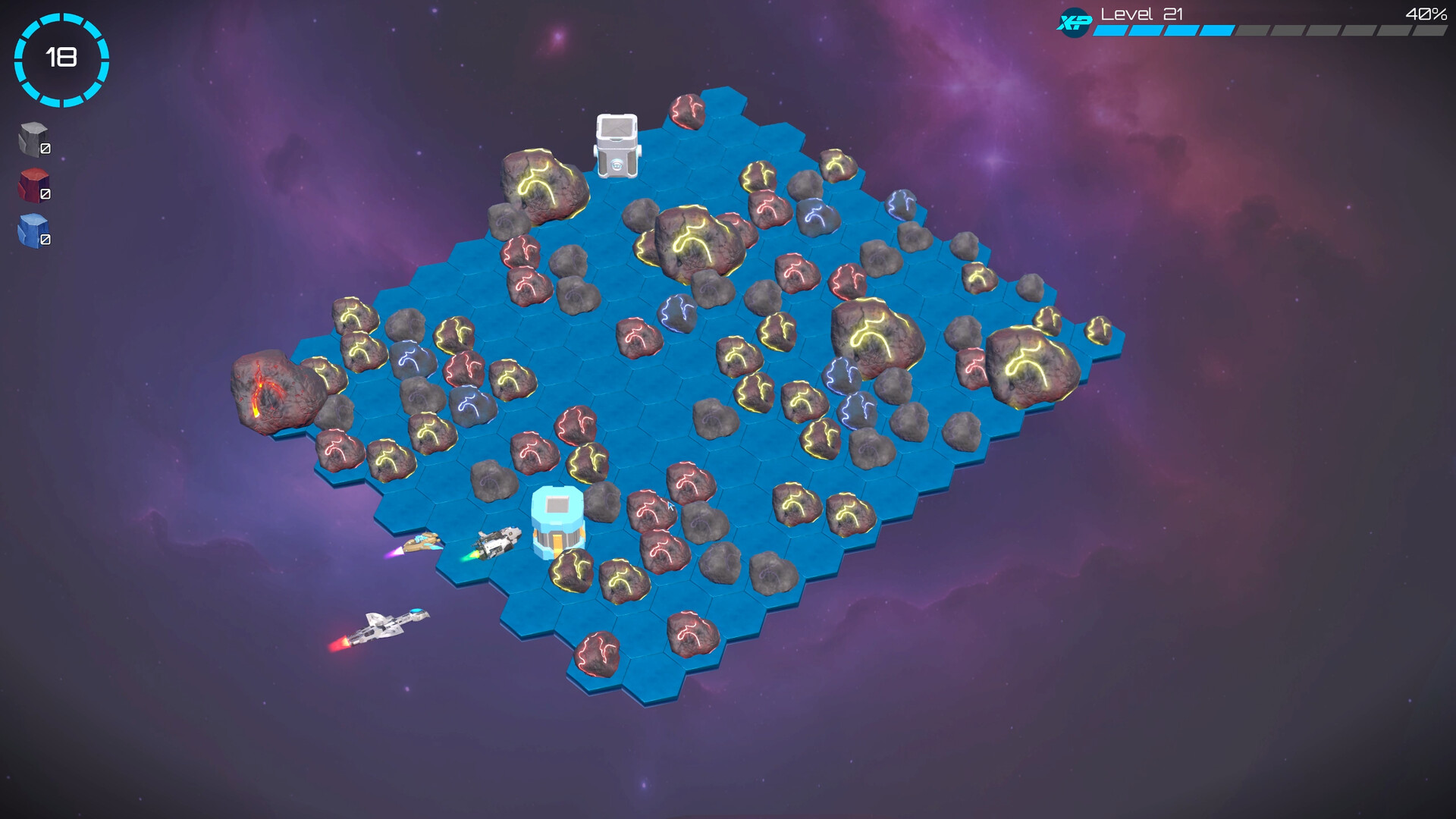
Despite the spaceships, the premise of the game remains peaceful and avoids violence, instead focusing on something many incremental games do well: mining. The gameplay loop revolves around a fleet of ships that you direct toward asteroids with a mouse cursor. The cursor acts as your targeting area, and your ships will attack anything found within the targeting circle. It starts out tiny, allowing you to target only one asteroid at a time, but it can be expanded to cover several rocks at once.
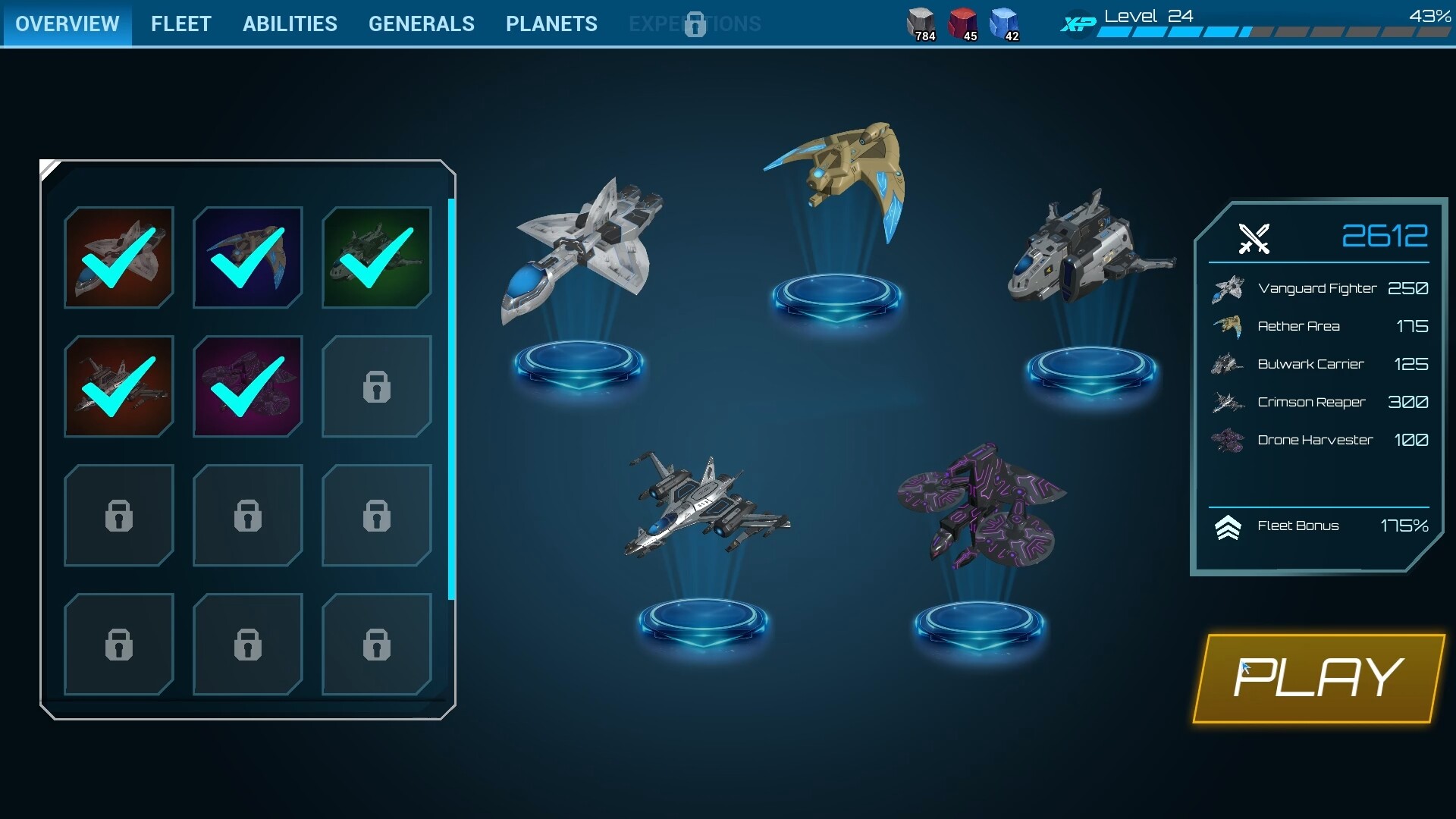
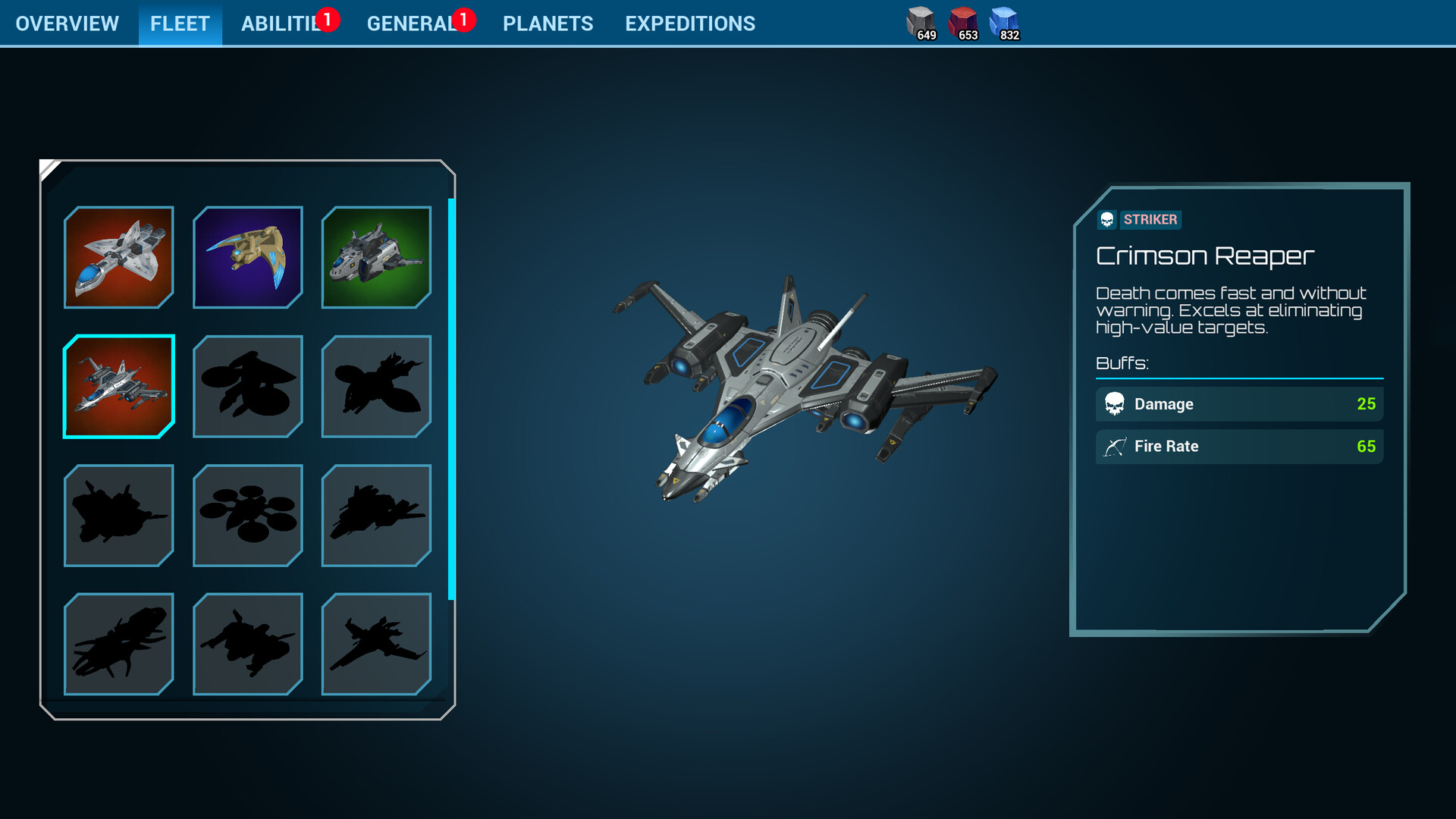
You start with only one ship, while the other 14 ships are unlocked by destroying the required number of different types of minerals and stones. These new mineral types have to be unlocked through the upgrade tree and do not appear on their own, so there is still a specific progression path toward unlocking new ships. Meeting the requirements only unlocks the ships, however, as you still have to purchase them with money.
Interesting thing about ships is that they have roles, so while some are attackers, others offer support, increase the amount of gathered resources, or expand the targeting area. You can create any fleet you want, even add same classes to boost their roles, but you need at least one attacker.
Resources are obtained by going on mining runs, each of which has a time limit. How quickly you can destroy rocks depends on your fleet, which can contain up to five ships, although you can only have one of each. Each ship also comes with several different stats, such as damage, fire rate, area damage, and more. Until you unlock more valuable ores, the first few runs contain only iron, which is converted into money at the end of a run. That money is then invested into the upgrade tree.
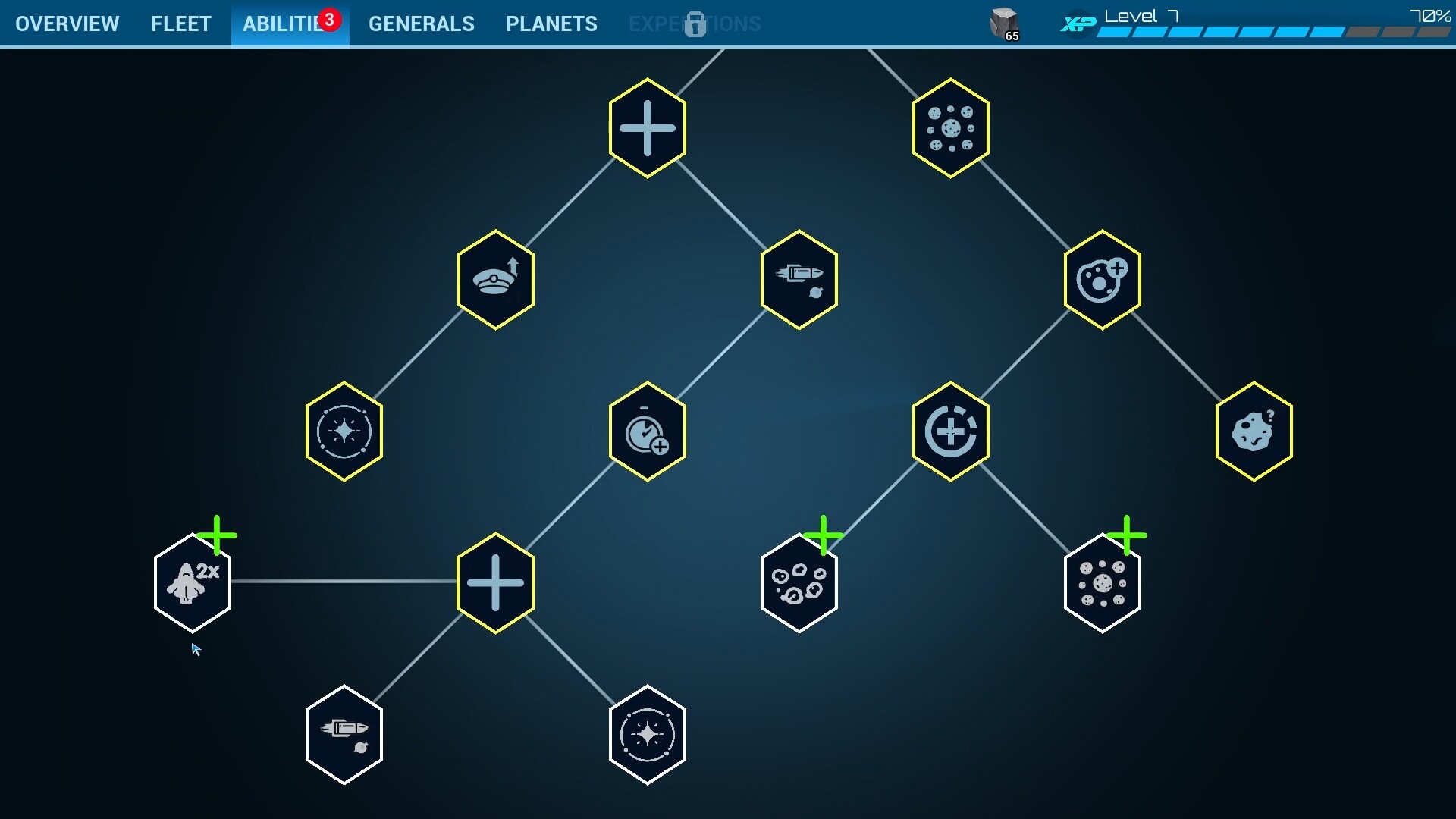
The upgrade tree is fairly standard for an incremental game. You start with a single visible upgrade while everything else remains hidden. There is an element of discovery because purchasing an upgrade reveals the adjacent ones, and buying those reveals even more of the tree. Unlike in many similar titles, each upgrade can only be purchased once, meaning many upgrades appear repeatedly throughout the tree. Unfortunately, there are no particularly exciting upgrades. Most of them simply expand the playing field, increase the asteroid spawn rate, or unlock new types of asteroids.
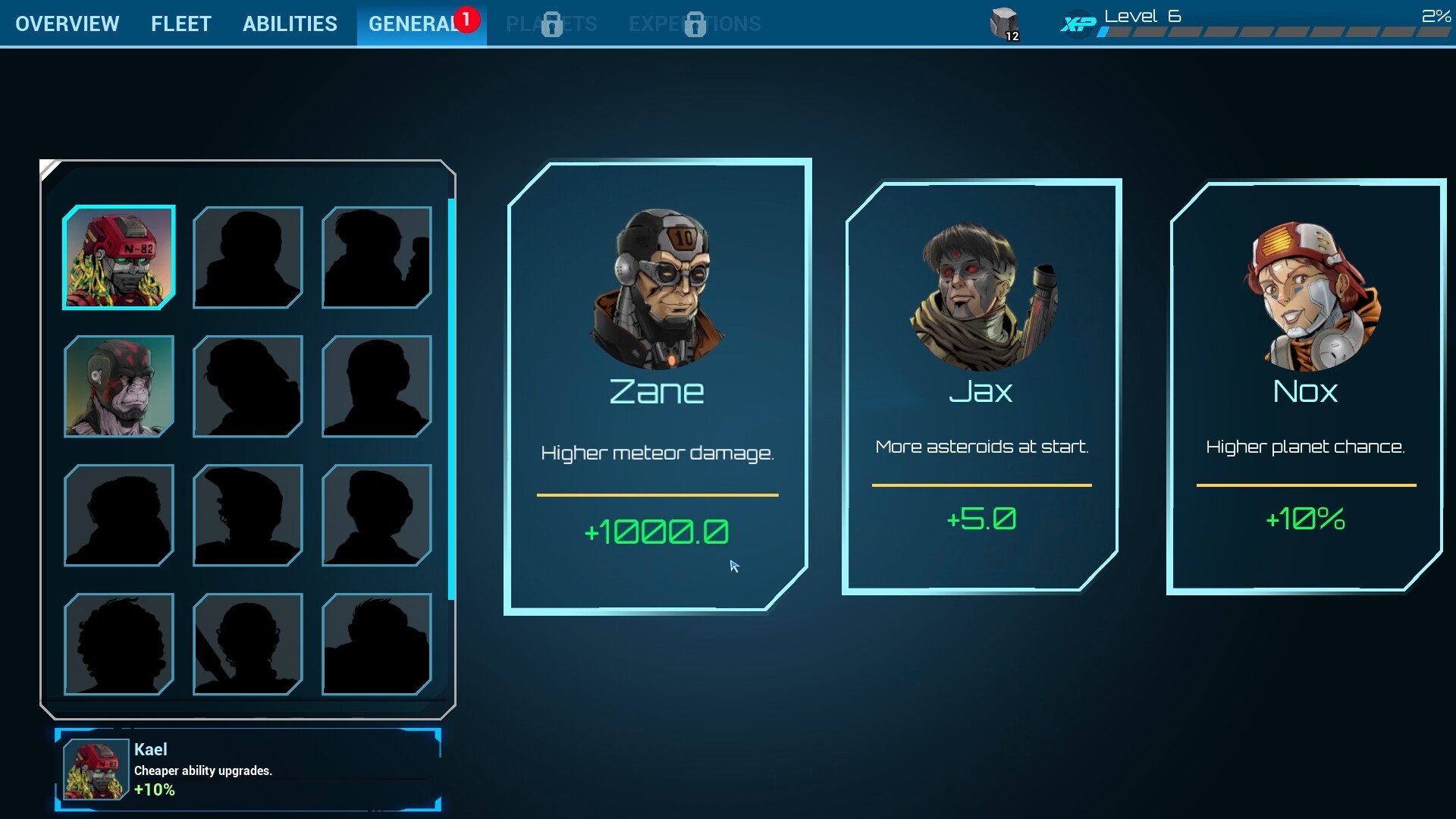
Runs are further influenced by planets and generals. There are 18 different planets, each with a chance of appearing during a run. Once you destroy a planet, it will never appear again, but you gain a permanent perk, such as an increased asteroid spawn rate or a larger targeting circle. Generals work in a similar way, with each one providing a unique perk, although acquiring them is slightly different.
As you complete runs and destroy asteroids, you fill an experience bar that eventually leads to a level up and grants one unit of a unique resource used to hire generals. The first general costs one unit of this resource, with the cost increasing for each subsequent general. When hiring a general, you are presented with three random choices and can select one. Just like planets, once a general has been hired, they will not appear again, and their perk remains permanently active. But both planets and generals come with small perks that won’t make that much of a difference.
The final feature revolves around ships that are not part of your active five-ship fleet. This system is called expeditions, and you can send your remaining ships on them to earn passive money. It is essentially an idle feature, with more ships generating greater rewards when the progress bar fills. The system continues running in the background and loops automatically, so there is no need to micromanage expeditions. However, this does not apply while you are actively on a mining run.
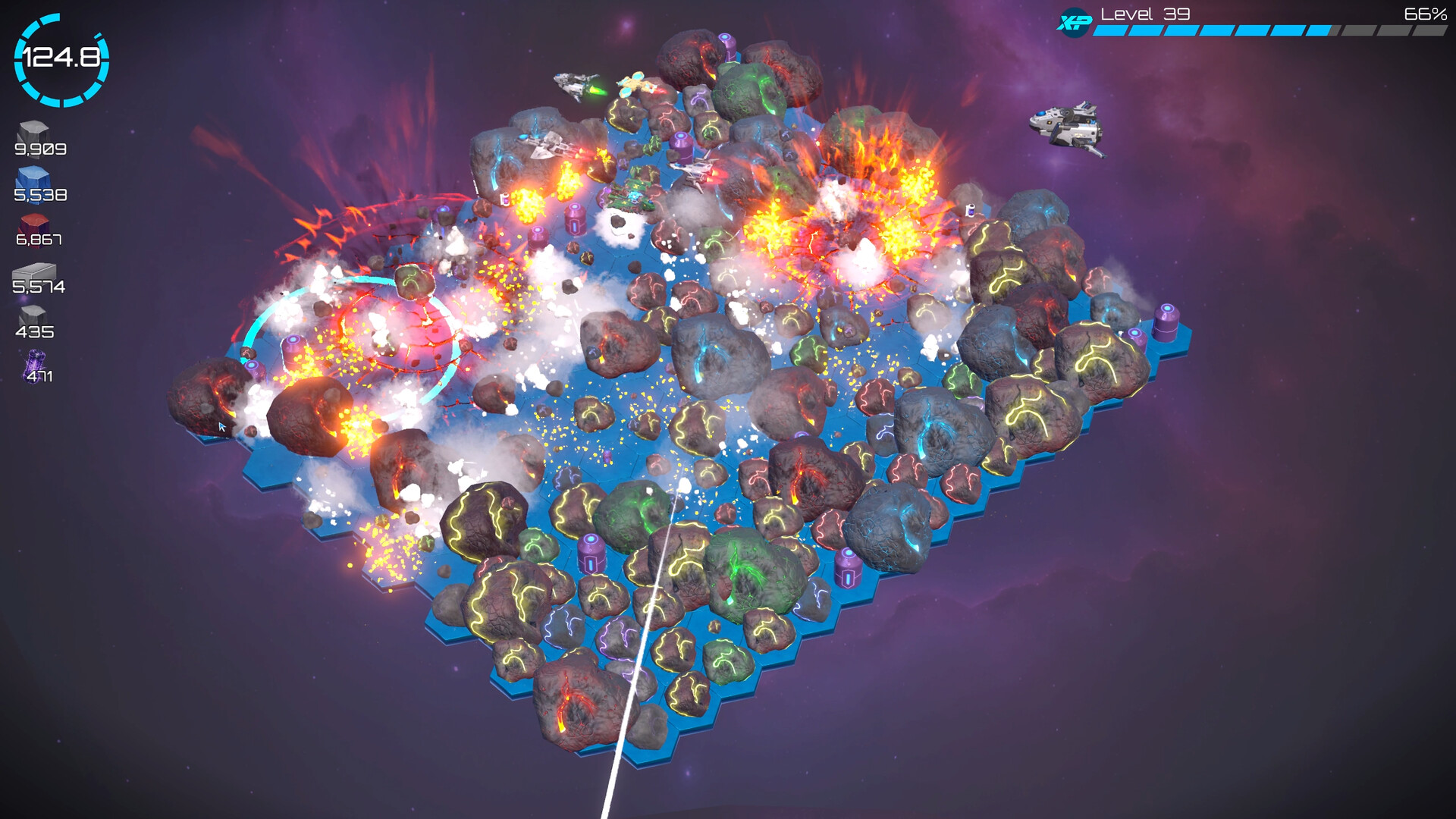
The game takes just the right number of hours to complete, although there is a bit of a trick later on that makes expeditions pointless. This is connected to meteors, which are the game's only truly unique feature. Meteors randomly fall from the sky and destroy asteroids, and you can upgrade them to create larger explosions and make them fall more frequently. What makes them particularly useful is what happens when a run's timer reaches zero. Instead of automatically returning you to the upgrade screen, the game waits for you to click the button to leave the run. This means meteors can continue falling in the background, effectively replacing the need for idling.
My main criticism is the game's performance. It consumes a surprising amount of computer resources despite its relatively simplistic visuals. This remains the case even after lowering all graphical settings, which points to poor optimization. There is little reason for a game with such a simple presentation to put this much strain on the computer.
You start with only one ship, while the other 14 ships are unlocked by destroying the required number of different types of minerals and stones. These new mineral types have to be unlocked through the upgrade tree and do not appear on their own, so there is still a specific progression path toward unlocking new ships. Meeting the requirements only unlocks the ships, however, as you still have to purchase them with money.
Interesting thing about ships is that they have roles, so while some are attackers, others offer support, increase the amount of gathered resources, or expand the targeting area. You can create any fleet you want, even add same classes to boost their roles, but you need at least one attacker.
Resources are obtained by going on mining runs, each of which has a time limit. How quickly you can destroy rocks depends on your fleet, which can contain up to five ships, although you can only have one of each. Each ship also comes with several different stats, such as damage, fire rate, area damage, and more. Until you unlock more valuable ores, the first few runs contain only iron, which is converted into money at the end of a run. That money is then invested into the upgrade tree.
The upgrade tree is fairly standard for an incremental game. You start with a single visible upgrade while everything else remains hidden. There is an element of discovery because purchasing an upgrade reveals the adjacent ones, and buying those reveals even more of the tree. Unlike in many similar titles, each upgrade can only be purchased once, meaning many upgrades appear repeatedly throughout the tree. Unfortunately, there are no particularly exciting upgrades. Most of them simply expand the playing field, increase the asteroid spawn rate, or unlock new types of asteroids.
Runs are further influenced by planets and generals. There are 18 different planets, each with a chance of appearing during a run. Once you destroy a planet, it will never appear again, but you gain a permanent perk, such as an increased asteroid spawn rate or a larger targeting circle. Generals work in a similar way, with each one providing a unique perk, although acquiring them is slightly different.
As you complete runs and destroy asteroids, you fill an experience bar that eventually leads to a level up and grants one unit of a unique resource used to hire generals. The first general costs one unit of this resource, with the cost increasing for each subsequent general. When hiring a general, you are presented with three random choices and can select one. Just like planets, once a general has been hired, they will not appear again, and their perk remains permanently active. But both planets and generals come with small perks that won’t make that much of a difference.
The final feature revolves around ships that are not part of your active five-ship fleet. This system is called expeditions, and you can send your remaining ships on them to earn passive money. It is essentially an idle feature, with more ships generating greater rewards when the progress bar fills. The system continues running in the background and loops automatically, so there is no need to micromanage expeditions. However, this does not apply while you are actively on a mining run.
The game takes just the right number of hours to complete, although there is a bit of a trick later on that makes expeditions pointless. This is connected to meteors, which are the game's only truly unique feature. Meteors randomly fall from the sky and destroy asteroids, and you can upgrade them to create larger explosions and make them fall more frequently. What makes them particularly useful is what happens when a run's timer reaches zero. Instead of automatically returning you to the upgrade screen, the game waits for you to click the button to leave the run. This means meteors can continue falling in the background, effectively replacing the need for idling.
My main criticism is the game's performance. It consumes a surprising amount of computer resources despite its relatively simplistic visuals. This remains the case even after lowering all graphical settings, which points to poor optimization. There is little reason for a game with such a simple presentation to put this much strain on the computer.
2 found helpful
Steam ↗