▲ Recommended
151 hrs
Anno series plus orcs!
This game is strongly reminiscent of the Anno series from the 2000s, only rendered in a tile graphic engine, with relaxing idle gameplay and wait times that aren't frustratingly long, overnight at worst. Oh, and plus orcs.
In Paragon Pioneers, you play as an envoy of some (mostly) unspecified nation. Your job is colonize several islands, attract Paragons (elites, lords) to the colony, and build them a Palace.
But attracting them means providing an awful lot of needs and luxuries, far too many for your starting island to sustain. That's where the colonization comes in.
As you satisfy more needs and luxuries, you'll upgrade your citizen housing from Pioneers to Colonists to Townsmen to Merchants and finally to Paragons. Reaching more of each level of citizen unlocks more buildings globally across all your island colonies.
First, you'll set up lumber production for basic building supplies. This means lumberjacks, foresters to help replant trees, and sawmills.
Production of most things works like the lumber production, taking batches of raw materials and creating batches of goods. However, production buildings need to be within range of either the building creating the raw materials they need or a warehouse to function.
After you gain a supply of lumber, you'll set up pioneer huts. Your hardy first citizens need access to a well, else they will die or simply leave. To make them very happy, they require some yummy fish and some schnapps.
Potato schnapps. *shudder* (The only alcoholic beverage that potatoes belong in is vodka!)
If all needs and luxuries are supplied at 100%, then their production rate is maximized.
However, the pioneers produce only militia. Think peasants with pitchforks. This is your only source of willing cannon fodder. Don't worry, they can be upgraded to better units. Point is, only the lowliest citzens will be volunteering for military duty.
Most everyone else will pay taxes to support the colony. The gold the bulk of your citizens will be paying isn't needed for per-turn expenses. However, it is needed to build advanced buildings or to upgrade the few that have upgrades. It's also needed to train up advanced military units, and for shipbuilding contracts. Gold can also be used to instantly recruit mercenary forces, so long as you've built that unit's production building somewhere among your islands.
You'll need to conquer your starting island. The locals are stubborn orcs who don't bother trading. Clearing the island of enemy forces means sending units to fight orcs holed up in small forts, each fort controlling a sector of the island.
The armies you send can only number 100 units at max, with nine different unit types eventually made available to you. Unit types are simple melee units on foot, ranged archer and crossbow, a light cavalry and an armored horseman, and a cannoneer.
The time it takes to complete a combat is based on both the size and complexity of the armies involved (representing the time it takes to mobilize troops) as well as distance from HQ. Therefore, the limited army size keeps the countdown down to a few hours overnight at worst. You can't send multiple armies at once to fight the same orc fort, but you can send armies simultaneously to as many forts as you see available. Any orc sector bordering your territory becomes visible to you. Combat itself is instantly calculated at the end of the countdown.
There are three strike phases per round. Some attack quick on the first strike, others are slow and attack in the last strike. One, the Long Bowman, has a double strike. Melee units soak up the hits first before any ranged units, but the cavalry and cannoneer both have a flanking maneuver and strike the weaker ranged units first.
The orcs never reinforce their forts, so you can use the attrition of a zerg rush to whittle down your orc opponent.
However, one of the final sectors uncovered will always contain a boss, an Orc Warchief. This unit has thousands of HP. The 100-unit limit on attack forces and the post-battle healing of survivors means that a force of militia alone won't bring down the Warchiefs. Fortunately, your starting island has a couple resources that will help create better units.
Ships have cargo space that can be used for either goods or units. Eventually, you'll be able to build eight different types of ships. Some are fast, others have larger cargo spaces. Building ships does not require you to have all supplies on hand, just enough gold to start the job and a production chain for the supplies. Your shipwrights will take the supplies in small batches and build the ship over time.
Defeating the local Orc Warchief gains you a point of cartography representing knowledge of the nearby islands. Build a ship, and you then get to scout for new islands. Discovering an island takes four hours, plus a bit of more time for exploration. The fastest ship can cut this down to under an hour. Once you discover an island, trips to and from it take a little over two hours at slowest speed.
You get to customize exactly what sort of island you are looking for by spending cartography points. This means size, number of mountains for stone and some deposits, as well as which plants can grow and what deposits might be found. The more cartography points you can spend, the more you can customize an island. New islands will of course be occupied by orcs and have to be cleared.
The first island you get will always be yours, but any others you find and conquer can be kept for your use or turned over to the Paragons. Turning over an island that still has orcs on it will earn you some gold, but clearing an island and then turning it over to the Paragons will gain you favor. Favor unlocks more island slots to occupy. Favor is also earned when you finally attract Paragons to your colony.
Production buildings don't require a local population base to keep them running. The only islands that require citizen housing are the one you are building up into a great city and any others that you are using to make military units. This simplifies managing needs and luxuries. All other islands can simply send goods to your home base.
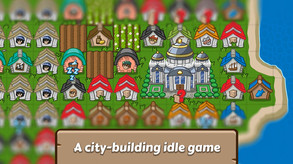
Graphics are bright and colorful. Icons are fairly self-explanatory for almost everything.
Most buildings are of the same basic "house with a picture" style, but their roofs have small variations and are of various logical color choices. Most everything blends together at a distance, but it's reasonably easy to distinguish everything at closer range.
Music here has some lovely simple open-source pieces.
The game offers a decent amount of info on everything.
Rate of production per good is visualized when you click on its entry in storage, with an option in Settings to see the numerical values of production and consumption. You can also watch the citizen consumption numbers and satisfaction levels shift up and down.
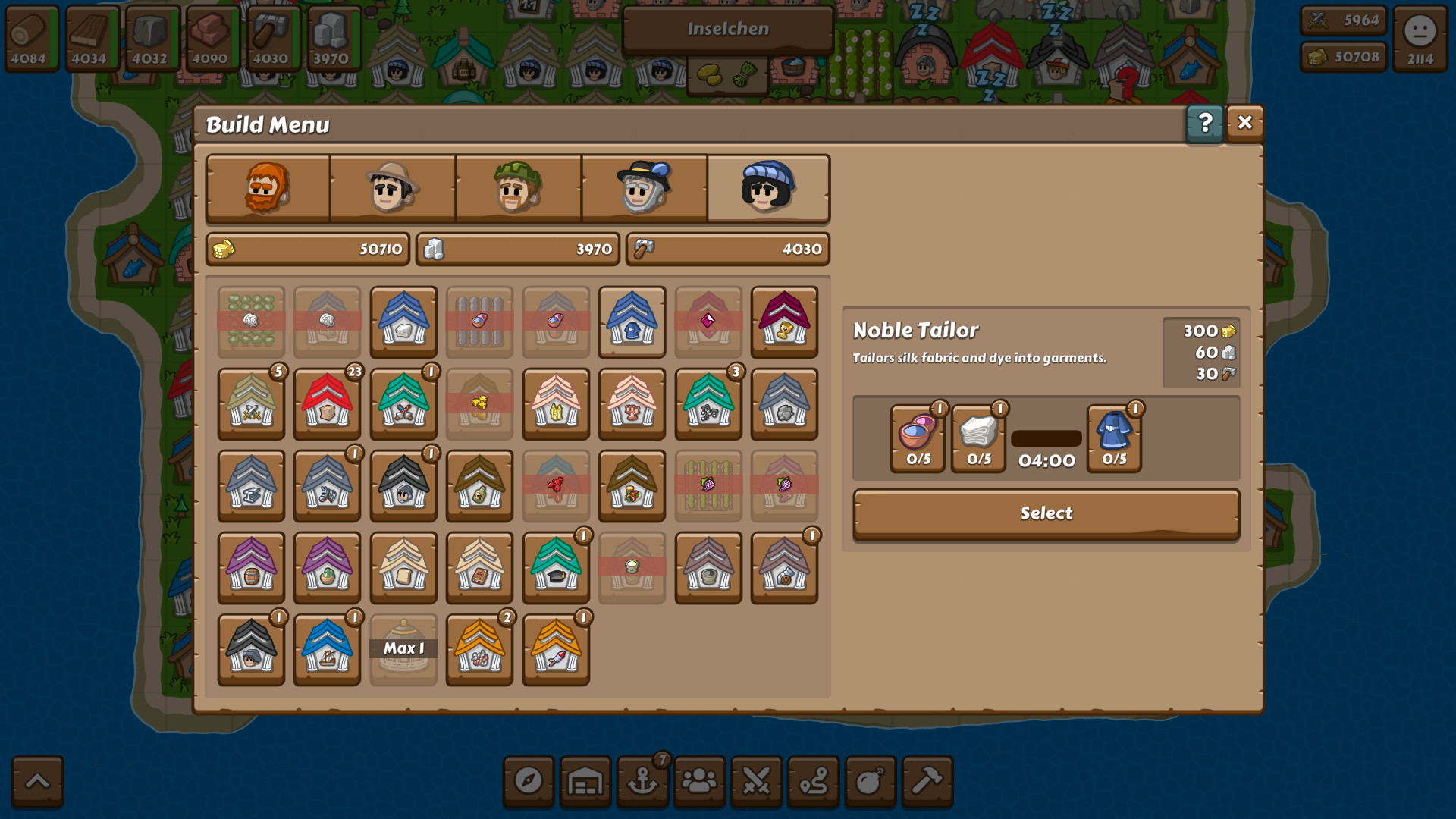
Countdowns in production buildings have progress bars and clear formulas for production, including badges indicating basic ratios.
Simple icons above buildings indicate when problems arise (not enough mats, warehouse full), with a description of what's wrong visible in that building's info screen.
The tutorial is very thorough and with a cheery tone. Much of the tutorial screens remain available as help screens, too.
What few (and minor) annoyances you may have are mostly addressed in the New Game Plus, where you get to choose a Custodian to help you in the next game. This includes a Scrap Collector that will reclaim some of the resources you sunk into anything you demolish.
I pounced on the game as a Curator because I like idle games and some strategy games, especially colony sims. This is a nice mix.
▲ Recommended
1 hrs
This game really isn't for me, but I have to give the dev credit. They seem responsive on the various platforms the game is on, have taken feedback well and implemented feature requests, and probably most important to me if I enjoyed the game play more, as far as I can tell, it isn't a micro-transaction based idle game on any platform. One purchase and you're done, which is rare these days in games with mobile versions.
As for the actual game play though, it has the same tropes as the micro-transaction idle games, which is where it quickly lost me unfortunately. You are somewhat forced into a bottleneck early on progression wise where the only solution seems to be waiting, and that just isn't enjoyable or enticing game play wise for me.
Past that, I had no issues with the game technically on desktop (Linux) or Steam Deck. If you're looking for a really easy to pick up and put down game for a low price, then this is a good option and why I still give it a recommend. It's just worth knowing beforehand what the game play is like, and whether or not it fits your needs.
Thanks for the opportunity to try the game!