▲ Recommended
1 hrs
The first step is to choose one of several available modes. While the core gameplay remains the same across all of them, you can opt to make things easier or ramp up the difficulty. For example, "Glass" mode gives you only one health point, but in return you deal double damage. You also choose your character, though aside from the first one, the rest must be unlocked by progressing through stages.
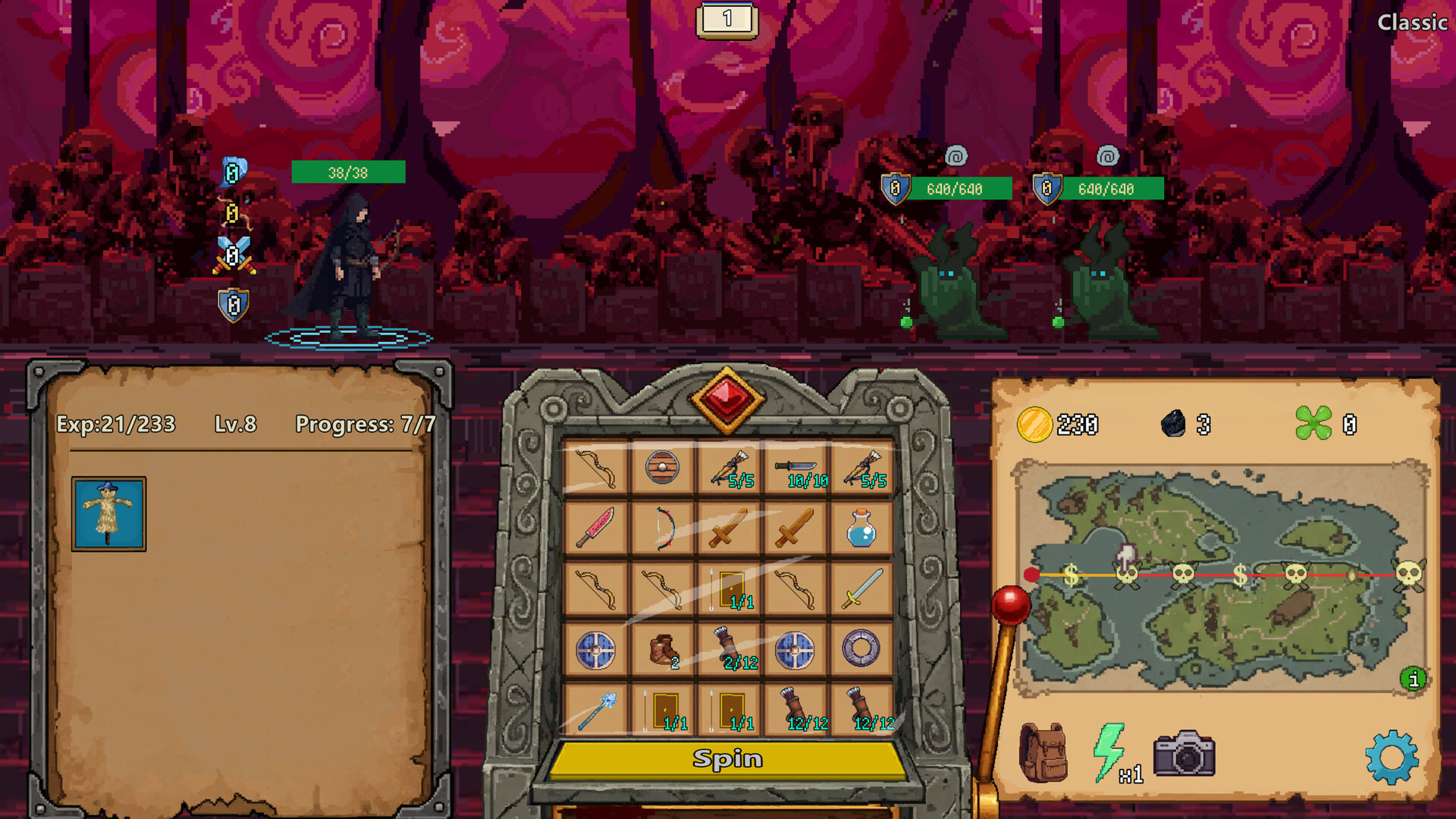
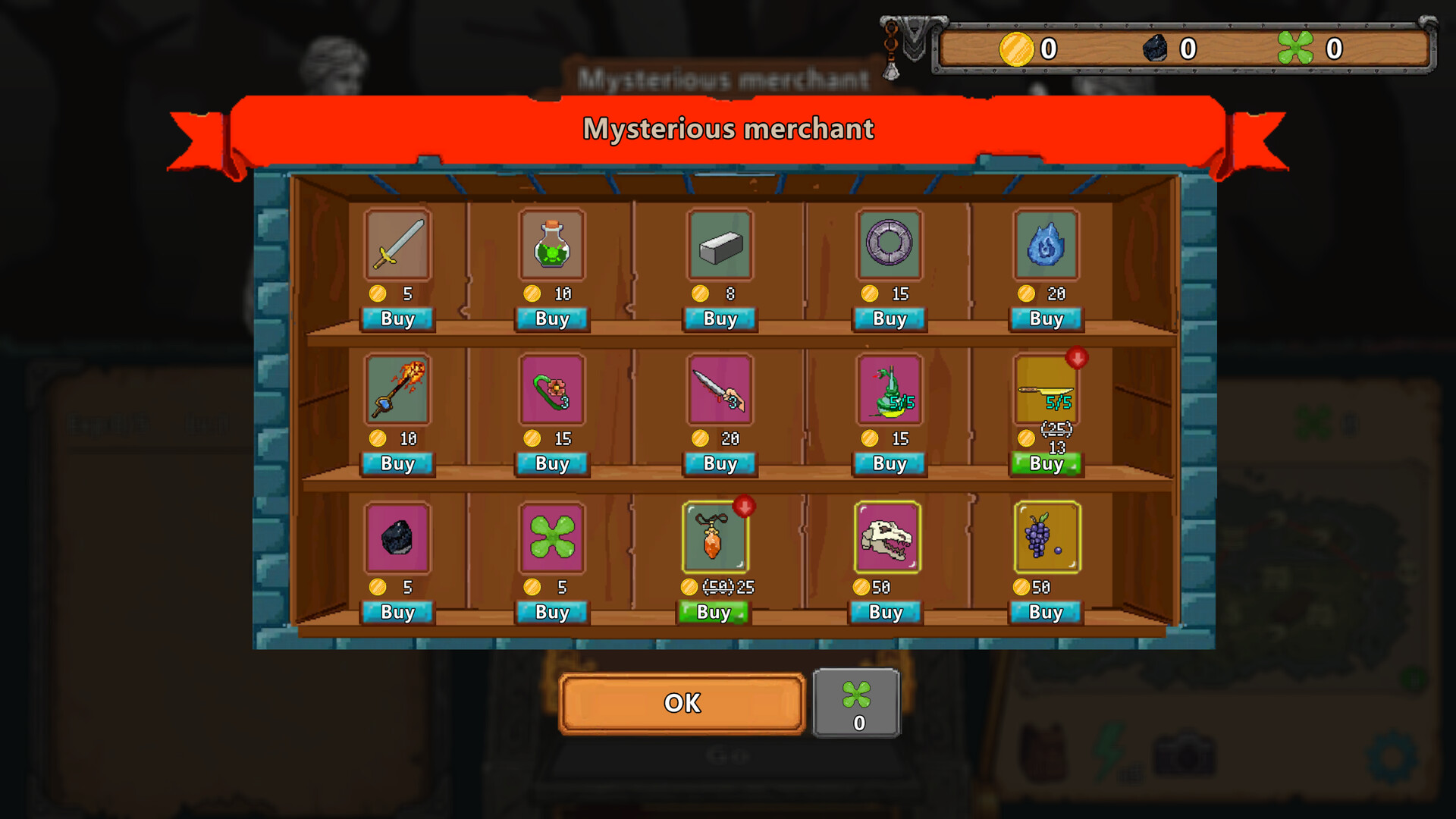
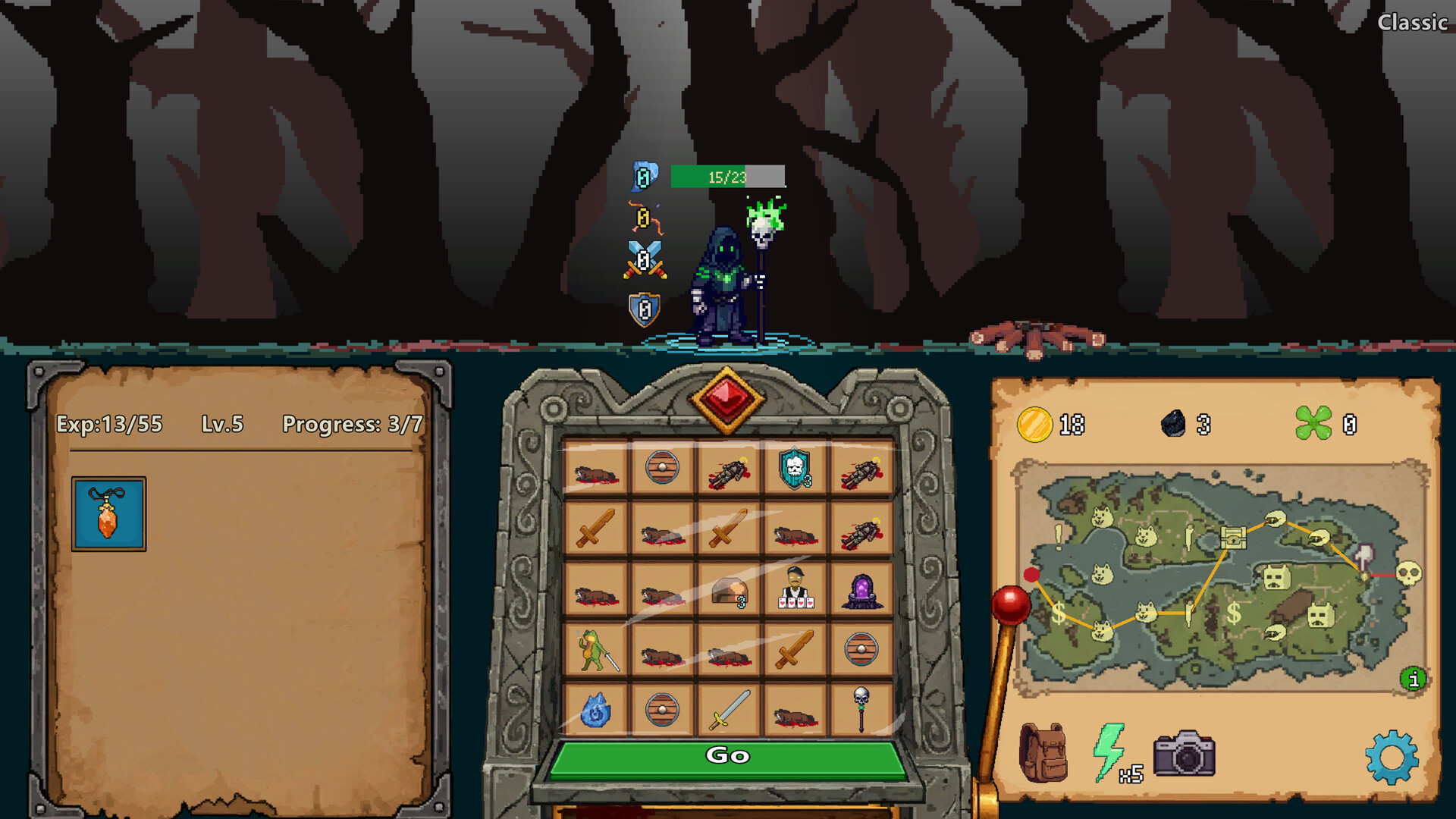
Each run is randomized and plays out similarly to other roguelite games. You move through nodes on a map, occasionally choosing between branching paths. Each node has an icon that indicates what you'll encounter there. Most involve combat, marked by a monster icon, but you’ll also come across merchants, treasure chests, and special events where you’ll make decisions that affect your reward.
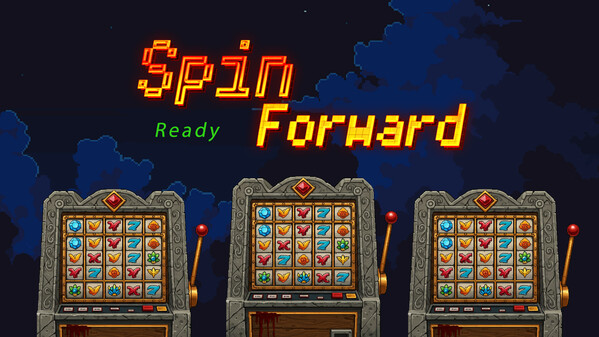
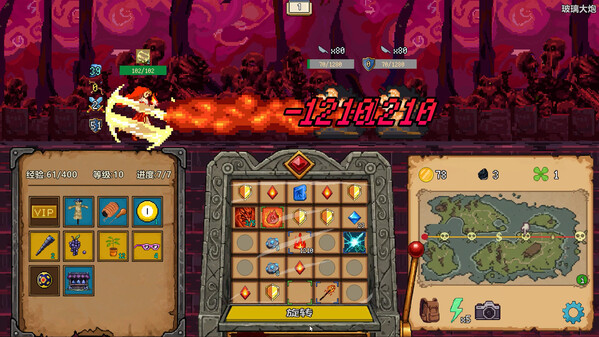
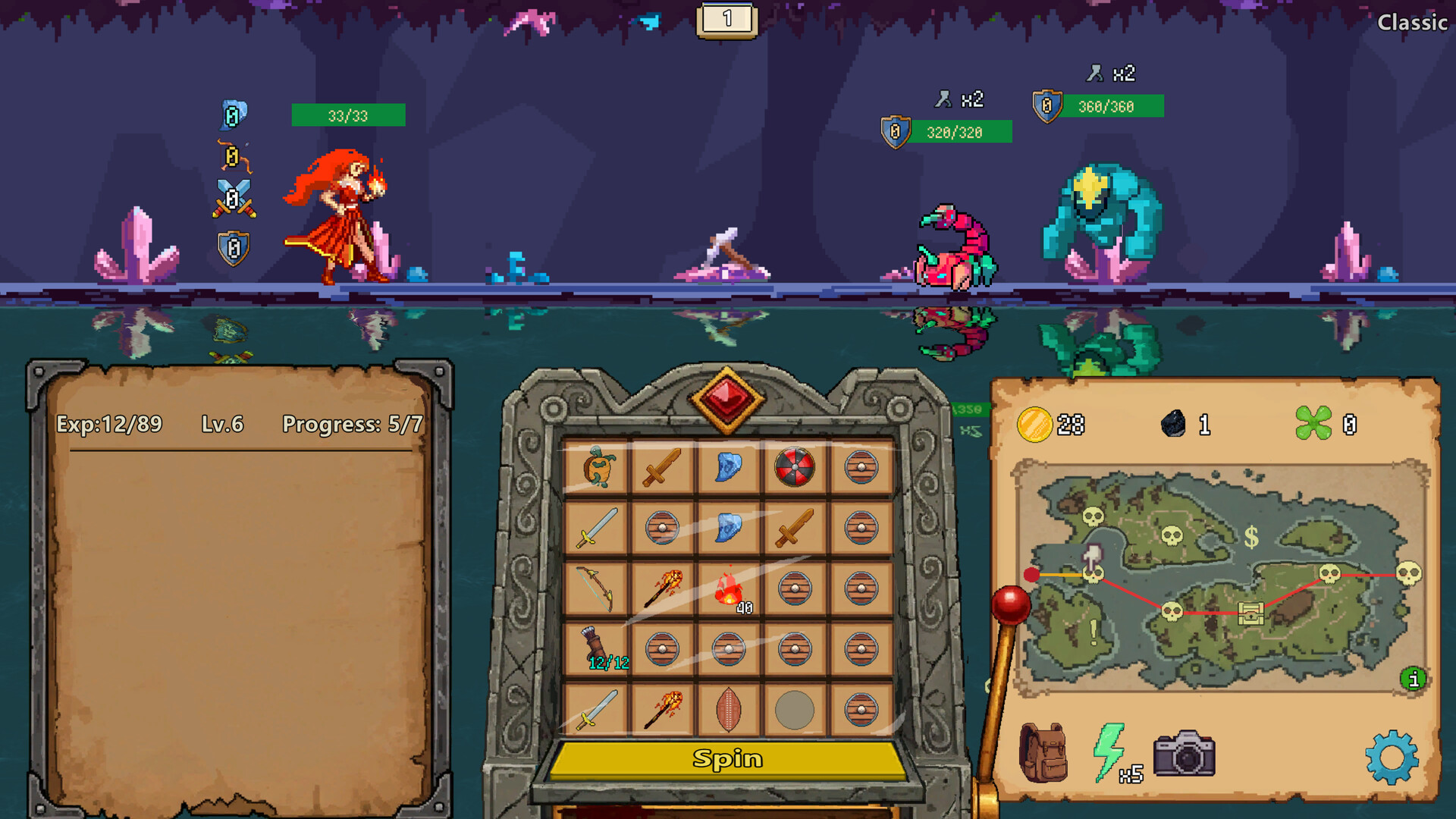
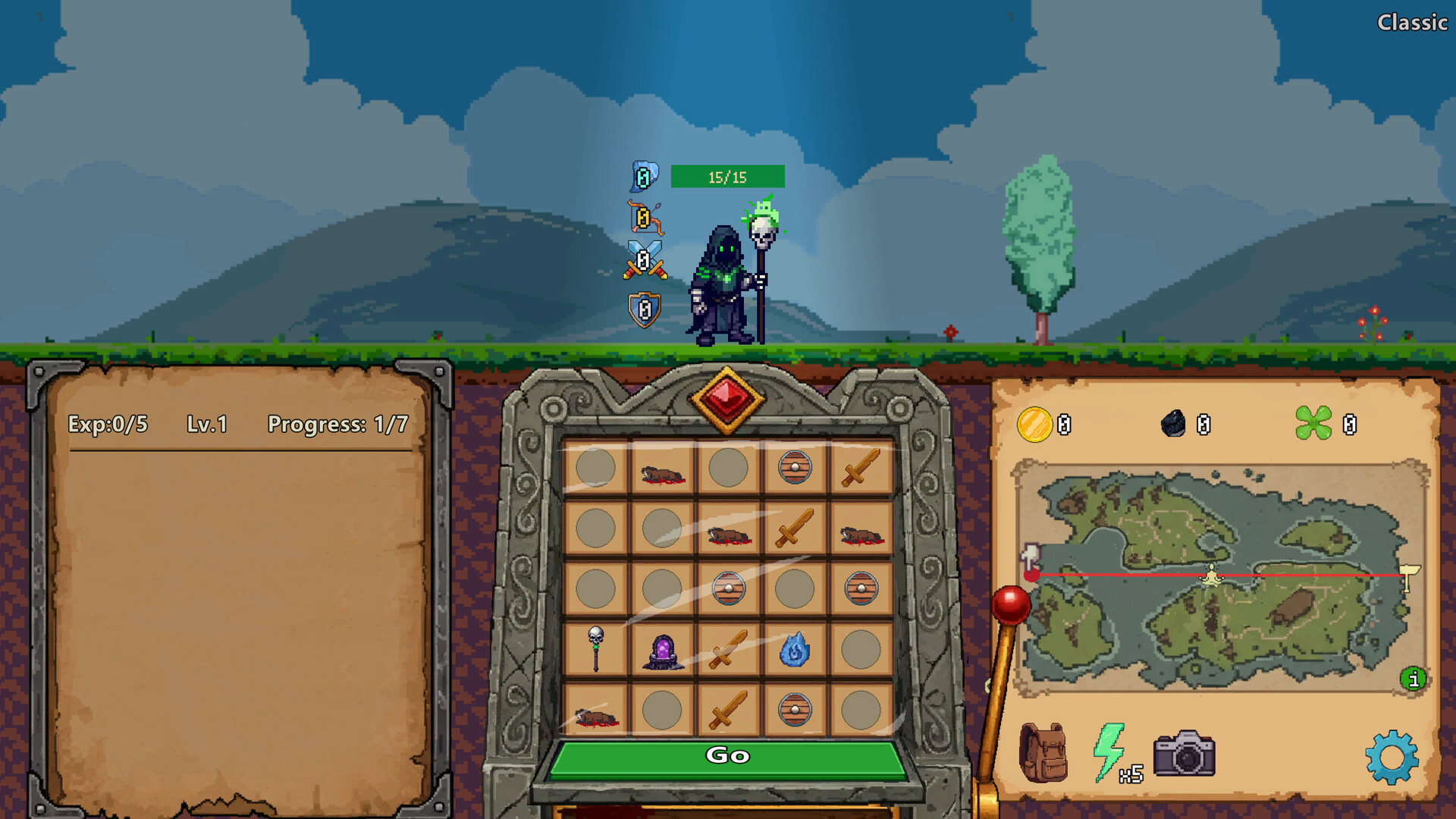
The gameplay is fairly simple and doesn’t require much input. Most of the time, you just pull a slot machine lever to generate symbols on a 5x5 grid. The symbols that appear depend on what’s in your inventory. You start with a few basic ones and earn new ones after each battle.
The most crucial symbols are swords and shields which determine how much damage you deal and how much you can block. These are automatically applied to your character and reset back into your inventory after two spins. Once two spins are completed, your character attacks the enemy using the accumulated values. Enemies also act, but they first have to spend a few turns walking toward you before they can strike. Their action is visible by an icon above their heads.
Magic and bow symbols are also important but rarer. Since they're harder to accumulate over two spins, it may take longer to activate them. These resources are needed to use action symbols. To activate one, you either click it to use it on yourself, or drag it onto an enemy to perform a specific attack.
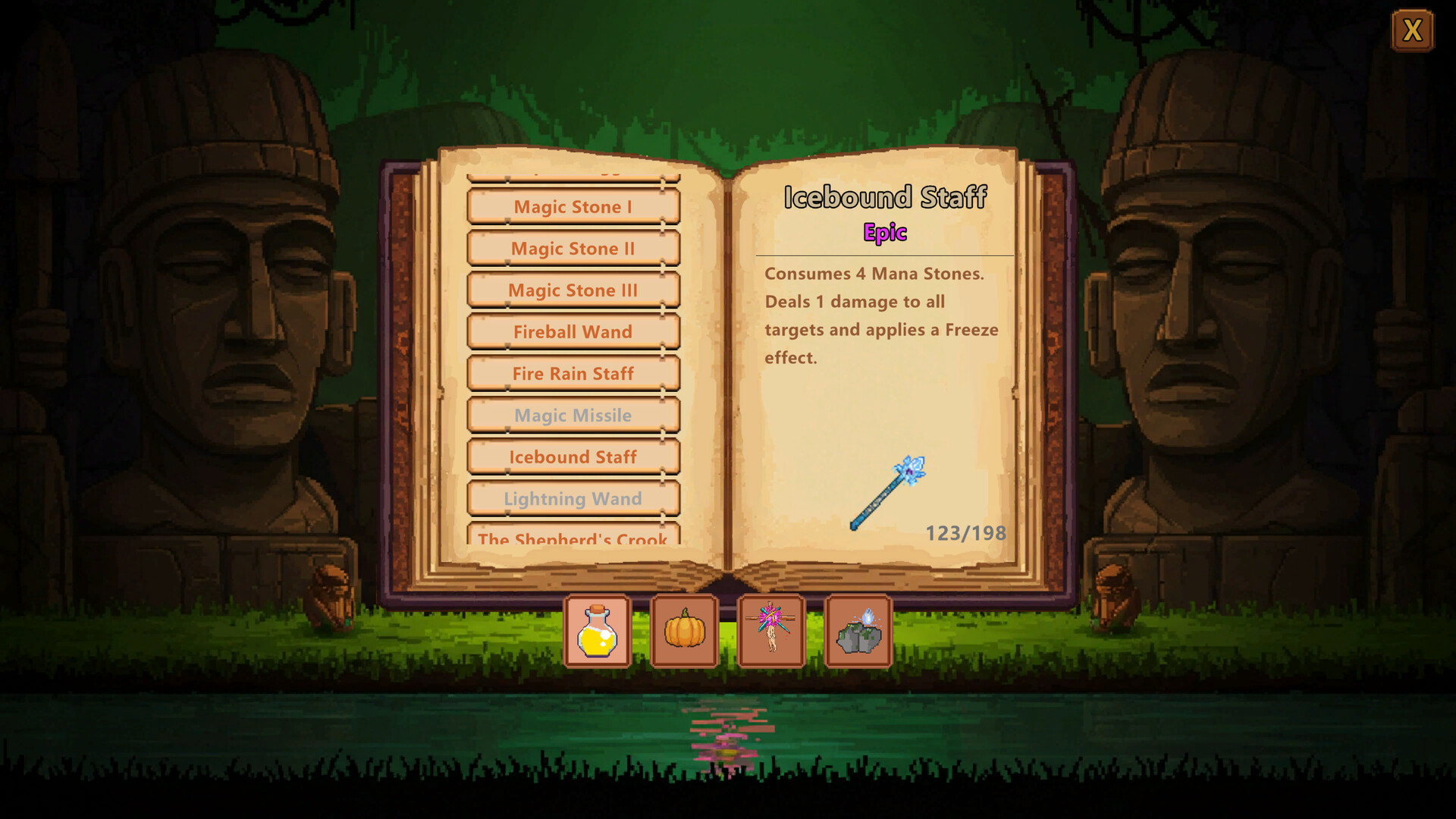
To make these symbols easier to spot, they have a flashing border. Some can be used an unlimited number of times, while others have durability limits. Even if an item runs out of durability, it still appears on the grid, potentially taking up space that could be used for something else. You can restore these items at rest nodes using the appropriate options.
All four resource types can be gathered through various symbols, each with unique rules and rarity tiers. For example, a helmet might double your defense if it appears in the top row, while a diamond card symbol becomes more effective when adjacent to other card symbols.
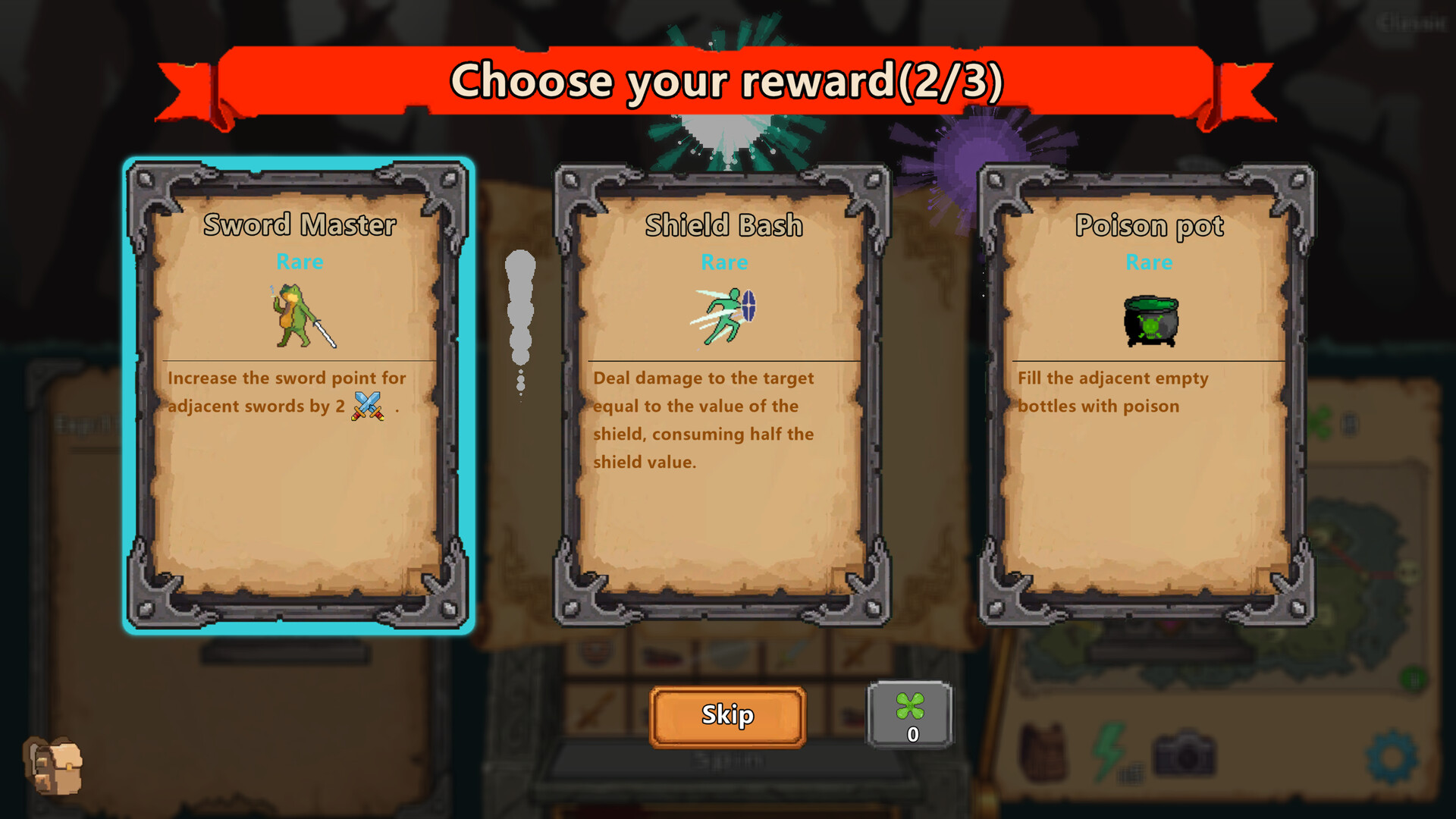
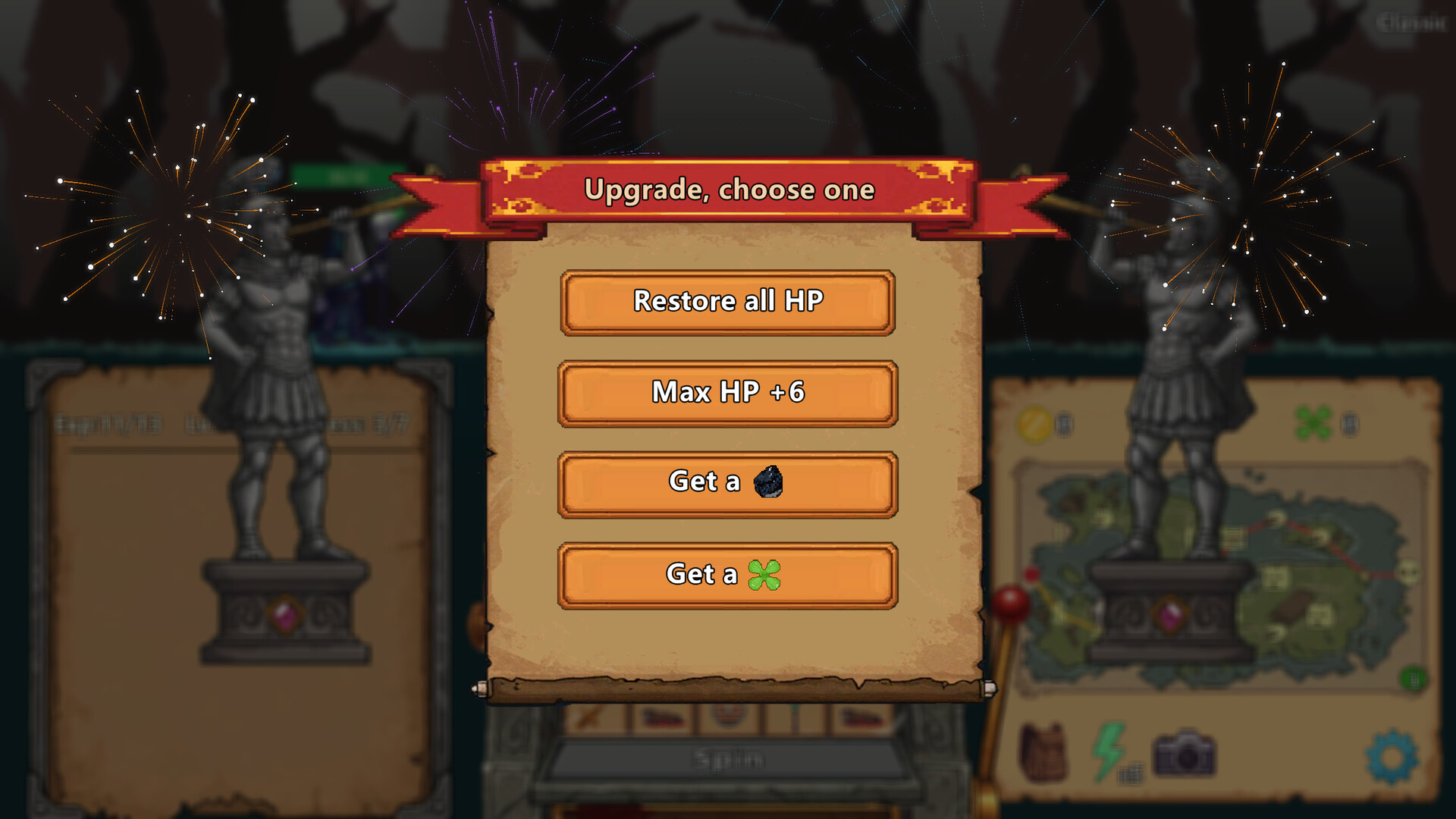
Winning battles earns you money, new symbols, and if you level up during the fight a bonus reward. These bonuses include healing, more health, a piece of coal which lets you remove a symbol from your inventory, or a clover that allows a reroll of the post battle symbol reward.
The game is challenging due to its reliance on luck. Even on the easiest setting, I couldn’t beat the first boss because it kept spawning minions faster than I could handle. There are no permanent upgrades or progression between runs, so how much you enjoy the game will depend on your tolerance for randomness and love for luck based mechanics.
Each run is randomized and plays out similarly to other roguelite games. You move through nodes on a map, occasionally choosing between branching paths. Each node has an icon that indicates what you'll encounter there. Most involve combat, marked by a monster icon, but you’ll also come across merchants, treasure chests, and special events where you’ll make decisions that affect your reward.
The gameplay is fairly simple and doesn’t require much input. Most of the time, you just pull a slot machine lever to generate symbols on a 5x5 grid. The symbols that appear depend on what’s in your inventory. You start with a few basic ones and earn new ones after each battle.
The most crucial symbols are swords and shields which determine how much damage you deal and how much you can block. These are automatically applied to your character and reset back into your inventory after two spins. Once two spins are completed, your character attacks the enemy using the accumulated values. Enemies also act, but they first have to spend a few turns walking toward you before they can strike. Their action is visible by an icon above their heads.
Magic and bow symbols are also important but rarer. Since they're harder to accumulate over two spins, it may take longer to activate them. These resources are needed to use action symbols. To activate one, you either click it to use it on yourself, or drag it onto an enemy to perform a specific attack.
To make these symbols easier to spot, they have a flashing border. Some can be used an unlimited number of times, while others have durability limits. Even if an item runs out of durability, it still appears on the grid, potentially taking up space that could be used for something else. You can restore these items at rest nodes using the appropriate options.
All four resource types can be gathered through various symbols, each with unique rules and rarity tiers. For example, a helmet might double your defense if it appears in the top row, while a diamond card symbol becomes more effective when adjacent to other card symbols.
Winning battles earns you money, new symbols, and if you level up during the fight a bonus reward. These bonuses include healing, more health, a piece of coal which lets you remove a symbol from your inventory, or a clover that allows a reroll of the post battle symbol reward.
The game is challenging due to its reliance on luck. Even on the easiest setting, I couldn’t beat the first boss because it kept spawning minions faster than I could handle. There are no permanent upgrades or progression between runs, so how much you enjoy the game will depend on your tolerance for randomness and love for luck based mechanics.
6 found helpful
Steam ↗