▲ Recommended
6 hrs
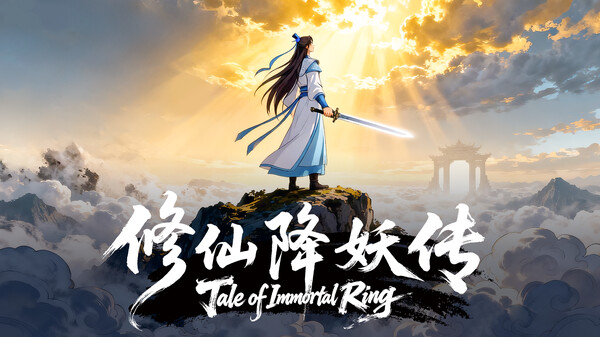
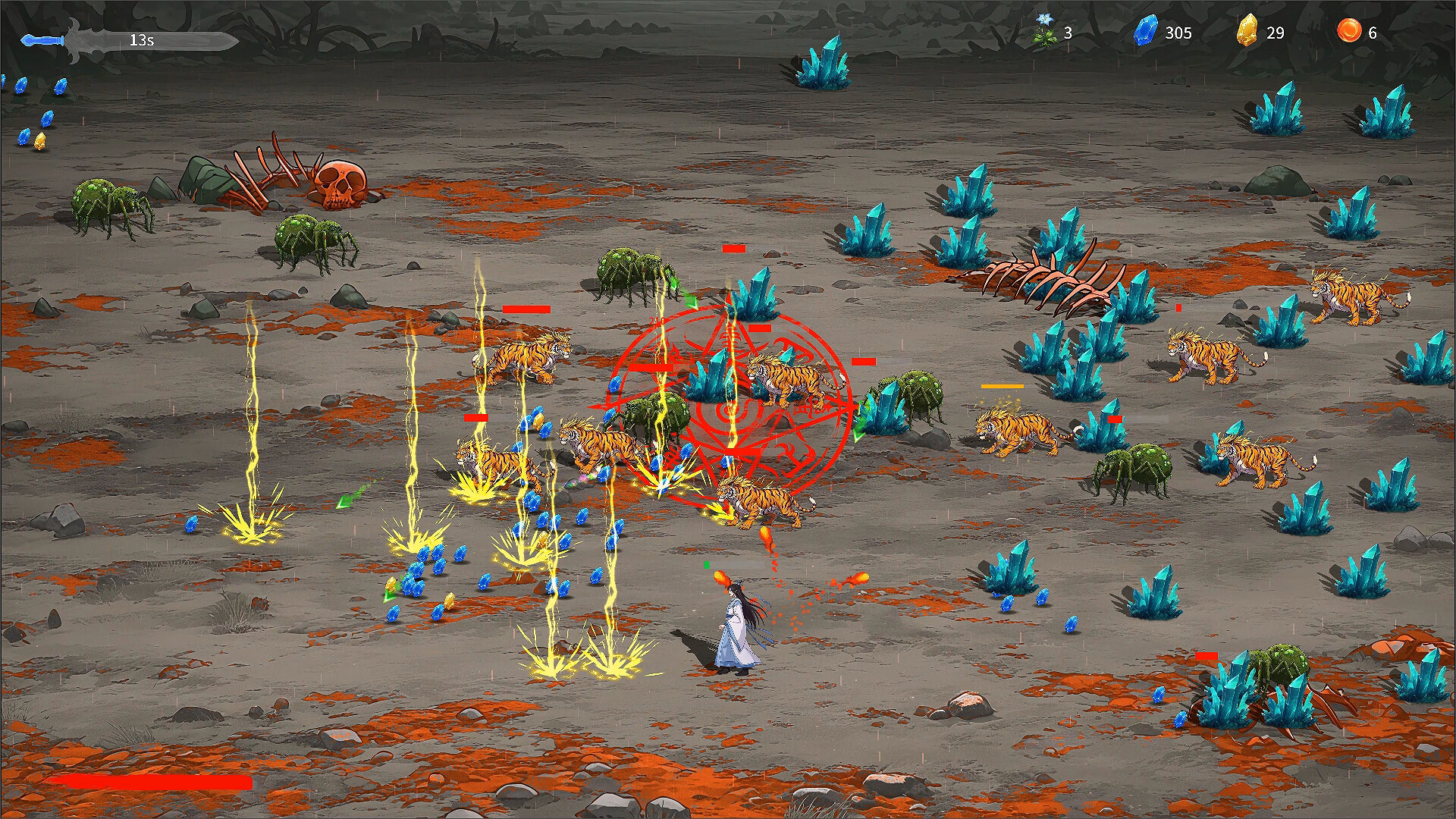
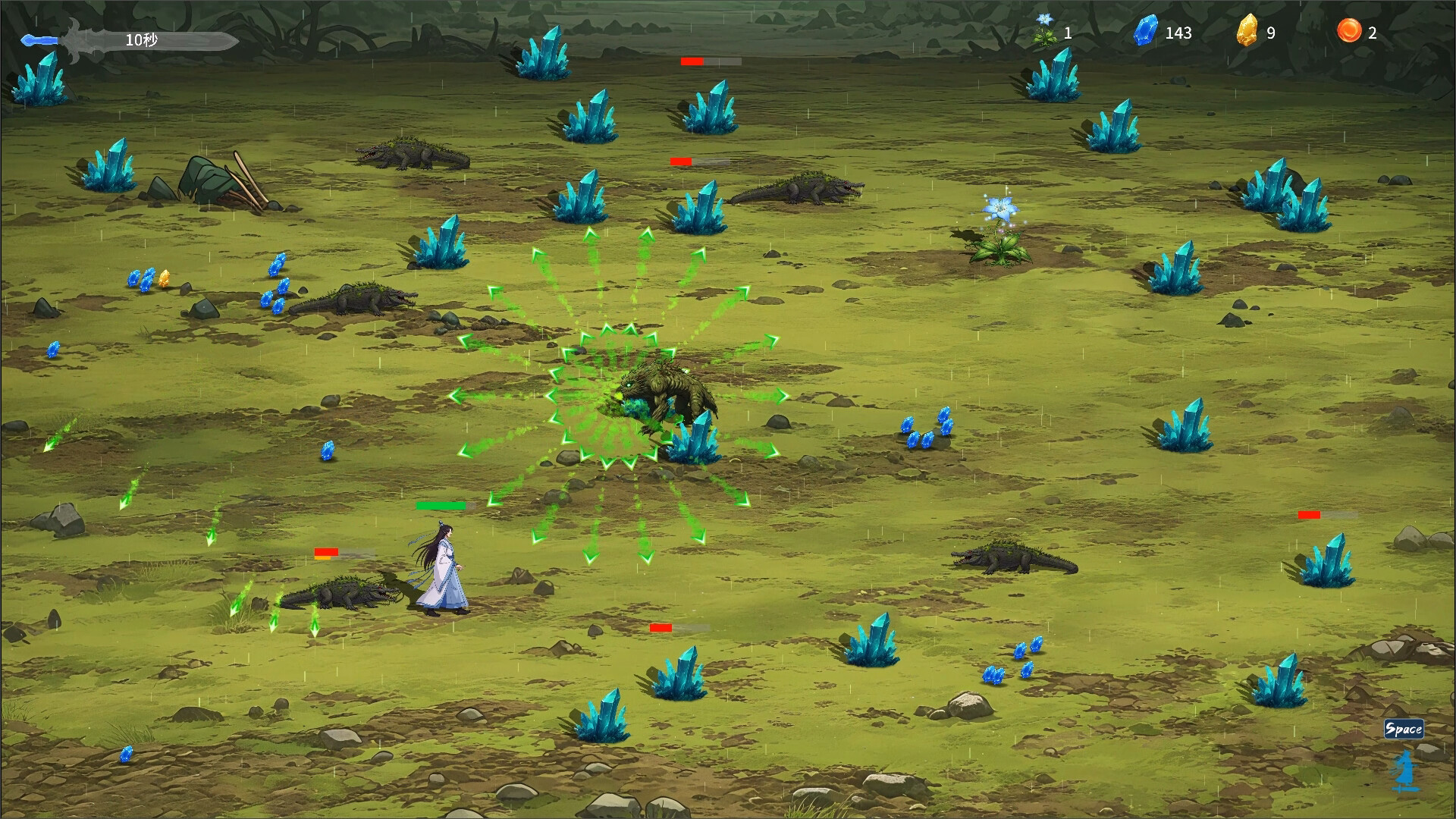
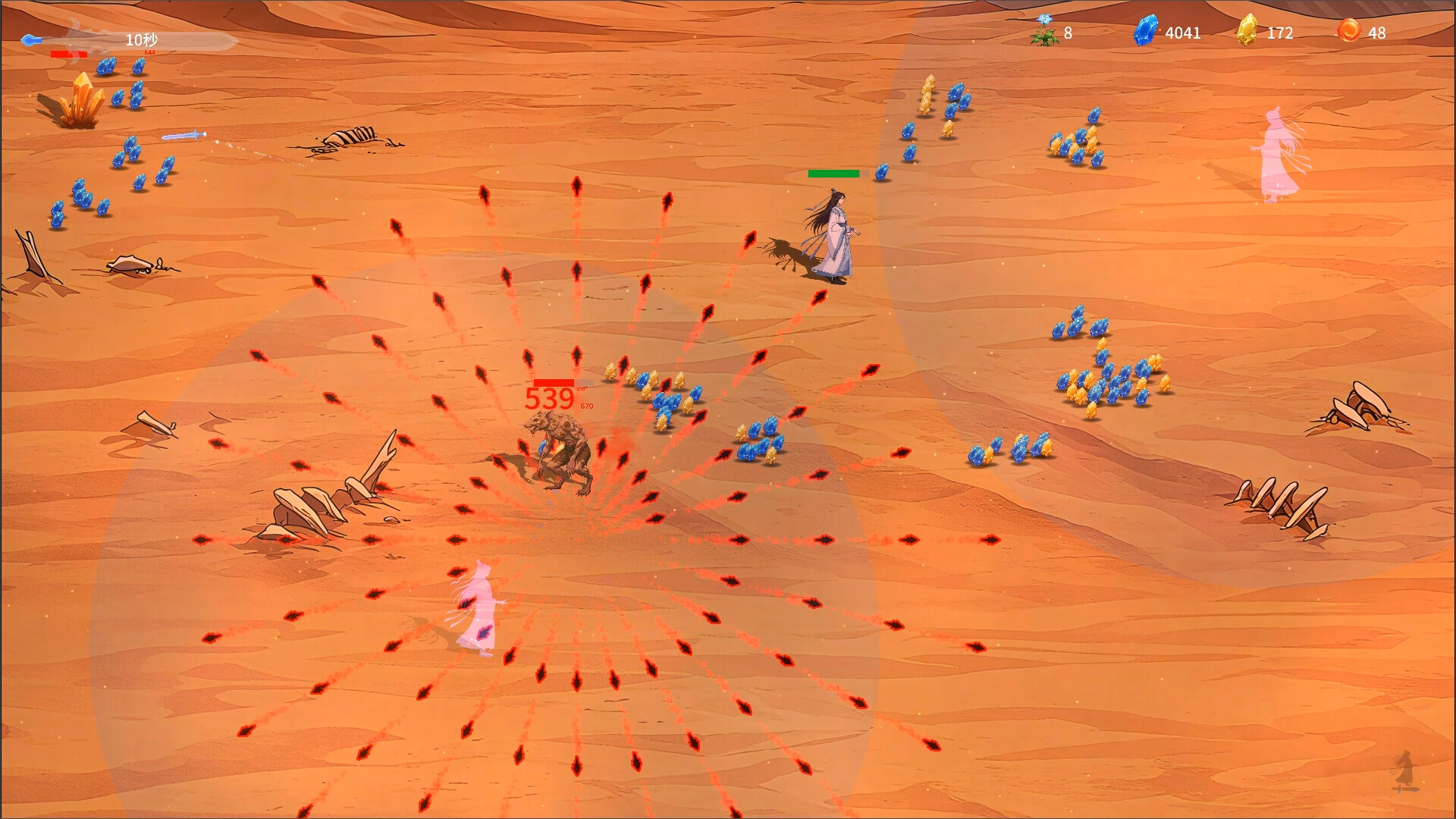
In this incremental game, you collect stones by breaking crystals with your fireball. The core gameplay has a bit in common with the survivors genre. You move around the area while your character automatically fires at the nearest crystal. From there it becomes all about upgrades and steadily improving your build so you can gather crystals faster and faster.
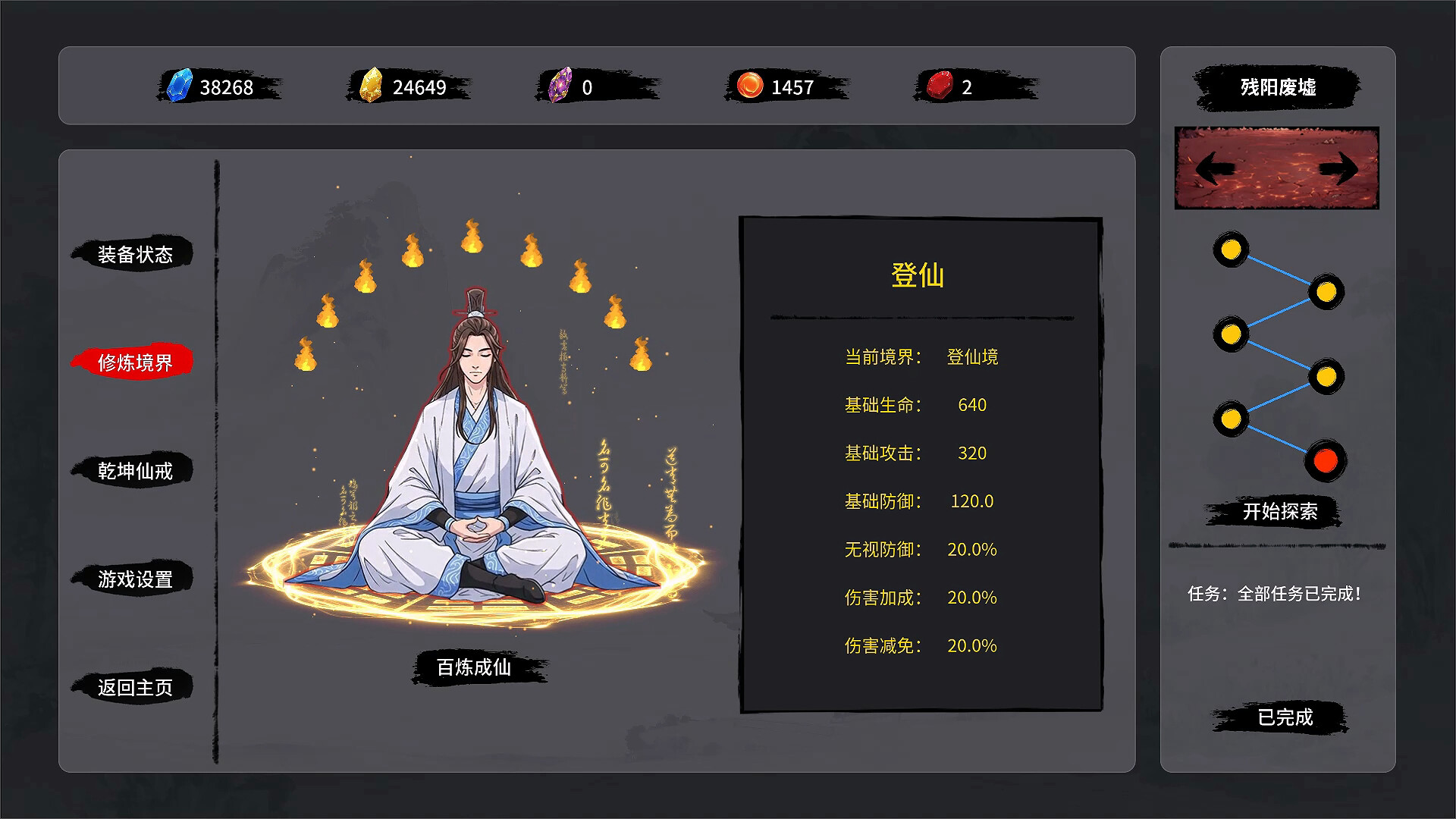
Each run only lasts a few seconds. It can end even sooner if you walk into crystals or get hit by one of the enemies roaming around, which lowers your health. Enemies can also drop materials when you defeat them. Whatever crystals you collect can be used on your character through cultivation, which boosts general stats like health, damage, and defense, or spent in the upgrade tree that follows the familiar structure of the genre.
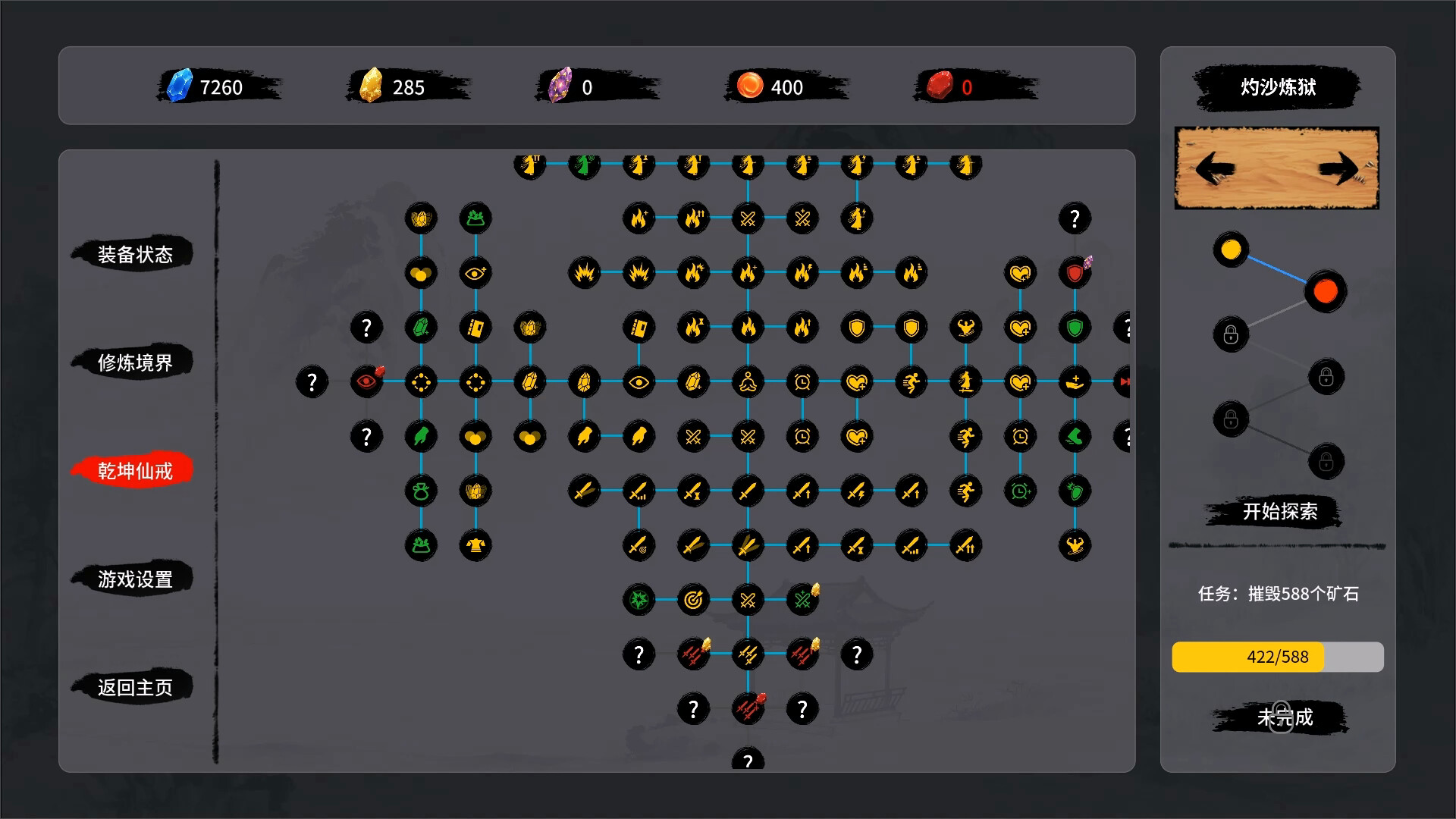
You always start in the center with the first upgrade. From there the tree expands in four directions. Buying an upgrade reveals the ones next to it and makes them available to purchase, while the rest remain hidden behind question marks. Most upgrades are fairly standard. You can increase firing speed, deal more damage, improve rewards, shoot multiple projectiles at once, and more.
Some upgrades can be purchased multiple times while others are limited to a single purchase. However, progress through the tree is gated by different types of materials. Besides the basic blue crystals there are two additional materials, and you must first unlock the chance for them to appear by buying the right upgrades.
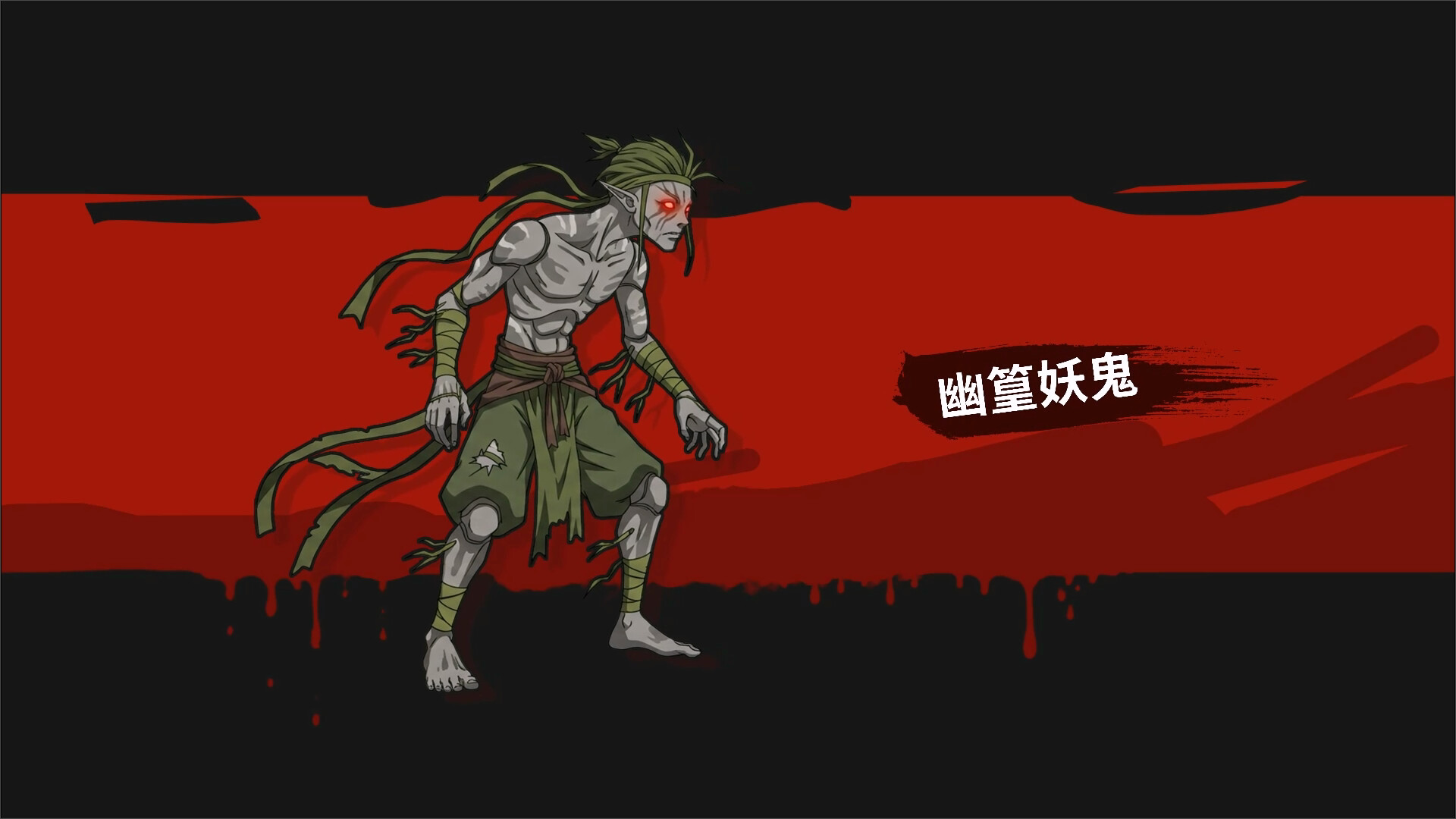
The game also has a progression mechanic that pushes you forward. As you destroy crystals and defeat enemies, you fill a circle in the center of the screen. Once it is full, a boss appears. Defeating that boss unlocks the next stage with tougher crystals and stronger enemies. It can be a bit challenging at times, so it helps that you can return to earlier stages and grind until you are stronger. In total, there are seven regions, each containing six stages.
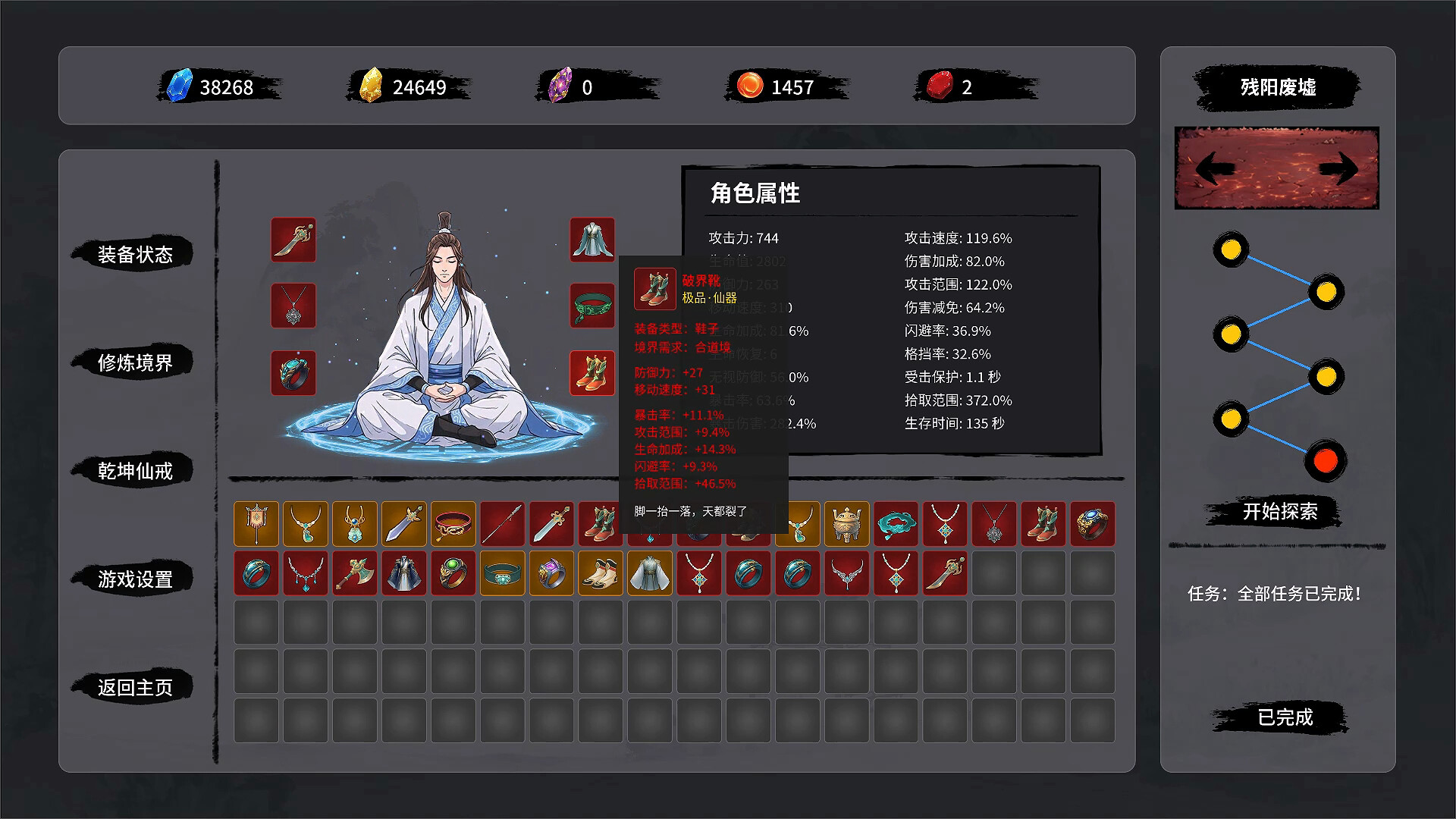
Trying more difficult stages increases the chance of equipment drops. There are six equipment types including shoes, weapons, and hats. Every item has a rarity tier and stat bonuses that add to the power you gain from upgrades and cultivation. If you find something you do not need you can break it down into basic crystals. One small annoyance is that the game does not clearly show whether a piece of gear is better or worse than what you are already wearing, so you have to compare the numbers yourself.
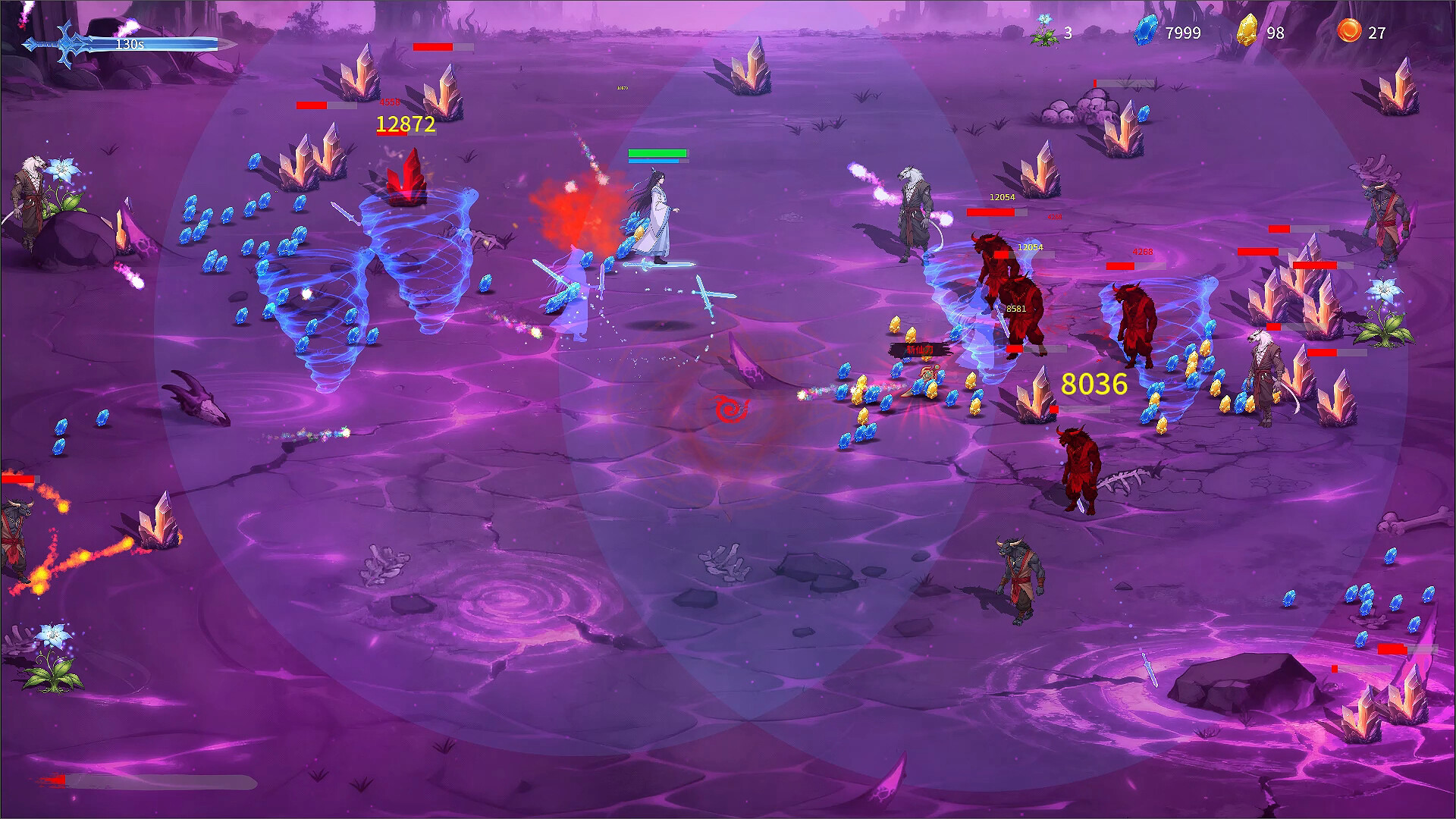
Progress is also tied to quests and defeating specific bosses. These reward two special materials that cannot be found anywhere else. They usually unlock some of the most exciting features in the game, such as flying swords or a tornado that supports your fireballs, or upgrades that make your fireballs explode on impact.
Like most incremental games, the real key is time and persistence. You gather resources, invest them into upgrades, and slowly unlock everything the game has to offer. While some skill is required to dodge enemy attacks, especially in the later stages, having a fully upgraded build can make the journey much smoother.
Each run only lasts a few seconds. It can end even sooner if you walk into crystals or get hit by one of the enemies roaming around, which lowers your health. Enemies can also drop materials when you defeat them. Whatever crystals you collect can be used on your character through cultivation, which boosts general stats like health, damage, and defense, or spent in the upgrade tree that follows the familiar structure of the genre.
You always start in the center with the first upgrade. From there the tree expands in four directions. Buying an upgrade reveals the ones next to it and makes them available to purchase, while the rest remain hidden behind question marks. Most upgrades are fairly standard. You can increase firing speed, deal more damage, improve rewards, shoot multiple projectiles at once, and more.
Some upgrades can be purchased multiple times while others are limited to a single purchase. However, progress through the tree is gated by different types of materials. Besides the basic blue crystals there are two additional materials, and you must first unlock the chance for them to appear by buying the right upgrades.
The game also has a progression mechanic that pushes you forward. As you destroy crystals and defeat enemies, you fill a circle in the center of the screen. Once it is full, a boss appears. Defeating that boss unlocks the next stage with tougher crystals and stronger enemies. It can be a bit challenging at times, so it helps that you can return to earlier stages and grind until you are stronger. In total, there are seven regions, each containing six stages.
Trying more difficult stages increases the chance of equipment drops. There are six equipment types including shoes, weapons, and hats. Every item has a rarity tier and stat bonuses that add to the power you gain from upgrades and cultivation. If you find something you do not need you can break it down into basic crystals. One small annoyance is that the game does not clearly show whether a piece of gear is better or worse than what you are already wearing, so you have to compare the numbers yourself.
Progress is also tied to quests and defeating specific bosses. These reward two special materials that cannot be found anywhere else. They usually unlock some of the most exciting features in the game, such as flying swords or a tornado that supports your fireballs, or upgrades that make your fireballs explode on impact.
Like most incremental games, the real key is time and persistence. You gather resources, invest them into upgrades, and slowly unlock everything the game has to offer. While some skill is required to dodge enemy attacks, especially in the later stages, having a fully upgraded build can make the journey much smoother.
5 found helpful
Steam ↗