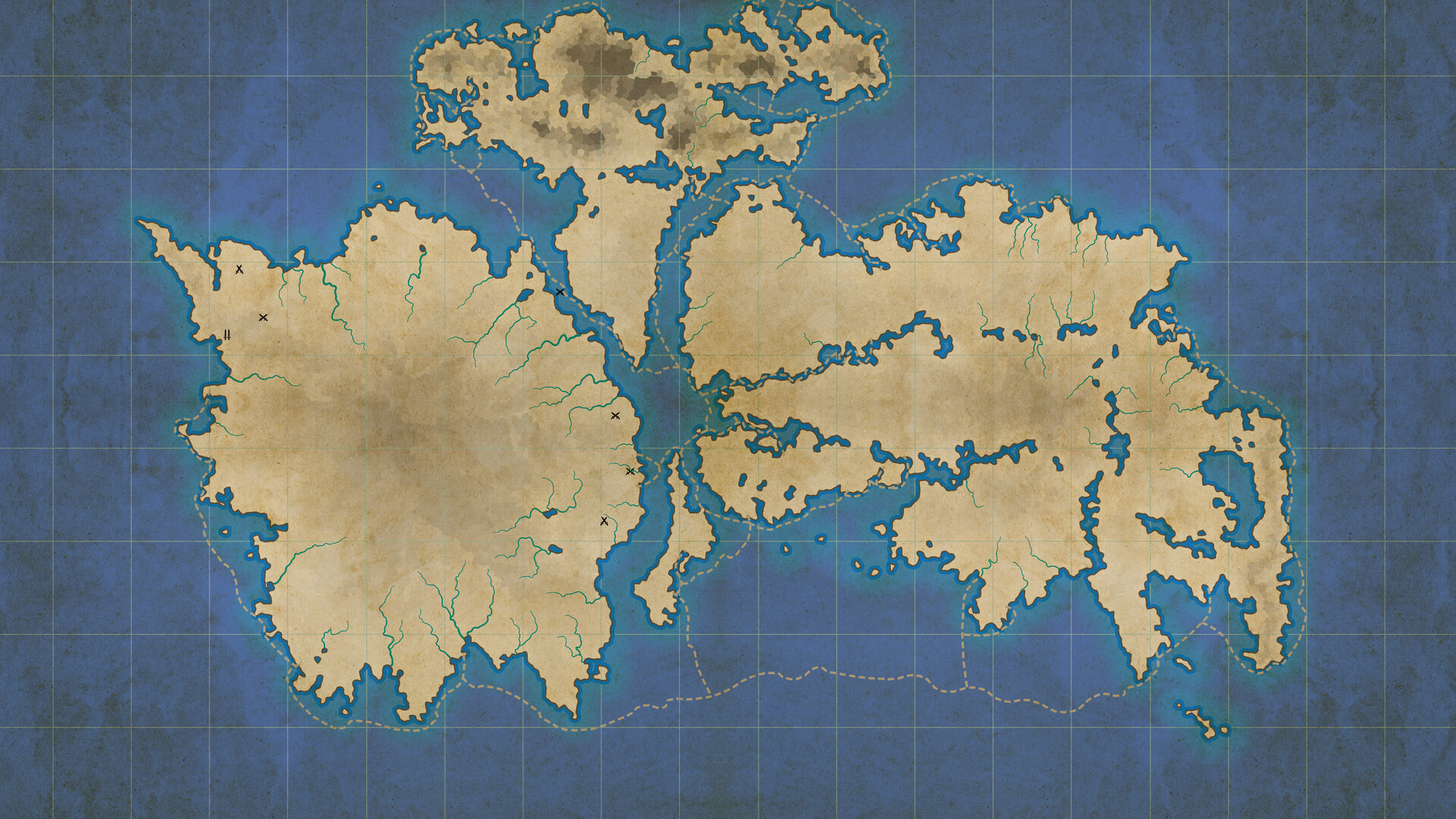
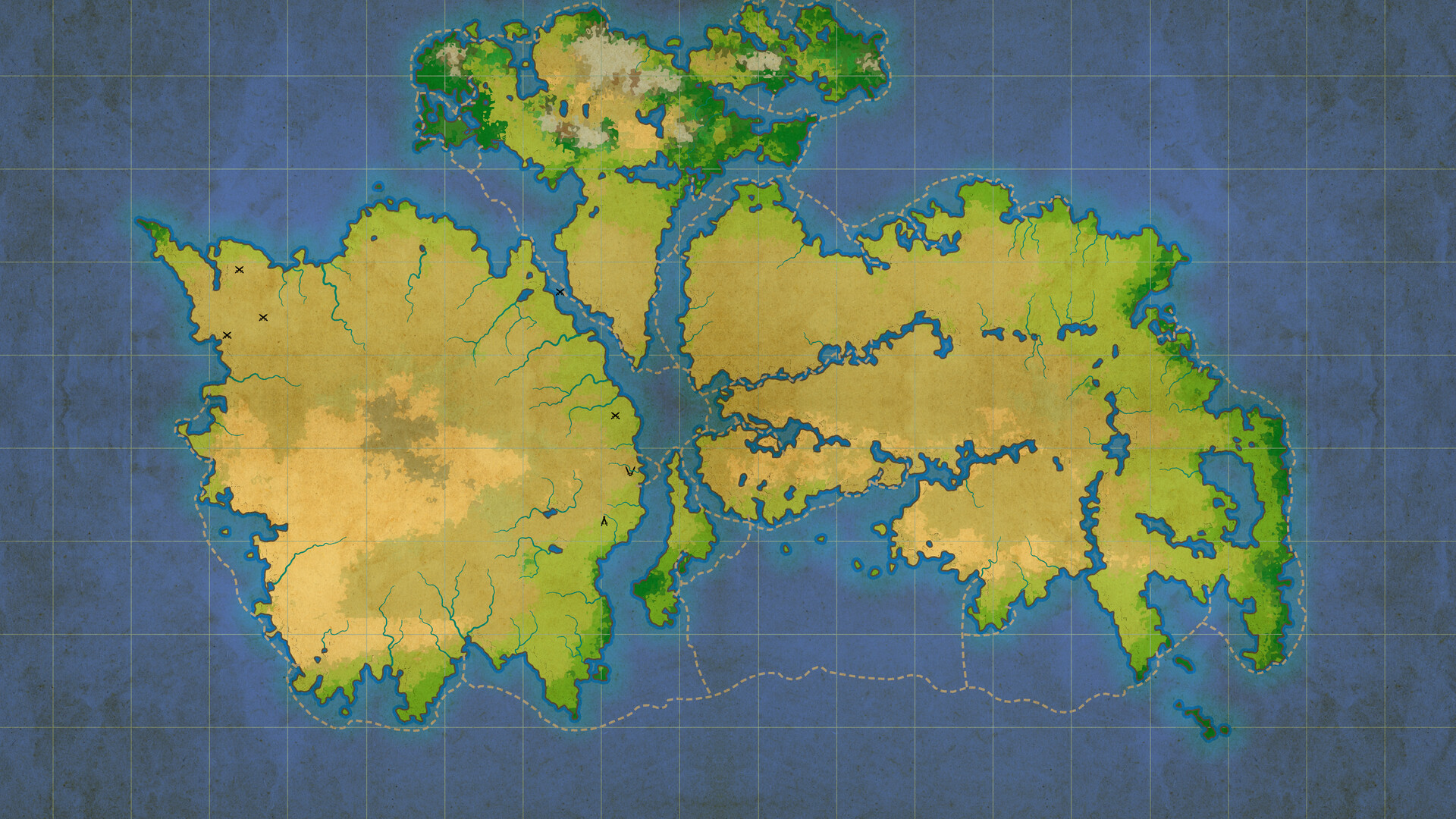
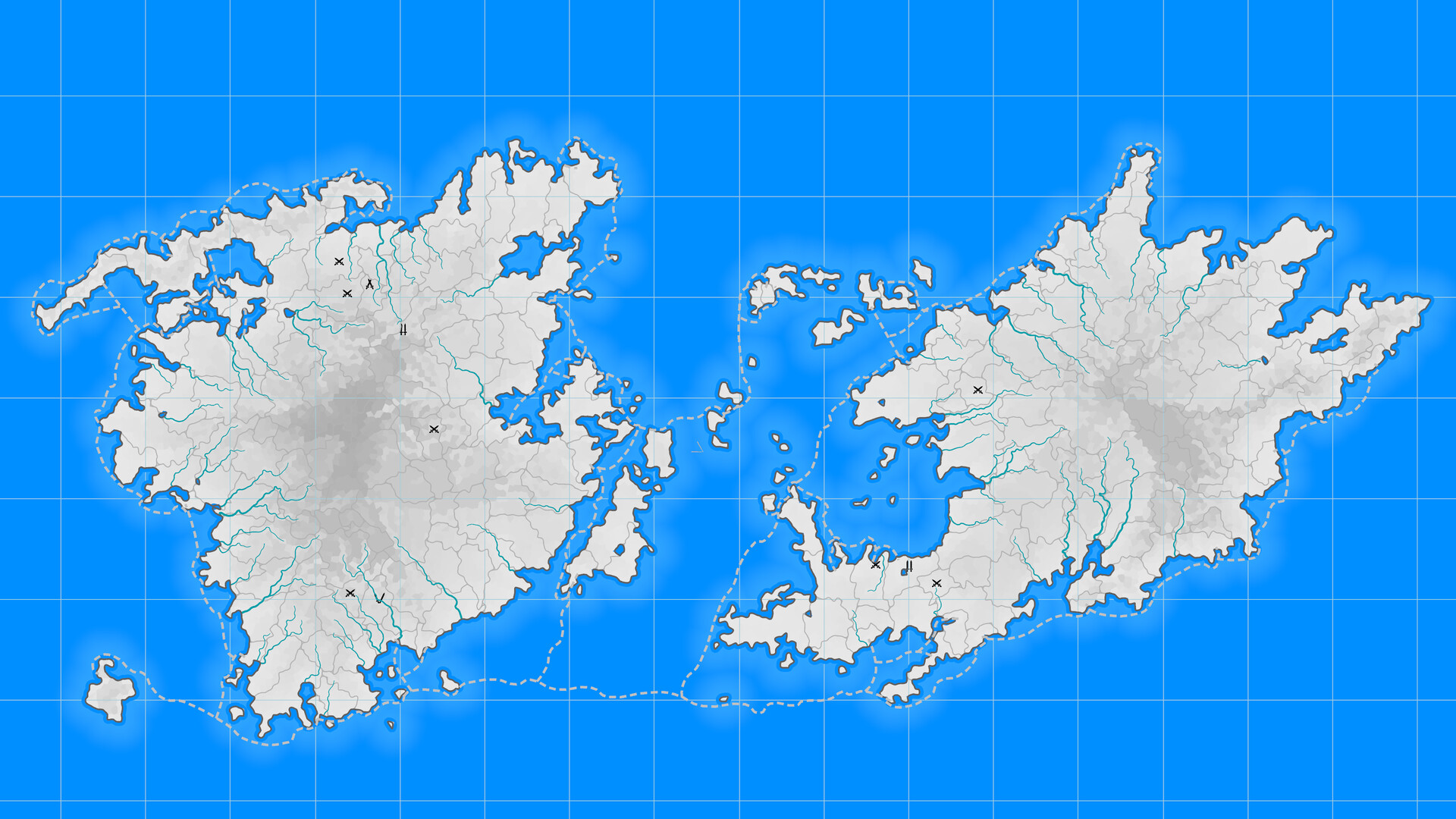
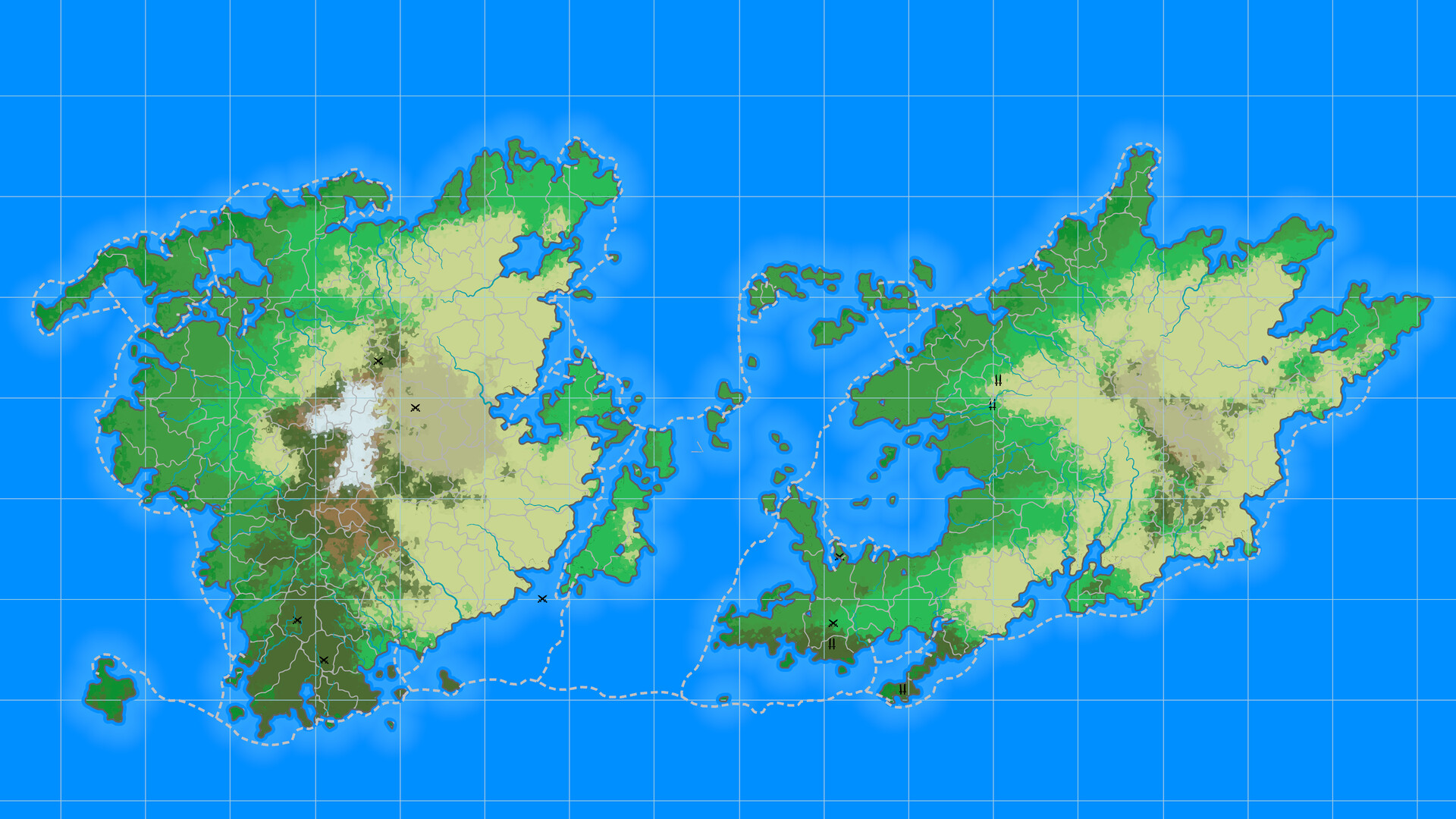
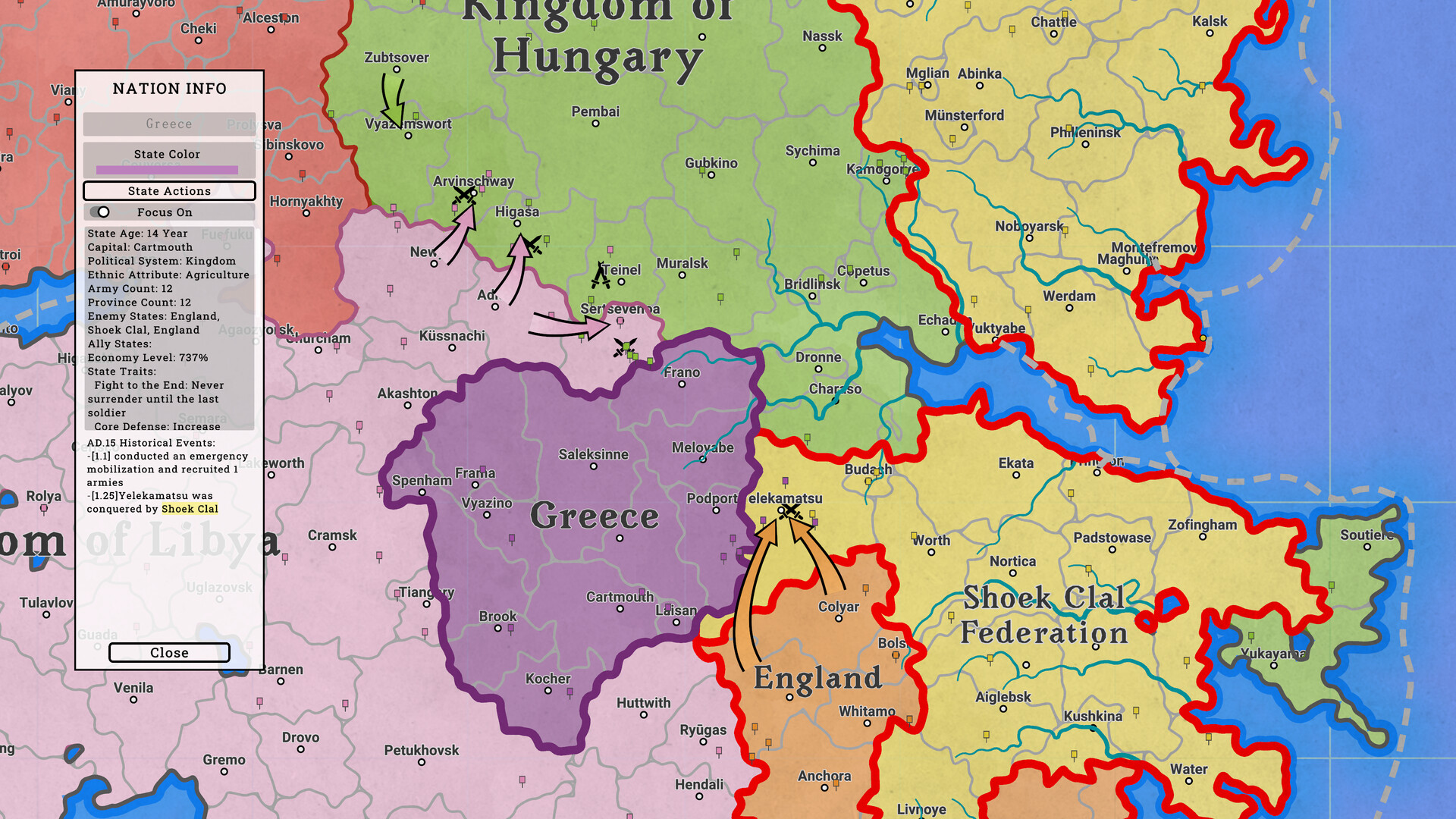
Fantasy Map Simulator generates procedural worlds where civilizations rise, wage wars, and fall across simulated centuries. You design the initial map and nations, then watch history unfold through political and military conflicts, with some ability to influence events. It appeals to world-builders and history enthusiasts seeking an automated backdrop for creative projects, though it offers limited customization of individual civilizations once simulation begins.
About this game
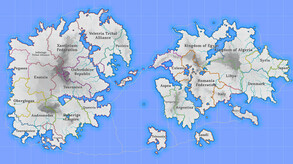
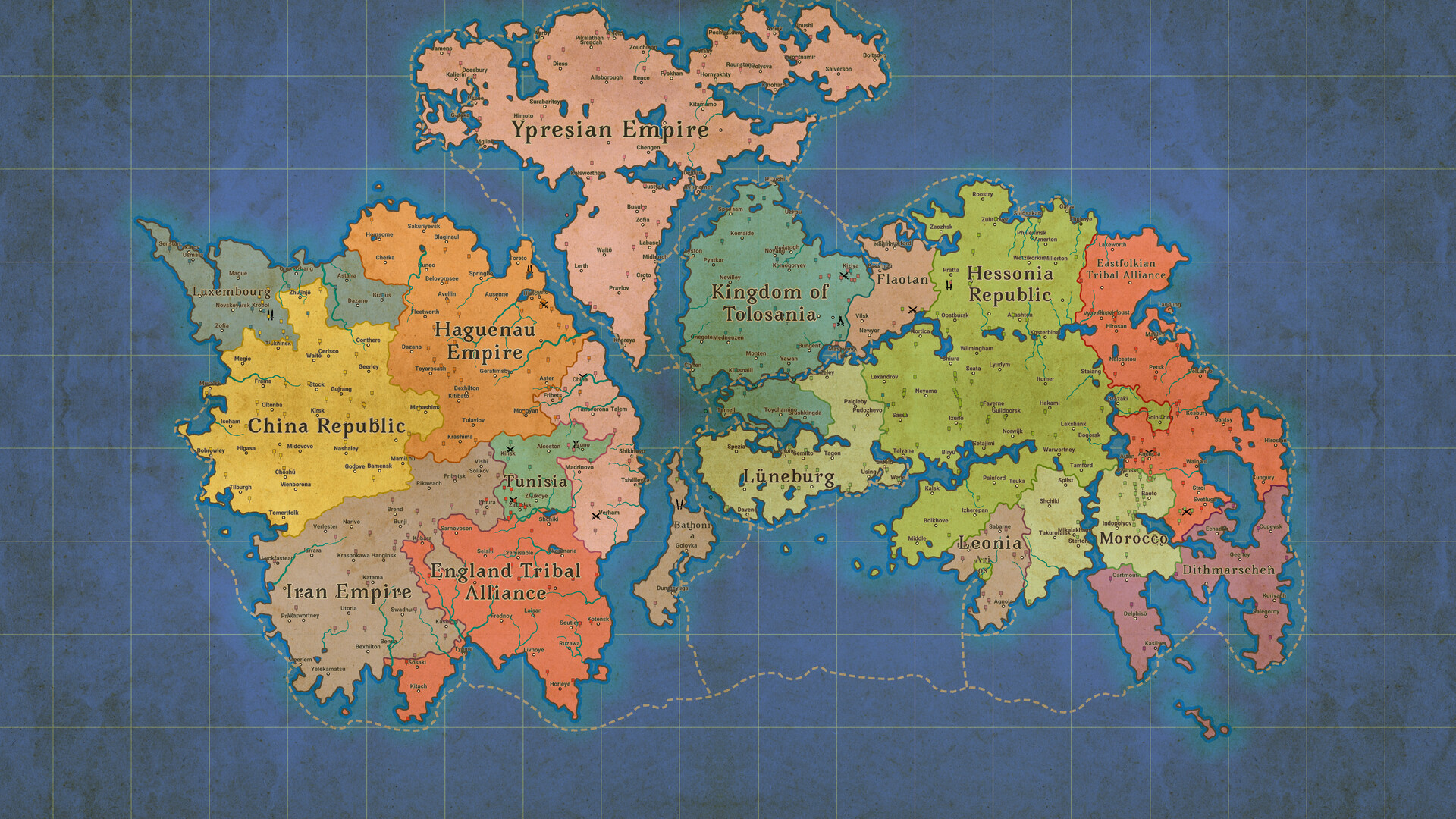
Fantasy Map Simulator: Create and watch imaginary worlds evolve over centuries. Design maps, simulate nations and their politics, and control destinies. See empires rise and fall on your desktop wallpaper. A unique simulation for history buffs and creative minds.
Players, last 30 days
Peak 230 · Low 117
Daily peak concurrent players, sampled once a night from Steam.
What players are saying
▲ Recommended0 hrs
As someone who's interested in using this to map out a campaign setting for D&D and/or other tabletop games, I'd really like to see an option that would allow the "player" to set up details (country names and their religious and cultural details, for example) for the various nations on the map before pitching head-long into developing the world's history. It's hard to customize when the game starts the action immediately.
Basically it's a generator/simulator for military history. I was hoping for more control over being to edit civilisations, generate and edit history in text fields, be able to make notes on regions etc. If you just want a map that evolves by itself (or that you can influence the evolution of), and that is downloadable then this game will be fine for you. If you want to be able to fine tune, customise and add your own lore/notes/details in-game then this game is likely not for you. The emphasis is more in simulation than customisation and world building.
Good game but the game should have the options listed: Deeper Cultural and Social Systems
Right now the simulator emphasizes political and military dynamics, but expanding into culture and society would give worlds more personality. Imagine simulating languages, art, music, and traditions that spread through conquest, migration, or trade. Players could watch religions fracture into sects, or cultures blend into hybrids along trade routes. This would make every empire feel less like a color blob on the map and more like a living, breathing civilization with unique identity.
Economy, Trade, and Resources
Introducing an economy system would unlock new strategies and storylines. Regions could specialize in resources—iron, grain, or rare magical crystals—and wars might be fought over these. Trade routes would become vital arteries of prosperity, subject to piracy, embargoes, or shifting alliances. Watching how economic booms create golden ages—or how resource scarcity sparks famine and rebellion—would give much more depth to the simulation.
Environmental and Natural Events
Nature could play a larger role in shaping history. Dynamic climate systems, volcanic eruptions, plagues, or magical catastrophes could dramatically alter a kingdom’s fate. A prosperous coastal empire might be wiped out by rising seas, or a drought could weaken an entire region and make it vulnerable to conquest. These unpredictable events would add both realism and drama, ensuring no two simulations unfold the same way.
Interactive Leaders and Characters
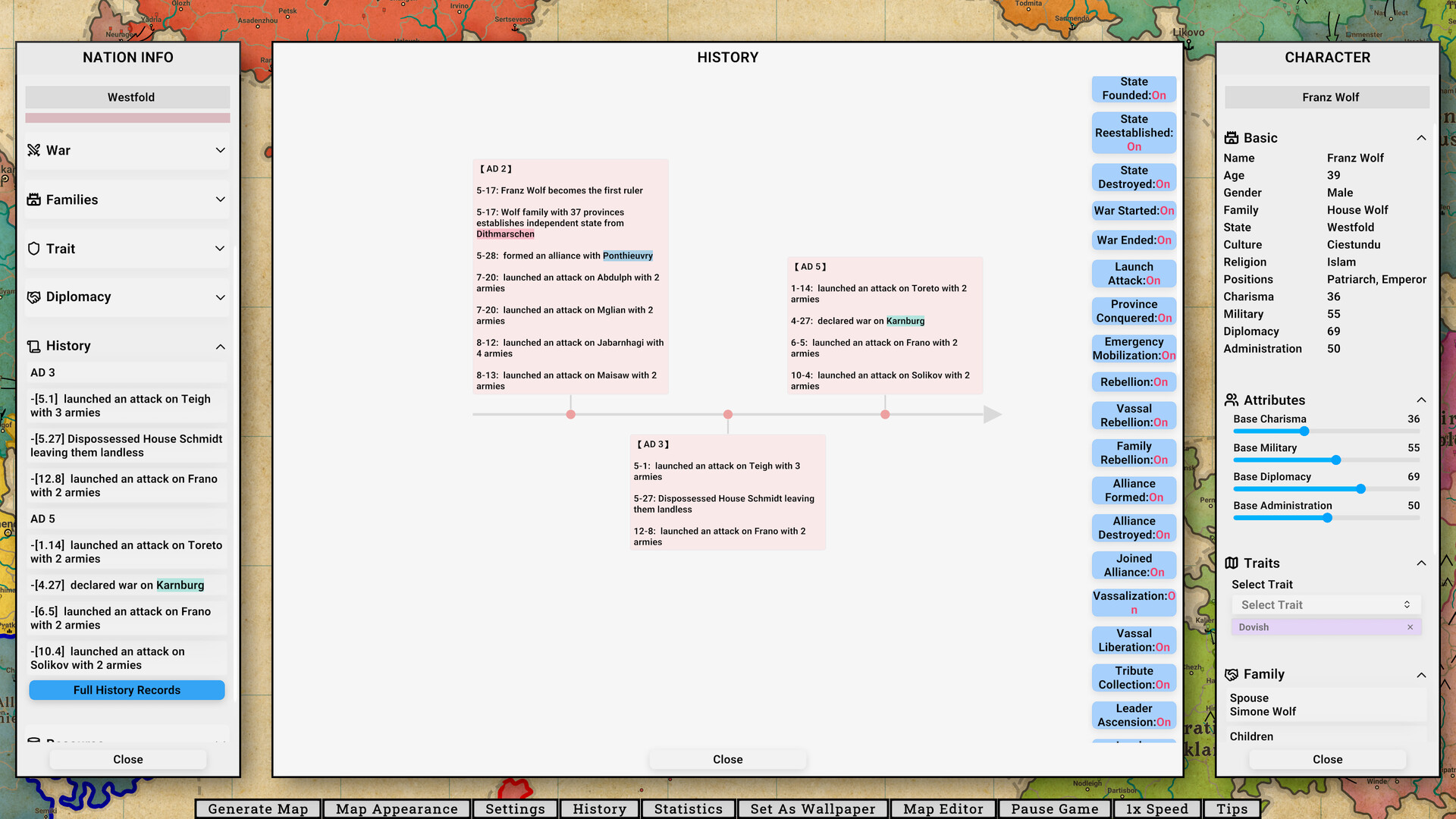
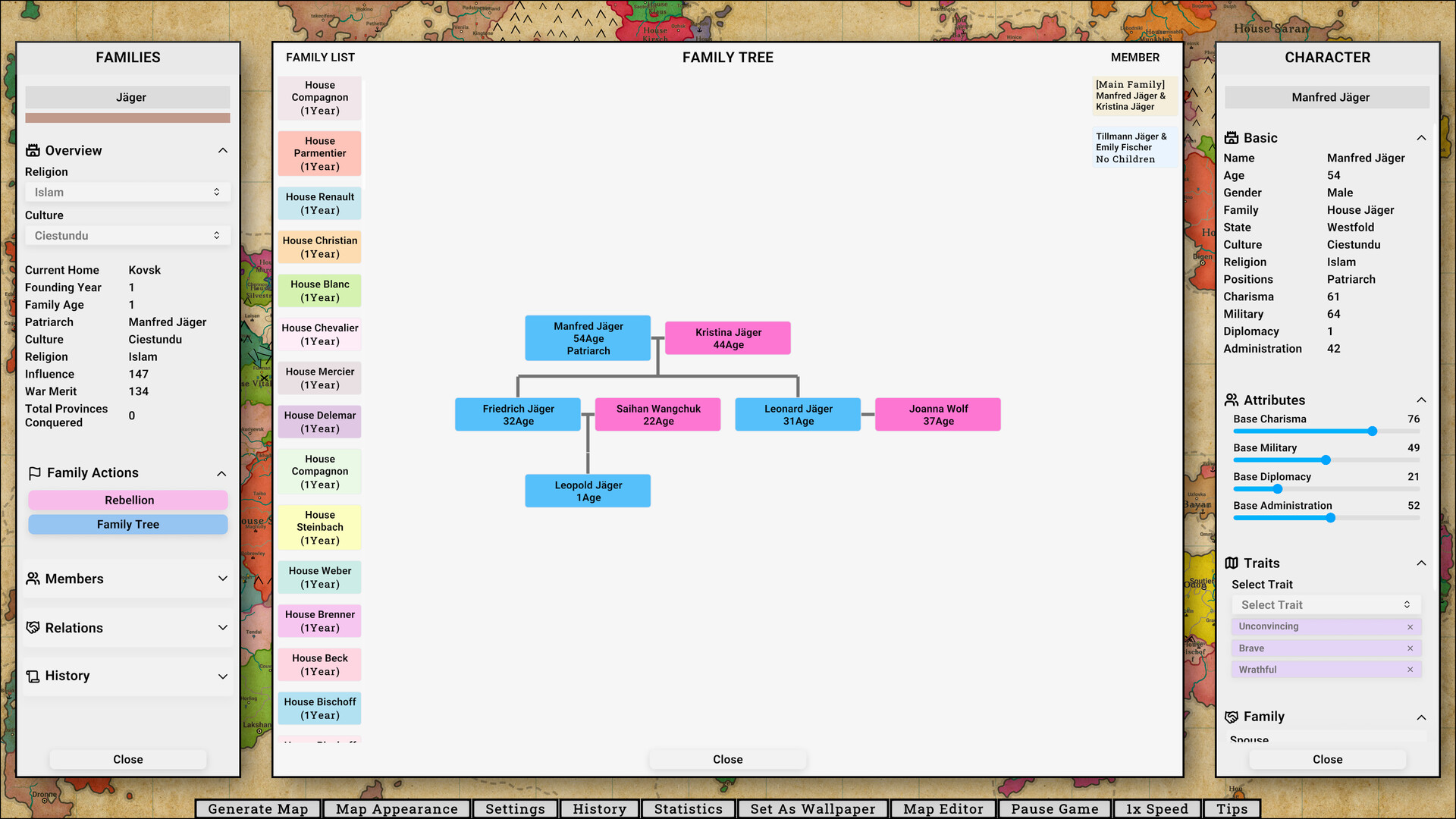
Adding rulers, heroes, and influential figures could give the map a stronger narrative feel. Players could watch dynasties rise and fall, or intervene by promoting charismatic generals and philosophers. Characters might have traits like ambition, cruelty, or wisdom, shaping how they govern and interact with others. This would bridge the gap between a pure geopolitical simulator and a story-driven world generator. Immersion Beyond the Map
While the wallpaper-style map is already unique, adding optional layers—like zooming into a city view, or switching to a first-person explorer mode—could increase immersion. Even simple narrative pop-ups (“The Kingdom of Veloria has crowned a new queen…”) would help bring history to life. Combining visuals, text, and simulation could make watching centuries pass feel like reading an epic saga unfold. Maybe even add idk like a way you can play as a character you make inside the game but anways without allat i rate the game a soild 9.5/10 as my true rating.
This August 6, 2026 update introduces the complete Government Office System: every state appoints a full roster of officials (by AI or by hand) whose competence directly affects the treasury, provincial output, rebellions, and battlefield command. Official titles change dynamically with culture and government form, backed by a full title editor and map-wide default titles. Also included: streaming-loading optimization for legacy saves. The office system at a glance: States are no longer run by the ruler alone: three tiers and six offices have been added. Central offices (one per state): Chief Administrator, Treasurer, and Marshal. Local offices: the District Governor (governs a district) and the Governor (governs a single province). Wartime office: the War Commander, appointed per war and automatically discharged when it ends. Every office is held by a real character with skills and a family; officials age and die, and every office held is recorded permanently in the character's career history. How officials shape the state: Treasury: the Chief Administrator and Treasurer together sway national income by up to ±12%. Local output and stability: Governors affect their province's output (±8%) and rebellion risk (±15%); District Governors benefit all owned provinces in their district (output ±5%, rebellion ±10%), and the two layers multiply — a court of the able and a court of the mediocre produce very different lands. Military command: battle command skill falls back through War Commander → Marshal → ruler; appointing the right commander for each war changes real battlefield performance. How the AI picks officials: Candidates are weighed on administration, martial skill, diplomacy, and charisma according to each office, with an age curve (prime years 25–55). Also considered: culture and state-religion fit, family influence and local roots (local magnates more easily govern their home region, military dynasties more easily take command), government form, workload, and p...
This update includes the following fixes: Fixed newly founded countries created by rebellions showing a regular city icon for their capital. Fixed the city icon not updating after a national capital was captured. Fixed alliance names remaining on screen after switching the alliance view or loading a save. Fixed issues with the Religion Mod upload list. Fixed vassals continuing to pay tribute after launching a war of independence against their overlord.
This July 17, 2026 update brings the reworked War System V2: AI declarations now come with explicit casus belli and war goals, wars are pushed toward the negotiating table by war exhaustion and distress, peace settlements are enforced based on the outcome, and new mechanics arrive: capital fall crises, forced conversion wars, and cultural unification wars. How to switch between V1 and V2: Newly generated worlds use War System V2 by default. Existing saves keep their original war system: old saves still load as V1 and show a notice on load. They are never switched automatically. The switch is in Map Editor → Global Commands → AI Global Configuration: War System V2 (This Save): switches the war system of the current save. Confirming will force-end all ongoing wars, and the choice is stored with this save. War System V2 (New Games): sets the default war system for newly generated worlds. It persists across sessions and does not affect the current game or existing saves. The legacy V1 war system remains fully available, and you can switch back at any time. Casus belli and war goals: AI declarations now require a casus belli and war goals: Territorial Conquest, Annexation, Subjugation (vassalization), Cultural Unification, and Forced Conversion. Territorial Conquest adapts to the balance of power: evenly matched attackers wage opportunistic occupation wars and keep what they hold, while overwhelming attackers claim a connected stretch of border provinces that is ceded in the settlement even if never occupied. Claimed provinces are picked along the shared border first, then expand inland when more are needed; without a land border, claims start from the nearest landable coast. With an overwhelming advantage (about 3x strength) over a small state, the AI prioritizes an outright annexation war, significantly reducing cases where one conquest is split across several wars. Added the Unifier character trait: rulers with this trait prioritize cultural unification wars against s...
Posts come from Steam's official announcements feed.