
▲ Recommended
4 hrs
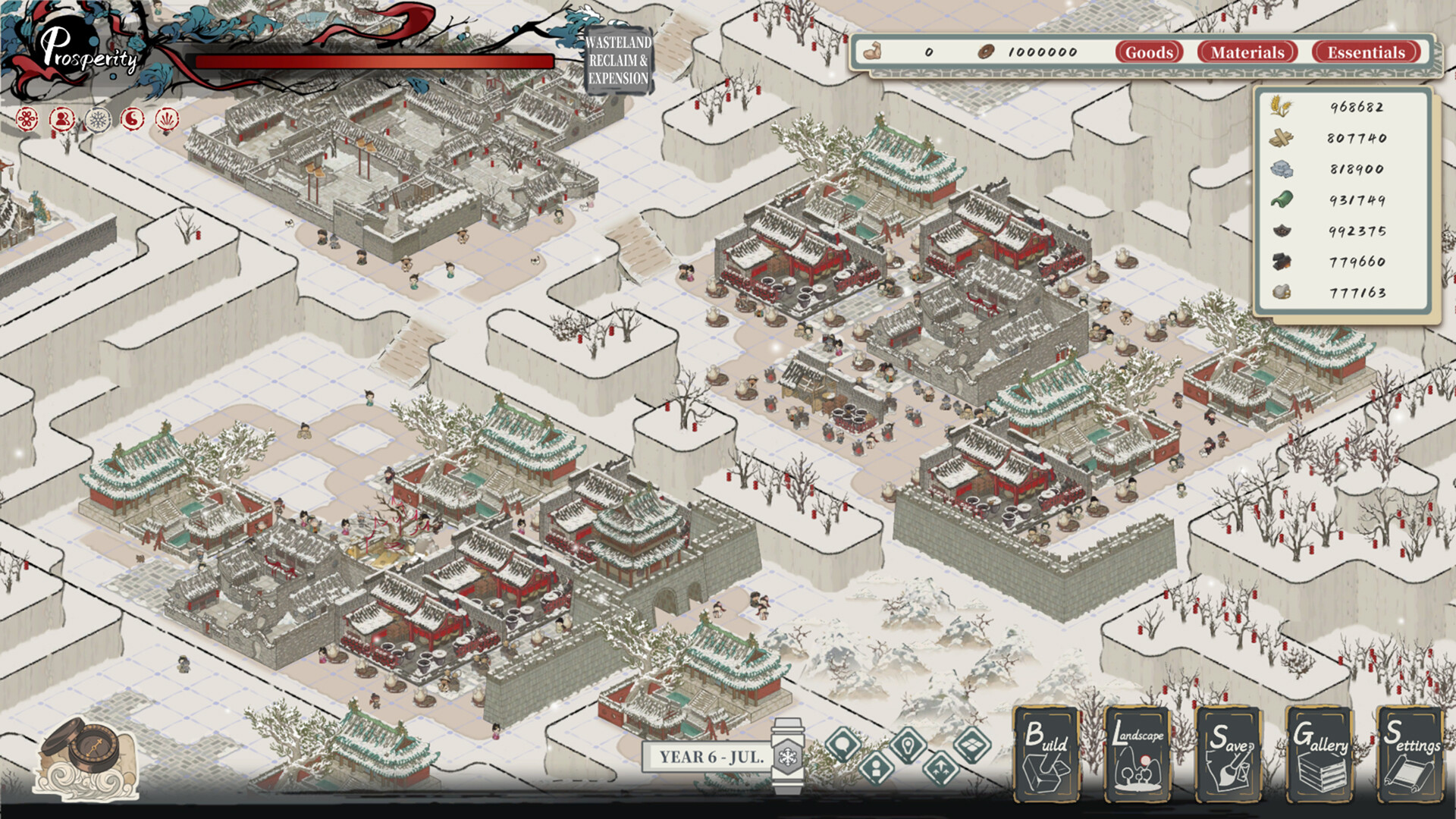
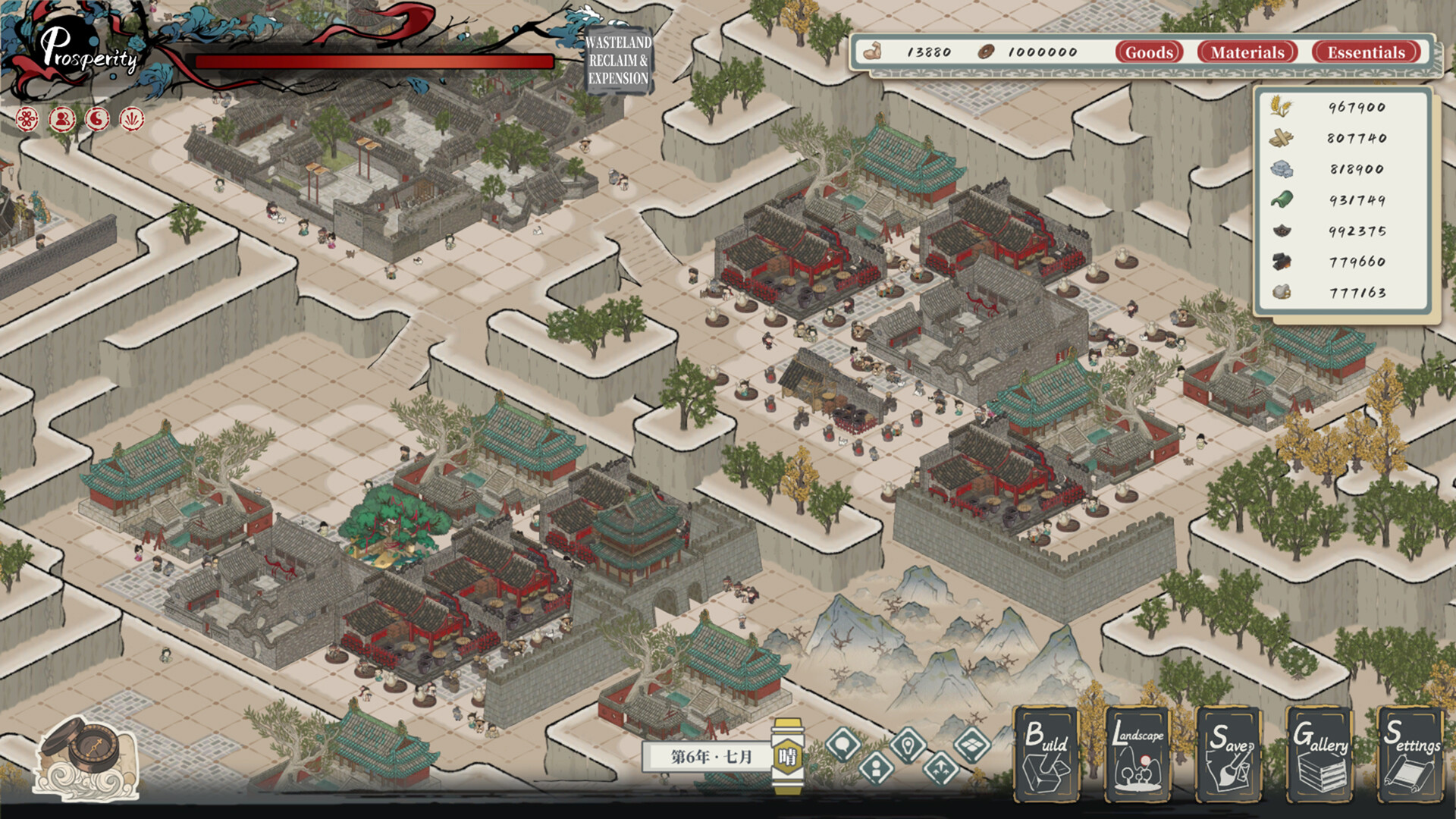
The game consists of five stages that must be played in order, each selected from the main menu. There are no time limits or gameplay restrictions within a level, so you’re free to take your time and work toward filling the prosperity bar, which the key objective for completing a stage and unlocking the next.
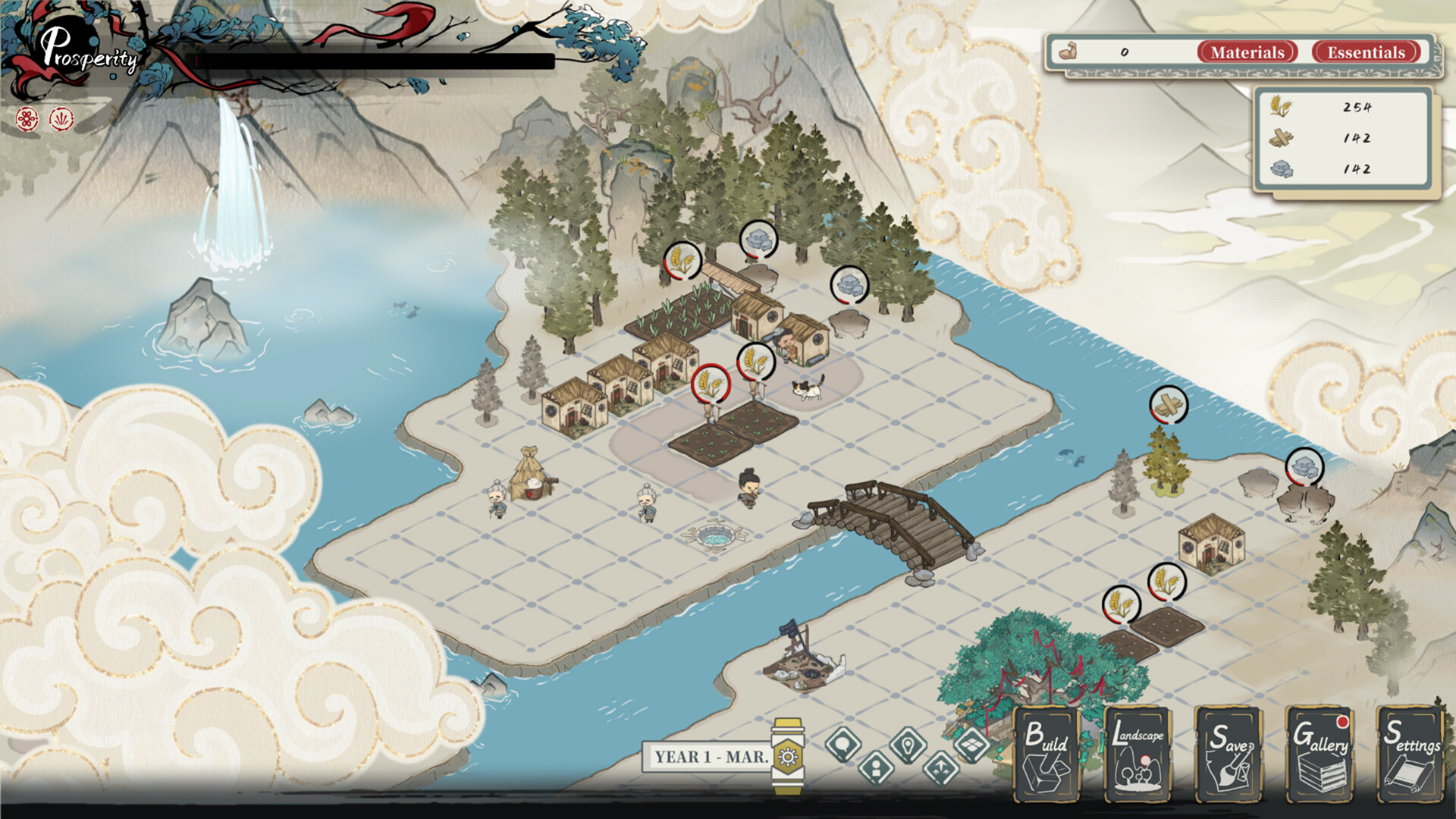
Each stage begins with a few basic buildings, and you're given complete freedom in how to progress. Your first task is to ensure a steady supply of the three core resources: food (via farms), wood (via trees), and stone (via quarries). To generate these resources, you'll also need to build houses to bring in people and create a workforce. If you don’t have enough workers, it will be visually indicated because buildings will appear grayed out.
Unless you build certain structures, resource collection is mostly manual: when a progress circle fills above a structure, you need to click it to add the output to your total supply. If there are multiple filled circles across the map, you can hold the mouse button and swipe over them to collect faster. Basic structures require minimal resources and produce quickly, so shortages are rare. However, food needs a bit more attention since it’s consumed regularly by your population.
Building is intuitive and streamlined: simply select a structure from the menu, and it will appear near the chosen spawn point. Most buildings occupy a single tile, though some larger ones take up more space. Placement is fully flexible because you can reposition any building by clicking and dragging it.
Once your essential needs are covered, you can begin expanding and upgrading. Upgrading is simple: instead of relying on a research system, you just combine three identical buildings placed next to one another and pay the upgrade cost. When you drop the third building in place, it automatically upgrades, and if you have a bunch of them, you’ll merge them all as long as there are enough structures. Occasionally, this will result in two upgraded structures instead of one, saving you resources.
There aren’t too many building types to manage, and new ones unlock gradually as your city develops. Most serve to boost productivity. While each building starts at level 1, upgrades can go up to level 6, and upgrades significantly increase resource output.
Some advanced buildings, like the tavern, require unique resources such as blossom petals. These come from special trees that you can construct. Unlike other structures, they don’t produce resources via a clickable circle. Instead, they periodically drop their resource on nearby empty tiles. If there’s no free space, production halts. Thankfully, both blossoms and tea leaves can also be merged, making them unique as the only “structures” created by other structures.
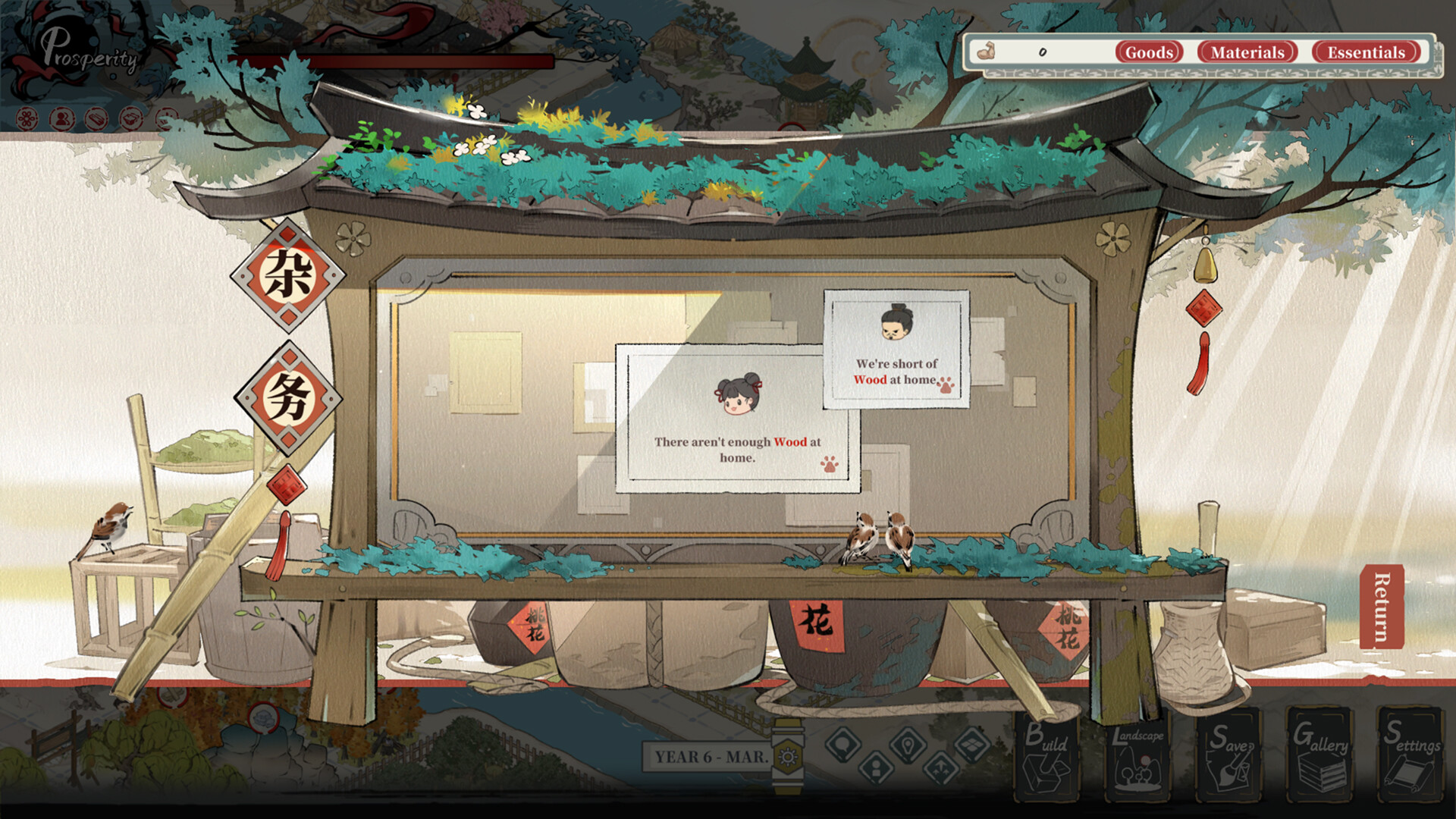
Each time you upgrade a building for the first time, you’ll receive a bundle of bonus resources. These can be collected from the gallery, which also lets you view all available structure levels. Additional rewards can be earned by fulfilling villagers’ requests posted on the message board. While board space is limited, requests remain until completed. Rewards may include small resource bundles or prosperity-boosting decorative structures.
As mentioned, the goal of each stage is to fill the prosperity bar. Fortunately, prosperity does more than track progress - it also unlocks small perks as you advance, such as reduced upgrade costs or increased production for specific resources.
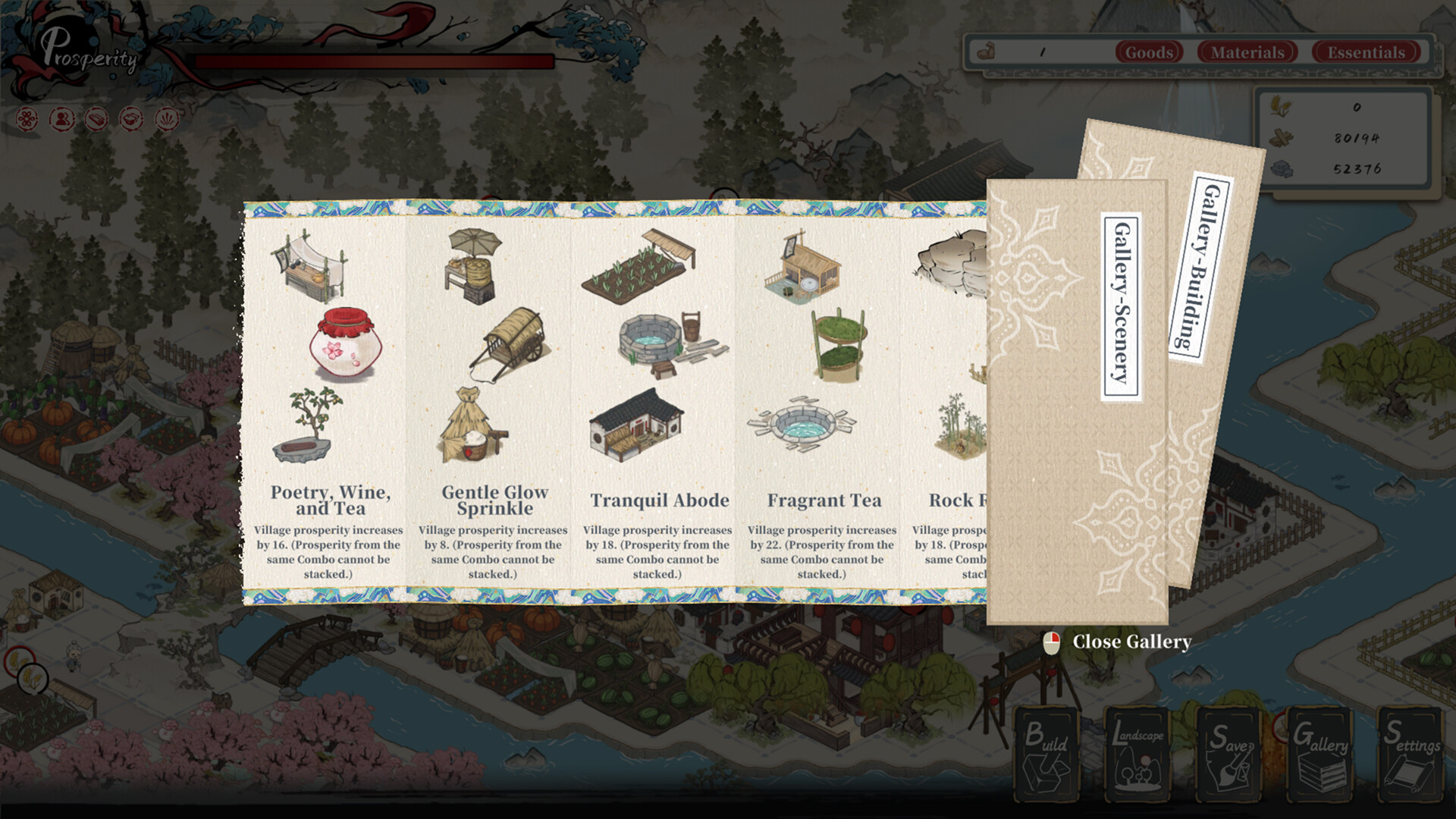
You earn prosperity by placing certain combinations of three structure types close together, including decorative buildings. The gallery shows all possible combinations, and you only need one active instance of each to receive its benefits. Most combinations increase prosperity, but some provide special perks, like reduced food consumption.
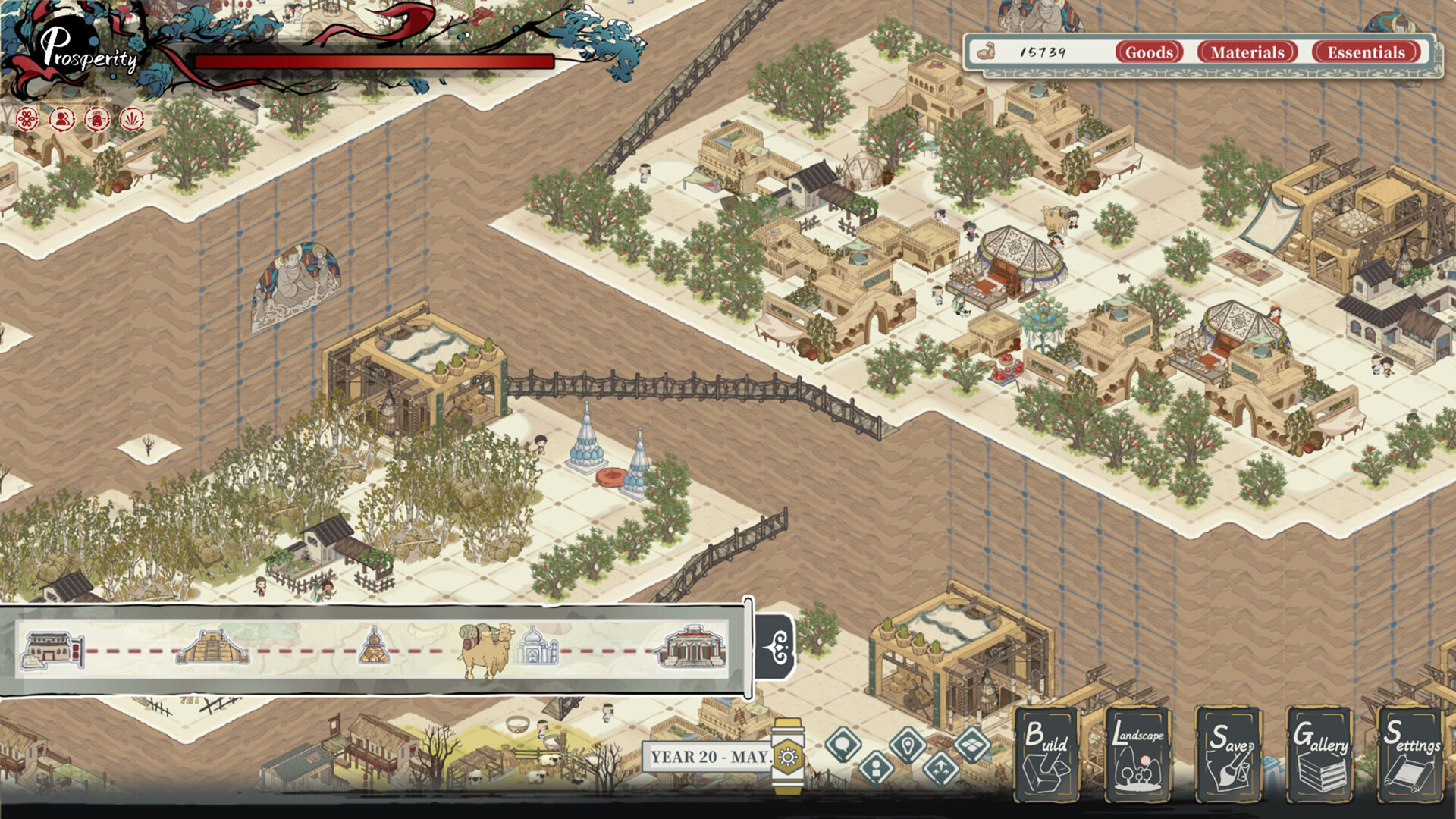
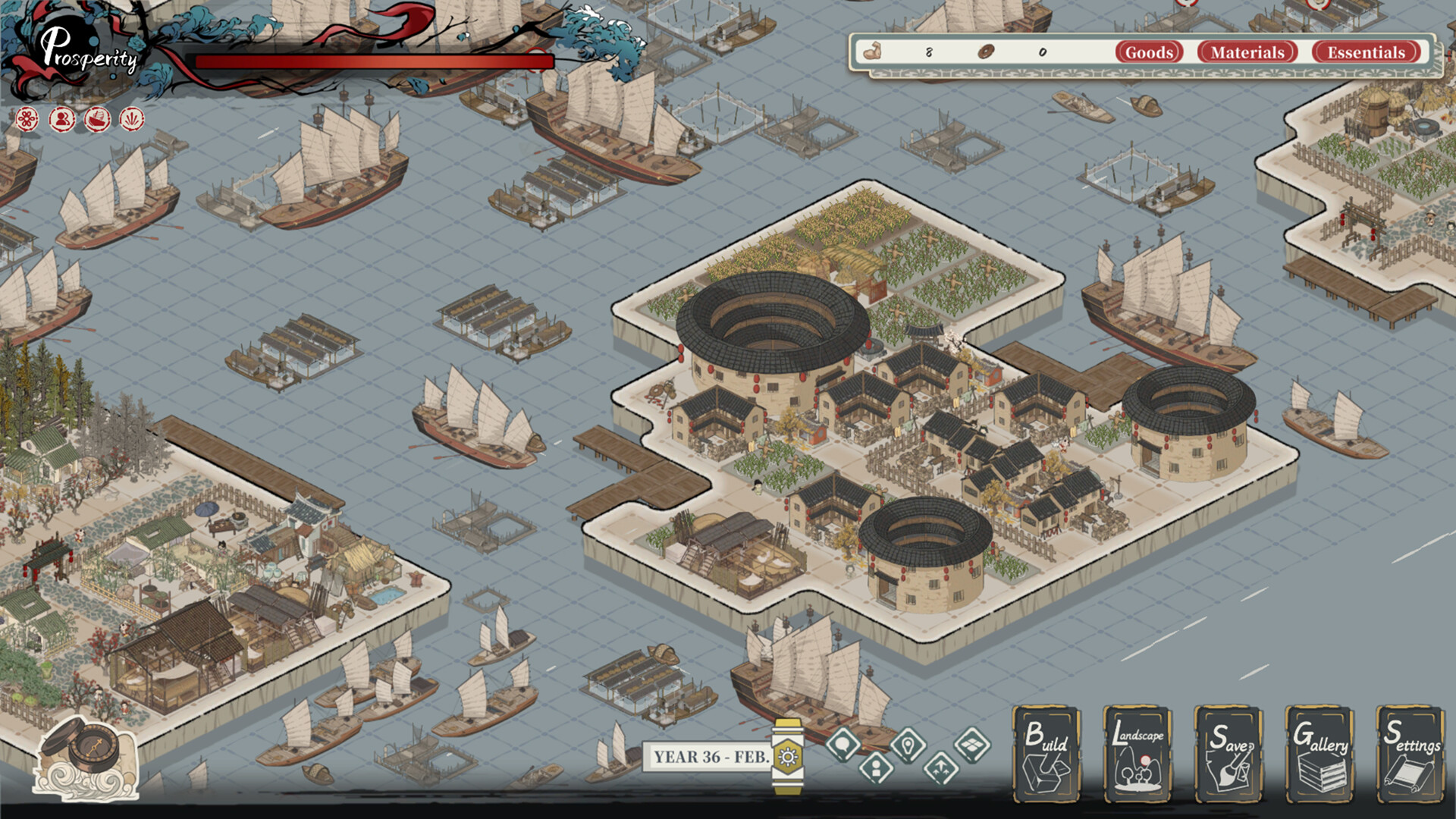
Each stage has a separate save slot so you can return to the city at any time without losing progress. What makes the whole thing interesting is that each of the stages has completely unique buildings and look. The main principle stays the same, which is starting with structures for main resources and then expand, but everything changes with new resources, for instance clay for stone, or mutton for food.
The game is huge and each stage can take hours to beat. However, it’s a lot closer to idle games than a real strategy because there are no threats and no way of losing. Except for structures that need constant refreshing to automatically collect nearby resources, you can easily leave the game play itself.
Each stage begins with a few basic buildings, and you're given complete freedom in how to progress. Your first task is to ensure a steady supply of the three core resources: food (via farms), wood (via trees), and stone (via quarries). To generate these resources, you'll also need to build houses to bring in people and create a workforce. If you don’t have enough workers, it will be visually indicated because buildings will appear grayed out.
Unless you build certain structures, resource collection is mostly manual: when a progress circle fills above a structure, you need to click it to add the output to your total supply. If there are multiple filled circles across the map, you can hold the mouse button and swipe over them to collect faster. Basic structures require minimal resources and produce quickly, so shortages are rare. However, food needs a bit more attention since it’s consumed regularly by your population.
Building is intuitive and streamlined: simply select a structure from the menu, and it will appear near the chosen spawn point. Most buildings occupy a single tile, though some larger ones take up more space. Placement is fully flexible because you can reposition any building by clicking and dragging it.
Once your essential needs are covered, you can begin expanding and upgrading. Upgrading is simple: instead of relying on a research system, you just combine three identical buildings placed next to one another and pay the upgrade cost. When you drop the third building in place, it automatically upgrades, and if you have a bunch of them, you’ll merge them all as long as there are enough structures. Occasionally, this will result in two upgraded structures instead of one, saving you resources.
There aren’t too many building types to manage, and new ones unlock gradually as your city develops. Most serve to boost productivity. While each building starts at level 1, upgrades can go up to level 6, and upgrades significantly increase resource output.
Some advanced buildings, like the tavern, require unique resources such as blossom petals. These come from special trees that you can construct. Unlike other structures, they don’t produce resources via a clickable circle. Instead, they periodically drop their resource on nearby empty tiles. If there’s no free space, production halts. Thankfully, both blossoms and tea leaves can also be merged, making them unique as the only “structures” created by other structures.
Each time you upgrade a building for the first time, you’ll receive a bundle of bonus resources. These can be collected from the gallery, which also lets you view all available structure levels. Additional rewards can be earned by fulfilling villagers’ requests posted on the message board. While board space is limited, requests remain until completed. Rewards may include small resource bundles or prosperity-boosting decorative structures.
As mentioned, the goal of each stage is to fill the prosperity bar. Fortunately, prosperity does more than track progress - it also unlocks small perks as you advance, such as reduced upgrade costs or increased production for specific resources.
You earn prosperity by placing certain combinations of three structure types close together, including decorative buildings. The gallery shows all possible combinations, and you only need one active instance of each to receive its benefits. Most combinations increase prosperity, but some provide special perks, like reduced food consumption.
Each stage has a separate save slot so you can return to the city at any time without losing progress. What makes the whole thing interesting is that each of the stages has completely unique buildings and look. The main principle stays the same, which is starting with structures for main resources and then expand, but everything changes with new resources, for instance clay for stone, or mutton for food.
The game is huge and each stage can take hours to beat. However, it’s a lot closer to idle games than a real strategy because there are no threats and no way of losing. Except for structures that need constant refreshing to automatically collect nearby resources, you can easily leave the game play itself.
21 found helpful
Steam ↗