


▼ Not recommended
4 hrs
Can not recommend this game. This game came off as a great game. But upon playing it you start to notice things that seem out of place. The game was released into 1.0 and not early access. Sure the game is 10$ but this does not feel like 10 dollars.
---Pros---
1. Cool cable routing system.
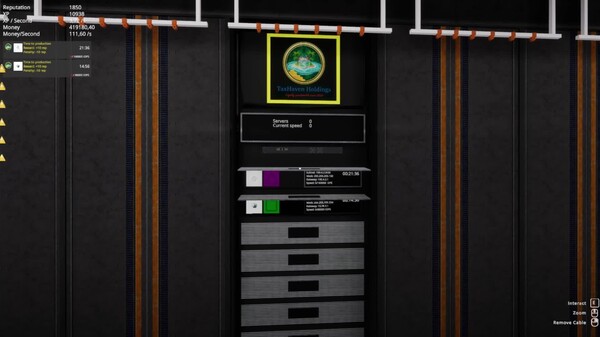
2. Cool packet simulation system.
3. Cool and functional rack mounting system.
4. LAG (technology) is built into the switches.
---Cons---
1. No VLANs. Everything just doesnt talk to anything else magically.
2. Money income is slow and honestly feels like an idle game.
3. No routing or any other technologies. Only the arbitrary IOPS that are usually used to calculate speeds of storage.
4. The in game tutorial...... Are these written by AI? Were these not checked for what the game uses? We are talking about IPv6. Front-Back cooling as if we have that, Server weights as if thats in the game, among many other things.
5. The servers are all the same except slightly retextured.
6. The switches are made for a spline setup but again no vlans so it just magically works aggregating everything.
This just seems like an idle game. Again Packet simulation super cool. Cable management super cool. The content of the game is severely lacking for a 1.0 release.
----Edits for clarity below----
The game really does not give us any concepts that are worth while. It talks about Spline-Leaf Architecture but as many have pointed out does not balance or do anything with the Spline-Leaf that is expected. VLANs are not a thing so keeping everyone seperate into only their own racks makes the most sense. Its not like we are using 2 WAN links from our carrier no we are only managing their internal ports. Their internal ports are using external IP addresses. We do not assign these addresses to servers except in extremely rare cases. The main thing this game is good at is the cable management. For education I would not recommend this.
---Pros---
1. Cool cable routing system.
2. Cool packet simulation system.
3. Cool and functional rack mounting system.
4. LAG (technology) is built into the switches.
---Cons---
1. No VLANs. Everything just doesnt talk to anything else magically.
2. Money income is slow and honestly feels like an idle game.
3. No routing or any other technologies. Only the arbitrary IOPS that are usually used to calculate speeds of storage.
4. The in game tutorial...... Are these written by AI? Were these not checked for what the game uses? We are talking about IPv6. Front-Back cooling as if we have that, Server weights as if thats in the game, among many other things.
5. The servers are all the same except slightly retextured.
6. The switches are made for a spline setup but again no vlans so it just magically works aggregating everything.
This just seems like an idle game. Again Packet simulation super cool. Cable management super cool. The content of the game is severely lacking for a 1.0 release.
----Edits for clarity below----
The game really does not give us any concepts that are worth while. It talks about Spline-Leaf Architecture but as many have pointed out does not balance or do anything with the Spline-Leaf that is expected. VLANs are not a thing so keeping everyone seperate into only their own racks makes the most sense. Its not like we are using 2 WAN links from our carrier no we are only managing their internal ports. Their internal ports are using external IP addresses. We do not assign these addresses to servers except in extremely rare cases. The main thing this game is good at is the cable management. For education I would not recommend this.
275 found helpful
Steam ↗