▲ Recommended
3 hrs
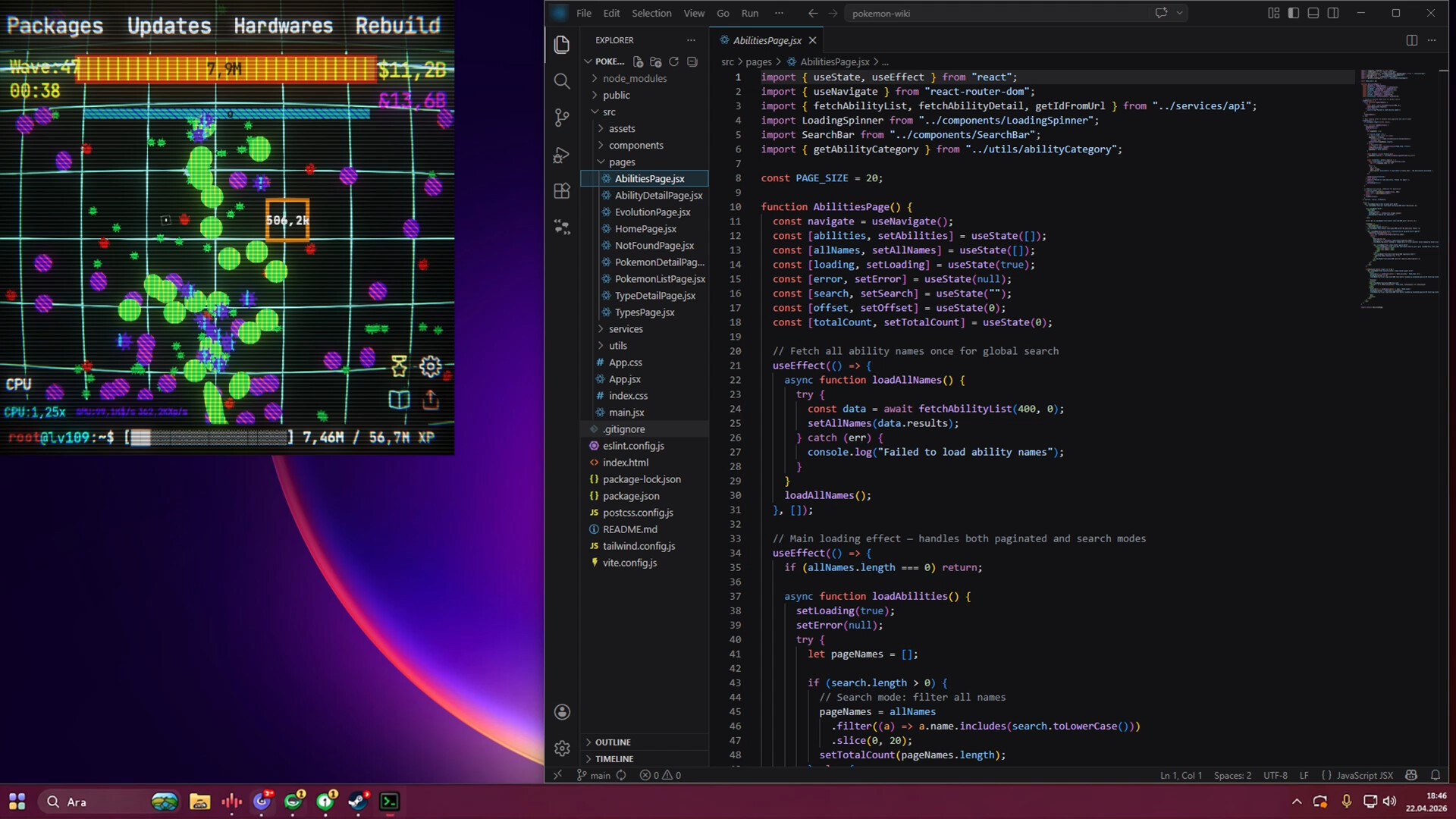
Not usually my kind of game since I don’t play many idle titles. But I ended up enjoying the vibe more than I expected. The hacking theme gives it a cool style, and it’s satisfying to watch your setup improve over time. Just leaving it on the background and treating it as a work-break during my pomodoro sessions.
▲ Recommended
1 hrs
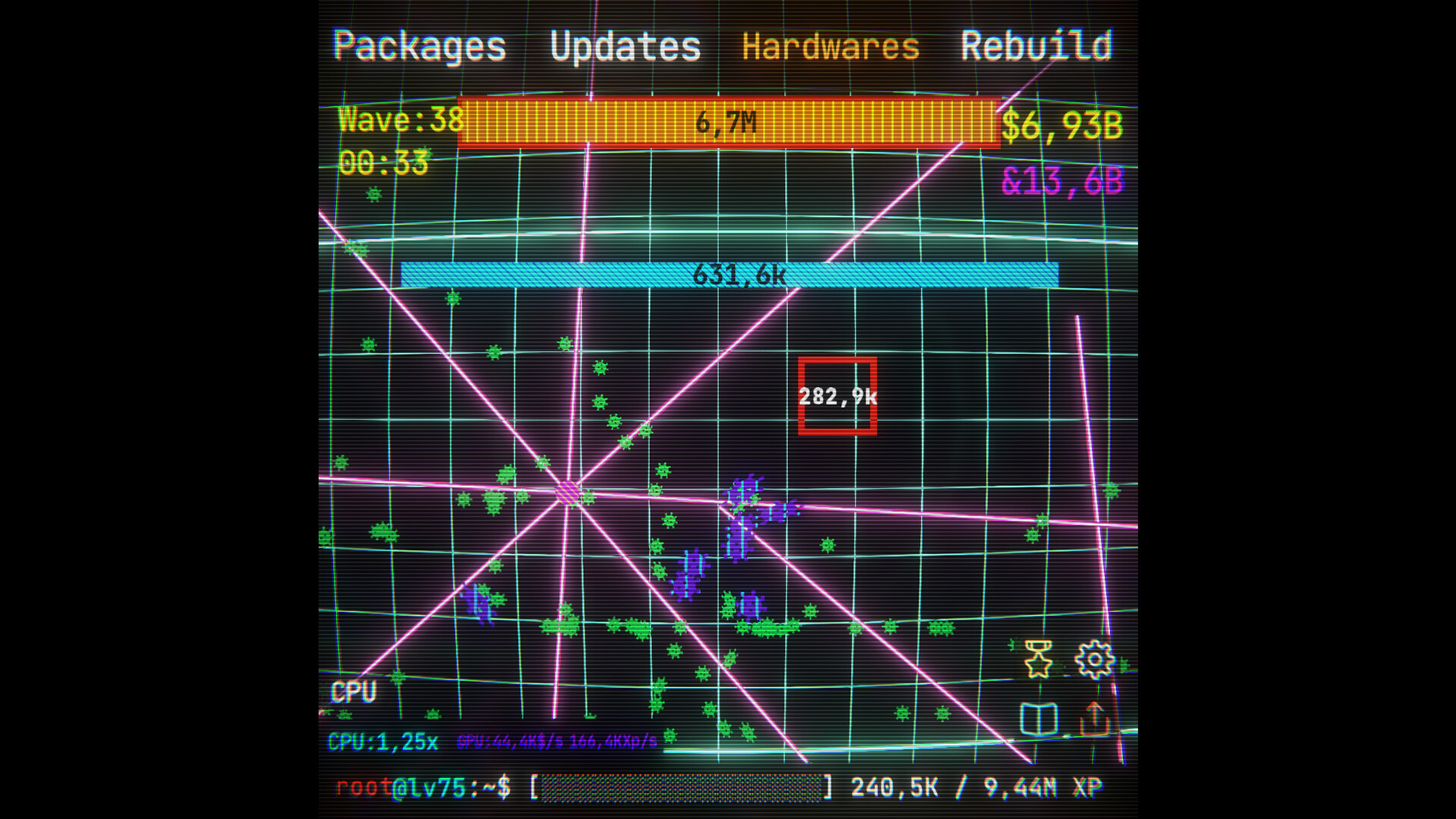
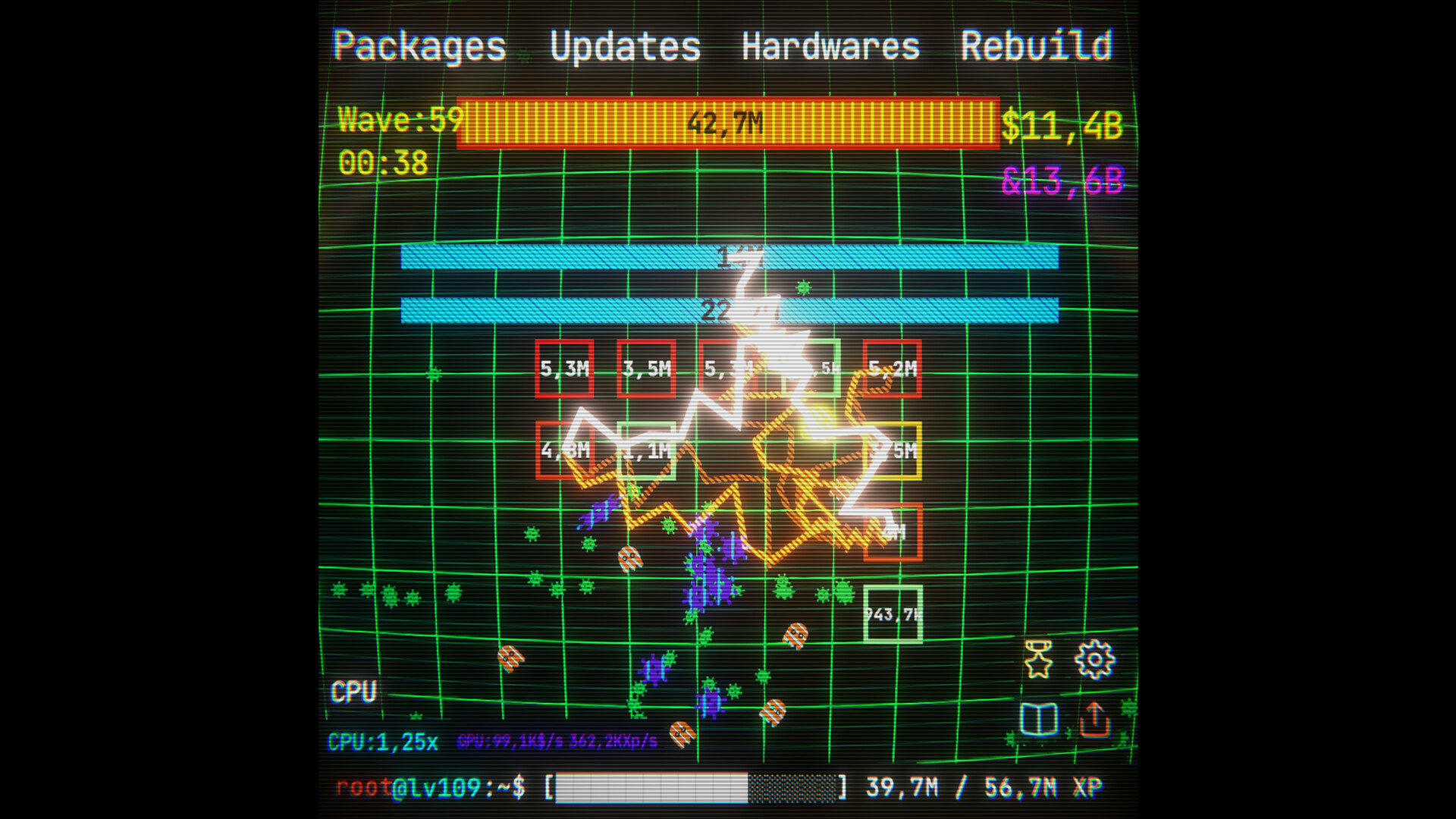
For something that runs quietly in a small window while you focus on other things, the gameplay feels simple, relaxing, and highly incremental. You’re constantly earning rewards even when the game is practically playing itself. At its core, you have a shooter at the bottom of the screen that automatically fires pings at different objects, creating a stylish little hacking simulation.
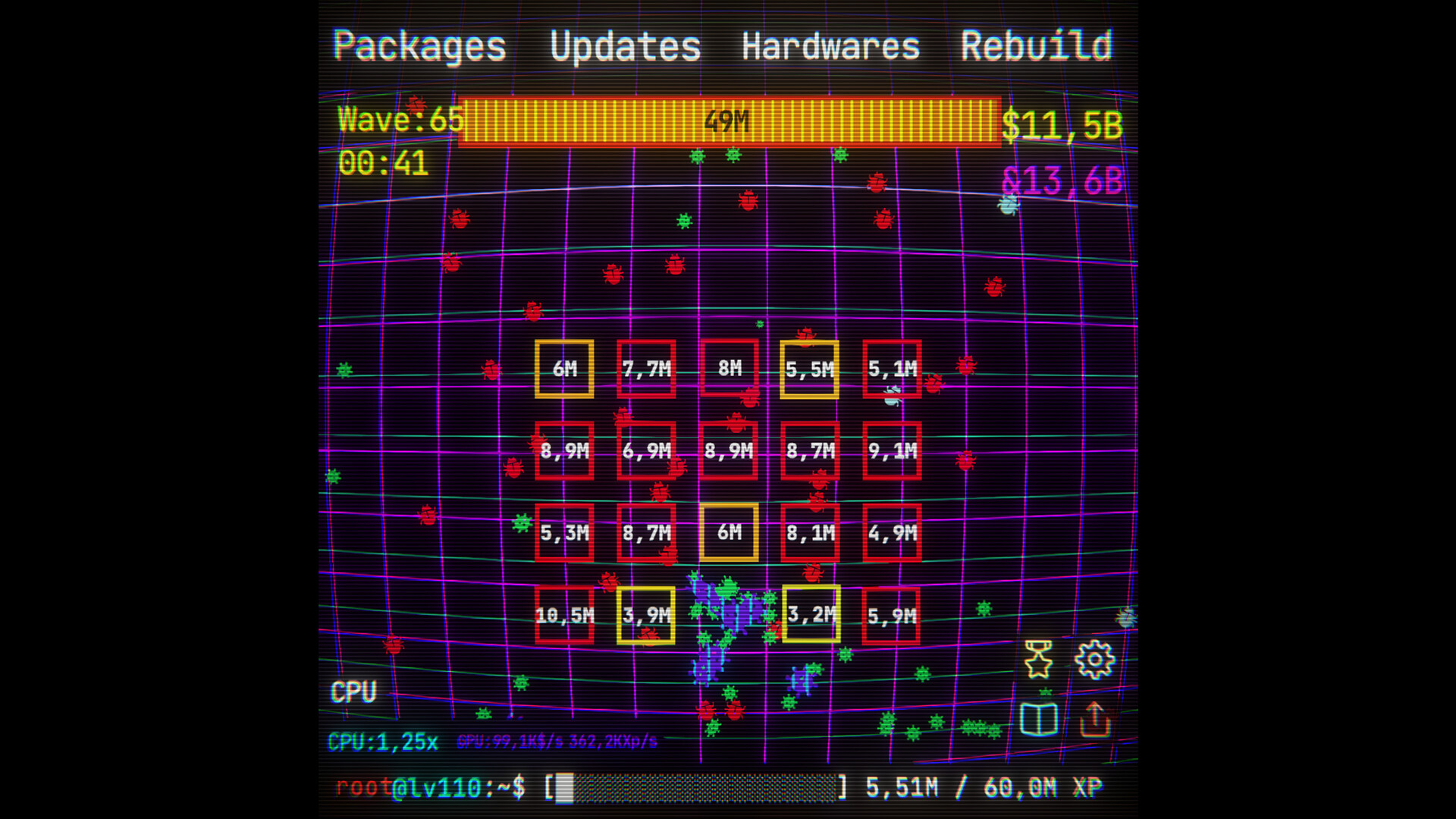
Your main target is the firewall at the top of the screen, but getting there is never straightforward. Smaller obstacles, shields, and other defensive systems stand in the way, blocking your pings from reaching their goal. Every object has a number that represents its health, and each successful hit chips away at it. Once you destroy the firewall, you move on to the next wave, but every new wave becomes more crowded and introduces tougher obstacles.
What keeps the game engaging is the constant pressure of the time limit. If you fail to clear a wave in time, you’re sent all the way back to the first one. You do gain small permanent perks through leveling and experience points, but most of your progress comes from repeating runs over and over again. That repetition never feels pointless because every destroyed object rewards you with data.
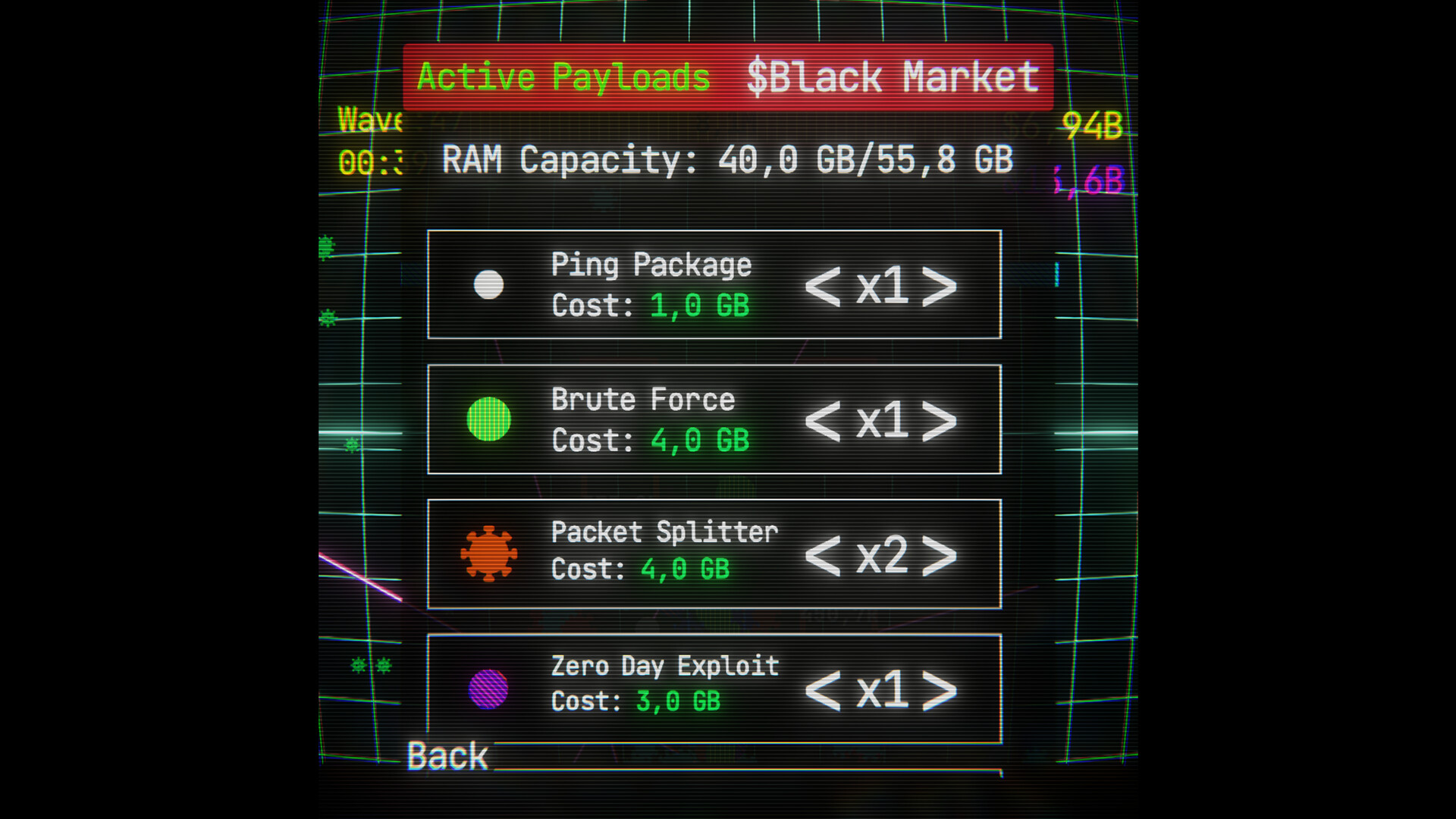
Data acts as the main currency and allows you to buy upgrades like attack damage, resource gain, and other useful improvements. One of the most important upgrades is RAM because it determines how many pings your shooter can handle at once. As you progress, you unlock entirely new hacking tools, each with its own behavior and playstyle.
Regular pings are fast, numerous, and bounce around the screen, while something like Packet Splitter breaks apart into several smaller projectiles on impact. Every tool also consumes RAM, so simply unlocking them is not enough. You constantly have to experiment and rearrange your setup to fit within your available capacity.
Additional bonuses come from hardware, essentially loot drops that appear only occasionally. Hardware is divided into six rarity tiers ranging from common to mythic, and thankfully you can enable auto sell for lower tier items so your very limited storage does not fill up immediately. Even though you eventually gain access to 20 equipment slots, most of them start locked and can only be unlocked through the Disk Capacity upgrade.
Some of the most impactful upgrades are hidden behind a separate progression system that uses crypto. This menu includes unique bonuses like CPU speed, which affects the overall game speed, luck, which improves hardware drop chances, and GPU speed, which boosts passive data and experience gain.
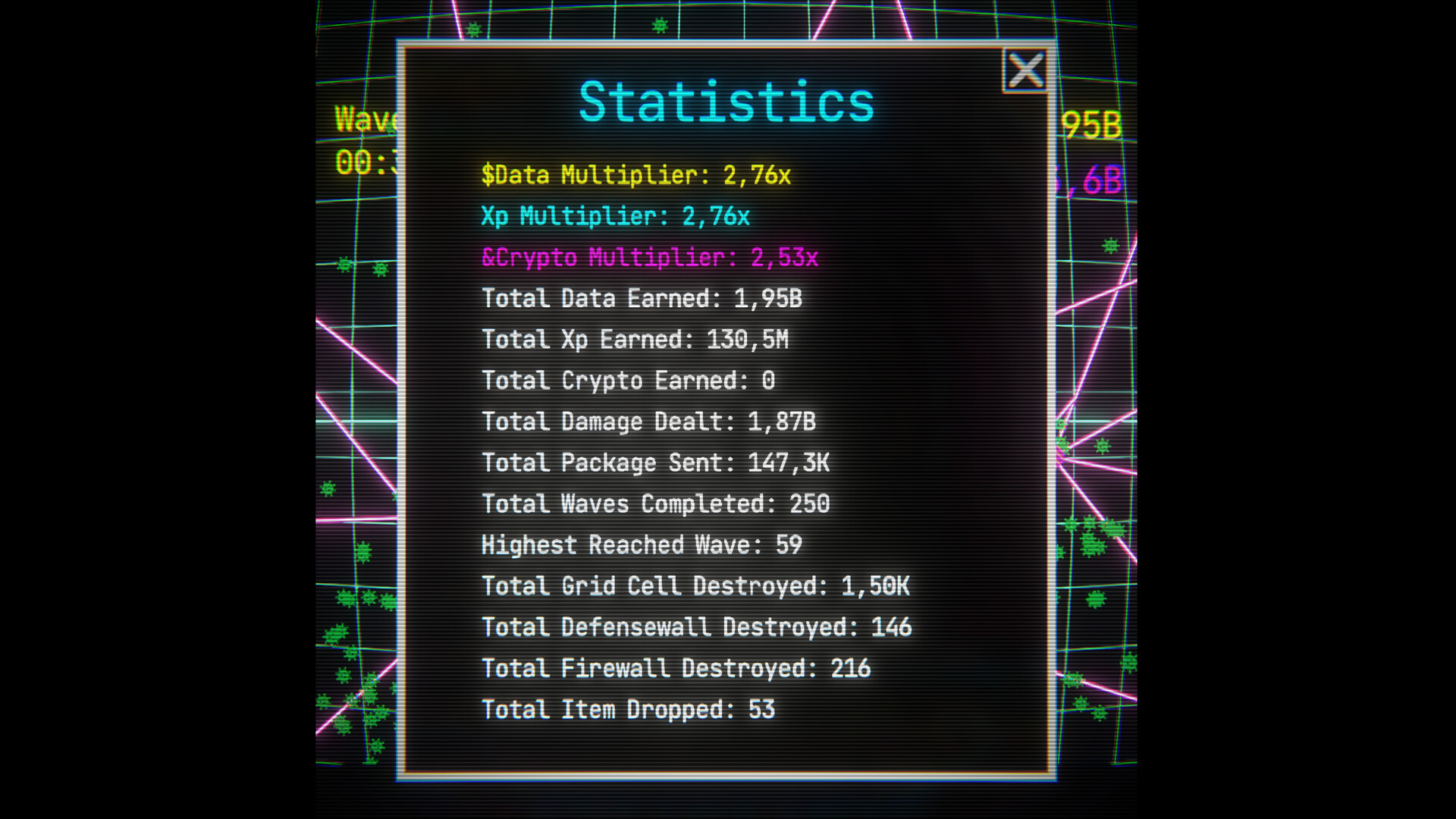
Crypto is earned through Rebuild, the game’s prestige mechanic. Rebuilding requires you to meet certain level, wave, and data requirements, but every reset permanently increases the gain of all resources. The catch is brutal because a rebuild wipes your level, upgrades, and hacking tools completely clean. Hardware is the only thing that survives the reset. Every new rebuild raises the requirements even further, though it also rewards you with stronger long-term bonuses. As is often the case with these games, they start fast and introduce everything you need to know within a couple of hours, but require time if you’re aiming to actually beat the game and get all achievements.