



▲ Recommended
10 hrs
Air Star is a roguelite tower defense game developed by DogmaQuest in collaboration with Brendan Roarty and published by DogmaQuest. The game takes the familiar foundation of tower defense strategy and blends it with active arcade-style mechanics and roguelite progression. Instead of presenting a purely passive defensive experience where players simply build towers and wait for waves to unfold, Air Star places the player directly into the action. By combining traditional defensive structures with interactive abilities such as launching planes and selecting upgrades between waves, the game creates a dynamic strategy loop that rewards quick thinking and experimentation.
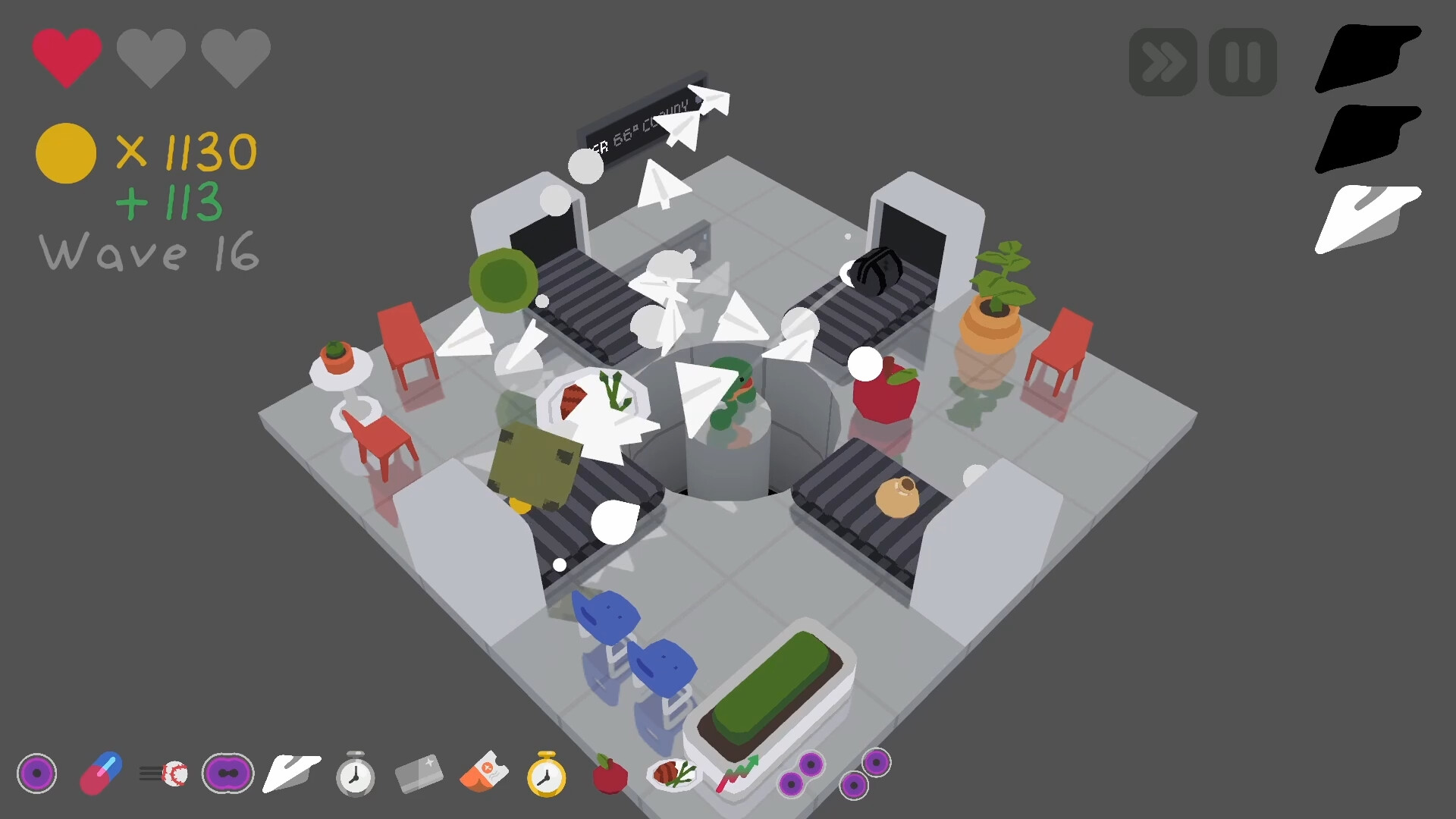
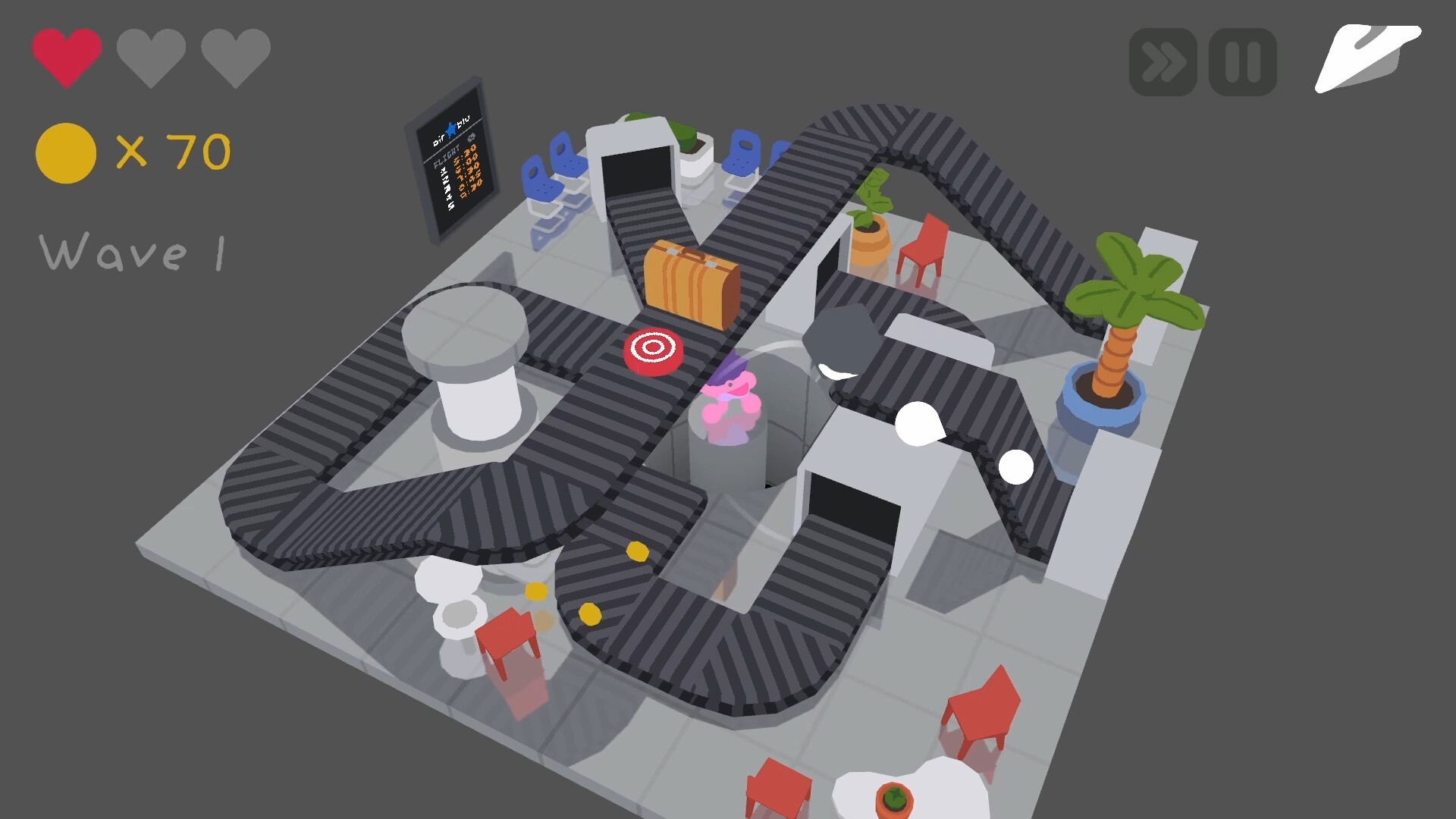
The premise of Air Star is intentionally playful and unconventional. The player takes control of a frog-like airport operator responsible for protecting a baggage handling system from waves of animated luggage that threaten to overwhelm the facility. While the narrative remains minimal, the quirky concept adds a layer of charm to the experience. The battlefield resembles a stylized airport layout where conveyor-like pathways guide enemies across the map toward their objective. The player’s role is to deploy defensive tools and intervene directly whenever the situation becomes overwhelming.
At its core, Air Star follows the structure of a traditional tower defense game. Waves of enemies travel along defined routes across the map, and players must place towers strategically to damage or slow them before they reach the end of the path. Towers serve as the primary defensive tool, automatically attacking enemies that pass within their range. Each tower type offers different advantages, encouraging players to think carefully about placement and synergy between structures.
What distinguishes the game from many tower defense titles is the inclusion of active abilities that allow players to influence the battlefield in real time. One of the most notable mechanics is the ability to throw planes across the map. These planes act as temporary weapons that can damage enemies or intercept particularly dangerous threats during critical moments. Because the player controls when and where the planes are launched, this feature adds an additional layer of skill and timing that keeps the gameplay engaging even after towers have been placed.
The roguelite progression system further enhances the game’s replayability. After each wave of enemies is defeated, players are presented with a selection of upgrades that modify their defenses. These upgrades may increase tower damage, improve the durability of the base, unlock new tower types, or introduce special effects that alter how enemies behave. With more than fifty different upgrades available, players can experiment with a wide range of build strategies. Some runs may focus on maximizing tower damage, while others may emphasize survivability or specialized mechanics that exploit certain enemy weaknesses.
Because upgrades are offered randomly during each playthrough, no two runs are exactly the same. Players must adapt their strategy based on the options presented to them, often leading to unexpected combinations of abilities. This randomness encourages experimentation and gives the game a strong sense of variety despite its relatively compact scope.
Level design also contributes to the game’s strategic depth. Each map introduces different layouts that affect how enemies travel and where towers can be placed. Early stages provide straightforward paths that help players learn the mechanics, while later levels introduce more complex layouts that require careful planning. Narrow corridors, branching routes, and strategic choke points force players to rethink their defensive strategies as the difficulty increases.
Enemy design evolves gradually as the game progresses. Early waves consist of relatively simple enemies that allow players to become familiar with tower placement and upgrade mechanics. Later waves introduce tougher units with higher health, increased speed, or unique behaviors that challenge existing defenses. These variations require players to continuously adjust their strategy and make better use of the upgrades they have acquired.
The visual presentation of Air Star embraces a colorful and stylized aesthetic that complements its playful premise. The environments are designed with bright colors and clean shapes that keep the battlefield easy to read during intense moments. Towers, enemies, and projectiles are clearly distinguishable, which is essential in a strategy game where players must quickly identify threats and respond accordingly.
The audio design reinforces the game’s lively tone with energetic sound effects and upbeat music. Launching planes, destroying enemies, and selecting upgrades are all accompanied by satisfying audio cues that enhance the sense of action. While the soundtrack is relatively simple, it maintains a cheerful rhythm that fits well with the whimsical theme of defending an airport from mischievous waves of animated luggage.
One of the game’s strongest qualities is its accessibility. The basic mechanics are easy to understand, allowing new players to quickly jump into a run and start experimenting with tower placement and upgrades. At the same time, the variety of upgrades and the need to balance active abilities with defensive structures provide enough depth to keep experienced players engaged.
However, the game’s modest scale means that it may not offer the same level of long-term content as larger tower defense titles. Although the upgrade system provides variety, the number of maps and core mechanics remains relatively limited. After extended play sessions, some players may begin to notice that the overall structure of each run remains fairly consistent.
Despite these limitations, Air Star succeeds as a compact and creative strategy game that blends multiple gameplay styles into a cohesive experience. The combination of tower defense mechanics, roguelite progression, and active player involvement creates a gameplay loop that feels both energetic and strategic. The quirky concept and colorful presentation further enhance the game’s charm, making it an enjoyable experience for players looking for something slightly different within the tower defense genre.
Overall, Air Star stands out as a clever indie strategy game that reimagines tower defense with a more interactive approach. Its emphasis on experimentation, fast-paced decision-making, and randomized upgrades ensures that each playthrough offers new opportunities for creative strategies. While it may not match the scale of larger strategy games, it delivers a focused and entertaining experience that will appeal to players who enjoy tactical challenges with a playful twist.
Rating: 7/10
The premise of Air Star is intentionally playful and unconventional. The player takes control of a frog-like airport operator responsible for protecting a baggage handling system from waves of animated luggage that threaten to overwhelm the facility. While the narrative remains minimal, the quirky concept adds a layer of charm to the experience. The battlefield resembles a stylized airport layout where conveyor-like pathways guide enemies across the map toward their objective. The player’s role is to deploy defensive tools and intervene directly whenever the situation becomes overwhelming.
At its core, Air Star follows the structure of a traditional tower defense game. Waves of enemies travel along defined routes across the map, and players must place towers strategically to damage or slow them before they reach the end of the path. Towers serve as the primary defensive tool, automatically attacking enemies that pass within their range. Each tower type offers different advantages, encouraging players to think carefully about placement and synergy between structures.
What distinguishes the game from many tower defense titles is the inclusion of active abilities that allow players to influence the battlefield in real time. One of the most notable mechanics is the ability to throw planes across the map. These planes act as temporary weapons that can damage enemies or intercept particularly dangerous threats during critical moments. Because the player controls when and where the planes are launched, this feature adds an additional layer of skill and timing that keeps the gameplay engaging even after towers have been placed.
The roguelite progression system further enhances the game’s replayability. After each wave of enemies is defeated, players are presented with a selection of upgrades that modify their defenses. These upgrades may increase tower damage, improve the durability of the base, unlock new tower types, or introduce special effects that alter how enemies behave. With more than fifty different upgrades available, players can experiment with a wide range of build strategies. Some runs may focus on maximizing tower damage, while others may emphasize survivability or specialized mechanics that exploit certain enemy weaknesses.
Because upgrades are offered randomly during each playthrough, no two runs are exactly the same. Players must adapt their strategy based on the options presented to them, often leading to unexpected combinations of abilities. This randomness encourages experimentation and gives the game a strong sense of variety despite its relatively compact scope.
Level design also contributes to the game’s strategic depth. Each map introduces different layouts that affect how enemies travel and where towers can be placed. Early stages provide straightforward paths that help players learn the mechanics, while later levels introduce more complex layouts that require careful planning. Narrow corridors, branching routes, and strategic choke points force players to rethink their defensive strategies as the difficulty increases.
Enemy design evolves gradually as the game progresses. Early waves consist of relatively simple enemies that allow players to become familiar with tower placement and upgrade mechanics. Later waves introduce tougher units with higher health, increased speed, or unique behaviors that challenge existing defenses. These variations require players to continuously adjust their strategy and make better use of the upgrades they have acquired.
The visual presentation of Air Star embraces a colorful and stylized aesthetic that complements its playful premise. The environments are designed with bright colors and clean shapes that keep the battlefield easy to read during intense moments. Towers, enemies, and projectiles are clearly distinguishable, which is essential in a strategy game where players must quickly identify threats and respond accordingly.
The audio design reinforces the game’s lively tone with energetic sound effects and upbeat music. Launching planes, destroying enemies, and selecting upgrades are all accompanied by satisfying audio cues that enhance the sense of action. While the soundtrack is relatively simple, it maintains a cheerful rhythm that fits well with the whimsical theme of defending an airport from mischievous waves of animated luggage.
One of the game’s strongest qualities is its accessibility. The basic mechanics are easy to understand, allowing new players to quickly jump into a run and start experimenting with tower placement and upgrades. At the same time, the variety of upgrades and the need to balance active abilities with defensive structures provide enough depth to keep experienced players engaged.
However, the game’s modest scale means that it may not offer the same level of long-term content as larger tower defense titles. Although the upgrade system provides variety, the number of maps and core mechanics remains relatively limited. After extended play sessions, some players may begin to notice that the overall structure of each run remains fairly consistent.
Despite these limitations, Air Star succeeds as a compact and creative strategy game that blends multiple gameplay styles into a cohesive experience. The combination of tower defense mechanics, roguelite progression, and active player involvement creates a gameplay loop that feels both energetic and strategic. The quirky concept and colorful presentation further enhance the game’s charm, making it an enjoyable experience for players looking for something slightly different within the tower defense genre.
Overall, Air Star stands out as a clever indie strategy game that reimagines tower defense with a more interactive approach. Its emphasis on experimentation, fast-paced decision-making, and randomized upgrades ensures that each playthrough offers new opportunities for creative strategies. While it may not match the scale of larger strategy games, it delivers a focused and entertaining experience that will appeal to players who enjoy tactical challenges with a playful twist.
Rating: 7/10
2 found helpful
Steam ↗